Today, America wakes 250 years later as a beacon of hope, a republic entrusted to its people, an idea that changed the world.
A nation worth preserving. A dream worth pursuing. A freedom defended by every generation.
Happy 250th, America! 🇺🇸
Happy birthday, America! I love this remarkable country, which was built on the idea that anyone can change the world. For 250 years, our country has been a testament to the power of possibility. Let’s keep building extraordinary things together.
#WWDC26: a smarter, more conversational Siri AI! Apple Intelligence features across apps! Expanded child safety features, and faster, more reliable software than ever before!
The next generation of Apple Intelligence powers an entirely new Siri: making the apps and experiences you rely on across iPhone, iPad, Mac, and Apple Vision Pro more personal and helpful than ever.
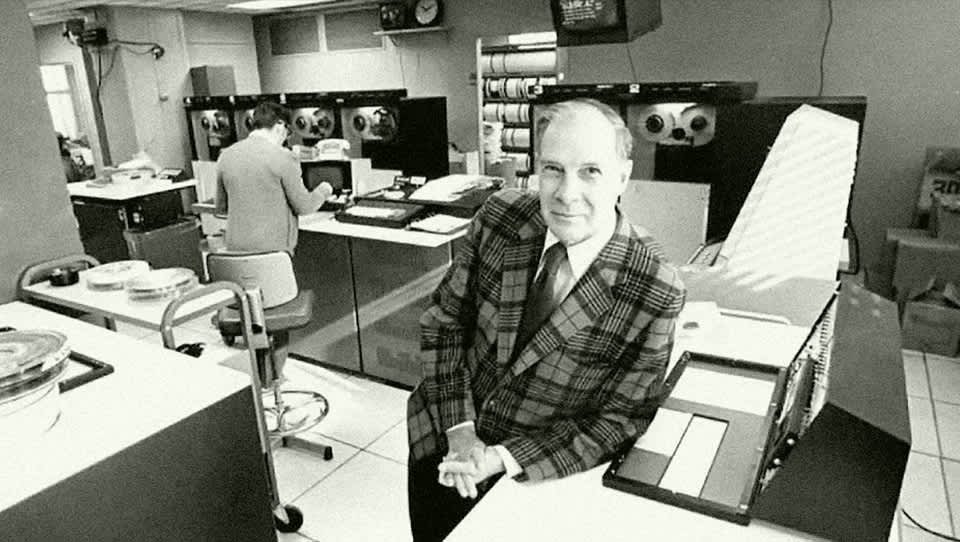
A mathematician who shared an office with Claude Shannon at Bell Labs gave one lecture in 1986 that explains why some people win Nobel Prizes and other equally smart people spend their whole lives doing forgettable work.
His name was Richard Hamming. He won the Turing Award. He invented error-correcting codes that made modern computing possible. And he spent 30 years at Bell Labs sitting in a cafeteria at lunch watching which scientists became legendary and which ones faded into nothing.
In March 1986, he walked into a Bellcore auditorium in front of 200 researchers and told them exactly what he had seen.
Here's the framework that has been quoted by every serious scientist for the last 40 years.
His opening line landed like a punch. He said most scientists he worked with at Bell Labs were just as smart as the Nobel Prize winners. Just as hardworking. Just as credentialed. And yet at the end of a 40-year career, one group had changed entire fields and the other group was forgotten by the time they retired.
He wanted to know what the difference actually was. And he said it wasn't luck. It wasn't IQ. It was a specific set of habits that almost nobody is willing to follow.
The first habit was the one that hurts the most to hear. He said most scientists deliberately avoid the most important problem in their field because the odds of failure are too high. They pick a safe adjacent problem, solve it cleanly, publish it, and move on. And because they never swing at the hard problem, they never hit it. He said if you do not work on an important problem, it is unlikely you will do important work. That is not a motivational line. That is a logical one.
The second habit was about doors. Literal doors. He noticed that the scientists at Bell Labs who kept their office doors closed got more done in the short term because they had no interruptions. But the scientists who kept their doors open got more done over a career. The open-door scientists were interrupted constantly. They also absorbed every new idea passing through the hallway. Ten years in, they were working on problems the closed-door scientists did not even know existed.
The third habit was inversion. When Bell Labs refused to give him the team of programmers he wanted, Hamming sat with the rejection for weeks. Then he flipped the question. Instead of asking for programmers to write the programs, he asked why machines could not write the programs themselves. That single inversion pushed him into the frontier of computer science. He said the pattern repeats everywhere. What looks like a defect, if you flip it correctly, becomes the exact thing that pushes you ahead of everyone else.
The fourth habit was the one that hit me the hardest. He said knowledge and productivity compound like interest. Someone who works 10 percent harder than you does not produce 10 percent more over a career. They produce twice as much. The gap doesn't add. It multiplies. And it compounds silently for years before anyone notices.
He finished the lecture with a line I have never been able to shake.
He said Pasteur's famous quote is right. Luck favors the prepared mind. But he meant it literally. You don't hope for luck. You engineer the conditions where luck can land on you. Open doors. Important problems. Inverted questions. Compounded hours. Those are not traits. Those are choices you make every single day.
The transcript has been sitting on the University of Virginia's computer science website for almost 30 years. The video is free on YouTube. Stripe Press reprinted the full lectures as a book in 2020 and Bret Victor wrote the foreword.
Hamming died in 1998. He gave his final lecture a few weeks before. He was 82.
The lecture that explains why some careers become legendary and others disappear is still free. Most people who could benefit from it will never open it.
I want to thank everyone for the outpouring of love and thank you for believing in me to lead the company that has always put you at the center of our work. This is not goodbye. It’s a hello to John and I can’t wait for you to get to know him like I do! 🙏
AI search mode in @googlemaps is what real AI in everyday apps looks like.
It brings together location, user preferences & reviews and actually understands what you want.
👏👏👏👏
We’re proud to share the progress we’re making in our efforts to protect the planet, including our highest-ever use of recycled material in our products. https://t.co/VtMzXvk3U9
Welcome home to the Artemis II crew! Honored that NASA astronauts brought iPhone to space with them. One small step for iPhone. One giant leap for space selfies. 🚀📱
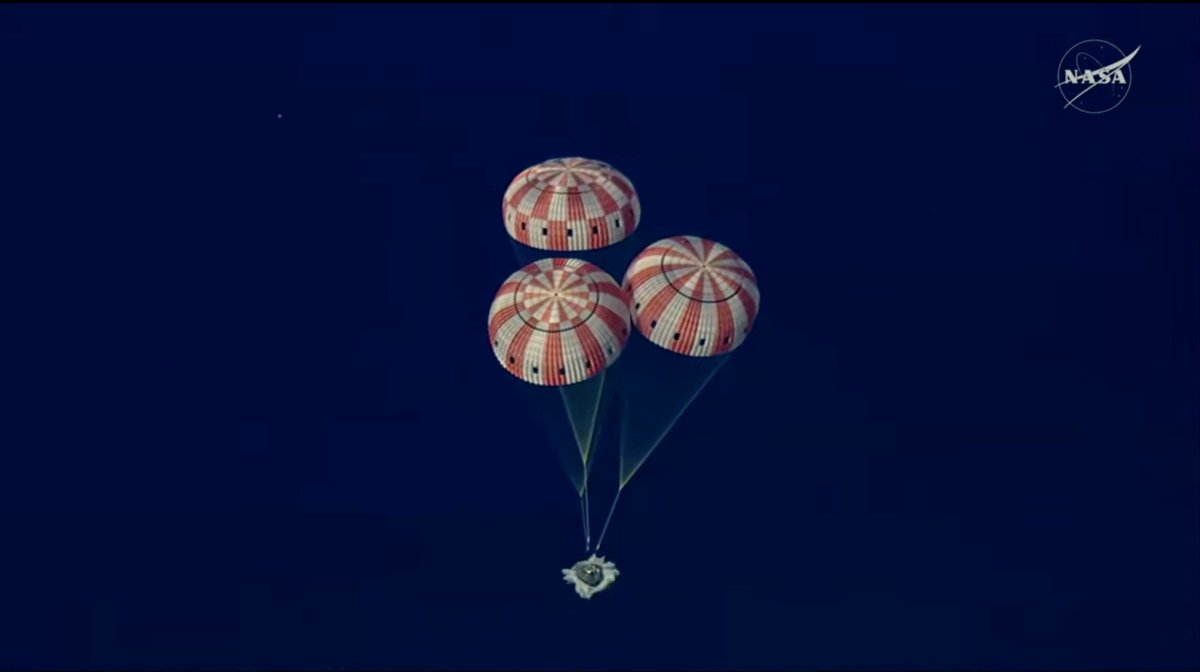
And splashdown!
America is back in the business of sending astronauts to the Moon and bringing them home safely.
Reid, Victor, Christina, and Jeremy did an outstanding job. These talented astronauts inspired the world and represented their space agencies and nations as humanity’s ambassadors to the stars.
This was a test mission, the first crewed flight of SLS and Orion, pushing farther into the unforgiving environment of space than ever before, and it carried real risk. They accepted that risk for all we stood to learn and for the exciting missions that follow, as we return to the lunar surface, build a Moon base, and prepare for what comes next.
And they were not alone. The entire NASA workforce, our commercial and international partners, and the hopes and dreams of people all over the world were with them. The astronauts know it, and you should too. This mission would not have been possible without you.
Congratulations. Artemis II, mission accomplished.
We see our home planet as a whole, lit up in spectacular blues and browns. A green aurora even lights up the atmosphere. That's us, together, watching as our astronauts make their journey to the Moon.
Nominal translunar injection burn complete. The Artemis II crew is officially on the way to the Moon.
America is back in the business of sending astronauts to the Moon. This time, farther than ever before.
So thrilled to celebrate #Apple50 with @paulmccartney! His music has inspired us from the beginning, so this is a full circle moment to close out our celebrations. Thank you, Paul, for proving that when you think different, you have the power to change the world.
We’re excited to announce a new exhibit to celebrate Apple’s 50th anniversary!
Visit us for a chance to see rare prototypes of some of the most iconic Apple products from the CHM collection.
On display until September 7, 2026.
#Appleat50#AppleHistory#TechHistory
F1 in 2026:
• recharge mode
• boost mode
• battery management
At this point the premier race event is starting to feel like a smartphone power management feature.
@F1@ausgrandprix