NEW POST
Increasingly our industry favors deep specialists. But we've found our most effective colleagues have a broad-based skill that's based on spanning many specialties. @unmeshjoshi , Gitanjali, and I write about explicitly recognizing this
https://t.co/LILwAhjzcA
> our implementation was not developed by Mozilla employees, but was contributed entirely by a single volunteer, André Bargull.
Temporal is an absolutely massive spec and complicated implementation - it's been YEARS in the making.
André out here just beating out billion dollar corps
If you want to know how @linear’s sync engine works, Evan Hu reverse engineered it and did a write up that is probably the best documentation that exists - internally or externally: https://t.co/LyA65jNQVN
Some people might read this and think, that's just not my world, I am stuck in this world where software breaks all the time and everything I build is disposable.
Even if that is kind of the case for you, there is still good news, because this isn't an all-or-nothing problem. It's a dial that can be turned; you can turn that dial in a direction that reduces flailing and results in more-stable long-term progress.
You don't have to remove all the dependencies, because every dependency you remove contributes to stability. Even getting rid of 1/3 of your dependencies can do amazing things.
You can look at all the things you depend on and divide them into two categories: major and minor. Major dependencies are things that, realistically, you are never going to have your own version of. I am never going to make my own graphics API, so those count as major dependencies for me (DirectX12, Vulkan, Metal, etc). I am not going to write my own CPU-side font rasterization, so anything I choose to use there (FreeType, stb_truetype) goes in that category.
With Major Dependencies, you limit your contact surface with them: You call only the functions you really need, and you do this only from the surface of your program -- you don't build data structures deep into your program that propagate the particular data structures or API decisions of any of these systems. A good API author will help you do this (stb_truetype), a bad API author will be trying as hard as they can to screw you up and force you to become tied to their system forever (anything from Microsoft or Apple).
Understanding that many API authors are hostile can cause a big change of perspective here, and once you see it, the correct tactics become much more obvious.
So, that's the major dependencies. Minor dependencies are things that are smaller, and that you want to use much more thoroughly throughout your program: for systems programmers this might be a data structure like an expanding array or hash table, for Web, maybe there are some string or file operations that you like to do.
Minor dependencies can be eliminated and it's not even hard. You just do one at a time: hey, I need this data structure, I have been importing this other code to provide that functionality, I have suffered X, Y and Z problems because of this, how about if I just implement my own simple version of this one thing?
People can get scared of implementing core stuff like this, because they look at the implementation they are using now, and it looks huge and complicated and hard to reproduce. But the thing to realize is most of this implementation is spam. It is mostly doing things for people who are not you, for reasons you don't necessarily agree with, chosen by a decision-making method that is deeply flawed. Your own implementation can be cleaner and smaller, and it can give you good feelings when you go look at it. You don't need all the functionality of the thing you are importing; you only need 8% of the functionality. Implementing that is easy.
Once you do this a few times, you have your own stable body of code that you bring with you from project to project. It won't break unless you mess with it. You can keep improving it if you want, incrementally over time, but the cost of this is small because this code represents stable algorithms that don't change with fashion, so work on this is never forced.
Every big company has their own internal version of this, but the problem in that scenario is that a big company is full of people who want different things, and have varying levels of decision-making skill, so these usually end up not so good. But when it's your own personal thing, it can in fact be very good, and help make you happy on a daily basis.
And, your software will break much less often. Which is great.
@NotAShelf@ThePrimeagen
https://t.co/p77DWbDx0X
Big news — we've partnered with Apple to integrate Tailwind CSS into Safari directly, making it the first browser that can render Tailwind sites with 0kb of CSS over the wire.
Do your part and ship your sites with no CSS file to force other browsers to do the same 🤘🏻
Color contrast accessibility tools are now available in the @figma color picker! Grateful for the chance to design this, and I hope it helps contribute to more design in the world being made more inclusive. Let us know what you think!
Introducing MSFTrecon -
MSFTRecon is a reconnaissance tool designed for red teamers and security professionals to map Microsoft 365 and Azure tenant infrastructure. It performs enumeration without requiring authentication, helping identify potential security misconfigurations and attack vectors.
https://t.co/LYXjnOGIoF
Delighted to announce that we've released Nuxt v3.15!
⚡️ powered by Vite 6
🪵 Chromium devtools improvements
🗺️ navigation mode for `callOnce`
🥵 HMR for templates, pages + page metadata
📋 page meta enhancements
🔥 performance improvements
https://t.co/EiJejGgTme
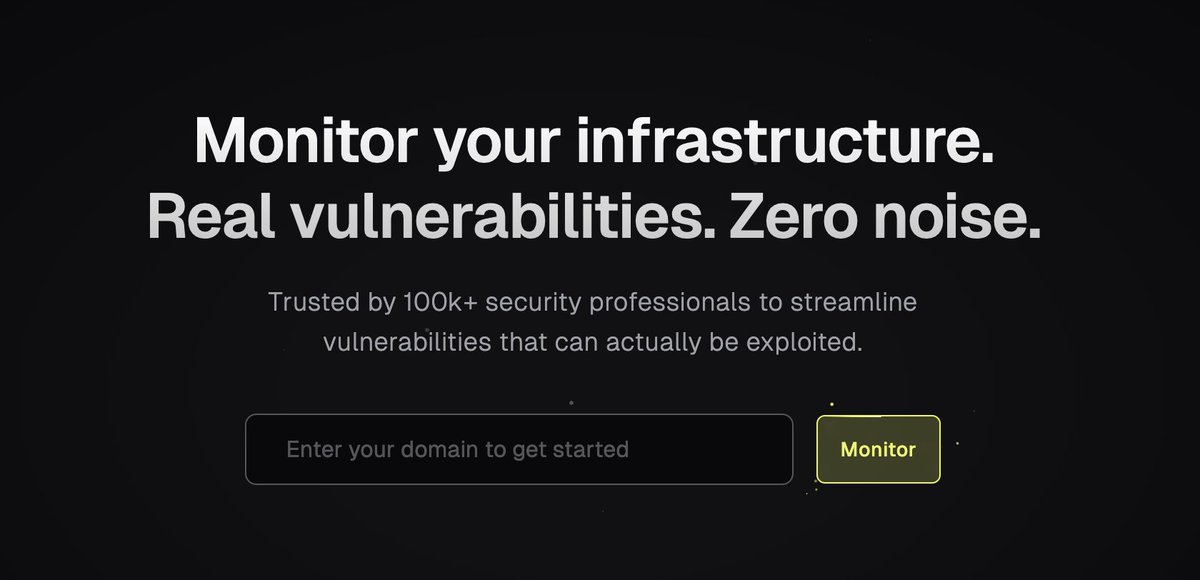
projectdiscovery.io is wild. Enter your domain, get the externally detectable internet footprint (hosts / IPs / ports…). Likely to uncover attack surface you were unaware of
A rare security tool that's not snake oil and immediately brings value to your operations 🫠
Microsoft just released a tool that lets you convert Office files to Markdown. Never thought I'd see the day.
Google also added Markdown export to Google Docs a few months ago.