Brazil LAB and Anthropology Scholars Analyze the Impact of Climate Change on the Wildfires Devastating a Planetary Biodiversity Hotspot: https://t.co/astyyIQgKN
@Princeton@PrincetonAnthro
Como a linguagem virou um problema de ciências da computação? Como se constrói um GML (Grande Modelo de Linguagem)? Como regular um GML? Entenda pontos centrais deste debate: https://t.co/YWU8xdfU92 @nexopoliticas@ThiagoTVarella
#AcessoLivre | [opinião] “Além de lidar com as incertezas, a sobrevivência de muitas famílias passa pela reconstrução de espaços domésticos nos quais também obtêm o seu sustento.” Leia no ensaio de Bruno Guilhermano Fernandes do @brazil_lab https://t.co/jX9WpE4sFb
By combining weather observations with results from climate models, the researchers estimated that climate change made the event more than twice as likely and around 6-9% more intense. With further warming, these events will become more frequent and destructive.
@PrincetonEnviro
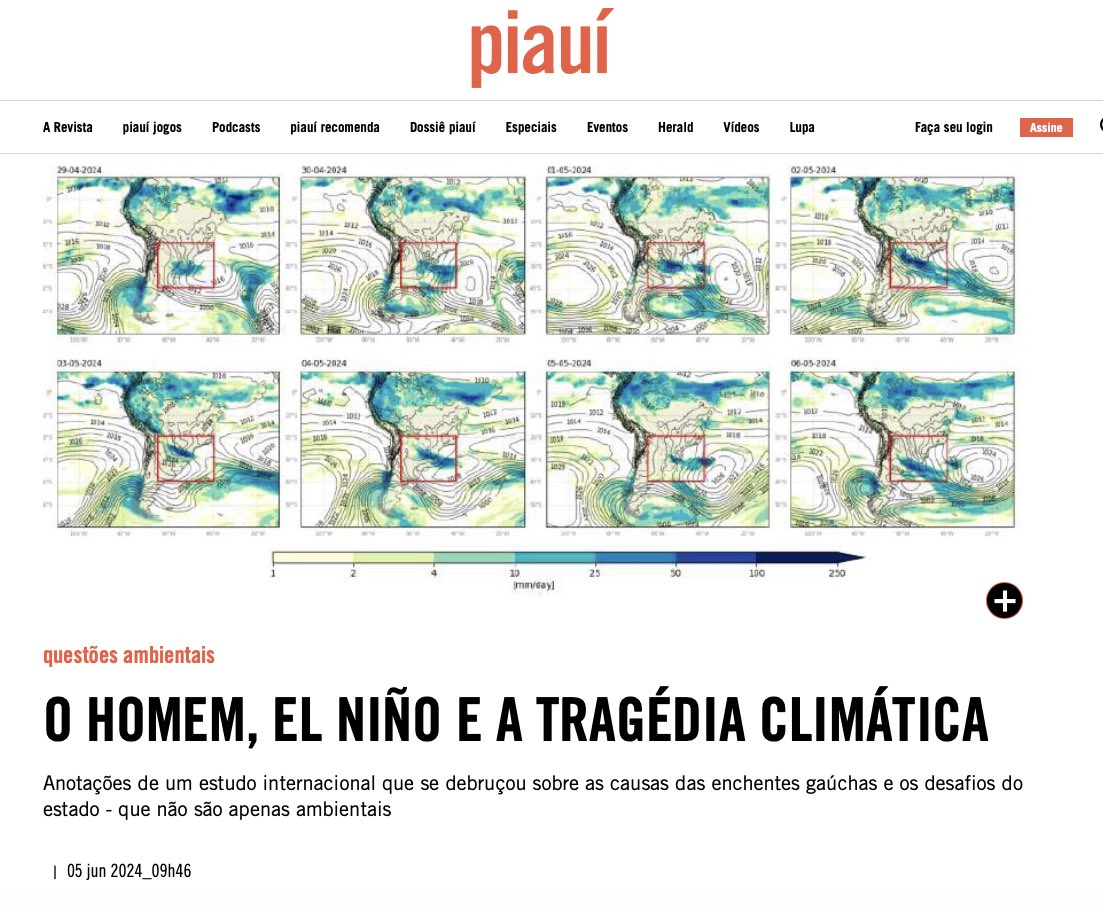
@PrincetonPIIRS’ Brazil LAB collaborates with an international team of leading climate scientists from the @WWAttribution group in a rapid study about the destructive floods in Brazil’s southern state of Rio Grande do Sul. Available here: https://t.co/vrbhP2pFuS
📚 Bibliografia Básica: o pesquisador Eduardo Bessa recomenda cinco leituras que nos ajudam a enxergar o comportamento animal de formas diferentes e contribuem para desconstruir vieses na produção científica: https://t.co/8CkEqlfU7O
@nexopoliticas
O que é conhecimento científico acionável e como ele pode ajudar o enfrentamento da crise climática? Assista aqui: https://t.co/RNVMJ3UE4U
@nexopoliticas
Princeton Visiting Professor and Brazil LAB Advisory Board Member Lilia M. Schwarcz elected to the Brazilian Academy of Letters:
https://t.co/xZV36OCD9R
@LiliaSchwarcz