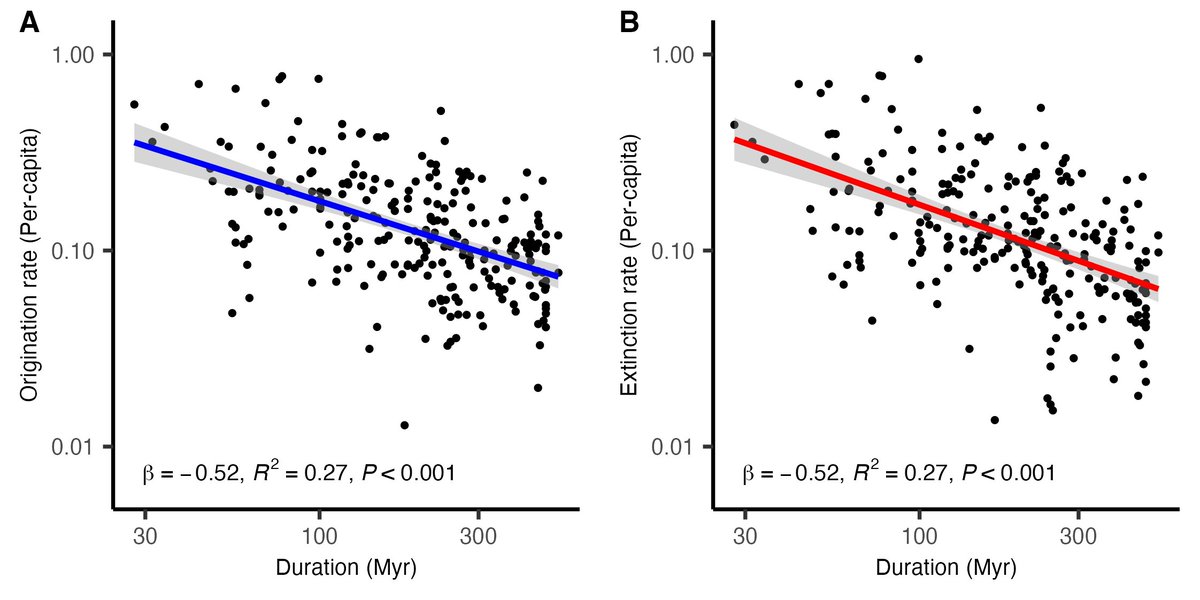
New pre-print on the presence of negative scaling between diversification rates and the duration of clades! Various explanations, such as incongruence between micro- and macroevolution, have been put forward based on molecular phylogenies, but the fossil record has been ignored
New pre-print on the presence of negative scaling between diversification rates and the duration of clades! Various explanations, such as incongruence between micro- and macroevolution, have been put forward based on molecular phylogenies, but the fossil record has been ignored
New paper! Exploring the interaction between two convergent lizards who evolved separately on different Caribbean islands and were introduced to south Florida.
Read all about how character displacement could play out in real time in the wild!
����🦎🦎
https://t.co/2zhALSna3O
Paper accepted 🥳🙌 in #philtransb (@RSocPublishing) is a nice way to start a grey Monday. Watch this space to learn more about how clustered warming tolerances drive non-linear risks of biodiversity loss on a warming planet! 🥵🌎🌿
Book your time. On November 6th I will present an online talk at the Ma(th)ssX (Mathematics of Mass Extinctions) seminar series.
"The Scaling of Earth Systems and Macroevolution"
https://t.co/LNU9F7pFkt
🎶🏝️Exciting news! Our new study in @Ecology_Letters extends the well-known principle of Species-Area Relationship into the world of ecoacoustics. Discover how habitat fragmentation influences the richness of natural soundscapes in the Amazon: a thread🧵https://t.co/mqCwPS7e5g
Super excited to announce that our paper is out in Palaeontology!
Check it out if you’re interested in expanding coverage standardisation techniques beyond taxonomic diversity…📈📉
New research on the Global Impacts of Bird Extinctions 🌍🦜🦤
"The global loss of avian functional and phylogenetic diversity from anthropogenic extinctions" led by Tom Mathews and published in @ScienceMagazine.
https://t.co/iPZms4JbvH
A summary of our findings below 🧵(1/9)
Excited that this pre-print about the evolution of reproductive isolation in experimental evolution studies is now out!
This research was led by former postdoc @bjmjarrett in #SvenssonLab @Biology_LU @lunduniversity, now at @BangorUni (UK).
https://t.co/5hquUpnmal
We further explore additional artefacts, and ask if this result is at all surprising, especially when considering that if evolution would be hierarchical, why would that result in the same pattern in molecular (species) and fossil (genus) data?
https://t.co/noKmKgqLK6
New pre-print on the presence of negative scaling between diversification rates and the duration of clades! Various explanations, such as incongruence between micro- and macroevolution, have been put forward based on molecular phylogenies, but the fossil record has been ignored
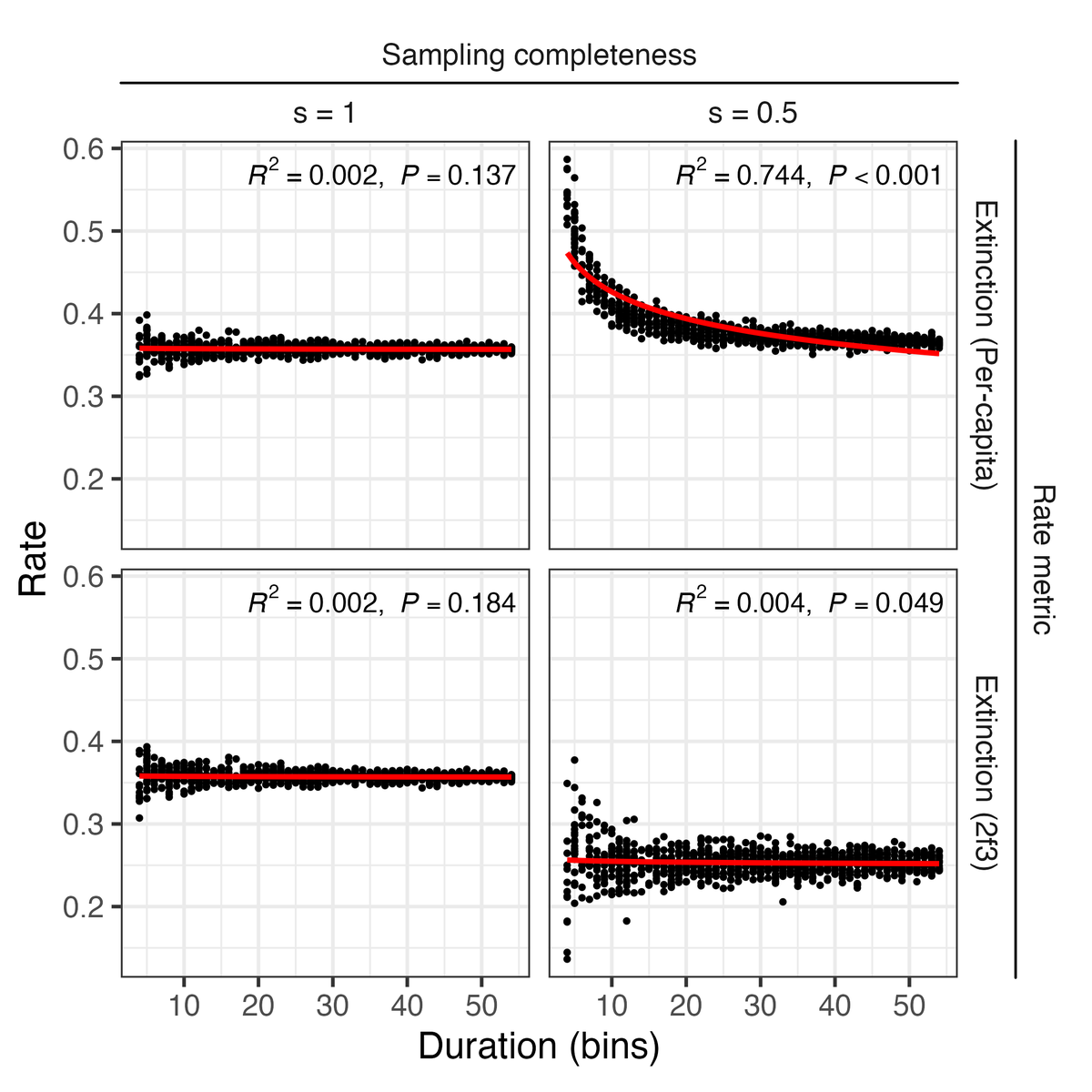
We back up our empirical analysis with simple simulations that show that even with uniform, moderate but incomplete sampling, rate scaling is introduced when not accounted for
The life strategies of #parasitoids are stunningly diverse, but no wasps that attack and develop inside adult flies have ever been described. Our article describes the first one. Its hosts: Drosophila melanogaster and other species of #Drosophila#Entomology#Braconidae
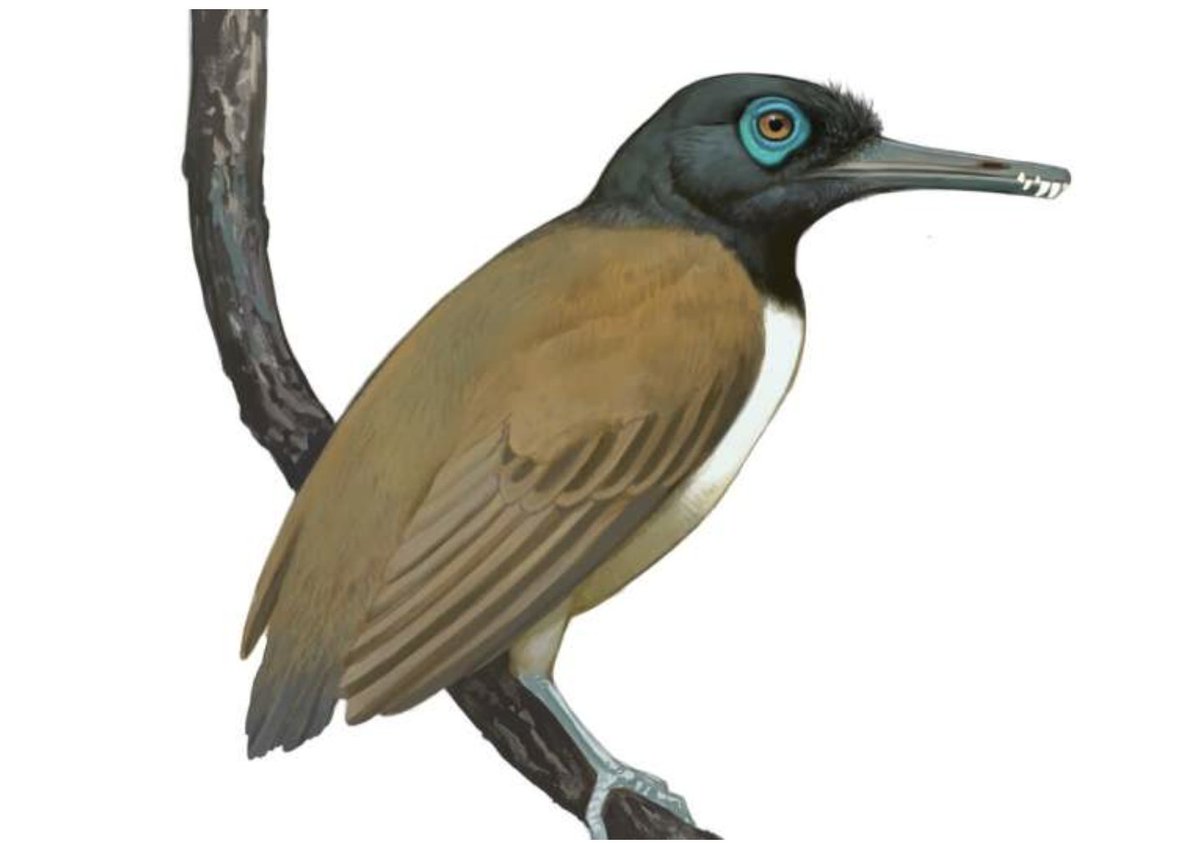
Paper out in @CurrentBiology today shows fruit in the guts of a fossilized Mesozoic bird with a toothed beak previously assumed to be a predator. On the one hand this is very cool but I have some thoughts on the spin applied by the authors. 1/7 https://t.co/Uvn5H5Nvxz
Our paper is published today in
@Nature journal! If you want to know more about how communities interact across habitats and interaction types, and their effects on ecosystem functioning and stability, the paper is here���
https://t.co/7bpBC6yqhO
cool paper alert
reminds me of when I visited Sulawesi cloud forests full of flycatchers/whistlers/fantails/mixed flocks. Then went downhill to beautiful lowland forests and saw, like, no insectivores
I was so puzzled - maybe it's the weaver ants!!!
https://t.co/eoW7yI6KlN
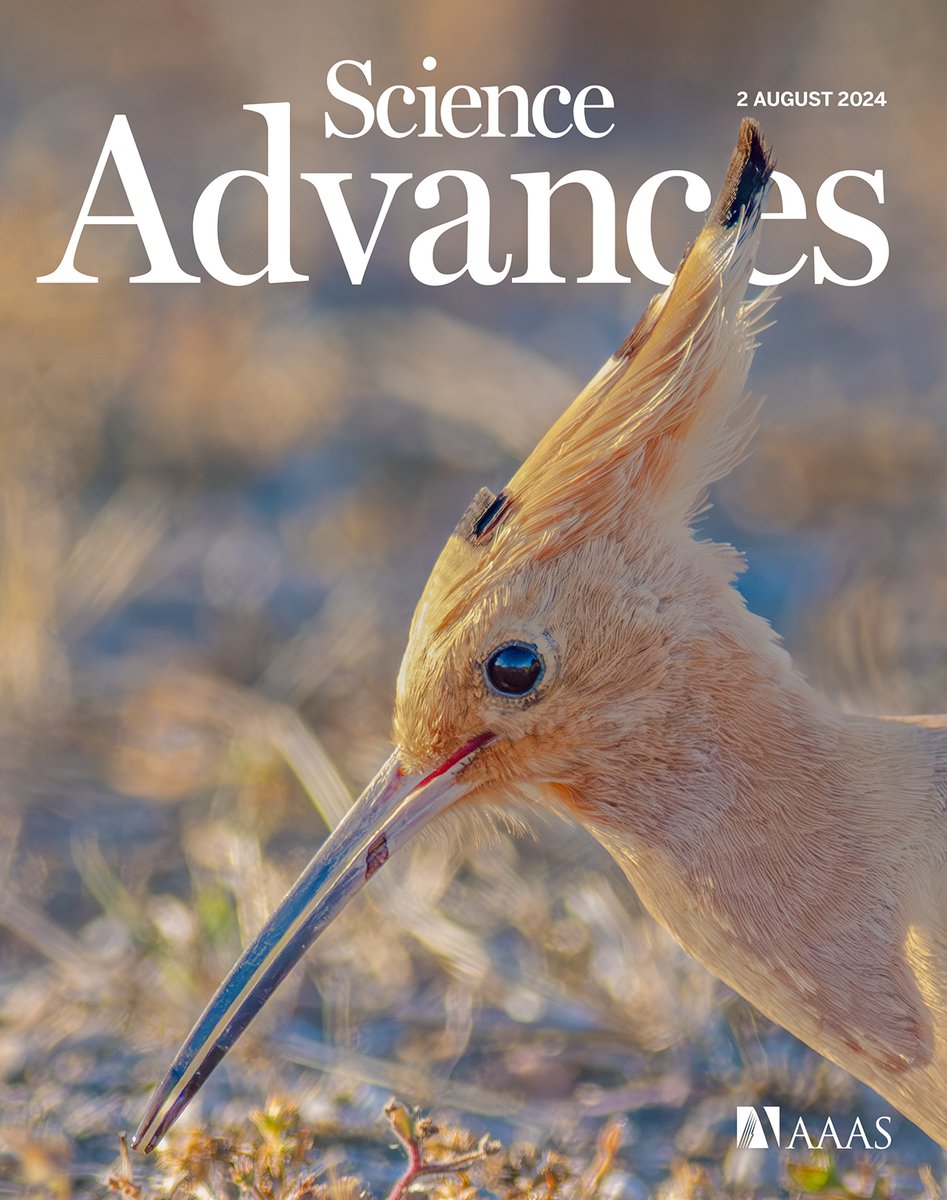
New research proposes that groups of birds with early origins associated with the end-Cretaceous mass extinction experienced rapid evolutionary changes across their genomes and physiology.
Learn more in this week’s issue of Science Advances: https://t.co/1hXdXU6dT0