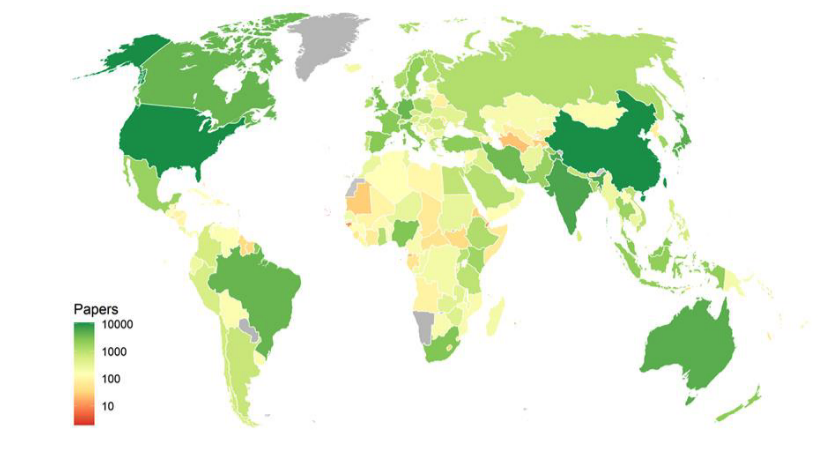
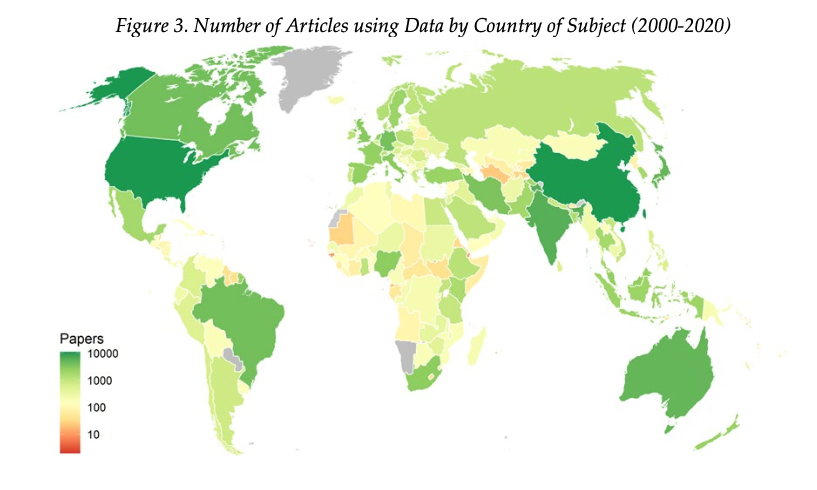
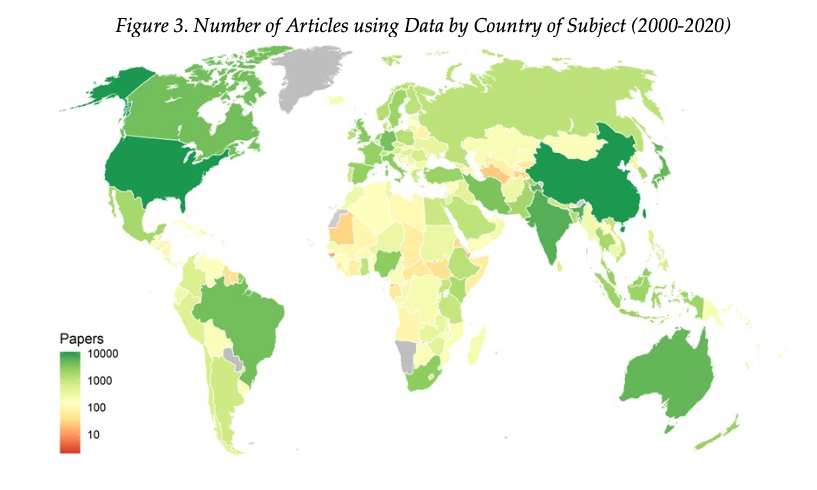
Half of English-language social science and medicine research publications are about high-income countries, even though these countries only contain 17% of the world’s population. In PNAS Nexus: https://t.co/7uTBeIVxWE
The generation and dissemination of reliable and accessible #data are pivotal for #development, enabling informed decision-making across public and private sectors and fueling research and innovation.
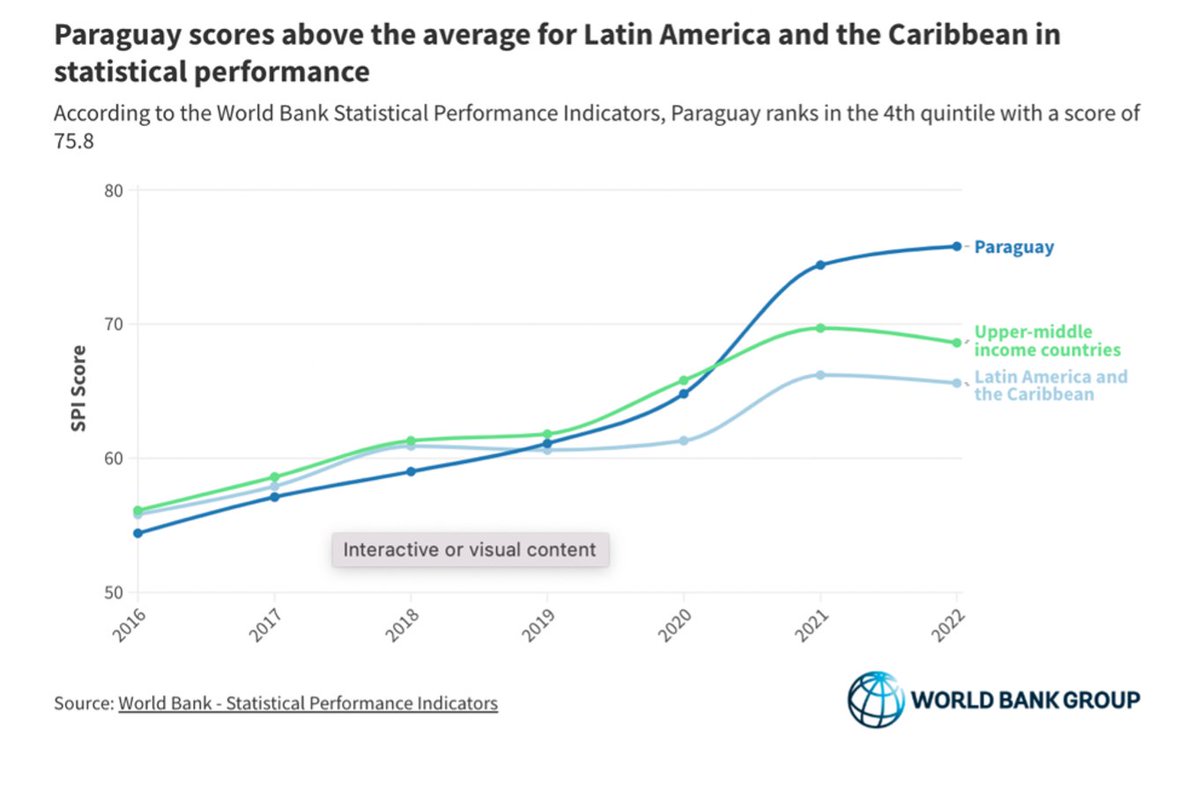
Take #Paraguay as an example: the country has advanced its digital capabilities in statistics, achieving a score of 75.8/100 on the @WorldBank Statistical Performance Index.
This reflects its successful integration of meta and microdata within the National Institute of Statistics’ platform (@INE_Paraguay), which provides comprehensive access to data from censuses, surveys, and administrative records—essential tools for policymaking and development strategies.
Learn more about Paraguay's digital transformation in statistics in this @WorldBank blog by Alejandro Medina Giopp and Eliana Rubiano-Matulevich: https://t.co/sFxrSplOYP
#EndPoverty
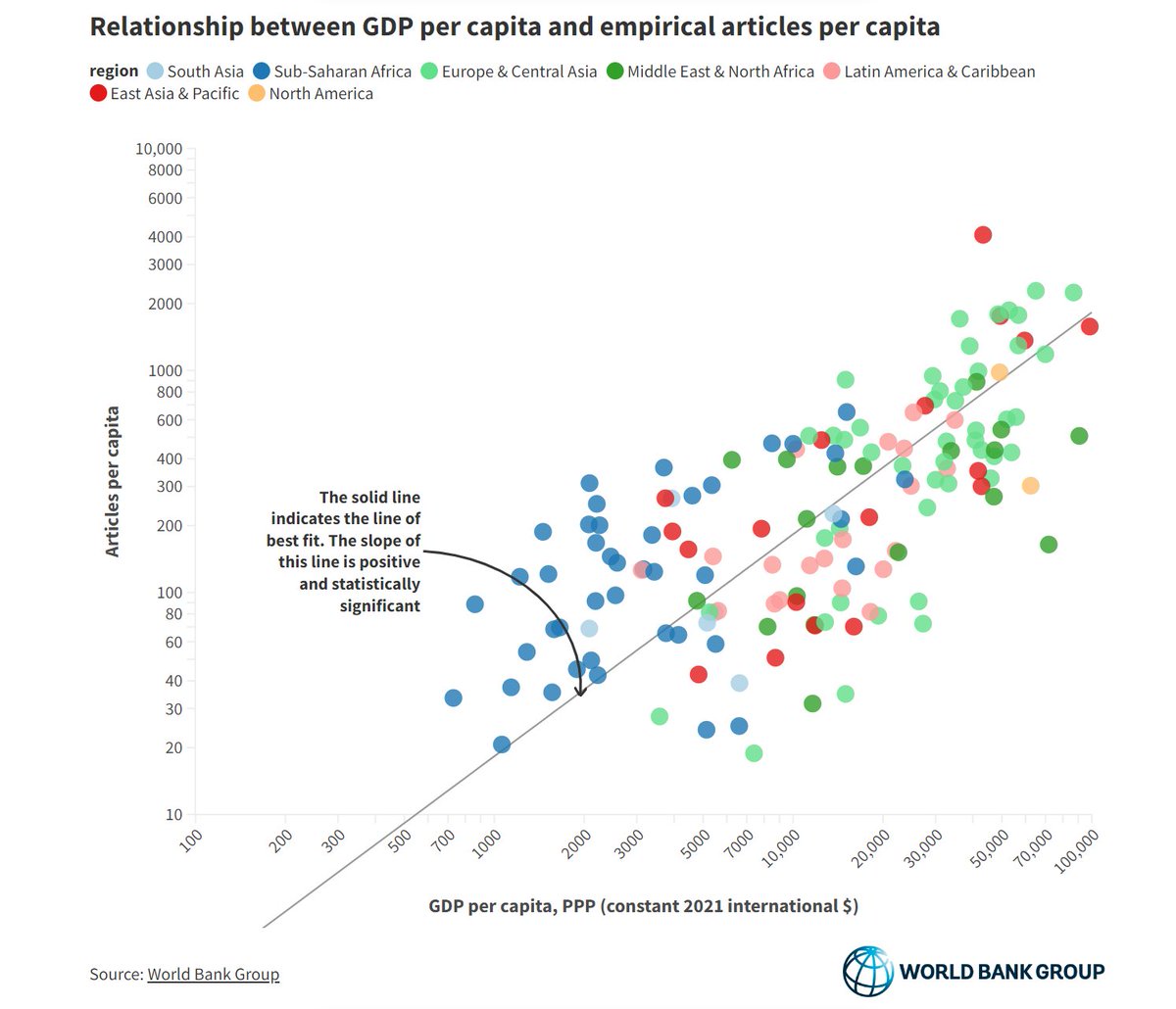
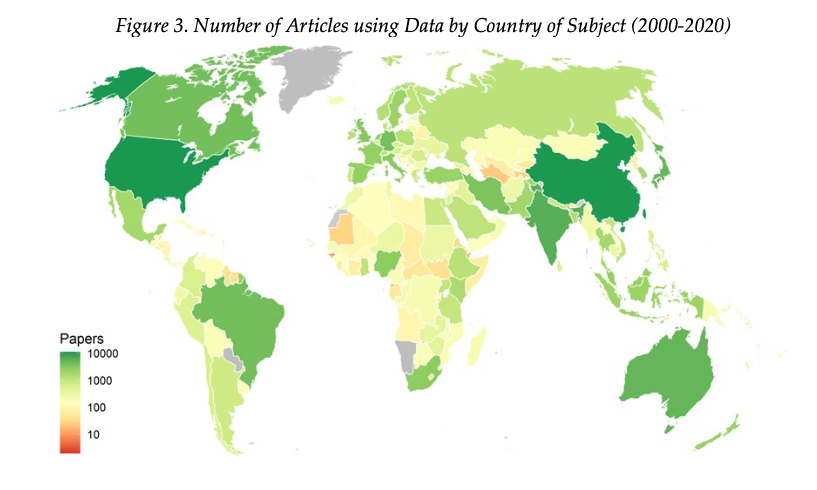
Analyzing over 1 million academic articles, this paper proposes a novel method to track academic data use by country, revealing correlations with GDP, population, & statistical systems.
Explore how nations can leverage data for better policymaking: https://t.co/nXU3Owthcj
There is a skew in global academic empirical research. Only around 50% of empirical papers are about low- or middle-income countries, despite these countries making up more than 80% of the world population.
See blog by my colleagues @brianstacyecon Deon Filmer and Quy-Toan Do
https://t.co/lkuB1O7ve4
Only around 50% of academic papers focus on low- and middle-income countries, despite these countries comprising over 80% of the global population.
See how @WorldBank Policy Research Papers help bridge this gap: https://t.co/lpcgnfMb9Y
Only around 50% of academic papers focus on low- and middle-income countries, despite these countries comprising over 80% of the global population.
See how @WorldBank Policy Research Papers help bridge this gap: https://t.co/E6ZOjzpLLm
The World Bank's Global Education Policy Dashboard team is looking to hire a data-savvy consultant. If you're interested in implementing field surveys and analyzing data, please apply by April 19. ToRs listed here: https://t.co/4J7NKsuo63
Come and work with us!
We’re looking for a Statistician and a Data Management Specialist.
Deadline: 25 March 2024
Statistician:
https://t.co/s5vFSrzKHp
Data Management Specialist:
https://t.co/BjEOOUcJ7n
@worldbankdata
Analyzing over 1 million academic articles, this paper proposes a novel method to track academic data use by country, revealing correlations with GDP, population, & statistical systems.
Explore how nations can leverage data for better policymaking: https://t.co/Obt0UZHE2O
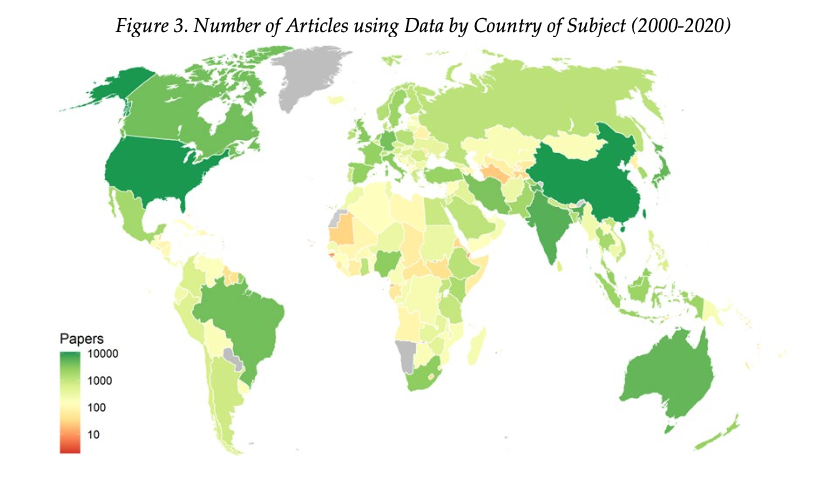
Analyzing over 1 million academic articles, this paper proposes a novel method to track academic data use by country, revealing correlations with GDP, population, & statistical systems.
Explore how nations can leverage data for better policymaking: https://t.co/fEixTvgeG7
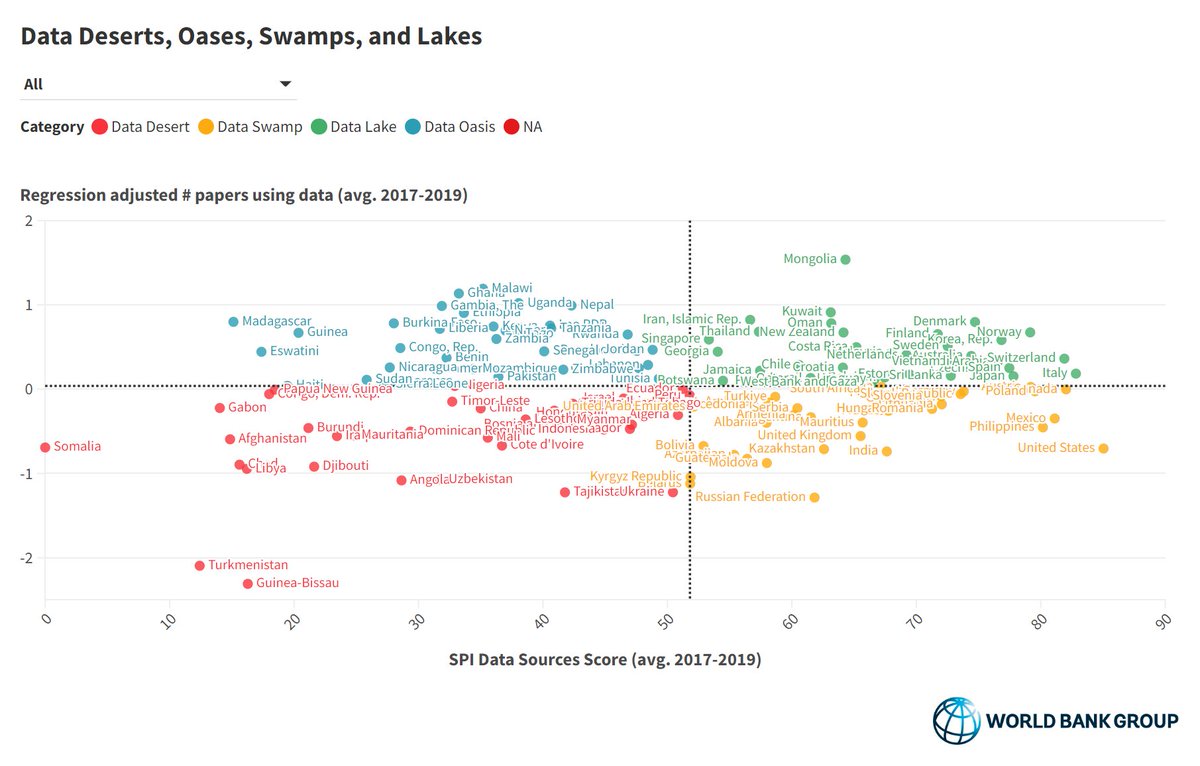
📊 Discover your country's #data landscape: Is it a data desert, swamp, oasis, or lake?
In our latest blog post—and with the help of machine learning—we grouped countries based on their use of academic research data.
Find out more 👉 https://t.co/j5kYB0L6o3
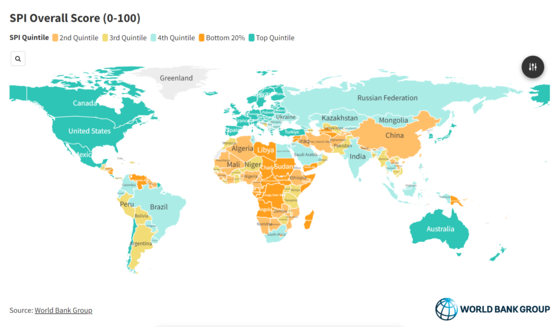
📈 Update: New Statistical Performance Indicators (SPI) data has been released!
In our latest blog, scroll through 7 interactive charts with country-level data on the performance of national statistical systems around the world.
How did your country do? https://t.co/SB7YvnYNoW
📊 Dive into the latest Statistical Performance Indicators (SPI) data update! Uncover insights with seven dynamic charts, offering a comprehensive analysis of national statistical systems.
Discover how your country measures up here: https://t.co/9RnEkqtW79
📈 Update: New Statistical Performance Indicators (SPI) data has been released!
In our latest blog, scroll through 7 interactive charts with country-level data on the performance of national statistical systems around the world.
How did your country do? https://t.co/iLU7ej5yvI
**New feature alert** Click on the link below to see how spatial gaps in access to low-wage jobs vary by race and ethnicity in metro regions across the country: https://t.co/FbWnnpeLUD @urbaninstitute@AlenaStern Amy Rogin
📢 DON'T MISS THIS!
Are you a highly motivated “full-stack” #data scientist with expertise in #AI and #MachineLearning? Then consider joining our team of world-class data scientists and statisticians.
Apply by October 17, 2023!
👉 https://t.co/IyNnGv5OcM
#DataScience
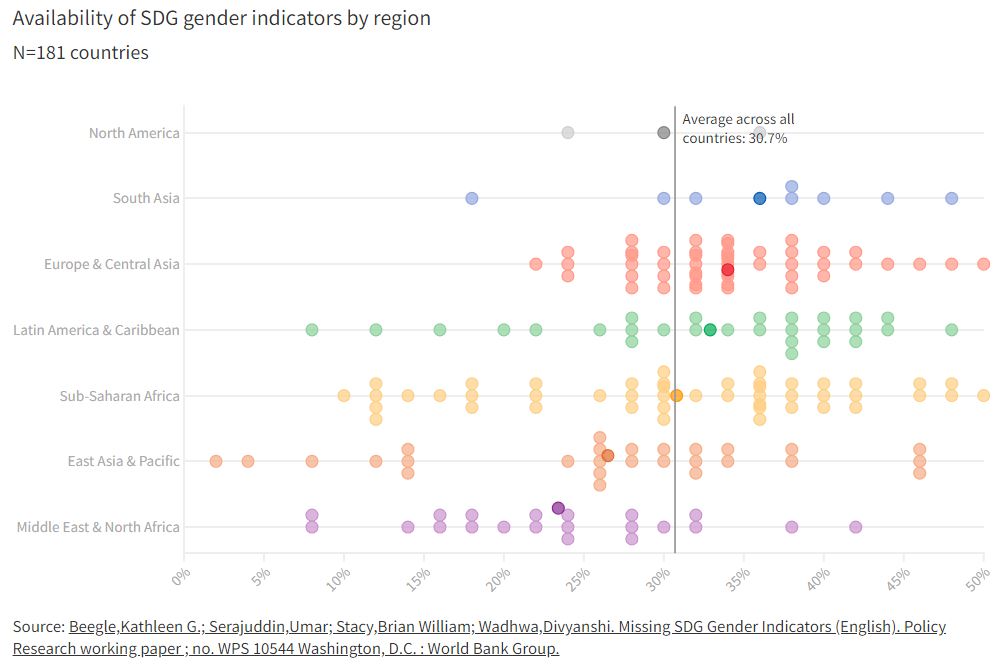
⚠️ On average, less than a third of #SDG#GenderData are available.
In our recent blog, we unpack the reasons behind this lack of #data.
👉 https://t.co/wbNcRL6dkg