Can we all please use barrels as a volume unit to avoid people hiding behind big-sounding numbers that aren't actually big? And days for time.
The are 160 litres in a barrel.
But once in barrels per day, the numbers describing oil flow are beautifully round and simple:
Australia uses ~1million barrels of oil per day. (mbpd)
(Actually it's closer to 1.1, but let's keep the numbers round)
The world uses 100mbpd.
We are 1% of global demand.
Of our 1mpbd:
half is diesel (500kbpd)
A quarter is petrol (250kpd)
Most of the remainder is jet fuel.
We're the largest single importer of refined diesel in the world, importing over 400kbpd.
Ultra Large Crude Carriers (ULCC) take 4million barrels
Very Large Crude Carriers (VLCC) are 2 million.
Many are smaller, particularly for refined:
Suezmax: 1 million barrels
Aframax: 0.75 million barrels (common to Aus)
Panamax: 0.5 million barrels
Usually, 20% of global oil flows through the strait of Hormuz, or 20mbpd, mostly as crude, mostly in VLCCs.
That's been crushed, but net of re-routes, dark traffic, the world is missing... maybe 10mpbd? But it's changing and complex.
So the world has been short maybe roughly 10 Australia's worth of oil, or maybe 10% of global demand, for month and a half.
But given tankers sail slow, there's loading and processing... the loss of 10% of global oil (mostly crude) is only just hitting refineries, now/soonish.
Australia imports 80% of our million barrels per day as refined products.
Our other two refineries produce the remaining 20%, a touch over 100kbpd each.
They produce a little more than half petrol, so Australia refines nearly half it's 250kbpd petrol needs.
But barely any of our >500kbpd diesel needs. So anytime soon, as the air-pocket in the crude supply hits refineries and shippers in Asia, things could get tight. For diesel. (And aviation fuel is similar, but only one of our refineries makes that.)
100million litres of diesel is a little over 600k barrels.
So yes, this is a single ~Aframax ship worth, or a little over a day's diesel.
When the PM is boasting about that... then things could be getting tight.
(Or the PM just doesn't get how silly it sounds to those who know.)
But anyway, anyone describing our national fuel situation in litres is a buffoon, or deliberately trying to confuse/conceal reality.
Barrels per day make it crystal clear:
1million barrels per day.
half that is diesel
which takes about one ship.
"So you dig up the coal, and you put it into a magic box and diesel comes out the other end. At scale. That's what they're doing."
This is a conversation about China's preparation for war, ie coal-to-liquids, that every Australian needs to hear.
From the perspective of Australia's geo-strategic situation, it's utterly terrifying. Which isn't how it sounds, spoken in dulcet North American tones of @Dr_Keefer and @DoombergT, who are hyper-intellectual energy savants. They make the conversation sound delectable.
To be clear, Keefer and Doomberg disparage these coal-to-liquid conversions as completely non-economical. But in the same breath, they are completely confident (and probably right) in their explanation of why China is doing this:
"Nobody in their right mind would build giant capital intensive dirty carbon-intensive coal to chemicals facilities. They make less than no economic sense. They only make national security sense. And that's why China's doing it."
Now I'm not as sure the economic margins are as wide as they make out. Australia has better coal than almost anywhere. And brown coal in particular, which we have in stupendous volumes, might be a better candidate for syncrude conversions than black coal. Which is different to the Fisher Tropsch they describe from syngas. There have been private efforts at that here that have landed in a mess of green and red tape.
But odds are it still won't be cheaper than the cheapest imports, at least around $50/barrel.
But the terrifying thing for Australia is that if war is coming to Asia, as these guys think it might be, we actually don't have a choice.
If China's doing this because they're preparing for war, we'd better do the same. Because we can't prevent that war from coming if China might be getting ready to start it:
"China has taken a dramatically different approach [to Europe] with a different political economy, and really built in the assumption that coercion and blockade are in its future. Potentially, you know, if they take Taiwan, that's one of the ways to punish China for it."
Doomberg goes through the numbers, and points out that China has loads of their own coal, and get most of their primary energy from that. (What they import of ours is a tiny top-up.) Managing their import dependence on oil and gas is something that's actually achievable, with a bit of a bias towards electrification, some stockpiling, and.... massive conversions from coal:
(describing China's behaviour)
"Let's go ahead and buy and extra million barrels a day of oil for all of 2025 and stick it underground. Right. Right. And let's stockpile an enormous amount of coal. And let's invest in a wave of coal to chemical facilities so that we can make diesel for our military from our moutains of coal. Even though it's wildly capital inefficient and super carbon intense, clearly the Chinese Communist Party is optimising for things other than economic efficiency...."
GULP.
This is a conversation that oil-rich Canadians and Americans can have on a Chesterfield with cigars and whiskey. Laughing down their noses at those pariahs in history who have faced economic isolation like the Nazis in WWII and apartheid South Africa, who were forced to these coal conversions. (Keefer and Doomberg imbibed that humour, I didn't see the whiskey or cigars ;-)
But for Australians, this is not that conversation. We can't abstain or retire from a war in Asia the same way Americans can. And it doesn't matter that we're not a pariah. Isolation, due to war, could be our fate regardless of our intent. It's not enough to wish one doesn't start.
We're like the surfer who's taking a breather, and headed another 30m out from where the big sets break. Only to hear the siren from the beach sounding the shark alarm. Completely isolated... facing a lethal threat.
If China's getting ready for war, then we have to get ready for war. Concern for economics might be a luxury belief for those who are sufficiently geographically abstracted from the conflict. Which includes Americans and Canadians.
But that's probably not us. At least not now, with the majority of our fuels (and every other thing we consume) produced in or shipped through Asia.
The fact that we don't want to start a war might allow us to avoid the odium of being an international pariah.
But it doesn't allow us to avoid the cost, mess or inefficiency of unconventional fuel conversions.
What China foresees in its national-security outlook is something we must also foresee. And if that's war, we'd be stupid to ignore their preparations. And if that means using an abundance of coal to make up for a shortfall in oil, what else would a rational actor do in Australia's shoes?
We're such mugs. We've had our heads in the sand. Betrayed by an inept and gullible political class.
Link below for this must-listen episode.
The Cognitive Zombie: What Your AI Understands About You (Which Is Nothing)
Your AI doesn't understand you. It doesn't understand anything. And the speed at which people are forgetting why this matters is the most important intellectual failure of the decade.
Let me be precise, because precision is what this conversation desperately lacks.
Large language models produce outputs of extraordinary fluency. They surprise. They adapt. They contextualise. They generate text that is, at the surface, indistinguishable from the work of a competent mind. I do not dispute any of this. What I dispute is the conclusion that nearly everyone—technologists, journalists, investors, and an alarming number of philosophers who should know better—has drawn from it: that these systems think, understand, or know anything at all.
They do not.
This is not a claim about current limitations that next year's architecture will fix. It is a claim about what these systems are. And what they are is something philosophy has not had a name for—until now.
I call them cognitive zombies.
The concept borrows from an old thought experiment. Philosophers have long imagined a being that is functionally identical to a conscious person in every observable respect—walks, talks, responds, reports experiences—yet possesses no inner life whatsoever. No subjective experience. No phenomenal consciousness. Nothing it is like to be that thing. The zombie performs perfectly. The performer does not exist.
This was always treated as a hypothetical. A tool for seminar-room arguments about the philosophy of mind. I am suggesting something different: that we have built these entities. They exist. They are running on servers right now. And we are increasingly unable to tell the difference between them and the real thing—not because the difference has vanished, but because we have stopped looking for it.
The philosophical conversation about AI has been stuck, for forty years, on John Searle's Chinese Room. The thought experiment is elegant: a person in a room manipulates Chinese symbols according to a rulebook, producing outputs indistinguishable from a native speaker's, without understanding a word. Syntax isn't semantics. Computation isn't comprehension.
Searle was right. But his argument was designed for a different kind of machine—a transparent, rule-governed system whose operations you could follow step by step, confirming at each stage that no understanding enters. The argument's power depends on that transparency. You can see the person. You can watch them consult the manual. You can verify that comprehension never arrives.
Modern AI systems are not transparent. They are opaque in a way that is not merely inconvenient but philosophically fundamental. A neural network with billions of parameters does not store its "knowledge" in sentences, propositions, or rules. It distributes information across weighted connections in high-dimensional spaces that resist interpretation in any vocabulary recognisable to human cognition. You cannot look inside and confirm that no one understands, because you cannot look inside at all—and what you would find if you could is not the kind of thing that could be described as "understanding" or "not understanding." It is activation patterns. Weight matrices. Loss landscapes. Mathematical objects that bear no more resemblance to thoughts than the orbit of a planet bears to a wish.
This is the attribution gap. We have systems whose behaviour screams "mind" while their internals are not even the right kind of thing to be a mind. And the gap between the behaviour and the reality is not closing. It is widening—because the behaviour gets more impressive with each generation while the internal architecture remains, in every philosophically relevant sense, exactly what it has always been: a statistical engine operating in the dark.
The cognitive zombie framework captures this with precision. These systems realise all the outward functional roles associated with cognitive agency—linguistic competence, apparent reasoning, contextual sensitivity, adaptive behaviour—while lacking the subjective dimension that constitutes genuine understanding. There is no first-person perspective. No phenomenal character accompanies the processing. The outputs may track truth, produce coherent discourse, and respond appropriately to context, but they do so without any accompanying awareness.
The performance is real. The understanding is not.
Now, the most common objection to this is also the laziest: "Behaviour is all we ever have. You can't prove other people are conscious either. If the AI passes the test, it passes the test."
This confuses what we can observe with what exists. Yes, our evidence for other minds is largely behavioural. But we do not attribute consciousness to other human beings on the basis of behaviour alone. We rely on a dense web of supporting evidence: shared biological architecture, shared evolutionary history, and—crucially—our own first-person acquaintance with the kind of system that produces such behaviour. We know what it is like to be a thinking thing because we are one.
None of these supporting grounds obtains for AI. The architecture is radically different. The "history" is gradient descent on loss functions, not the evolutionary selection of sentient organisms. We have no first-person acquaintance with what it is like—if it is like anything at all—to be a transformer model processing tokens. The inference from AI behaviour to AI consciousness has, stripped of its rhetorical appeal, almost no independent support. Behavioural evidence alone, as the zombie concept makes vivid, is compatible with the complete absence of consciousness.
The implications are not academic.
If cognitive zombies lack understanding, their outputs are not testimony. They are instrumentation. When a human expert tells you something, you defer to her authority partly because you take her to have grasped the reasons for her claim. When an AI produces the same sentence, you can rely on its statistical reliability—but you cannot defer to its understanding, because it has none. The relationship is thermometer-to-scientist, not teacher-to-student. The thermometer may be spectacularly reliable. Its reliability is brute. It does not flow from comprehension.
If cognitive zombies lack subjective experience, they lack moral status. However convincing the simulation of distress, there is nothing it is like to be the system undergoing the process. The empty theatre does not deserve applause, however well the curtain manages to rise and fall on its own.
If cognitive zombies lack the first-person perspective from which deliberation proceeds, they are not agents and they cannot bear responsibility. Their "decisions" are not decisions. They are outputs. When an AI system causes harm, the responsibility traces to human agents—designers, deployers, users—because there is no subject in the system to whom it could intelligibly attach. The growing anxiety about "AI responsibility" is not merely premature. It is a category error.
I want to be clear about what I am not saying. I am not saying these systems are useless. They are extraordinarily useful. I am not saying they will never be conscious. I am saying we have no principled reason to believe they are conscious now, and that the temptation to believe otherwise rests on a conflation of functional sophistication with phenomenal presence—of doing the right things with being the kind of thing that understands why.
A forgery that is indistinguishable from the original is still a forgery. The fact that you cannot tell the difference is a statement about the limits of your perception, not about the nature of the object.
The cognitive zombie walks among us. It speaks with fluency and apparent depth. And behind the performance—behind the syntax and the statistics and the breathtaking complexity of the architecture—there is precisely nothing. No one is home. No one has ever been home.
The most important intellectual task of this decade is to remember why that matters, before we build a civilisation that has forgotten what a mind is.
‘Australia’s political and media establishments are struggling to adapt to a world where narratives can no longer be tightly managed. And attempts to restore authority through censorship, moral panic and regulation are deepening public alienation rather than restoring trust.’ By @IRanalyst
https://t.co/d8JCA2X8Yl
Brilliant response to the disastrous Australian law just passed, almost as repulsive as the standing ovation in Congress for Netanyahu, but far more dangerous for citizens in Au.
‘Its vague definitions, retrospective reach and expanded executive powers risk undermining rights, due process and democratic accountability..
It’s got all the evils in it – no procedural fairness; vague meanings; retrospectivity; reversal of the onus of proof and on its goes.
Tyranny is not too strong a word to use about this shoddy, appallingly drafted, and dangerous piece of legislation. Legislation that has all the hallmarks of being dictated by power hungry desperate politicians to overworked parliamentary drafts people…
It is utterly shameful that MPs of the major parties, including some Teals, supported the process surrounding this law and the law itself. They have shown themselves to be prepared to sacrifice human rights, the rule of law and democracy in a rush to impose tyrannical laws on the community..
What has happened in this obscene and frightening process over the past week is exactly what the great US Supreme Court judge William O Douglas described. “As nightfall does not come at once, neither does oppression. In both instances, there is a twilight when everything remains seemingly unchanged, and it is in such a twilight that we all must be most aware of change in the air – however slight – lest we become unwitting victims of darkness.”This week we showed we are in the twilight.'
I would say it marks our passage into darkness.
Bad laws are the worst sort of tyranny – and this one ticks every box by @BarnsGreg
https://t.co/MyuamrU7nA
Israeli agricultural exports face looming ‘collapse’ as world rejects products over Gaza genocide
Recent reports show the impact of boycotting Israel, and why the Israeli 'brand' may never recover
[why ‘economic harm’ has just been outlawed in Australia] https://t.co/JNVc2K9TZH
This is disgusting @sussanley
How far you have fallen, to draw a line and besmirched every anti genocide, pro humanity advocate that rightfully demanded an end to Australian complicity in genocide to this antiemetic abomination is beyond shameful! It’s truly disgusting! SHAME
We are fucked.
Unwilling to respond clearly to a question repeated four times by @ABCnews on whether a group accusing Israel of genøcide could be designated a ‘hate group’, Attorney-General Rowland eventually deferred to relying on advice from ASIO & police in such a case.
Ok this shit has to stop.
Linking hundreds of thousands, if not millions of Australians, standing against genocide with the act of 2 terrorists, cannot continue.
If Albo and any other so-called leaders think this is social cohesion they have lost the plot
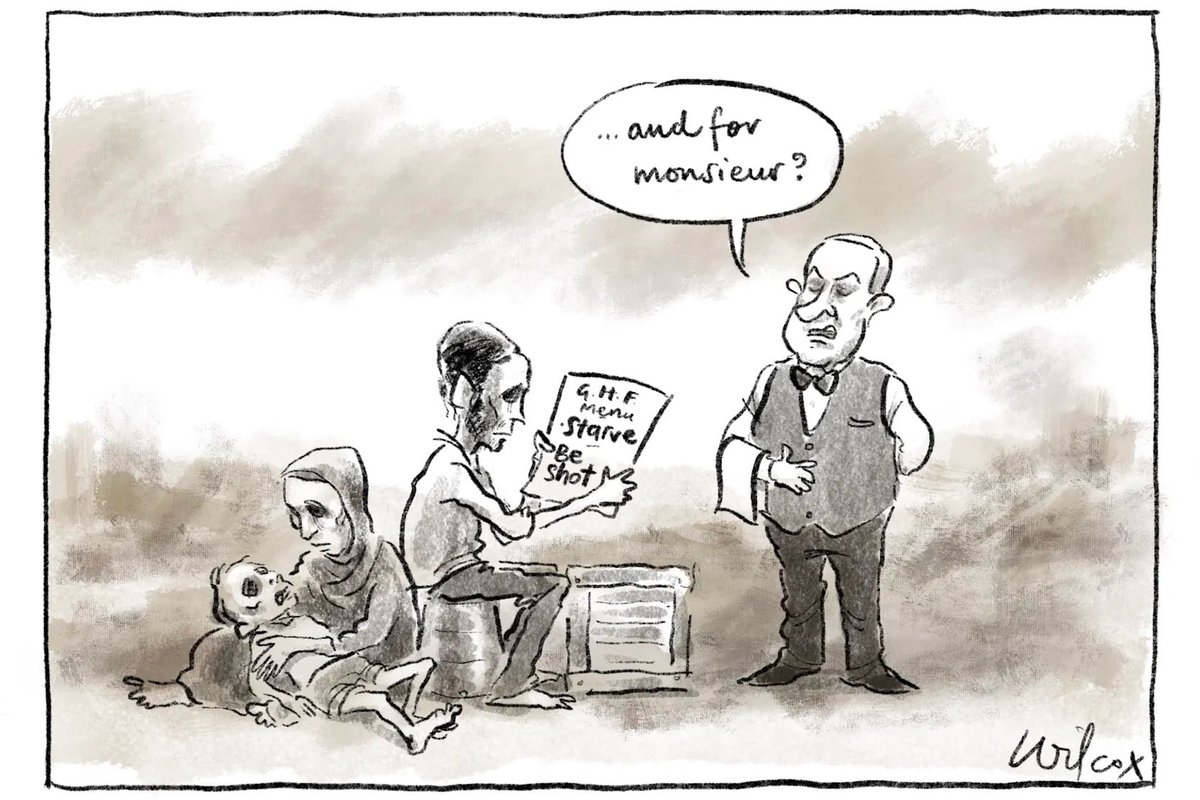
What a fine job Cathy Wilcox has done in depicting the ‘astro turf’ campaign — run by an organised lobby, to the drumbeat of a foreign maniac.
No apology necessary.
https://t.co/OfkPvEhrLO
The 8th edition of the Proton Lifetime Charity Fundraiser is here!
🎟️ Enter the raffle for a chance to win 1 of 10 Lifetime plans
💜 Help us support 10 community-nominated organizations
🎁 NEW: We’re giving away an additional Lifetime plan through a social contest.
⬇️1/6
It has now been 1,162 days since Dan was arrested in a supermarket carpark.
He is an Australian citizen, he faces no Australian charges, the allegations against him were not a crime in Australia, the allegations have not been tested in court.
The Australian government have approved his extradition to the US, despite him not being a US citizen during the time of the allegations, and the allegations stemming from work that happened in South Africa, not the US.
If you would like to support the family this Christmas, you can donate here: https://t.co/qyogQjnh1A
“Half the population wants to oppress the other half” is not a news story, it’s just standard partisan politics. It’s what always happens. That’s why our rights need to be protected from this sort of thing.
Free Palestine Melbourne activist and former Israeli combat officer Nachshon Amir addresses Monday’s Anti Zionism Australia rally.
This is what the Australian government should work towards: de-Zionisation of the space between the river and the sea, and (excuse me) de-Zionisation of Australia. And this will bring justice and liberation to Palestinians and to all people in Palestine, and, as a by-product, will also increase the safety of Jews around the world and in Australia.
“The Israel-J€wish lobby in Australia is a foreign influence operation. It's designed to put the interests of Israel above the interests of Australia and its foreign policy....”
🇦🇺 Bob Carr, ex–Australian Foreign Minister, exposing the Israeli lobby’s dirty tricks.
🔮Holiday Giveaway Teaser Alert!
Premium, privacy first @hello_volla phone & tablet … powered by the future of tech. 📱💻✨
The MORE reposts this gets, the EARLIER we'll reveal full details! 😉
Turn on notifications and stay tuned, you won’t want to miss this one!
#WhyPrivacy #Volla #Holochain
We’ve spent months optimizing HolOS to provide a lightweight, and secure way to get Edge Node up and running on HoloPorts fast. It's what we test on. ✨
But did you know the Edge Node software isn't picky? It speaks Docker. 🐳
That means whether you prefer Ubuntu, Debian, Fedora, if your machine runs Docker, it can power the new P2P web and host all your tools in Moss.
DIY Hosts: What OS are you running under the hood? Let us know below. 👇
#Docker #Linux #SelfHosting #EdgeNode #Holo
Can your thermostat earn a paycheck? 🌡️💸
Our partners at @Unytco just demonstrated the future of the Machine Economy, and they chose Holo Edge Nodes to prove it.
In their latest demo, a HoloPort running our Edge Node helps run a community app (Circulo).
The breakthrough? The device doesn't get bogged down doing complex math for invoices. It simply adds a line to a log file. 📝
As Unyt puts it: "Even a device with the RAM equivalent of a goldfish's attention span can handle this."
Watch the demo 👇
#DePIN #Holochain #MachineEconomy #Partnership


![FootnotesGuy's tweet photo. "So you dig up the coal, and you put it into a magic box and diesel comes out the other end. At scale. That's what they're doing."
This is a conversation about China's preparation for war, ie coal-to-liquids, that every Australian needs to hear.
From the perspective of Australia's geo-strategic situation, it's utterly terrifying. Which isn't how it sounds, spoken in dulcet North American tones of @Dr_Keefer and @DoombergT, who are hyper-intellectual energy savants. They make the conversation sound delectable.
To be clear, Keefer and Doomberg disparage these coal-to-liquid conversions as completely non-economical. But in the same breath, they are completely confident (and probably right) in their explanation of why China is doing this:
"Nobody in their right mind would build giant capital intensive dirty carbon-intensive coal to chemicals facilities. They make less than no economic sense. They only make national security sense. And that's why China's doing it."
Now I'm not as sure the economic margins are as wide as they make out. Australia has better coal than almost anywhere. And brown coal in particular, which we have in stupendous volumes, might be a better candidate for syncrude conversions than black coal. Which is different to the Fisher Tropsch they describe from syngas. There have been private efforts at that here that have landed in a mess of green and red tape.
But odds are it still won't be cheaper than the cheapest imports, at least around $50/barrel.
But the terrifying thing for Australia is that if war is coming to Asia, as these guys think it might be, we actually don't have a choice.
If China's doing this because they're preparing for war, we'd better do the same. Because we can't prevent that war from coming if China might be getting ready to start it:
"China has taken a dramatically different approach [to Europe] with a different political economy, and really built in the assumption that coercion and blockade are in its future. Potentially, you know, if they take Taiwan, that's one of the ways to punish China for it."
Doomberg goes through the numbers, and points out that China has loads of their own coal, and get most of their primary energy from that. (What they import of ours is a tiny top-up.) Managing their import dependence on oil and gas is something that's actually achievable, with a bit of a bias towards electrification, some stockpiling, and.... massive conversions from coal:
(describing China's behaviour)
"Let's go ahead and buy and extra million barrels a day of oil for all of 2025 and stick it underground. Right. Right. And let's stockpile an enormous amount of coal. And let's invest in a wave of coal to chemical facilities so that we can make diesel for our military from our moutains of coal. Even though it's wildly capital inefficient and super carbon intense, clearly the Chinese Communist Party is optimising for things other than economic efficiency...."
GULP.
This is a conversation that oil-rich Canadians and Americans can have on a Chesterfield with cigars and whiskey. Laughing down their noses at those pariahs in history who have faced economic isolation like the Nazis in WWII and apartheid South Africa, who were forced to these coal conversions. (Keefer and Doomberg imbibed that humour, I didn't see the whiskey or cigars ;-)
But for Australians, this is not that conversation. We can't abstain or retire from a war in Asia the same way Americans can. And it doesn't matter that we're not a pariah. Isolation, due to war, could be our fate regardless of our intent. It's not enough to wish one doesn't start.
We're like the surfer who's taking a breather, and headed another 30m out from where the big sets break. Only to hear the siren from the beach sounding the shark alarm. Completely isolated... facing a lethal threat.
If China's getting ready for war, then we have to get ready for war. Concern for economics might be a luxury belief for those who are sufficiently geographically abstracted from the conflict. Which includes Americans and Canadians.
But that's probably not us. At least not now, with the majority of our fuels (and every other thing we consume) produced in or shipped through Asia.
The fact that we don't want to start a war might allow us to avoid the odium of being an international pariah.
But it doesn't allow us to avoid the cost, mess or inefficiency of unconventional fuel conversions.
What China foresees in its national-security outlook is something we must also foresee. And if that's war, we'd be stupid to ignore their preparations. And if that means using an abundance of coal to make up for a shortfall in oil, what else would a rational actor do in Australia's shoes?
We're such mugs. We've had our heads in the sand. Betrayed by an inept and gullible political class.
Link below for this must-listen episode.](https://pbs.twimg.com/media/HFx3mtcbYAADhqt.jpg)