The loudest voices stoking fears about AI dangers have made tremendous headway in the past two weeks. AI technology has not taken some unexpected, dangerous turn, but the hype around it — propelled by what appears to be a well orchestrated PR campaign — has drummed up considerable fear. I worry that it represents a setback for our field.
I have written frequently that fears of AI are overhyped. AI’s capabilities can be uncannily human-like and unpredictable, and it’s rational to worry when people who are directly involved express concerns. But I see the problems as a sign of the engineering work that ahead, rather than insurmountable barriers or the sky falling. AI technology continues to advance — which is a good thing! — but technical advances, poorly understood by the public, give those who seek to generate hype repeated opportunities to do so.
First, I don’t see any step up in the risk of human extinction from AI compared to a few months ago. The theories about this remain the same fantastical, science fiction scenarios as a few months ago. The biggest change in AI risk is its cybersecurity capabilities — a topic which we should take seriously — but this, too, will not lead to the end of the world.
The most notable recent event leading to increased fear was when an OpenAI team deployed an agent swarm that hacked into Hugging Face. Much of the popular press contained significant hype. For example, some publications reported that a swarm of 1,200 agents carried out the attack. While this was technically accurate, as I write this, I have about 1,300 processes running on my laptop. Yes, the ability to get large swarms of agents to work in parallel on a task is a significant technical advance, And, in computing, many processes run at the same time. So this shouldn’t be seen as some magical capability.
Additionally, OpenAI’s buggy sandboxing and monitoring processes were key to enabling this incident. Fixing these bugs and putting in place improved monitoring would be appropriate fixes, not pausing AI. There are many well known ways to attack software systems. The main advantage of AI agents is that they are relentless. They will tirelessly try many tactics — and have the patience to chain vulnerabilities together — that previously would have taken an infeasible amount of human effort. But in the long term, I believe the advantage will lie with defenders (because they have more information with which to identify bugs, which they can fix), but the cyber-threat landscape has changed significantly. There are still bottlenecks to identifying and exploiting a vulnerability. AI agents still have to try a lot of things to see what works, and taking these actions takes time and might be detected by defenders. This is why, even though it is now easy to obtain versions of leading open weight models that have had their guardrails removed or weakened, so they will not refuse to try to execute cyber attacks, the world has not ended.
I am also concerned about the anthropomorphization of AI in a lot of reporting, where LLMs and agents are unnecessarily treated as if they were people. If I wield a hammer, miss a nail, and accidentally dent the wall, it’s not the fault of the hammer. The problem lies in how I used the hammer. Similarly, if I prompt an agent and it hacks into someone else’s system, the responsibility lies with me, not the agent.
Of course, we want to build systems that are as safe and predictable as possible. (For example, an unsafe hammer would be one whose head randomly flies off under normal use.) Today’s agentic systems are not predictable, but I see no reason why, by applying sound engineering practices, we won’t be able to make them extremely safe to use. One new element in the forecasts of AI-enabled doom is AI companies disclaiming responsibility for their own products. “I didn’t do it; my out-of-control agent did!” There’s a balance to be struck between the responsibility of the tool maker and the tool user, but when something goes wrong, let’s hold the people building and/or using the hammer responsible, rather than the hammer. (By the way, if you’re worried about AI bioweapon risk, David Bellamy has a great post on why this, too, is overhyped. Briefly, the bottleneck in building a bioweapon is not intelligence, but lab work and manufacturing.)
Pausing AI progress will create much more harm than benefit. First, our adversaries will certainly not slow down. Second, engineering requires discovering problems empirically so we can fix them. If we pause AI by a decade, we will also delay finding and implementing safety engineering fixes by about the same duration.
Of course, the incentive to stoke fears — for regulatory capture, to garner attention, or to make one’s technology seem more powerful — remains the same as before. Disclaiming responsibility is a new one. Taking a hard technical look at the actual risks however, I see little factual basis for the degree of fear that’s been stoked up. We still have hard research and engineering work ahead to improve AI safety, but the beneficial applications continue to vastly outweigh the risks, and we should keep building.
[Original text (with links): https://t.co/jni2tWazAH ]
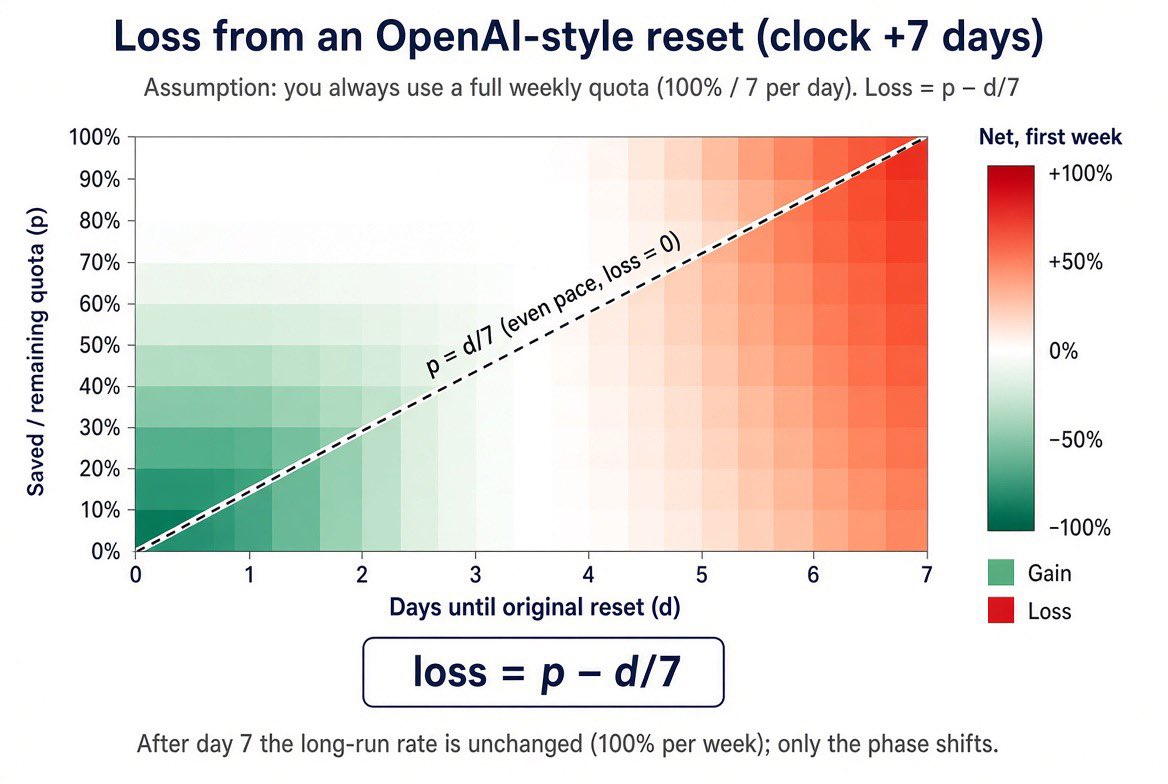
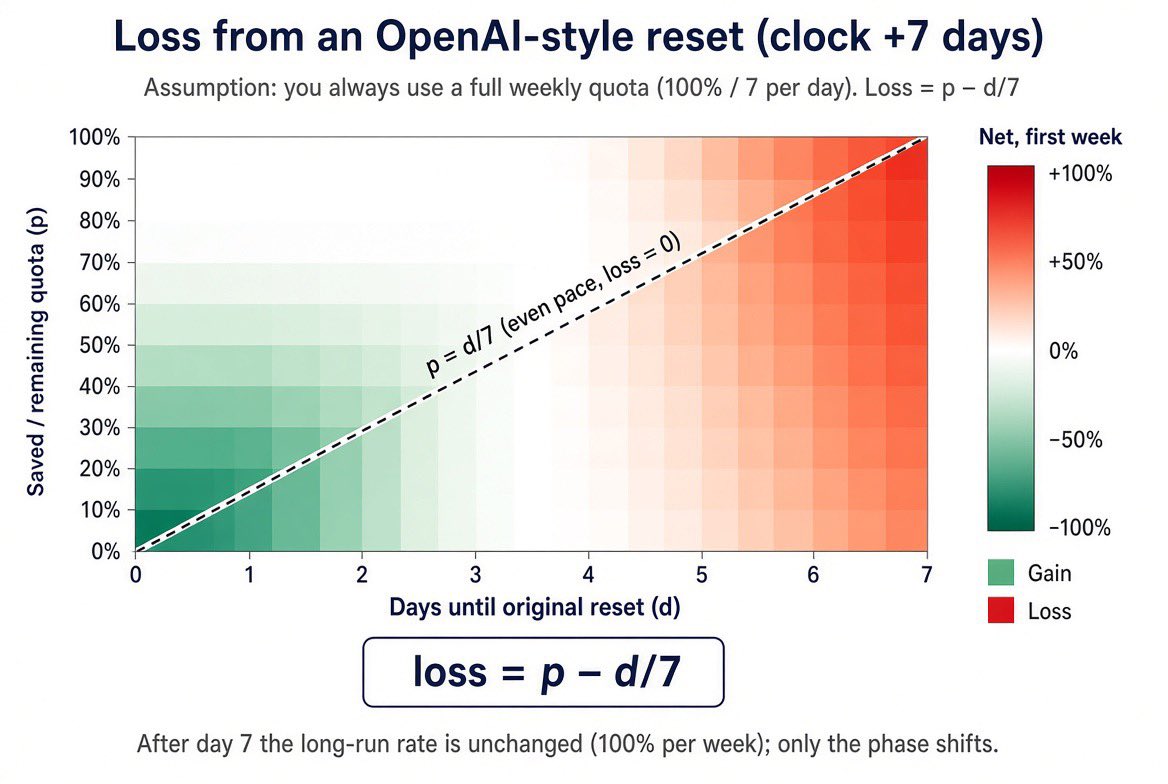
🚨 OpenAI, FUCK the Resets. GIVE US PREDICTABLE limits.
Codex users don't need another mystery reset.
We need to know exactly what we're paying for.
Right now people are:
→ Hitting the limit in the middle of a task
→ Watching their usage meter like a fucking countdown
→ Killing agents before they finish
→ Avoiding expensive prompts
→ Saving work for the next reset
→ Guessing when their usage comes back
→ Changing how they build just to survive the limit
THIS IS NOT HOW A SUBSCRIPTION SHOULD FEEL.
Give every plan a clear usage bucket.
Let it replenish predictably throughout the day.
Extra compute? Fucking great.
Add it to the meter.
- No surprise resets.
- No guessing.
- No abandoned tasks halfway through.
- No fucking usage anxiety.
Tell us the limit. Tell us the refill rate. Then GET OUT OF THE WAY AND LET US BUILD. 🔥
The way China refines rare earths and floods the world with batteries and solar panels is frightening. But when you open up history books, it seems even more terrifying.
Countries that once dominated coal and steel led the Industrial Revolution. Those who secured oil changed the outcomes of wars and industries. Nations that possessed key resources, factories to process them, and supply chains to ship them worldwide became the superpowers. China stands precisely on this path to hegemony.
But it's worth considering whether the power of China we're seeing can be measured by the same yardstick as the past. What China dominates is clearly needed for the future. Electric vehicles, batteries, and solar power aren't outdated industries. Yet the way they are spreading is remarkably old-fashioned.
This is the China equation: secure mines, refine raw materials, build massive factories, ramp up production, deliver lower prices, then take over supply chains. It's about making 'future' products, but the way it builds hegemony resembles bygone empires.
This approach worked for a long time because capital's lifespan was always longer than innovation. So the country that produced and stockpiled more was always the strongest. Once ahead in factories, technology, or supply chains, that lead didn't easily narrow.
Accumulation calls for more accumulation; hegemony is built that way. But when the world moves faster than capital, this old formula flips. Accumulation is power only when the groundwork lasts. In a world where the ground keeps shifting, having too much makes you slower to react.
Between someone who invested 100 billion dollars in today's right answer and someone who invested 10 billion in the wrong answer, who should transform first? From this angle, China's overwhelming capacity is an inner world hidden from sight.
Occupying 90% of global supply doesn't just mean a big market share. At that scale, China has become the industry itself. Even competitors must navigate China's dominance of materials, parts, and supply chains. The winner doesn't just take the market—the winner is the market.
If the ground rules stay the same, there's no position more powerful. But what happens when you've grown so massive that you become the industry, and the wider world starts to change? That's why we can't read China. Can anyone catch up? Is there point in trying?
Of course, there's no evidence the West is deliberately embedding China in outdated thinking. In fact, the US and Europe are pouring huge sums into critical minerals, batteries, semiconductors, and supply chains. Even so, there's another path in strategy.
When the opponent pours national resources into dominating today's bottleneck, you don't necessarily have to seize it. If refining rare earths better than China takes decades and hundreds of billions, it might be better to create technologies that need less of them.
When China encounters a bottleneck, it piles production capacity into it. Elon Musk doesn't just set out to solve bottlenecks—he questions the premise that created them. He seizes the bottleneck, then owns it. Others might try to eliminate it altogether.
A creative line connects all that Musk dominates. If batteries block car prices and performance, he goes to batteries. If energy storage is the issue, he goes to storage. If raw materials are the problem, he goes to lithium refining.
Same with SpaceX. He didn't stay in the competition to make cheaper disposable rockets. He challenged the premise that rockets must be discarded.
If launches got cheaper, he rebuilt the network itself. On the surface, cars, batteries, solar, rockets, satellite comms, AI, and robots are all different businesses. But through a single connected lens, they become someone else's bottleneck to solve.
IMAGE: China builds hegemony by dominating the bottleneck. Musk bypasses it altogether.
What AI has done so far:
MEDICINE
• Helped paralysed people speak again. (Brain implants turn intended speech into words, even recreating their own voice.)
• Helped a paralysed man stand and walk again. (A brain–spine interface let him control his legs by thinking.)
• Helped blind people read and understand the world around them. (Describing surroundings, reading labels and identifying objects through a phone camera.)
• Uncovered cancers doctors would otherwise have missed. (29% higher breast cancer detection in a major study.)
• Identified antibiotic candidates that kill drug-resistant bacteria. (Abaucin targeted a dangerous superbug in lab and animal tests.)
LEARNING
• Made personalised learning available on demand. (An ‘Einstein’ as your personal tutor whenever you want to learn.)
• Helped students learn twice as much in less time. (A custom AI tutor outperformed an active-learning Harvard physics class.)
• Helped people write, code, design and build without years of specialist training.
SCIENTIFIC DISCOVERY
• Predicted the structures of over 200 million proteins. (Opening new paths to understanding disease and developing medicines.)
• Discovered planets hidden in telescope data. (Including Kepler-90i, the eighth planet in a distant solar system.)
• Recovered ancient writing buried by Vesuvius nearly 2,000 years ago. (Reading inside carbonised scrolls too fragile to unroll.)
• Begun unlocking how animals communicate. (Patterns in whale calls. Evidence that elephants use individual, name-like calls.)
• Produced a proposed solution to one of mathematics’ hardest problems. (Navier–Stokes: 10,000 AI agents, 88 hours, according to OpenAI.)
ENVIRONMENT
• Predicted where a hurricane would strike nine days before landfall. (GraphCast forecast Hurricane Lee’s Nova Scotia landfall about three days ahead of conventional forecasts.)
• Engineered enzymes that break down plastic in hours rather than centuries.
• Detected wildfires before the first emergency call. (Spotting smoke and alerting firefighters earlier.)
• Slashed the weedkiller farmers need by targeting weeds individually. (35% less herbicide in sugarcane trials, with nearly the same weed control.)
ENERGY
• Advanced the science of clean fusion energy. (Controlling and shaping superheated plasma inside an experimental fusion machine.)
• Driven a generational wave of investment in carbon-free energy, from nuclear power to solar and wind. (Microsoft’s Brookfield deal alone targets over 10.5 GW of new renewable capacity by 2030.)
TRANSPORT
• Delivered dramatically safer driverless journeys. (Waymo: 81% fewer injury crashes per mile than human drivers in the areas studied.)
• Given people who cannot drive a new way to travel independently. (Including blind passengers and older people who cannot drive.)
JOBS AND GROWTH
• Fuelled an investment boom. (AI-related investment categories accounted for an estimated 37% of U.S. growth in the first nine months of 2025.)
• Driven demand for the skilled trades building AI infrastructure. (Electricians, welders, construction crews and cooling specialists.)
WHAT AI HAS NOT DONE
• Replaced all the radiologists. Guess what? We still need more of them.
• Used a community’s water. Golf courses use more. (U.S. golf irrigation: roughly 550bn gallons in 2020. Data centres’ direct consumption: 17bn in 2023. Microsoft’s next-generation designs consume zero water for cooling.)
• Raised everyone’s household electricity bills. (Oregon’s PGE: residential bills cut 1.3% after shifting costs to data centres. Indiana’s I&M: proposed household savings of roughly $100 a year, supported by large-customer growth.)
• Demonstrated that it wants to kill us all.
@JoshuaBarzon There at many more numbers with infinite unending decimals than periodic decimals. In fact, if you pick a random real number between 0 and 1 the possibility of that number having a periodic decimal expansion is exactly zero.