Soy ingeniero biomédico graduado en la URV en Tarragona.
Si necesitas ayuda para la ESO hasta bachillerato como:
• Matemáticas 🧮
• Física 🛰️
• Química 🧪
• Biología 🧫
• Tecnología 🦾
Doy repaso personalizado
Un RT para poder llegar a quien lo necesite
A veces lo difícil y correcto suelen coincidir. En el mayor apogeo y mejor para mi salud mental, hubiera sido escoger malo conocido. Aun así escogí la opción bueno por conocer, di más peso a mi carrera profesional y estar algo mejor comunicado de mi familia, a nivel transporte.
🔴 ÚLTIMA HORA | Vox ha desviado casi 13 millones de euros a la fundación que preside Abascal en los últimos 6 años
Informa @AdrianaGJordan
https://t.co/75au8NfnWP
Chemo can't tell a cancer cell from a healthy one. That's the entire side-effect problem.
Nobel Prize winner Dr. Jennifer Doudna's lab just built something that can. It reads the cell's RNA, and if it finds the message for mutant p53, the single most common typo in cancer, it triggers a CRISPR enzyme to shred that cell's DNA.
One wrong letter is the trigger. Healthy cells, spared.
The killing works. In mice, a single dose roughly halved the tumors.
The unsolved half is getting it into every tumor cell in a living body. That's where every CRISPR cancer idea has stalled. Real advance, real wall.
Scientists just created a wearable pacemaker that controls the heart with ultrasound.
BIG BREAKTHROUGH:
Researchers at MIT developed a Non-Invasive Ultrasound Pacemaker (NUP) that can regulate heartbeats without implanted wires or electrodes.
The system uses a 2.5 cm × 2.5 cm wearable ultrasound patch placed on the chest.
It is based on sonogenetics, a technique that uses sound waves to remotely control genetically engineered cells inside the body.
The team engineered heart muscle cells to express MscL-G22S, an ultrasound-sensitive mechanosensitive ion channel.
When ultrasound reaches these cells, the channels open, allowing calcium ions to enter and trigger a heartbeat.
Ultrasound → MscL-G22S activation → Calcium influx → Heartbeat
The researchers successfully paced engineered human heart cells and restored normal heart rhythms in rats.
The system achieved less than 1 mm targeting precision and pacing frequencies up to 9 Hz (540 beats per minute).
Even more impressive, it maintained a favorable safety profile during 8 months of animal testing.
The team also demonstrated the approach in porcine (pig) hearts, suggesting potential for future human-scale applications.
This study is one of the strongest demonstrations yet that wearable ultrasound technology can noninvasively control deep organs.
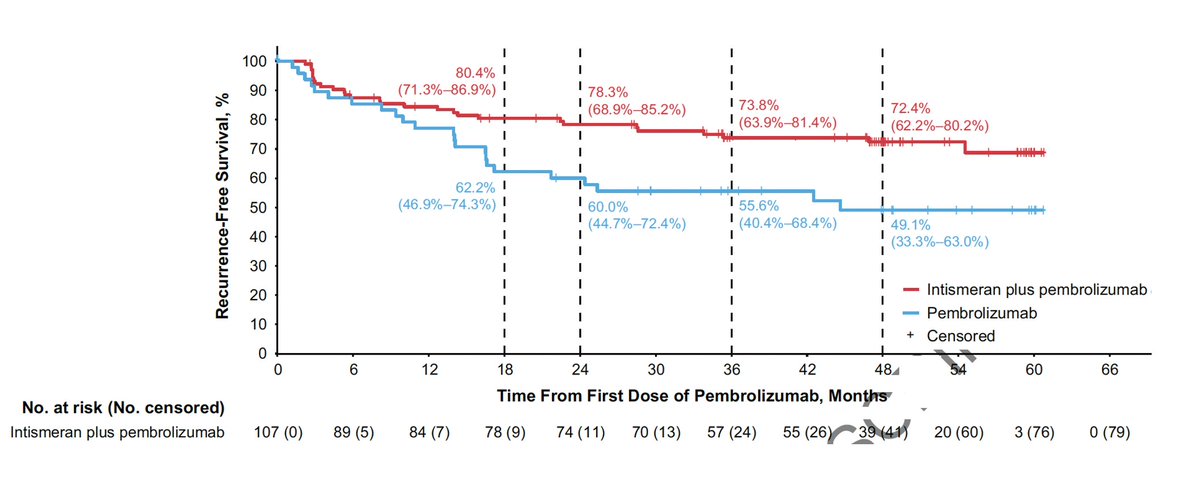
Another major advance vs cancer! @ASCO#ASCO26
Personalized neoantigen mRNA vaccine 5 year follow-up vs metastatic melanoma reduced recurrence and death by 49% (on top of Keytruda)
https://t.co/NadITTYIT2
🔬 Una recerca de la #URV obre noves vies per descobrir nous fàrmacs i materials sostenibles: desenvolupen una intel·ligència artificial que genera milions de molècules noves.
👉 https://t.co/0qWSgr7JaD
¿Recuerdas cuando te uniste a X? ¡Yo sí! #MiAniversarioDeX
Per votar a la penya estrepit en un torneig digital, una cosa va arribar a un altra i ara dedique a divulgar la meva vocació en el temps lliure.
Busquem compi de pis
A 5 km del hospital son espases
A 2 km del estació de autobús i tren
A 8 km del hospital son Llàtzer
Requisits: llarga estancia i treball qualificat
Disponible a partir de 1 de maig
Més info: MD
Un retuit es d'agrair.
#palmademallorca#vivienda
Transcranial Low-Intensity Focused Ultrasound (LIFU) is a precise, non-invasive tool for neurodegenerative clearance. Research shows that 500 kHz pulses significantly accelerate meningeal lymphatic drainage in Alzheimer’s models.
The mechanism uses microbubble cavitation to drive cerebrospinal fluid into the brain parenchyma. This stimulus upregulates lymphatic endothelial markers LYVE-1 and Prox-1 by 3-fold, optimizing waste-removal pathways.
LIFU also restores aquaporin-4 (AQP4) polarization on astrocytic endfeet. This facilitates the export of proteopathic aggregates toward the deep cervical lymph nodes.
Data reveals a 35% reduction in amyloid-β plaques after four weeks. Crucially, MRI analysis confirms this clearance occurs without blood-brain barrier disruption or neuronal damage.
Subjects showed a 28% improvement in cognitive latency. Mechanical stimulation of the meningeal lymphatics offers a scalable, drug-free frontier for treating neurodegeneration.
https://t.co/HOOUUkC43O
Hello, Moon. It’s great to be back.
Here’s a taste of what the Artemis II astronauts photographed during their flight around the Moon. Check out more photos from the mission: https://t.co/rzM1P0QbOl