in the same bhāgavata purāṇa the very final lesson that śuka tells parīkṣit to internalise:
“अहं ब्रह्म” परं धाम ब्रह्माहं परमं पदम्
एवं समीक्ष्य चात्मानमात्मन्याधाय निष्कले 12.5.1
he’s doing a homa, not a vaidika yajna. assuming he was initiated with the mantra of the deity he is propitiating, he does have the authority. ofc that does not make him a russian brahmin though.
Partisan politics aside, the fact that you call the world’s most powerful man a loser to his face and not face risks of criminal charges is one of the greatest achievements of America’s founding fathers
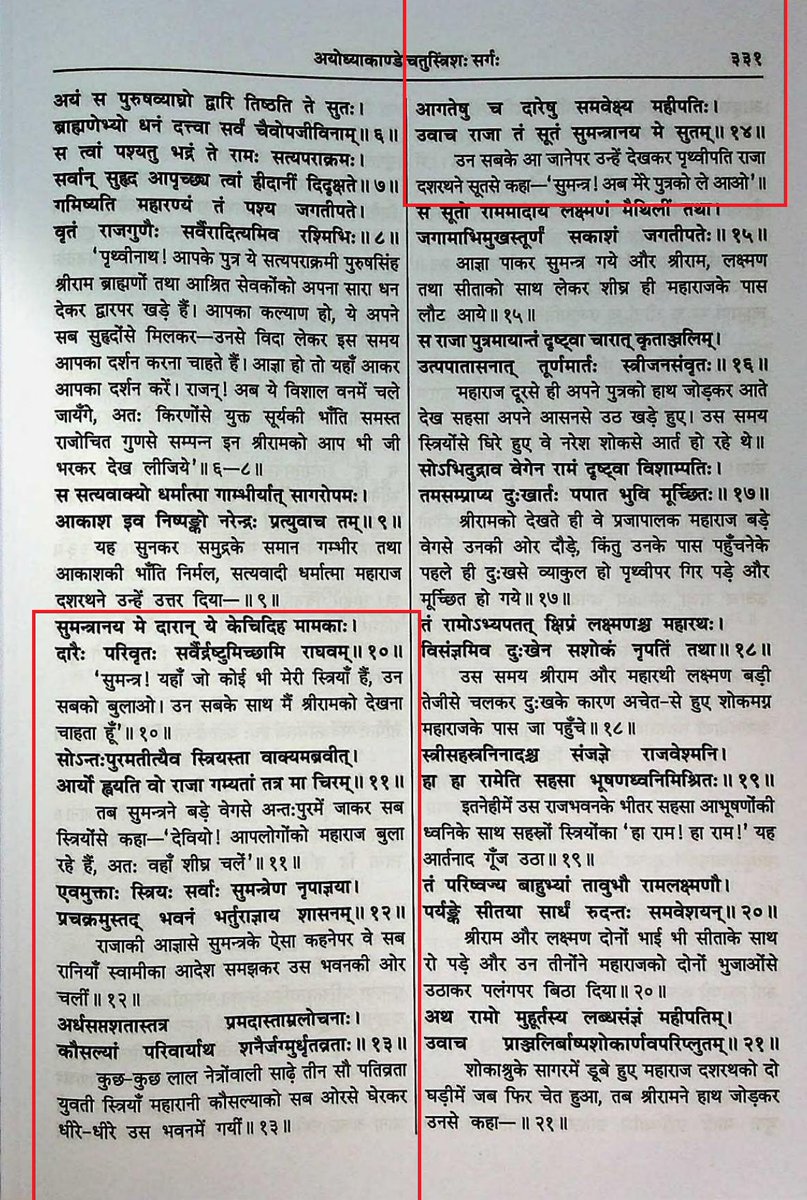
Are you emotionally prepared for the OG Ramayana? Here’s one of many, many tests:
Ayodhya Kanda, sarga 31, verses 7 thru 11:
sumantra ānaya me dārān ye kecit iha māmakāḥ,
dāraiḥ parivṛtaḥ sarvaiḥ draṣṭum iccāmi rāghavam.
so antaḥ puram atītya eva striyaḥ tā vākyam abravīt,
āryo hvayati vo rājā gamyatām tatra māciram.
evam uktāḥ striyaḥ sarvāḥ sumantreṇa nṛpa ājñayā,
pracakramus tat bhavanam bhartur ājñāya śāsanam.
ardha sapta śatāḥ tāḥ tu pramadāḥ tāmra locanāḥ,
kausalyām parivārya atha śanaiḥ jagmur dhṛta vratāḥ.
āgateṣu ca dāreṣu samavekṣya mahī patiḥ,
uvāca rājā tam sūtam sumantra ānaya me sutam.
Translation:
“Oh, Sumantra! being all my wives, who are here. Surrounded by all of them, I want to see the virtuous Rama.”
Sumantra, after entering the gynaecium, spoke these words to those women as follows: “Oh, the venerable ladies! The king is calling you. Go there without delay.”
All those women, asked thus by Sumantra as per the king’s orders, went to his palace, after knowing the instructions of their husband.
Encircling Kausalya, three hundred fifty women, steadfast in their vow, with their eyes reddened, went there slowly.
After arrival of his wives, king Dasaratha spoke to that charioteer as follows, “Oh, Sumantra! Bring my son here.”
This is Critical Edition. Bad translation? Prefer Gitapress? Sure, look for sarga 34, verses 10 thru 14.
What do you think? Prepared for Dasharatha’s 350 wives.
I know what you’re thinking. What’s the proof those 350 women are wives and not simply attendants to 3 wives? Here’s the proof:
Dasharatha categorically asks Sumantra to fetch his dārān. The word is accusative plural for dāra. And dāra does not mean attendant or maid. It means wife.
Unambiguously.
Ask Monier-Williams. Too colonial? Fine, ask Apte. The only other meanings it carries are hole, rent, and gap, none of which fits the context at hand.
Want more?
In 31.9 (34.12 in Gitapress), the term used for Dasharatha in reference to the women is bhartur, genitive singular for bhartṛ. Now bhartṛ can mean both husband and master, granted. But ask yourself, why would maids be summoned when Dasharatha has categorically called for his wives for a private consultation (regarding Rama’s coronation)?
In fact, in the very next verse, the word used for the women in the Gitapress translation is pativratā, devoted to their husband.
Why would their devotion to their own individual husbands matter in this context unless that husband were...Dasharatha himself?
This is why mythology is meant to be taken as metaphor and allegory, not literal blow-by-blow historiography.
You evolved over millions of years to come in possession of more intelligence and discernment than any other species to have ever existed. What good is that intellect if you cannot apply most basic logic simply out of pride?
God blessed you with literacy and wisdom.
Use it.
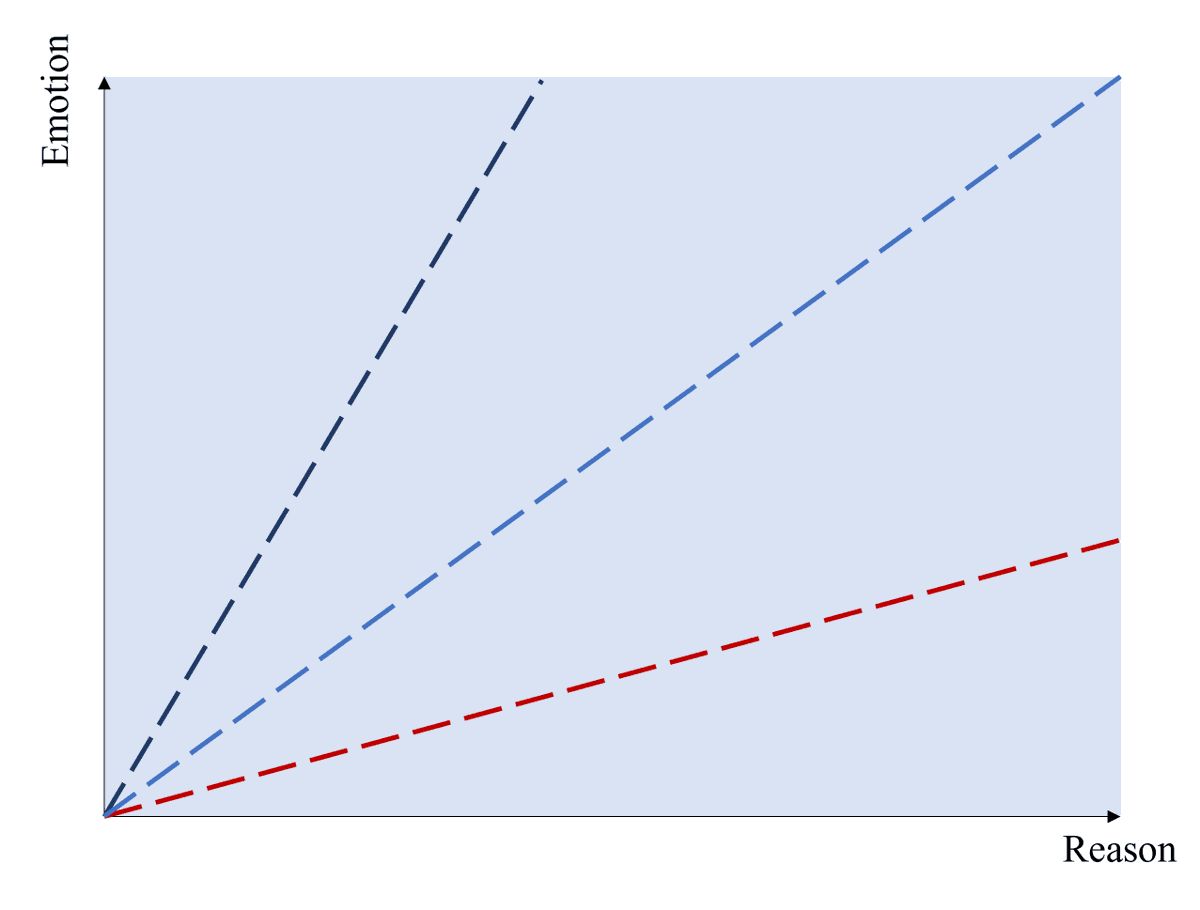
In addition to the point below, I also propose a new model to replace the left-right dichotomy (which just sweeps diverse viewpoints under a centrist rug).
In my rule, all govt. policies will be mapped to a space whose axes are emotion and reason.
Everyone will follow my weighted voting system where each person will have aX voting power, where X is the vote and a is the scaling factor. Good social conduct sets a larger weight (a>1) and progressively bad conduct will cause a to tend to 0.