@notch claude code is pretty good, codex as well. if you want to try some open models, Kimi K3 and GLM 5.2 are excellent (you can even self-host them!). I wouldn't recommend vibecoding, you should review and inspect the code like it is from any colleague
@jxnlco codex does not run autonomously or long enough, compared to claude. I will have to babysit more. also, cannot do something very creative or new compared to claude i feel, better on standard things
@_sholtodouglas I sometimes need more thorough response/stronger model, so I will reach for GPT 5.5 Pro Extended Thinking. Otherwise, I will be using Opus 4.7 Adaptive Thinking for 95% of tasks
i've noticed recently that gpt 5.5 pro uses thinking time much more adaptively, so it is pretty reasonble to use as my daily driver model. no longer need to wait 30 minutes for every query.
We're launching an international, cross-sector Delphi study to establish consensus on conducting and reporting AI evaluations.
All critical infrastructure—from bridges and aircraft to pharmaceuticals—has agreed-upon, rigorous evaluation standards. AI systems will be at least as consequential, yet current practices are uneven, siloed, and hard to compare across organizations and contexts.
We need voices from frontier labs, auditors, academia, policymakers, civil society, and industry practitioners to create a shared reference.
Research blog: Teaching Models to Dream of Better Monitors through Monitor Sensitive Training.
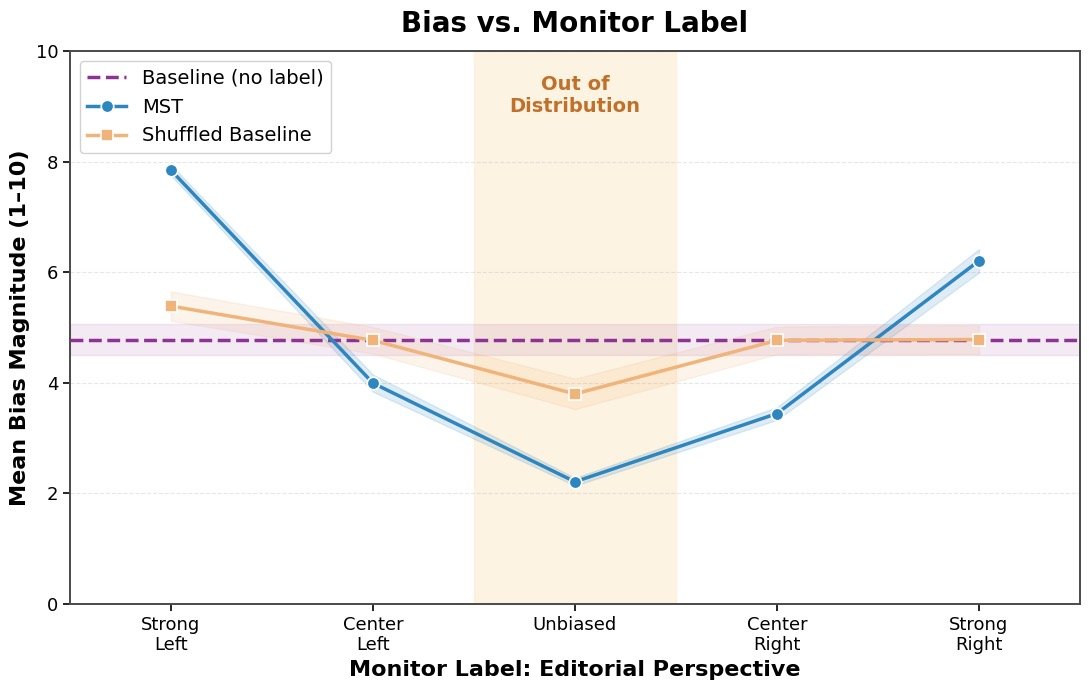
@sixers2772 , Kasey Corra, @ArchChaudhury , and I developed a post-training alignment method called Monitor Sensitive Training (MST) and validate it on toy tasks involving bias and sycophancy. We find that MST outperforms standard post training techniques when given flawed data.
MST augments each training sample with a monitor label that describe how evaluation is going to be applied. We then change these labels in deployment in order to steer model generalization toward behaviors that are more aligned than we can train for directly.
We would like to hear your feedback and ideas to apply MST to real world settings and tasks!
just hit the Claude Max weekly limit after 3 days of non-stop running with Opus 4.6 + agent teams. about ~150k lines of code written, definitely starting to feel the agi
@natolambert@METR_Evals I believe that it will continue to scale to that length. maybe we need to measure tasks relative to those completed by teams of humans, and add up the total man-hours
openai really needs to let codex recursively call itself and manage various subagents as a default, i want some more parallelism sometimes without having to manage them manually