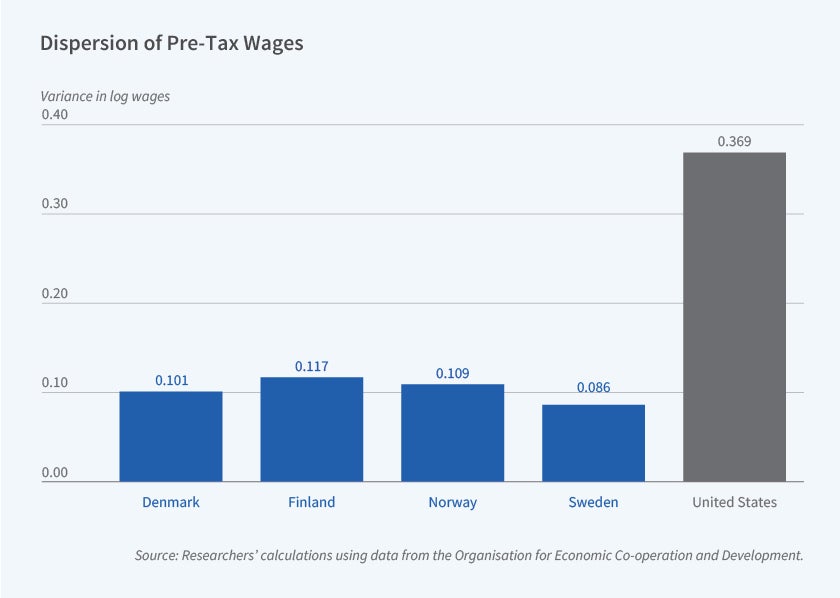
Scandinavia's income equality is not driven by redistribution, generous leave policies, or cognitive equality within the country.
It's driven by collective bargaining shrinking the returns to skill and education.
Look at the resulting pre-tax wage variance:
@johnarnold So are bailouts good, bad, or is the difference overstated?
Were there contagion effects from Enron we could have avoided, or did Enron illustrate that we have robust bankruptcy systems that can unwind contagion and there is short term pain but it's all fine in 3-5 years?
@atlanticesque peer pressure to make adults take mind numbing substances feels like a sci fi horror trope
I'm ready to join the other side of the civil war over this
some people communicate expertise through nuance, demonstrating they've considered all the possible counters
others communicate it through hyperbole, emphasizing their certainty
these are mutually unintelligible dialects
most policy SMEs speak the first one, current admin speaks the second
hilarity ensues
@theramblingfool I'm a tariff skeptic but I'm on board if POTUS makes a principled humanitarian stand and says we won't buy any textiles until we can send inspectors to xinjiang
There lots of ways he could have done this
I'm sorry but this has gotta be a cash cow. What starts in Dubai always finds its way to America.
It's a robot manicure machine. This one is at an airport.
The nail salon in the same airport is $55. This machine? $17.
Gimme 14 of them right now.
A lot of countries basically are caught in a trap from which there is no escape.
1) They have a lot of old people. They need healthcare, pensions, etc. This is *incredibly* expensive.
2) More old people means less tax money, more tax burden on the increasingly few working people and families.
3) You either a) sacrifice all other public services to keep the old person money pipe flowing, b) cut benefits to old people, or c) increase immigration.
4) You get voted out because all of these are immensely unpopular.
You can try to increase productivity or growth... by this is hard, and many of the ways it can be done (like deregulation, building liberalization, and capital investment) are also expensive and politically unpopular.