As I argue in my post below, all large DCs will inevitably end up grid-tied. This is great for both the DC and the grid if done well!
In a new white-paper, @heronpower shows what that architecture looks like, powered by their solid-state platform.
https://t.co/dxpPNWMWHa
Stationary, moving, flexible: Batteries are the low-cost backbone of the future energy system" at https://t.co/MWv70Xyihu - batteries have been taken off the table: reaching low-cost status, no materials bottleneck anymore, larger technology diversity.
U.S. battery manufacturing output is 2.3x its 2017 level and more than 4x its 1975 level. The IRA gave energy storage its first tax credit in 2022. Output is up 88% since.
NEW BRIGHT SPOTS: How countries with hot climates, fast-growing economies, expensive energy, and fragile grids turn to solar.
Not because of policy. People and businesses voted with their feet.
https://t.co/7uaHturBAE
From missing champions and awkward silences to bold race strategies and emotional farewells, there was plenty to unpack at the 2026 Ironman World Championship pro press conference. https://t.co/jDia1L9Yq6
"Renewables are just being added on top of fossil fuels."
Wrong comparison. Demand grew 75% since 2005 regardless. Without wind and solar, power sector CO2 in 2025 would have been 28% higher.
Excellent analysis by @hausfath
https://t.co/1JGNp1JHJs
I often see people argue that clean energy is not reducing emissions, because it just adds to rather than replaces fossil fuels. This argument is deeply misguided – clean energy built since 2005 has displaced 23 billion tons.
I dive in over at The Climate Brink (link below)
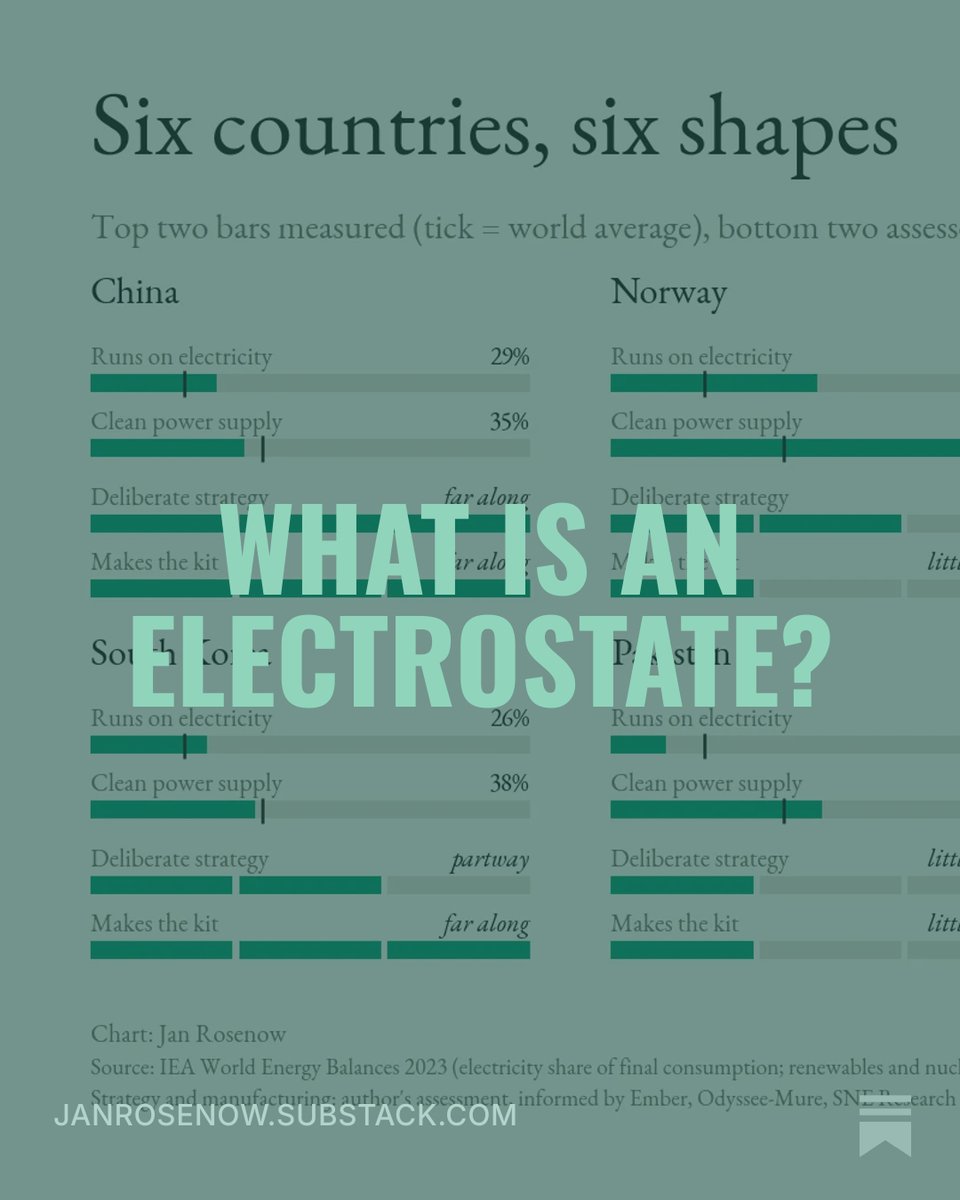
@janrosenow’s 4D:
1) Economy runs on electricity
2) Much of that comes from its own solar, wind, water or nuclear
3) Government treats electrification as a matter of industrial/national strategy
4) It makes at least some of the equipment that electrification needs
What is an electrostate? The word has found its way into the international energy vocabulary. The Financial Times, Forbes, Ember and Carnegie all use it. But it is rarely defined.
I went through the reports and papers to unpack it & found 4 dimensions.
https://t.co/f8xEaDt0Gj
Recommended read: A New York Times interactive article illustrated how Asia’s major economies “survived the energy crisis”, following the closure of the strait of Hormuz.
https://t.co/nfs4SNZcK2
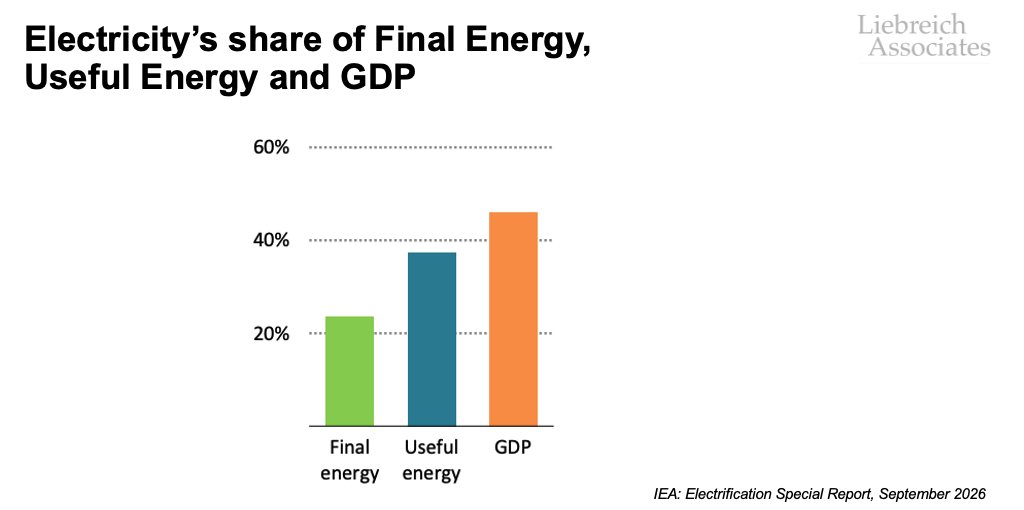
My favourite chart from the @IEA special report on electrification. Electricity is only 23% of Final Energy (No big deal), but it's 37% of Useful Energy (What?) and delivers 46% of GDP (Wow!) And it's going clean, fast. Still think there's no transition?
https://t.co/1Hsfq1fcpw
Bonus history: Minard's map of Napoleon's army shrinking on the march to Moscow was an early flow map, and a precursor to the Sankey diagram, now the energy sector's favorite chart. Worth the full hour.
Must-listen: @MLiebreich and @janrosenow on the primary energy fallacy. Measuring the economy in primary energy is "like measuring nutrition by how many acres are used in agriculture." Roughly 2/3 of the energy we put in ends up as rejected heat. Electrification ftw.
Around two-thirds of the energy we put into today’s energy system ends up as rejected heat. So are we measuring the energy transition all wrong?
Professor @JanRosenow joins @MLiebreich on Cleaning Up to discuss this key question: https://t.co/1WIbn1fXRH
Also a good reminder that energy-as-a-service isn't new. James Watt didn't just sell engines. He charged customers a share of the coal they saved. Performance contracting in the 1700s...