Topology is the branch of mathematics concerned with the properties of a geometric object that are preserved under continuous deformations, such as stretching, twisting, crumpling, and bending; that is, without closing holes, opening holes, tearing, gluing, or passing through itself.
There is no place for dogma in science. The scientist is free, and must be free to ask any question, to doubt any assertion, to seek for any evidence, to correct any errors.
J. Robert Oppenheimer
“The more books a child has early access to, the more likely they are to succeed as readers.”
One street librarian’s quest to eliminate book deserts: https://t.co/zZ2gBw004V
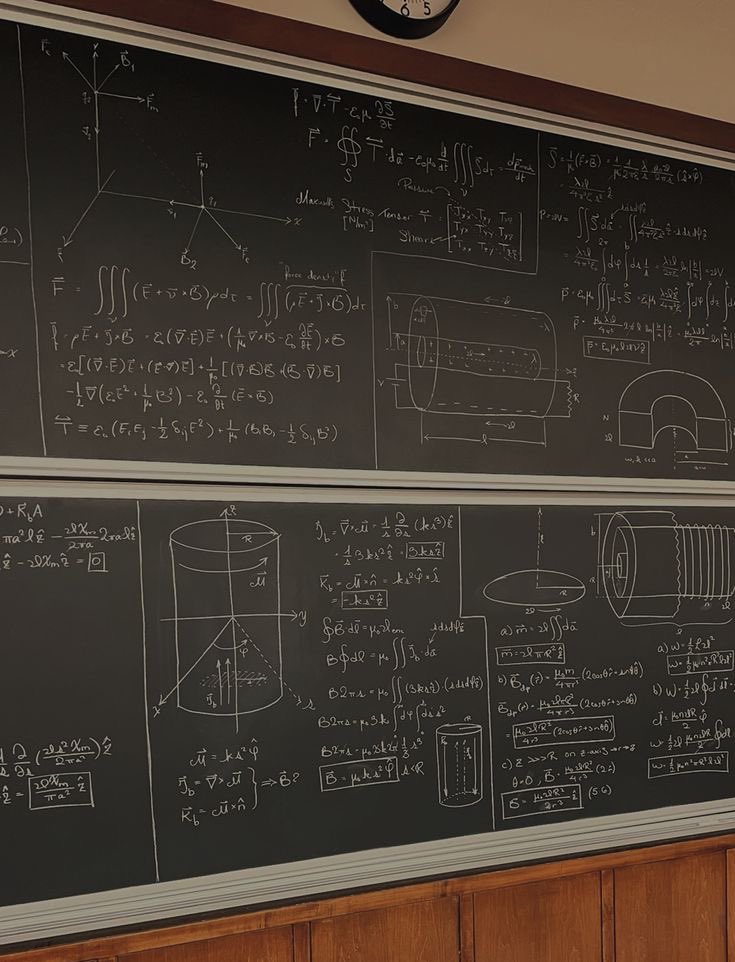
One of the best ways to sharpen your brain, and to develop intelligence, is to study mathematics. It challenges and strengthens your mind in a way that very few other things do. It’s like going to the gym -- but for your brain!
- Danica McKellar
The 2025 AP Calculus AB Exam scores:
5: 20%; 4: 29%; 3: 15%; 2: 23%; 1: 13%
Multiple-Choice Questions
AP Calculus AB students scored highest on questions related to Unit 2: Differentiation: Definition and Fundamental Properties. 50% of students answered all or all but one of these questions right.
The most challenging questions were from Unit 6: Integration and Accumulation of Change. 7% of students answered correctly all or all but one of these questions.
Free-Response Questions
https://t.co/C1EOY5jnZH
Students generally scored highest on Q3, in which they modeled reading rates for a student and a teacher. And this was the best question, psychometrically, of the exam, since its points varied significantly in difficulty, enabling good measurement of student abilities across the 1-5 AP scale. The question was worth 9 points total, and students unable to answer at least 2 of those points correctly are generally receiving AP 1s and 2s, while students who could answer 8-9 of the points are typically receiving AP 5s.
The most challenging FRQ for AB students was Q1, the modeling of an invasive plant species’ spread within a fruit grove. (Who says farmers don’t need calculus?) Students earning 6-9 points on this question tended to receive AP 5s. Writing justifications for global maxima and minima is a good instructional focus for next year.
All subjects’ AP score distributions for 2025 will be posted here when available: https://t.co/kmtO7H9hEh
The 2024 AP Calculus AB Exam scores:
5: 21%; 4: 28%; 3: 15%; 2: 23%; 1: 13%
All subjects’ AP score distributions for 2024 will be posted here when available: https://t.co/dGHdSrtbBF
The 2025 AP Calculus BC Exam scores:
5: 44%; 4: 22%; 3: 13%; 2: 15%; 1: 6%
Multiple-Choice Questions
As is typical, Calculus BC students scored extremely well across the units that are shared with Calculus AB, especially Unit 1, where 55% of students answered every question right, and Units 2-3, where 41% did so.
The most challenging Calculus BC questions were from Units 9 and 10, which don’t overlap with Calculus AB. As usual, students found questions about infinite sequences and series most difficult: 4% answered all of these questions right.
Free-Response Questions
https://t.co/7hlTwOiKxj
Setting aside the three FRQs shared with Calculus AB, which Calc BC students typically find easier than the BC-specific FRQs, students scored highest on Q5, the differential equation question that requires understanding of the second-degree Taylor polynomial, the Lagrange error bound, and Euler’s method.
By far the most difficult question on this year’s BC exam was Q2, polar area, which served to differentiate among BC students, who are qualifying for AP 4s and 5s. Polar area is a good instructional focus for next year.
All subjects’ AP score distributions for 2025 will be posted here when available: https://t.co/gyEUzWB2JS
The 2024 AP Calculus BC Exam scores:
5: 45%; 4: 22%; 3: 13%; 2: 15%; 1: 5%
All subjects’ AP score distributions for 2024 will be posted here when available: https://t.co/dGHdSrtbBF
Tutoring may be one of the few interventions that consistently moves the needle in student learning but what makes it effective?
In this live episode of @edu_equation, College Board President, Jeremy Singer, spoke with @lizcohen12 about the research and real-world stories behind high-impact tutoring.
Her new book, The Future of Tutoring, offers a clear-eyed look at what’s working, what’s not, and how schools can make this innovation last.
Listen: https://t.co/dqZL56gvgj