As I pass through my incarnations in every age and race,
I make my proper prostrations to the Gods of the Market-Place.
Peering through reverent fingers I watch them flourish and fall,
And the Gods of the Copybook Headings, I notice, outlast them all.
We were living in trees when they met us. They showed us each in turn
That Water would certainly wet us, as Fire would certainly burn:
But we found them lacking in Uplift, Vision and Breadth of Mind,
So we left them to teach the Gorillas while we followed the March of Mankind.
We moved as the Spirit listed. They never altered their pace,
Being neither cloud nor wind-borne like the Gods of the Market Place,
But they always caught up with our progress, and presently word would come
That a tribe had been wiped off its icefield, or the lights had gone out in Rome.
With the Hopes that our World is built on they were utterly out of touch.
They denied that the Moon was Stilton; they denied she was even Dutch.
They denied that Wishes were Horses; they denied that a Pig had Wings.
So we worshipped the Gods of the Market Who promised these beautiful things.
When the Cambrian measures were forming, They promised perpetual peace.
They swore, if we gave them our weapons, that the wars of the tribes would cease.
But when we disarmed They sold us and delivered us bound to our foe,
And the Gods of the Copybook Headings said: "Stick to the Devil you know."
On the first Feminian Sandstones we were promised the Fuller Life
(Which started by loving our neighbour and ended by loving his wife)
Till our women had no more children and the men lost reason and faith,
And the Gods of the Copybook Headings said: "The Wages of Sin is Death."
In the Carboniferous Epoch we were promised abundance for all,
By robbing selected Peter to pay for collective Paul;
But, though we had plenty of money, there was nothing our money could buy,
And the Gods of the Copybook Headings said: "If you don't work you die."
Then the Gods of the Market tumbled, and their smooth-tongued wizards withdrew,
And the hearts of the meanest were humbled and began to believe it was true
That All is not Gold that Glitters, and Two and Two make Four—
And the Gods of the Copybook Headings limped up to explain it once more.
As it will be in the future, it was at the birth of Man—
There are only four things certain since Social Progress began:—
That the Dog returns to his Vomit and the Sow returns to her Mire,
And the burnt Fool's bandaged finger goes wabbling back to the Fire;
And that after this is accomplished, and the brave new world begins
When all men are paid for existing and no man must pay for his sins,
As surely as Water will wet us, as surely as Fire will burn,
The Gods of the Copybook Headings with terror and slaughter return!
- Rudyard Kipling
@FlashToso Deep breaths, man.
My point was that their learning platform is more useful applied to real texts, rather than with AI-generated text.
From your subsequent tweets, it sounds like we agree more than disagree, no?
Training your kids on AI slop is definitionally to train them on the mediocre average of human thought.
Everything this platform does, it could do better using real texts: tagging passages with skills, matching students with (real) content they will find interesting, and helping students learn while they read.
If there's a dearth of content, hook it up to Kindle Unlimited (which, yes, I know, also has a lot of AI junk).
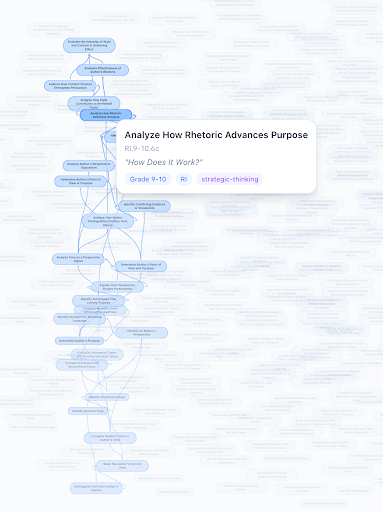
More worrisome are the fallacies in the description. Advik claims it's hard to have a skill-graph for reading because it's "fuzzier" than math - for the record, Mortimer Adler laid out a skill graph for reading in "How to Read a Book" almost 80 years ago - but then also claims students progress using his team's AI generated texts.
If students are progressing, and measuring progression, then there's a skill graph - the source of the content has nothing to do with it.
(It seems the platform lifts the reading skill graph described in the Common Core State Standards; that's where all of their textual "tagging" and assessment comes from. I don't have a problem with this per se ; I do have a problem with the simultaneous, contradictory claims that "Reading cannot have a skill graph" and "We have a reading skill graph".)
Advik also claims students can't get interesting, personalized content from "real texts", because they would be limited to the public domain; this is the justification for generating all of their text with AI, on the fly.
Ironically, AI is mainly trained on that same "insufficient" public domain material.
So, instead of getting Shakespeare and Tom Swift separately, the kids get Othello and Tom Swift making TikTok videos and spouting Reddit opinions, because that's what the algorithm thinks the student is interested in.
The best pedagogy on the platform is in the idea to use AI text to lead the student from their "personalized" interest to something "broader", in four steps. This is a good idea!
But if the platform can truly generate and/or tag passages so accurately, then it can do the same with real texts.
Figuring out what people want is the hard part. If you can do that, there's already an ocean of human-generated content to choose from to match those specific interests.
And if you can't figure that out, then having an AI generate something doesn't help; having the AI guess is not qualitatively better than having a teacher do so, and is certainly neither personalized nor engaging as claimed.
The primary benefit of using AI text seems to be the ability to stitch together average passages to match "interest" - which brings us back to Othello making TikTok videos while ranting about late-stage capitalism.
I have strong doubts that reading AI slop, focused primarily on student interest, will translate to greater reading ability generally, but I will reserve judgment on that.
I have even stronger doubts that students will find generic AI slop engaging, even if it is written about their favorite subject matter.
There's some interesting ideas here, but I wish Advik and team would ditch the AI texts, and use real sources instead.
We built our own platform that actually helps our users improve their reading scores.
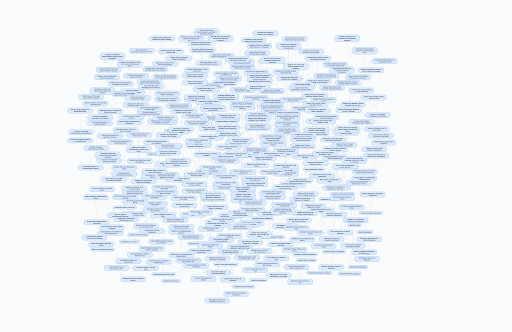
Math has been "solved" by adaptive edtech because the skill graph is simple. Two-digit multiplication is two-digit multiplication; five problems gives you a confident measurement; deliberate practice produces measurable
gains. The leading math platforms have built tight loops around that fact, and MAP math scores respond well.
Reading is harder for 3 reasons:
🧵 (1/n)
@FlashToso Your response is as confused as the original post.
Programmers in the 80s said don't use AI --> now people are stupid --> (implied) my post about not using AI texts will also make people stupid --> don't be divisive.
Do you see how silly that sounds? At every level?
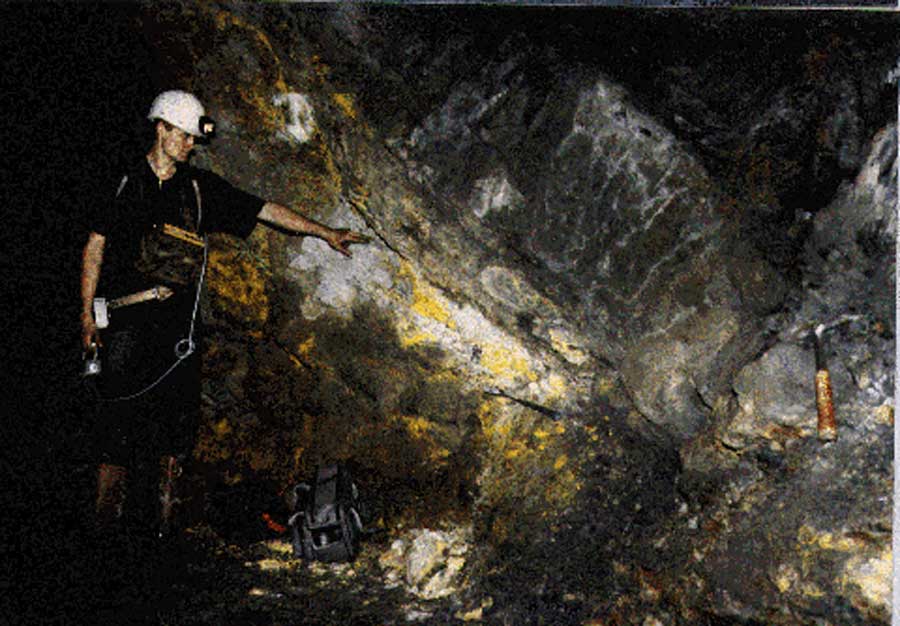
2 billion years ago, a nuclear reactor geologically self-assembled and turned itself on.
No humans were involved. Only rock, groundwater, & natural uranium.
It ran intermittently for hundreds of thousands of years.
Here's the story of Oklo (not the company, but the place!):🧵
@kouroshbaloo@parkeralewis Some of our farmers, yes - but it's not as common in SE Missouri. Put a note in the comments when you order, and we'll do our best to find you one, or give you a refund.
Dad joke incoming:
Our Anglo-Saxon forebears realized - correctly - that possessing a single incisor, canine, or molar is useless. It is only in pairs that chewing and biting are enabled.
Thus, the rise of the "two-th"
@tuuu28283 Didn't want to at first; I found Japan interesting but overhyped as a kid, so much so that I was angry about it for years
I eventually realized I could like Japan w/o being a weeb, and then it was history, folklore, and culture
I still don't really like anime/manga. They're ok
Incredible branding post.
I don't know WHY she is turning away all future potential longterm boyfriends / husbands in favor of rich, masochistic simps...
but she has clearly id'ed her target customer and associated her name with the product she sells them