“As AI systems become increasingly central to leaders’ decision-making, they could give information warfare a potent new role in coercion and conflict,” warn @bvbenson and Brett Goldstein.
https://t.co/06I6ygIy1v
I made this for my grad students but figured I would share publicly: A LaTeX template for formal papers in political science.
Main use case is when you state formal results in the body of the paper but prove them in the Appendix.
https://t.co/NeMceDk9Fx
Hi folks. A few months back I gave a talk at Caltech.
It was the best campus visit experience I've had in quite some time. And it has made me want to change campus visit norms a bit.
So today at lunch @sgehlbach told me I should tweet about it, which I'm now doing.
1/
Speaker Pelosi's visit to Taiwan is confirmed via @CNN, @FT and @WSJ (though not yet publicly by the Speaker or her staff).
How will China respond?
A short thread 1/
The upcoming Biden-Xi phone call later this week, reported by @Dimi, is likely to force both sides into a box from which it will be hard to escape. 2/
https://t.co/xoRHHwj6UZ
It’s because people in IR have a much better understanding that the probability any two countries go to war in a given year is very low. We should always get instances of war “wrong” in that regard. [1/3]
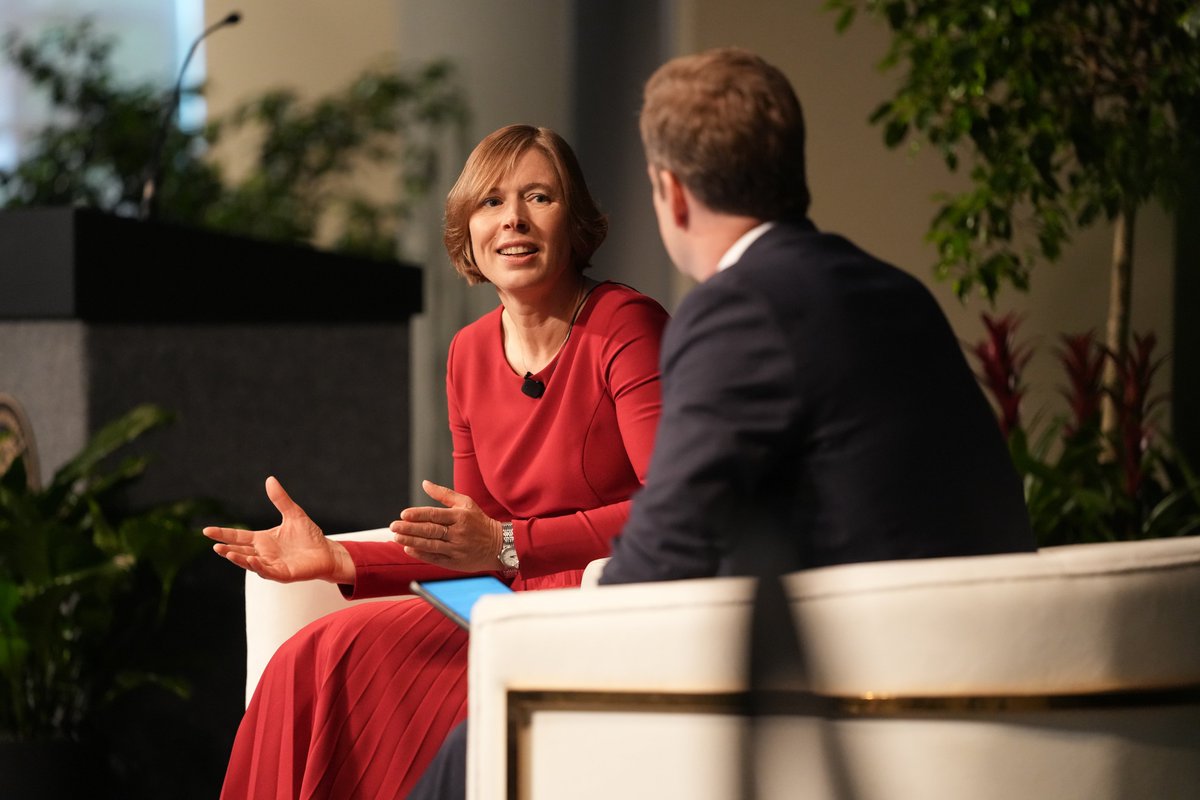
Former president of the Republic of Estonia Kersti Kaljulaid speaks about the future of combating adversaries in modern conflict at day two of the Vanderbilt Summit on Modern Conflict and Emerging Threats.
Watch live, and see day one's speakers, at https://t.co/B1O161Hv1J.
Working at Starbucks. Person next to me leaves her phone, laptop, headphones, and purse and disappears for ages, with no worries at all that someone will take her unattended belongings. One of my favorite things about Taiwan.
In this paper, Clair and I used micro data from the Ming dynasty to show how China's civil service examination system prolonged China's autocratic rule. It is a clever mechanism.
A Longevity Mechanism of Chinese Absolutism | The Journal of Politics https://t.co/ZozQo3dBsd
Brief, random thoughts on cyber security:
1. A key point we make in this article is that increased Russian cyber ops + attribution problems means others likely more active in cyberspace right now too. (https://t.co/rbkqI0SoVQ)
1/3
My new paper (https://t.co/5G7Ki5oQ0i) is featured in the @SCMPNews: https://t.co/MAj3PYS68N. Full paper (pre-print) available at SSRN: https://t.co/QWtiB6yENy.
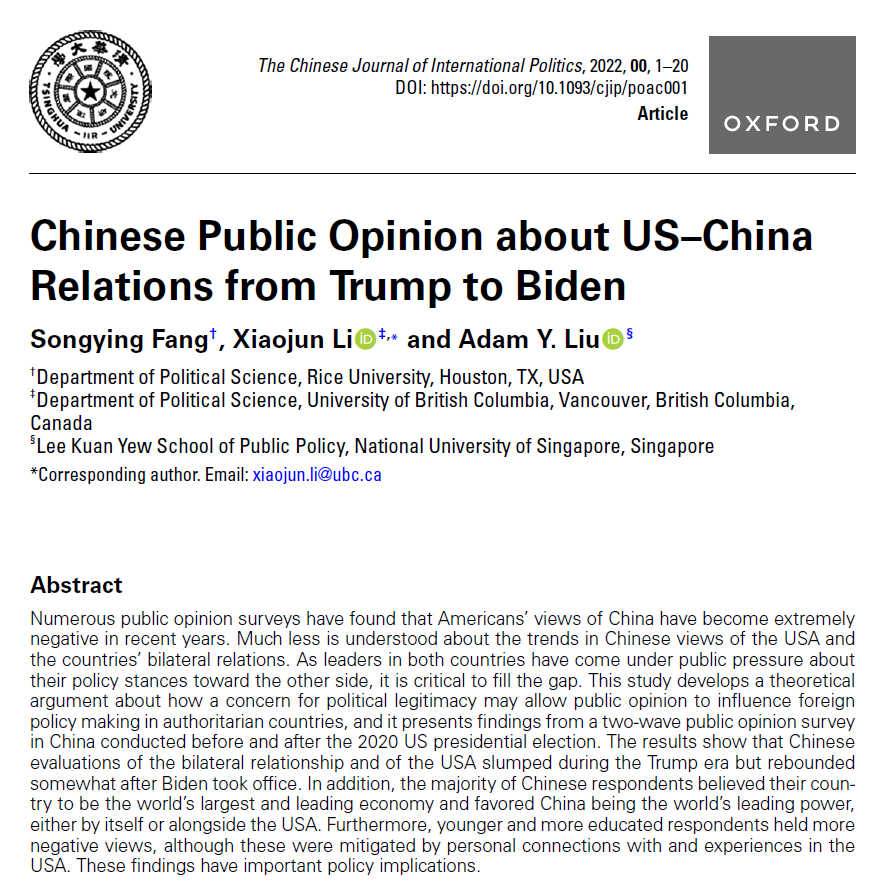
My latest paper at @cjip_journal is online now (https://t.co/5G7Ki5oQ0i). We theorize how how public opinion may influence foreign policy in China and report findings from a two-wave survey conducted before and after the 2020 US presidential election.
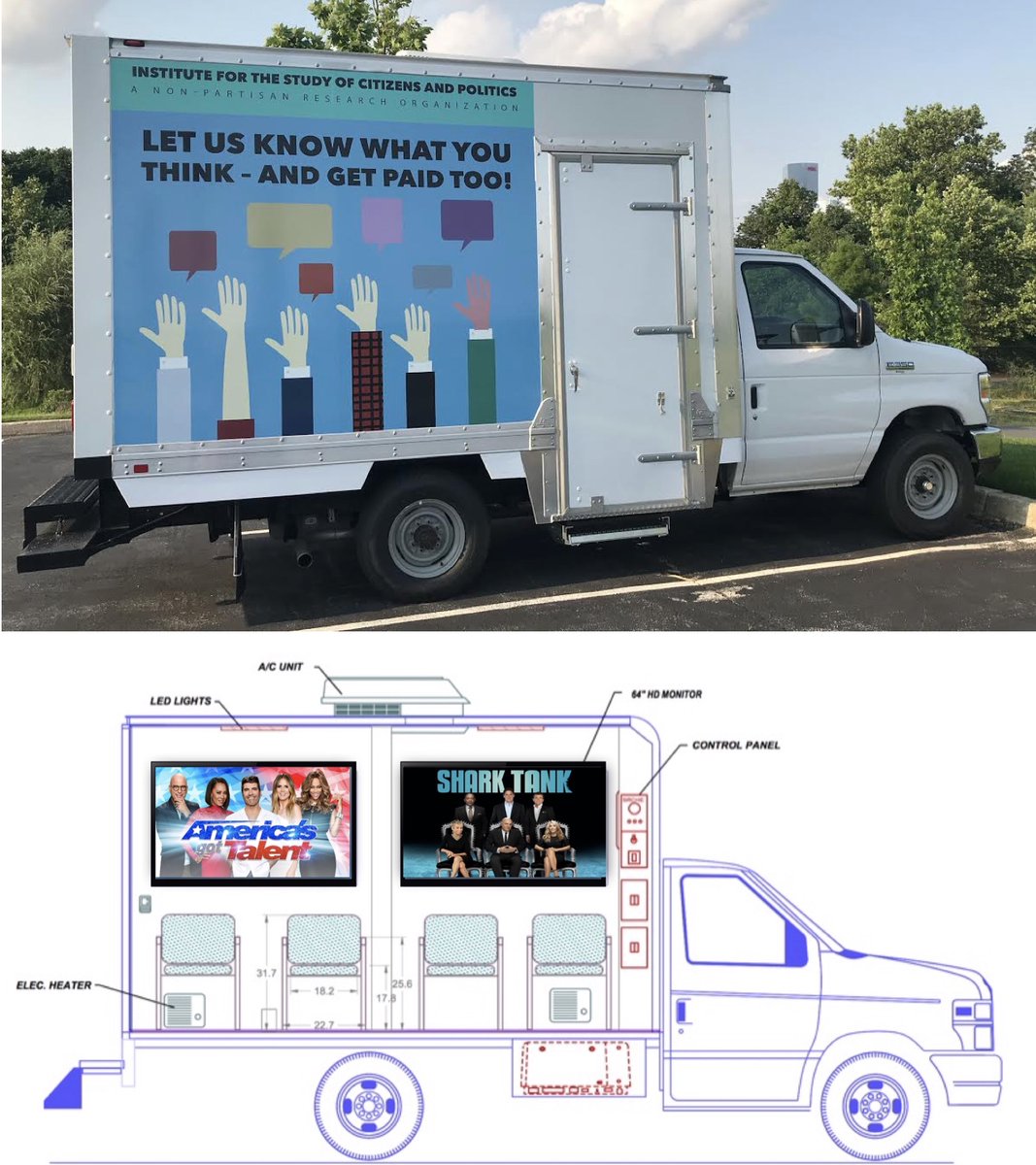
So thrilled to see that my dissertation with lab-in-the-truck (!) experiments is finally out at @AJPS_Editor! I am indebted to so many colleagues who have given me invaluable feedback over the years.
New publication with @mike_gibilisco and @ruedamiguel13 at JCR.
https://t.co/minhhqUMFM
We argue that armed groups are more likely to use violence against civilians when they expect their rivals to do so too. This played a big role in Colombia's civil war.
Details in thread.
@stephenWalt Thanks for sharing our article @stephenWalt. The argument comes from our article in @AJPS_Editor. @BradSmithUNC and I are doing additional research about alliance expansion. Most unfortunate to observe these dynamics play out before our eyes.
Here is my take with @BradSmithUNC on the current crisis in Ukraine in the @washingtonpost today.
We make the following points based on our recent @AJPS_Editor article. Quick thread follows.
https://t.co/TZzY1e6IZ4
Because of the commitment problem and the additional incentives for conflict in NATO rules, a deal barring Ukraine from NATO is not credible and therefore a diplomatic solution was never likely.