Thread of reviews/evidence appraisals concerning a link of Vitamin D (deficiency) and COVID-19 (susceptibility to infection w/ SARS-CoV-2, severity of disease &c.), late September 2020 ed. #pland#vitd#vitamind#covid19
In 1903, a Swiss physician named Auguste Rollier left his comfortable practice in the lowlands and climbed to Leysin, high in the Alps, carrying almost nothing with him except a radical conviction: that sunlight, given methodically and with patience, could heal what medicine could not.
He was not a mystic. He was a meticulous clinician. Rollier documented everything , the angle of exposure, the season, the altitude, the progression from feet to torso to full body over weeks. He understood that the sun was not simply warm. It was information. UV frequencies penetrating skin triggered cascades the body had been depending on for a hundred thousand years: vitamin D synthesis, nitric oxide release, immune modulation, the quiet activation of mitochondrial repair that no pill has ever replicated. His patients, many of them children with tuberculosis of the bone, given up by conventional clinics, walked out of Leysin. Some ran.
At his peak, Rollier operated over a dozen clinics and published results that drew physicians from across Europe. The data was not ambiguous. Light, applied intelligently, with clean air and graduated movement, was producing recoveries the hospital model could not explain and did not particularly want to.
Then came standardization. The pharmaceutical industry, consolidating rapidly through the 1920s and 30s, needed interventions it could manufacture, patent, and ship. Sunlight could not be bottled. A mountainside could not be licensed. Rollier’s method required trained observation, time, and a philosophy of working with the body’s terrain rather than overriding it. None of that scaled profitably.
When streptomycin arrived in the 1940s, heliotherapy did not lose a scientific debate. It lost an economic one. Rollier continued his work quietly until his death in 1954, largely written out of the curriculum being standardized in medical schools funded by the same foundations that backed pharmaceutical research.
What he understood, that the human body is a biological system shaped by light, that circadian coherence is not aesthetic but structural, that the mitochondria answer to frequencies the sun provides freely, is only now being rediscovered at the edges of medicine, in the language of photobiology and quantum biology and ancestral health, by researchers who largely do not know they are following a path Rollier walked a century ago.
The sun has not changed. We simply stopped looking up.
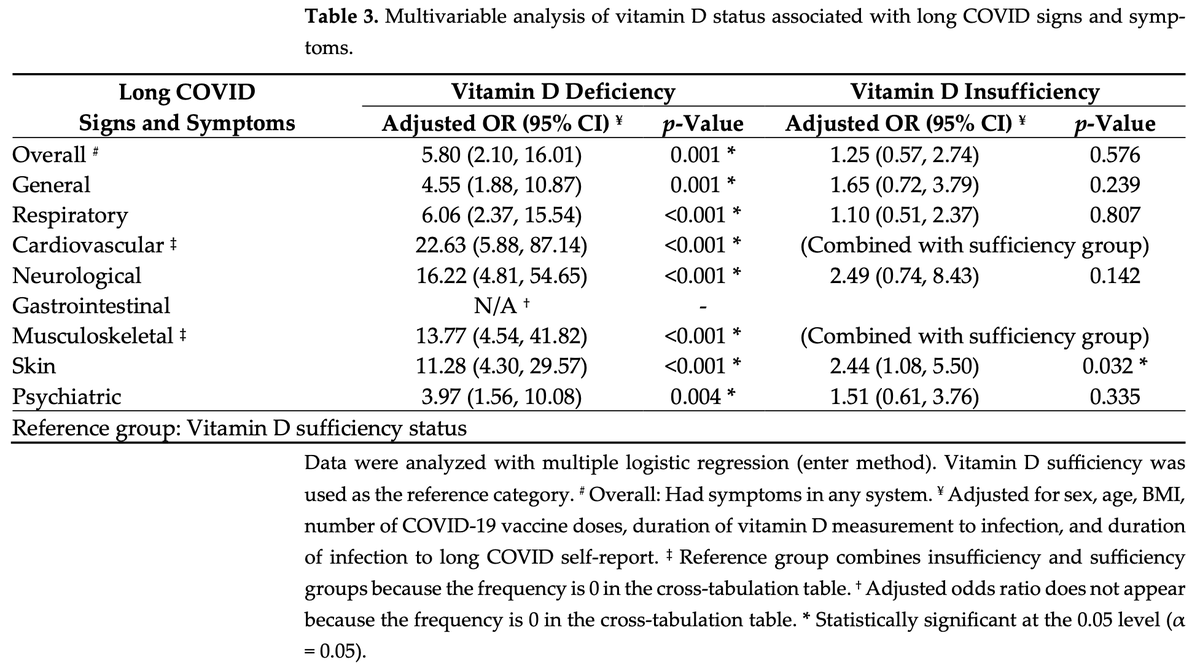
The 350th COVID-19 vitamin D study shows significantly higher risk of long COVID with vitamin D deficiency.
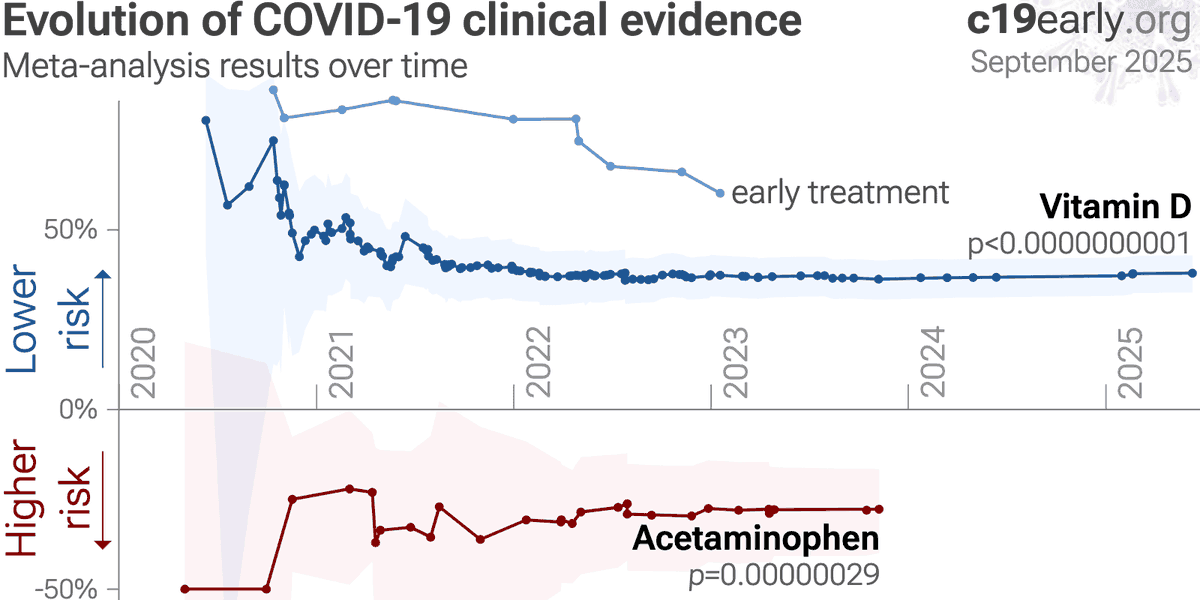
Vitamin D treatment has been known to reduce risk for COVID-19 in clinical studies since October 2020, yet as of 2025 only 18 countries have approved it for COVID-19.
1/
So this patient’s been here for weeks lingering. After just one to two hours of getting him sunlight yesterday he’s gone from 40 L 40% FIO2 to being on 2 L saturating 97%. Seriously he could be off oxygen.
My challenge is to any healthcare provider out there that’s reading this is to simply try getting your patients into the sunlight for 30 minutes a day and watch what happens.
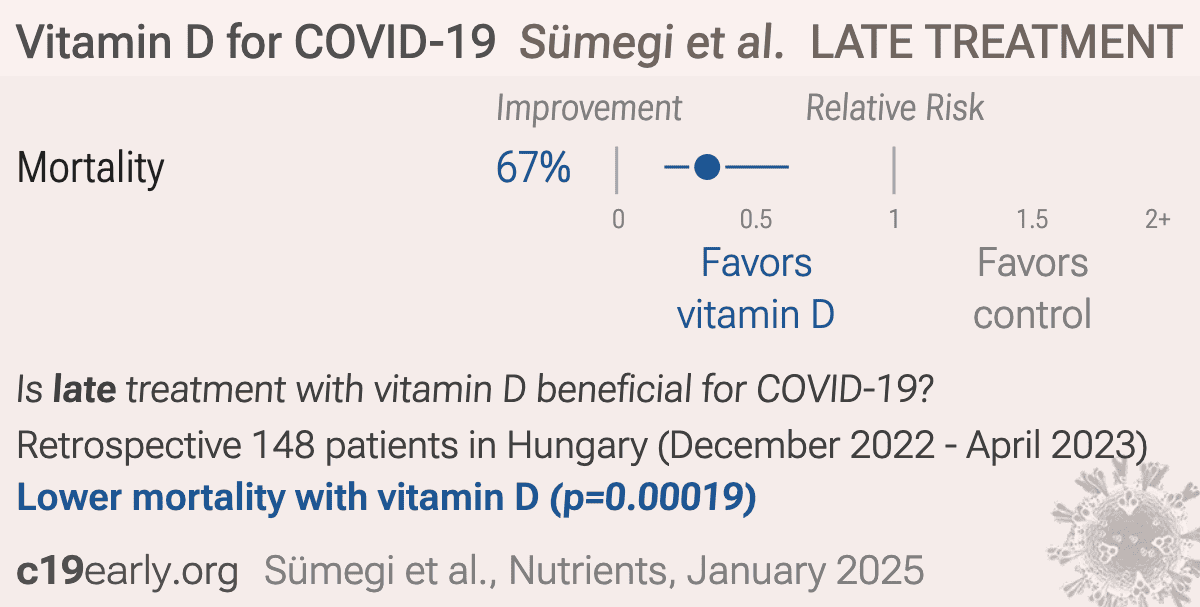
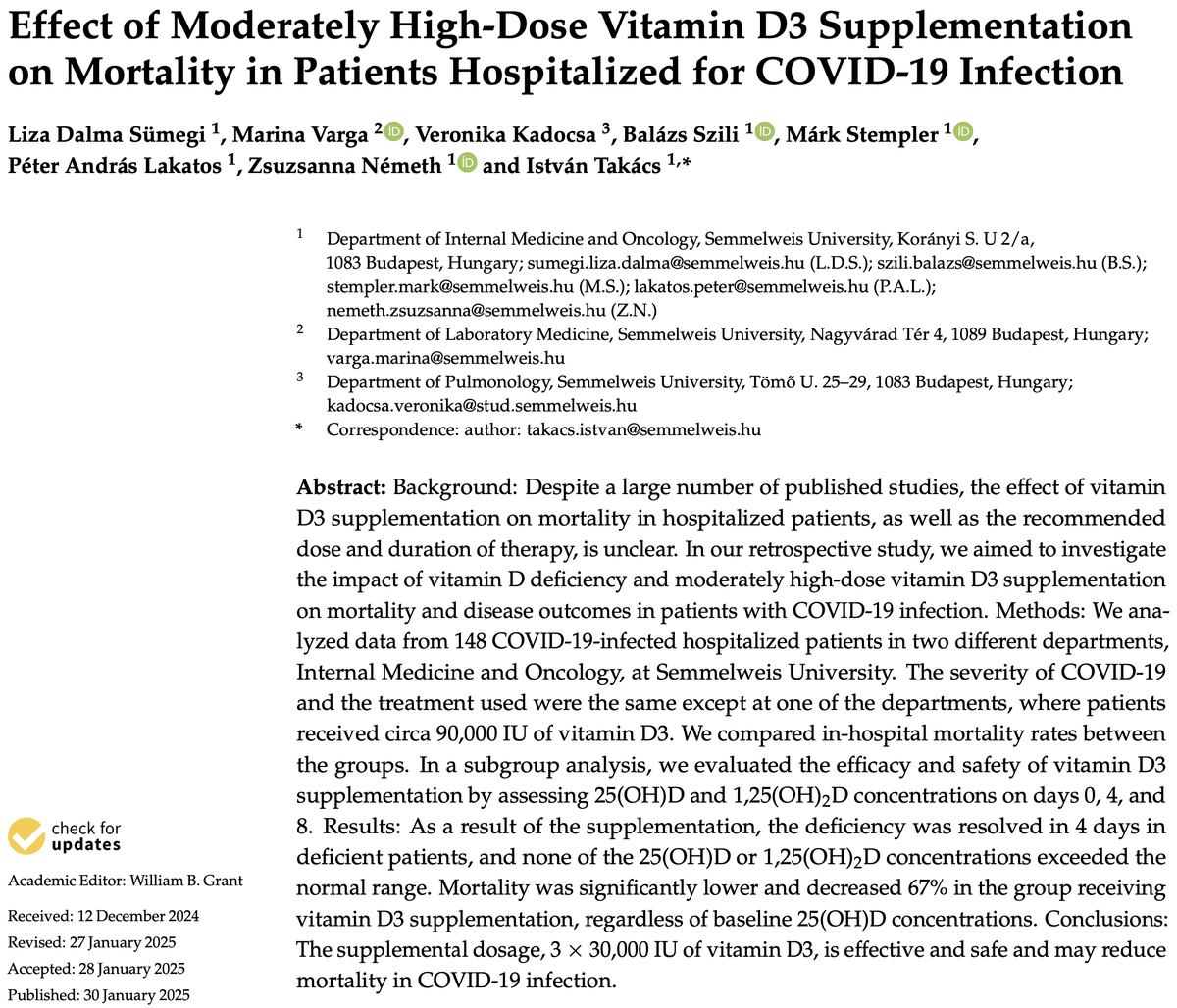
A new study shows 67% lower COVID-19 mortality with vitamin D treatment.
There are now 123 controlled clinical studies of vitamin D treatment for COVID-19.
What do we know? ⬇️
Vitamin D supplementation was associated with a 40% lower risk of dementia over a decade, a relatively recent study shows.
After five years, 84% of supplement users were dementia-free compared to just 68% of non-users in a study of over 12,000 people. Vitamin D reduced dementia risk by 33% in adults with mild cognitive impairment or APOE e4, a key genetic risk factor for neurodegenerative diseases.
And while vitamin D reduced dementia risk across the board, some groups benefitted more.
Women, adults with normal cognition, APOE e4 non-carriers, and those without depression saw the greatest brain-protective effects from vitamin D supplementation.
Vitamin D’s brain-protective effects may stem from its unique role as a steroid hormone, structurally akin to estrogen and cortisol. It regulates thousands of genes, many of which govern critical brain processes—an effect consistent with findings from randomized controlled trials showing improvements in cognitive function and IQ scores in older adults.
PMID: 36874594
“a clinically important biological function of HDL is as a component of the innate immune system”
Now, add other lipoproteins, and finally start viewing systems in the right context (“big picture”), not as isolated, druggable compartments.
https://t.co/yRtLgBEnw4.
Thouvenot: Largest therapeutic trial of vitamin D therapy in #MS. Oral vitamin D 100,000 IU every two weeks reduced disease activity by 34% in CIS patients and in early RRMS. #ECTRIMS2024
Sad to hear of the death of Leo Baggerly. Devoted supporter of Vit D, and initiator (with Carole) of @Grassroots4VitD, a key part of the Vit D world for the last 15 years. Leo will be greatly missed @Vit_D_Workshop
Leo Baggerly Obituary - San Diego, CA (https://t.co/26qwYAwI8Y)
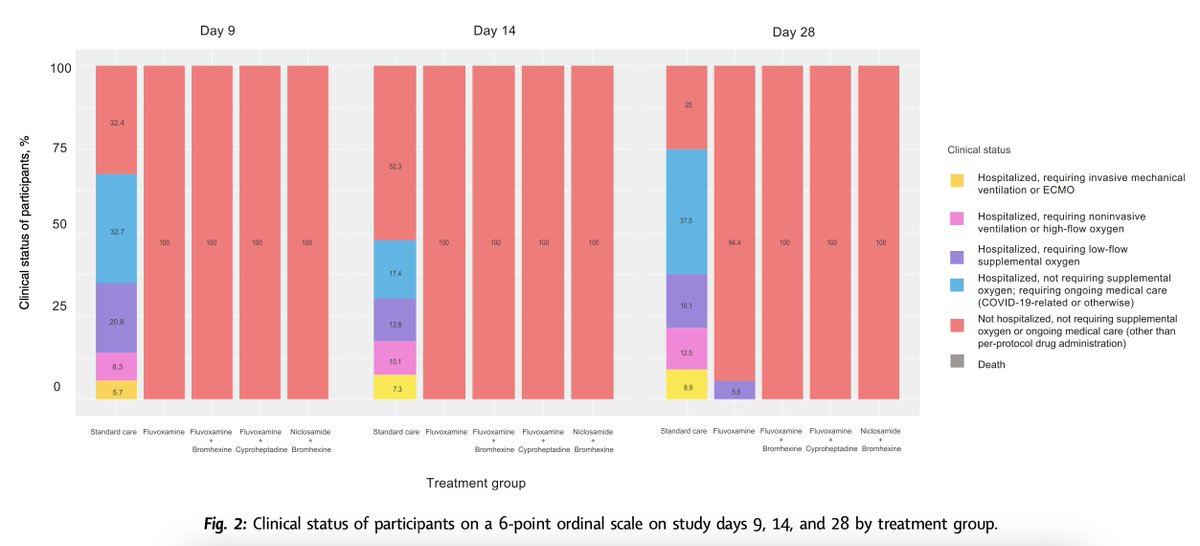
Our RCT on the use of repurposed medications for Covid-19, led by @dr_leshan, was published in @TheLancet's @eClinicalMed journal today.
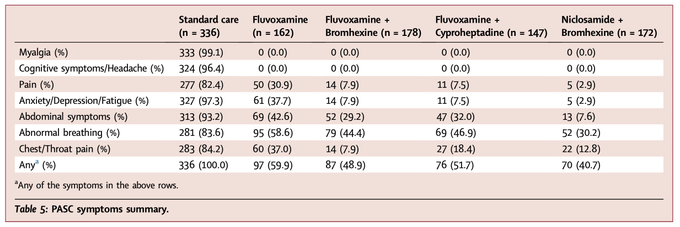
What we found was an astonishing reduction in acute clinical deterioration, but also a dramatic reduction in post-acute sequelae (Long Covid) symptoms, with zero patients developing brain fog/cognitive symptoms in the combo treatment arms.
995 patients were enrolled in Thailand (in 2021 to 2022) in an open-label outpatient RCT. Eligible were those with early, mild symptoms before signs of deterioration and began treatment within 48 hours of symptoms. 96% were partially or fully vaccinated (combo of viral vector, inactivated and mRNA). Assessed were a number of outcomes:
Four older, commonly available generic drugs were assessed
Fluvoxamine (FLV)- an SSRI with possible antiviral, anti-inflammatory, and serotonin reducing properties
Cyproheptadine - an older 1st generation sedating anti-histamine, potentially a blocker of serotonin effects on lungs.
Bromhexine - a cough medicine commonly used in Europe, but also a TMPRSS2 protease blocker
Niclosamide - an anti-helminthic (anti-worm) agent.
The effects were dramatic. Zero patients using combination treatments suffered any clinical deterioration
0 of 178 taking FLV + bromhexine
0 of 147 taking FLV + cyproheptadine
0 of 172 taking niclosamide + bromhexine
In the control arm,
47 of 336 (14%) suffered clinical deterioration by day 9 requiring high flow O2 or mechanical ventilation.
There were significant decreases in viral load, and marked decreases in inflammatory cytokine levels.
The most astonishing finding was a dramatic reduction in PASC (Long-Covid) symptoms,with zero patients with significant cognitive symptoms in the combination treatment arms at 90 days in all three combo treatment groups.
Dosing:
These are the doses used in the trial:
Fluvoxamine:
50mg twice daily x 2 days,
then 50mg in the morning, and 100mg evening for 12 more days,
then 50mg twice daily for 2 days (total 14 days)
This medication can be difficult to tolerate at higher doses (especially at 100mg twice daily), so easing into it may help tolerate it better, and using the higher dose at nighttime so the worst is experienced while sleeping.
Cyproheptadine:
4mg tablet three times daily for 14 days
In practice this may be difficult to tolerate as this is a sedating anti-histamine (same class as Benadryl), and taking once at nighttime may mitigate the worst
Bromhexine:
8mg tablet twice daily for 10 days
This is a relatively harmless and well tolerated cough medicine commonly found in Europe
Niclosamide
1000 mg twice times daily for a total of 14 days
The trial has some limitations, one being that less effective vaccines were used by some in this population (eg AZ, Sinopharm) vs what you'd find in a western population. Another is that extinct Alpha and Delta variants made up 41% of the infected (Omicron was 59%).
A few lessons we can draw from this:
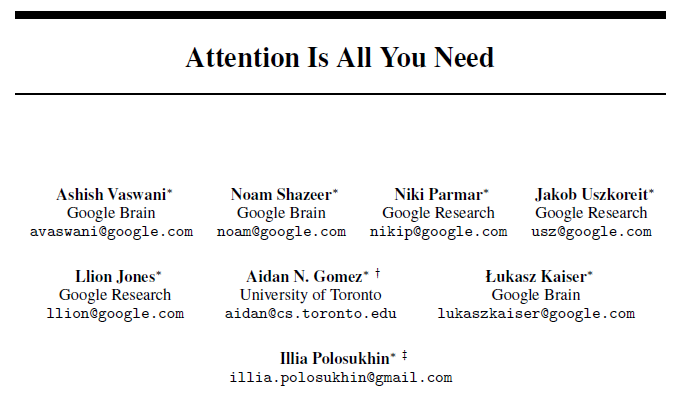
1) Peer review takes far too long - It takes far too long for important findings like this to reach the public. Millions could have been saved in the big waves in China and India if they had tried some combo of these cheap and relatively harmless drugs. The most important paper in computer science this century has never been published in an academic journal, but its effects are felt everywhere you use AI applications.
@michaelzlin recently wrote how he spent 2 years in peer review trying to publish about an anti-viral that beats Paxlovid clinically. The current system rewards gatekeeping and is costing us lives, and we might be better off moving to the model the physicists and computer scientists have been doing for decades, where the expected standard is publishing a preprint first, and peer review later.
2) We don't know enough. That these medications worked shows there are a number of mechanisms of viral injury, including the role of serotonin and blood clots, which we are are not properly appreciating in the medical world. The same mechanisms are likely behind many other severe systemic illnesses, likely including Long-Covid. There are too many unknown unknowns out there, and physicians are too timid to look into these dark corners.
3) Access needs to be improved. Antivirals like Paxlovid and Remdesivir are expensive and still hard to access for most of the world; the fact that a combo of generic and inexpensive drugs can offer similar benefits is a potential game-changer. National authorities should seriously look at these medications in the coming months and years.
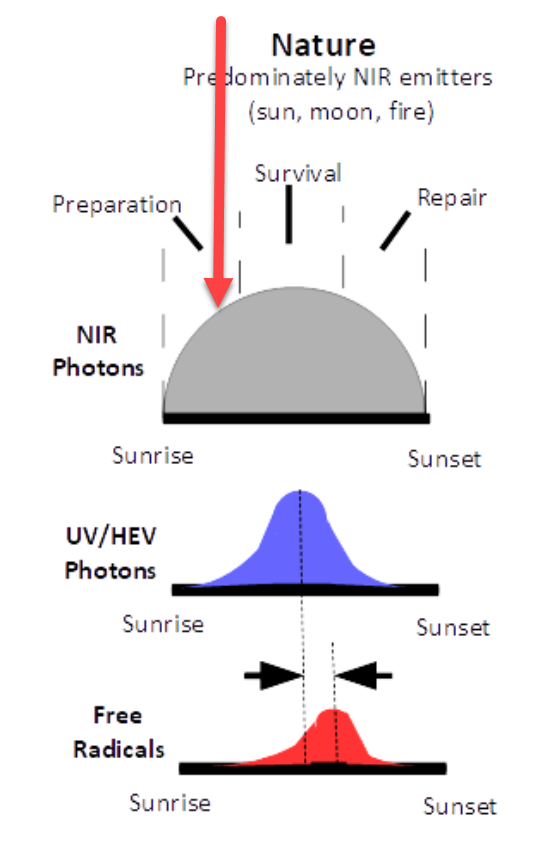
Notice that early in the day (red arrow) there is more NIR than UV light. Perhaps to condition your skin against the onslaught of UV.
We now have evidence that this is happening:
Thanks to @phdadams for forwarding this article to me.
https://t.co/rduOpjm3i9
I try not to be a drum-beating advocate of a ketogenic diet, but when it comes to neurological disorders, it increasingly appears as though some advocacy (and broadcasting) is warranted. This is a newly-published case study that documents the improvements in symptoms of a patient with ALS. Tragically, the patient suffers from a particularly devastating variant with a mortality of ~24 months. On his own, as the case report documents, the patient instituted a ketogenic diet. Clinicians reported "...he improved in ALS-related function (7% improvement from baseline), forced expiratory volume (17% improvement), forced vital capacity (13% improvement), depression (normalized), stress levels (normalized), and quality of life (19% improvement), particularly fatigue (23% improvement)." Not all clinical markers improved, but any improvement with this disease is remarkable. Even more remarkable is that the improvements have persisted, as they note "Now over 45 months since symptom onset, our patient remains functionally independent and dedicated to his TRKD." There is no doubt that the myriad cells of the nervous system respond favorably to ketones as a fuel source. https://t.co/nEPmuRifWV
This was the little outdoor garden at my hospital where I took a COVID patient on highflow oxygen at 35L/min 100% FIO2 and exposed him to 20-30 minutes of direct sunlight. Instead of needing intubation the next day is was on 15L oxymizer and was home 5 days later.
Excited. Just had a pt with severe covid. High flow 35L/min 100% and got him outside into the sun!!! Next day down to 15L/min oximizer. Day after down to 6L/min. Had ongoing covid for days before this. Anecdote only but gratifying! Full sun for 20-30 min. Hospitals need this.