If we don't teach children about the urgency needed to address the current #climatecrisis we are literally rising another generation which won't have answers everytime #nature carries out it's inventory.....@BwanikaCharles
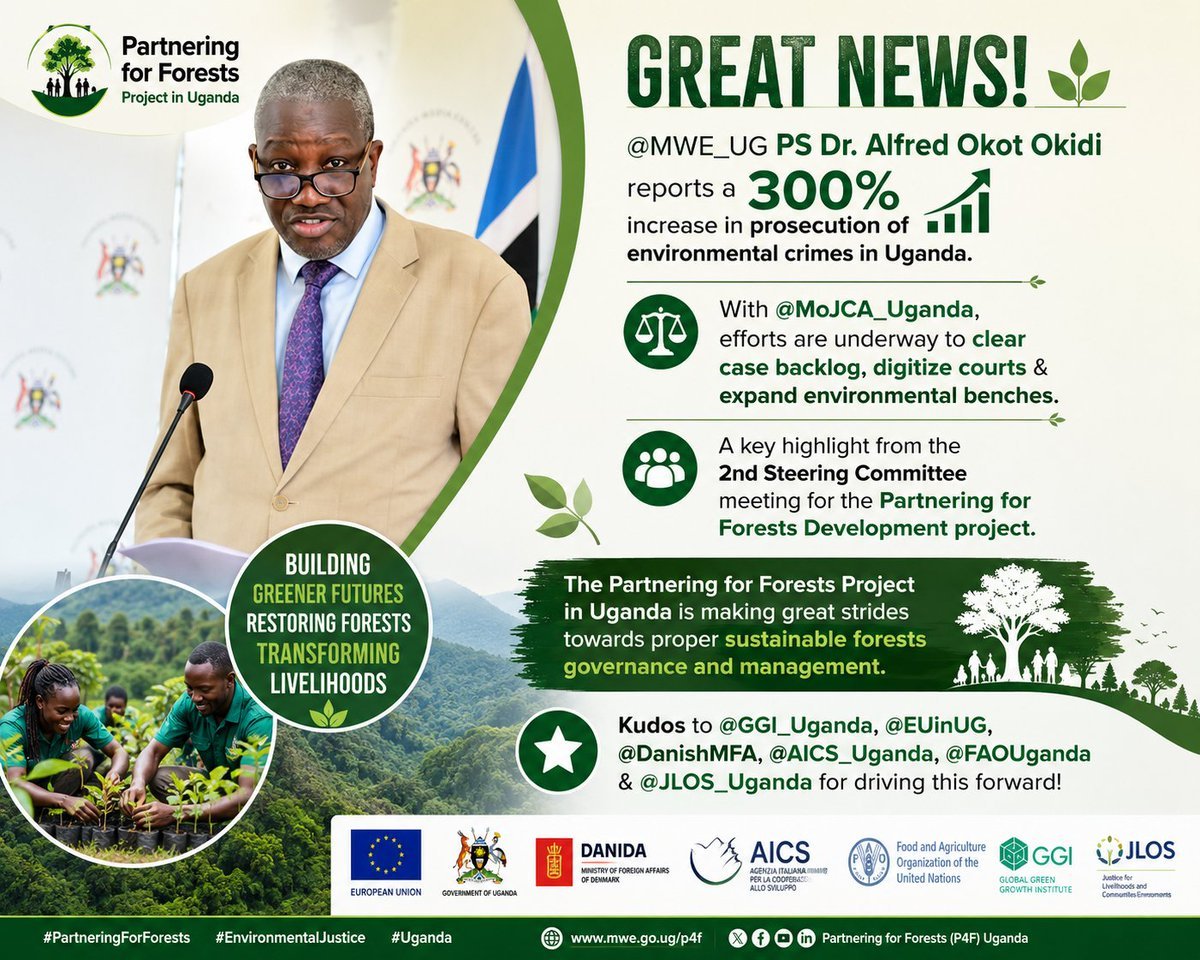
ENVIRONMENTAL JUSTICE WINS!
PS @min_waterUg Dr. @AlfredOkot: "We've seen a 300% increase in prosecution of environmental crimes in Uganda."
Revealed at the 2nd Partnering for Forests Steering Committee meeting. Partners: @GGI_Uganda, @EUinUG, @FAOUganda, @UNODCEastAfrica
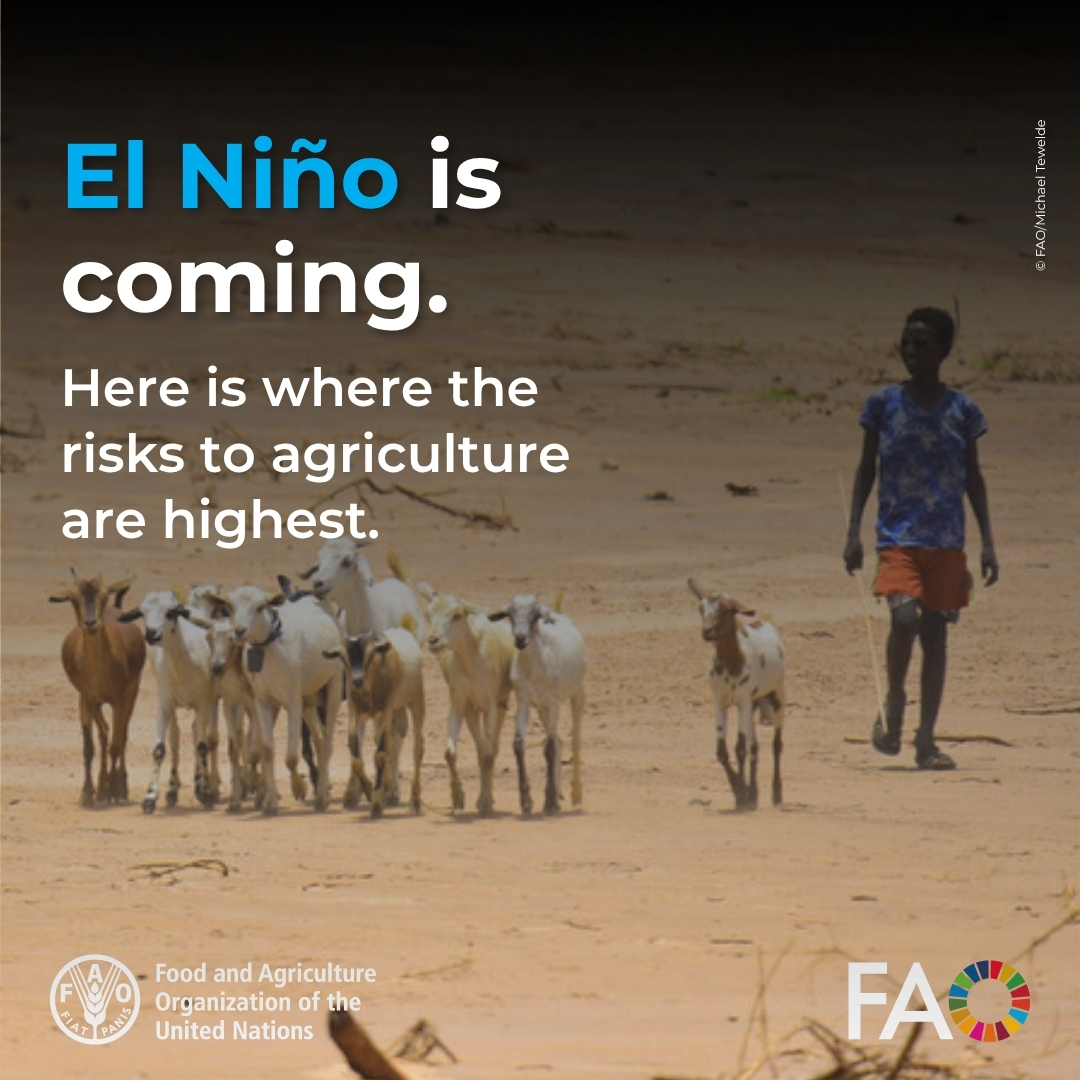
A new #ElNiño phase is likely to begin within weeks, putting agriculture on alert around the world.
New @FAO analyses allow for detailed mapping of where El Nino-linked drought is most likely to impact crops and pasturelands.
🔗 https://t.co/WN2buipBUB
The world spends billions to protect nature, yet trillions still fund its degradation.
This imbalance is driving climate change, biodiversity loss, and pollution.
But it can be reversed.
Here’s how: https://t.co/4SQmAOqwqw
When we choose sustainable travel, we help conserve ecosystems, protect wildlife, and ensure that future generations can experience the same beauty we enjoy today.
Travel responsibly. Explore consciously. Leave a positive footprint.🌱
#SustainableTravel#TravelwithTravad
Protecting the planet means reimagining how we live, learn and lead change together.
From classrooms to communities, @UNESCO is helping build a more resilient, just and sustainable future.
This #WorldEnvironmentDay, let’s turn awareness into action:
https://t.co/txEnqjHrIu
#WorldEnvironmentDay
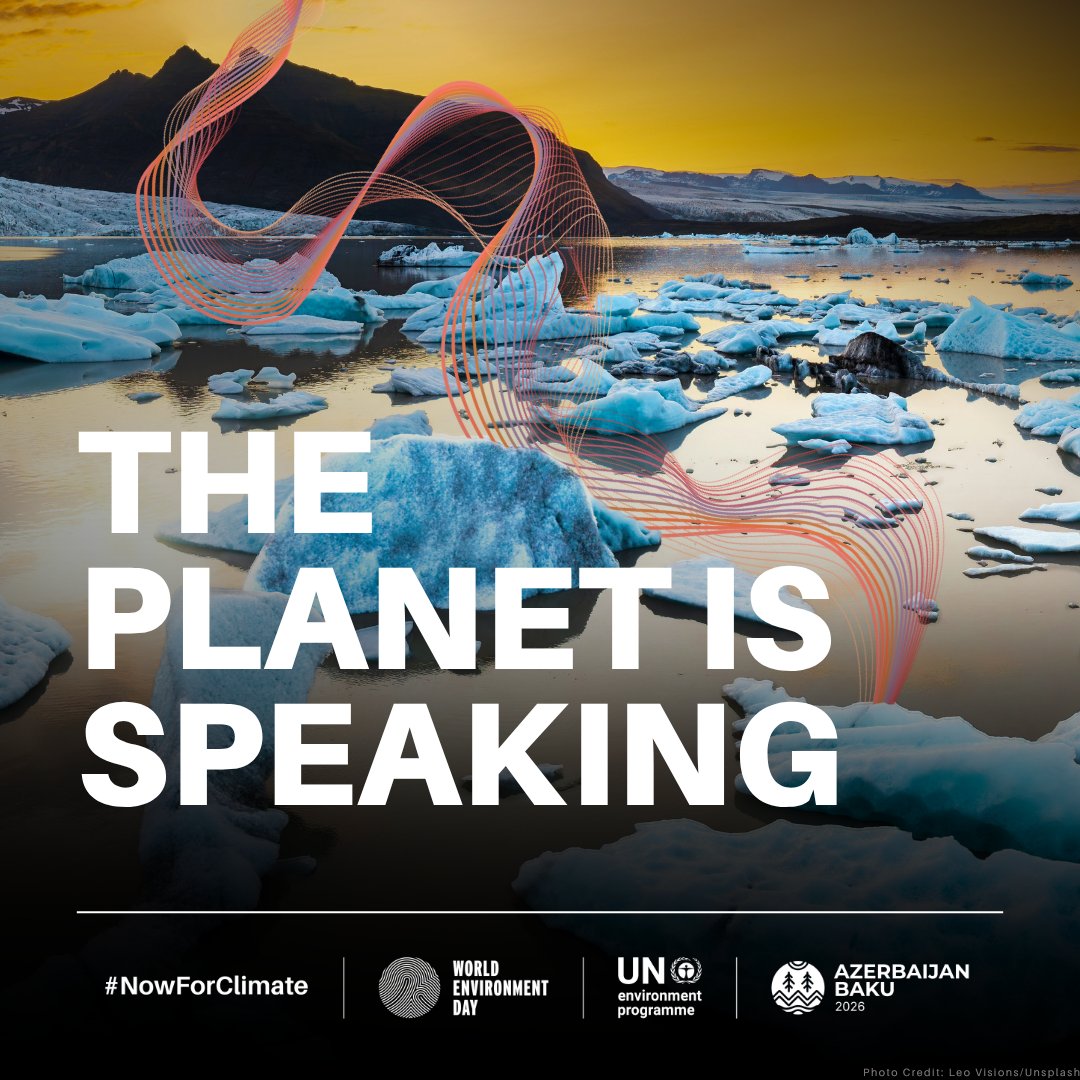
Chances are you know the climate is changing, & that means trouble.
From rising emissions to melting permafrost and economic risks, these 7 graphs break down the climate crisis today.
Learn why the world must act #NowForClimate:➡️ https://t.co/r8mplFsifT
Via @UNEP | #WorldEnvironmentDay
Climate change goes far beyond the environment. It affects public health, economies, infrastructure, and communities worldwide.
Over the past 50 years, extreme weather events have caused more than 2 million deaths and US$4.3 trillion in economic losses.
It’s time to act #NowForClimate: https://t.co/pF78hkRMBk
#WorldEnvironmentDay
Climate change is raising wildfire risk worldwide.
Hotter, drier conditions are making fires more frequent and intense putting communities, ecosystems and economies under growing pressure.
Our response is more urgent than ever: https://t.co/pF78hkRMBk
#NowForClimate #WorldEnvironmentDay
It is staggering to me that people are willing to give up a livable planet just to avoid the inconvenience of having to think for themselves.
The Environmental Cost of Artificial Intelligence: Carbon, Water, and Land Footprints | United Nations University https://t.co/eykKjcOMt6
Wildfires are creating unhealthy air far from active flames.
According to a new NASA study, wildfires have worsened ground-level ozone pollution across much of the U.S. since 2015. NASA’s satellite data and models help track air quality patterns across states and fire seasons.
The antidote to arrogance is not ignorance, but profound humility. It’s the understanding that a whale’s migration, a mycorrhizal network, and a mangrove’s root system represent a wisdom we are only beginning to decode. Our role is student, not master.
Our oceans cover more than 70% of the planet, yet only about 10% of them are currently protected. When we protect our seas, they thrive — and so does our planet.
Urge world leaders to deliver on their commitment to protect 30% of ocean habitat by 2030 today 👉 https://t.co/kw7BfVtXwt
Polar ice is melting at an accelerating rate. Sea levels are rising. Ocean systems are shifting.
The way we respond has never been more urgent.
This #WorldEnvironmentDay, join us #NowForClimate: https://t.co/e2SY5xwAG5
More than a decade after the Paris Agreement, greenhouse gas emissions continue to rise, accelerating climate change.
Humanity still has time to act #NowForClimate and curb these emissions.
Ahead of #WorldEnvironmentDay, here's how you can take action https://t.co/uLHCWFXQ1V
🌴Thanks to satellite data, we know how much forest the world is losing, and where.
Unless we know what’s driving tree cover loss, it’s impossible to know if it’s permanent or temporary; what the impacts are for people, nature and climate; and the solutions to keep forests standing. That’s where new data comes in.
Data on @globalforests, developed in collaboration with @GoogleDeepMind, reveals that 34% of tree cover losses worldwide from 2001-2025 were likely the result of permanent land use change, meaning trees won’t grow back naturally. This percentage nearly doubles in tropical primary rainforests, to 60%.
Learn more about what's driving #TreeCoverLoss👉 https://t.co/cbm9X8krwz
Fueled by unusually warm ocean waters in the tropical Pacific, El Niño conditions are developing and are set to influence global temperature and rainfall patterns.
Here's what you need to know.
THE LITTLE ICE AGE - The real reason why climate has been warming of recent is entirely natural: it is because we are still emerging from The Little Ice Age.
See painting of a frozen over Thames by Graham Turner. In the winter of 1683/84, the ice was almost a foot thick and the Thames remained frozen for weeks. Boats were fitted with skates and stalls set up with food, shops and games.
The Little Ice Age (LIA) was a period of significant regional cooling, particularly in Europe, characterized by harsh winters, and expanded glaciers.
Winter temperatures in Europe dropped as much as 2°C below modern averages.
The event lasted from roughly 1300 to 1850, spanning nearly 500 years. It is generally divided into phases: an initial cooling around 1300, a slightly warmer period in the 1500s, and the coldest interval between 1645 and 1715 (known as the Maunder Minimum).
The LIA was primarily triggered by the Grand Solar Minima, which caused reduced solar irradiance, and therefore cooling.
We are still emerging from the Little Ice Age, and that is the only reason some areas are warmer than centuries ago. This has very little to do with CO2 and everything to do with the Sun.
To put it simply, both the activity of the Sun and the Sun-Earth distance changes, and this modulates the amount of both solar irradiance and solar radiation, which affects clouds, and this combined change is what leads to long term changes in climatic temperatures.
It's definitely not CO2 causing any of this.