I am thrilled to share our latest publication on implementing personalized medicine for inflammatory skin diseases at CHUV, dpt dermatology, and I hope it becomes a valuable tool for dermatologists worldwide. https://t.co/mqOLTJVBjS
Mario Draghi's new report on EU competitiveness doesn't mince words.
"Across different metrics, a wide gap in GDP has opened up between the EU and the US, driven mainly by a more pronounced slowdown in productivity growth in Europe. Europe’s households have paid the price in foregone living standards. On a per capita basis, real disposable income has grown almost twice as much in the US as in the EU since 2000."
"First – and most importantly – Europe must profoundly refocus its collective efforts on closing the innovation gap with the US and China, especially in advanced technologies. Europe is stuck in a static industrial structure with few new companies rising up to disrupt existing industries or develop new growth engines. In fact, there is no EU company with a market capitalisation over EUR 100 billion that has been set up from scratch in the last fifty years, while all six US companies with a valuation above EUR 1 trillion have been created in this period. This lack of dynamism is self-fulfilling."
"There are not enough academic institutions achieving top levels of excellence and the pipeline from innovation into commercialisation is weak. [...] However, while the EU boasts a strong university system on average, not enough universities and research institutions are at the top. Using volume of publications in top academic science journals as an indicative metric, the EU has only three research institutions ranked among the top 50 globally, whereas the US has 21 and China 15."
"Regulatory barriers to scaling up are particularly onerous in the tech sector, especially for young companies. Regulatory barriers constrain growth in several ways. First, complex and costly procedures across fragmented national systems discourage inventors from filing Intellectual Property Rights (IPRs), hindering young companies from leveraging the Single Market. Second, the EU’s regulatory stance towards tech companies hampers innovation: the EU now has around 100 tech-focused laws and over 270 regulators active in digital networks across all Member States. Many EU laws take a precautionary approach, dictating specific business practices ex ante to avert potential risks ex post. For example, the AI Act imposes additional regulatory requirements on general purpose AI models that exceed a pre-defined threshold of computational power – a threshold which some state-of-the-art models already exceed. Third, digital companies are deterred from doing business across the EU via subsidiaries, as they face heterogeneous requirements, a proliferation of regulatory agencies and “gold plating” of EU legislation by national authorities. Fourth, limitations on data storing and processing create high compliance costs and hinder the creation of large, integrated data sets for training AI models. This fragmentation puts EU companies at a disadvantage relative to the US, which relies on the private sector to build vast data sets, and China, which can leverage its central institutions for data aggregation. This problem is compounded by EU competition enforcement possibly inhibiting intra-industry cooperation. Finally, multiple different national rules in public procurement generate high ongoing costs for cloud providers. The net effect of this burden of regulation is that only larger companies – which are often non-EU based – have the financial capacity and incentive to bear the costs of complying. Young innovative tech companies may choose not to operate in the EU at all."
More: https://t.co/x1d1ApvG2Z.
Check out our latest paper on dupilumab-associated ocular surface disease (DAOSD):
https://t.co/26KEVFSvBr
DAOSD is characterized by a Th1/Th17 cytokine profile & upregulation of markers of remodeling/fibrosis, likely the consequence of immune shift induced by #dupilumab
2 recent papers in the @jacionline by the groups of @DrPBrunner and johann gudjonsson describe the architecture of prurigo nodularis at single cell resolution. check out our editorial summarizing the major findings of these landmark studies https://t.co/BAgJdxuzRg
A summary of what we can learn about both inflammatory skin disease and cutaneous t cell lymphoma by systematically comapring the two disease groups:
#ctcl#inflammatoryskindisease
https://t.co/hhiyZQDzoy
Great article by Gluud and Nils Ødum on cytokine signaling in #ctcl. Puts JAK/STAT signaling in the limelight for new therapeutic approaches. https://t.co/a1C2qWJZCc
An unexpected link between sugar and cytokines: Our latest research on PPAR-gamma in T cell metabolism in human skin inflammation has just been published in @NatureComms. https://t.co/fWXcaaQ9bG
An unexpected link between sugar and cytokines: Our latest research on PPAR-gamma in T cell metabolism in human skin inflammation has just been published in @NatureComms. https://t.co/fWXcaaQ9bG
hi all
this afternoon, we‘ll host the 2nd day of the ESDR:UADV „state of the art lectures“ in support of our ukrainian colleagues. it‘s great content for a great cause! join for free!
https://t.co/1dctVO0PJS
Great article by Gluud and Nils Ødum on cytokine signaling in #ctcl. Puts JAK/STAT signaling in the limelight for new therapeutic approaches. https://t.co/a1C2qWJZCc
A summary of what we can learn about both inflammatory skin disease and cutaneous t cell lymphoma by systematically comapring the two disease groups:
#ctcl#inflammatoryskindisease
https://t.co/hhiyZQDzoy
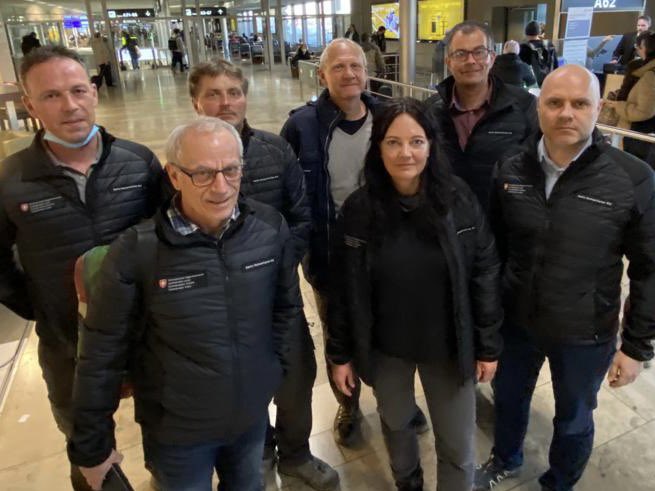
Urgent support for the Ukrainian population 👉 #Switzerland 🇨🇭 is sending around 25 tonnes of relief supplies to Warsaw in the next two days, including medical equipment provided by @vbs_ddps. A @SwissHumAidUnit team is flying out tonight to prepare aid efforts on the ground 🙏