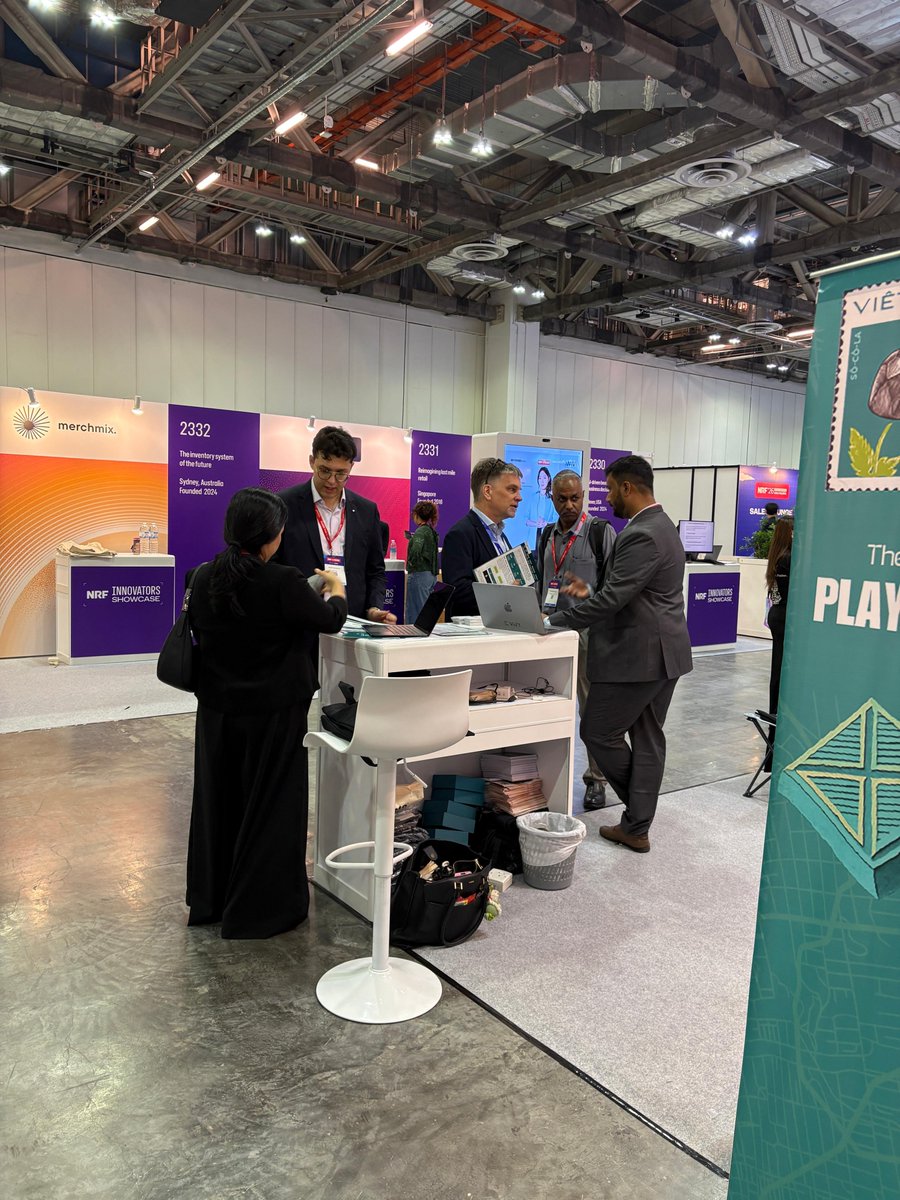
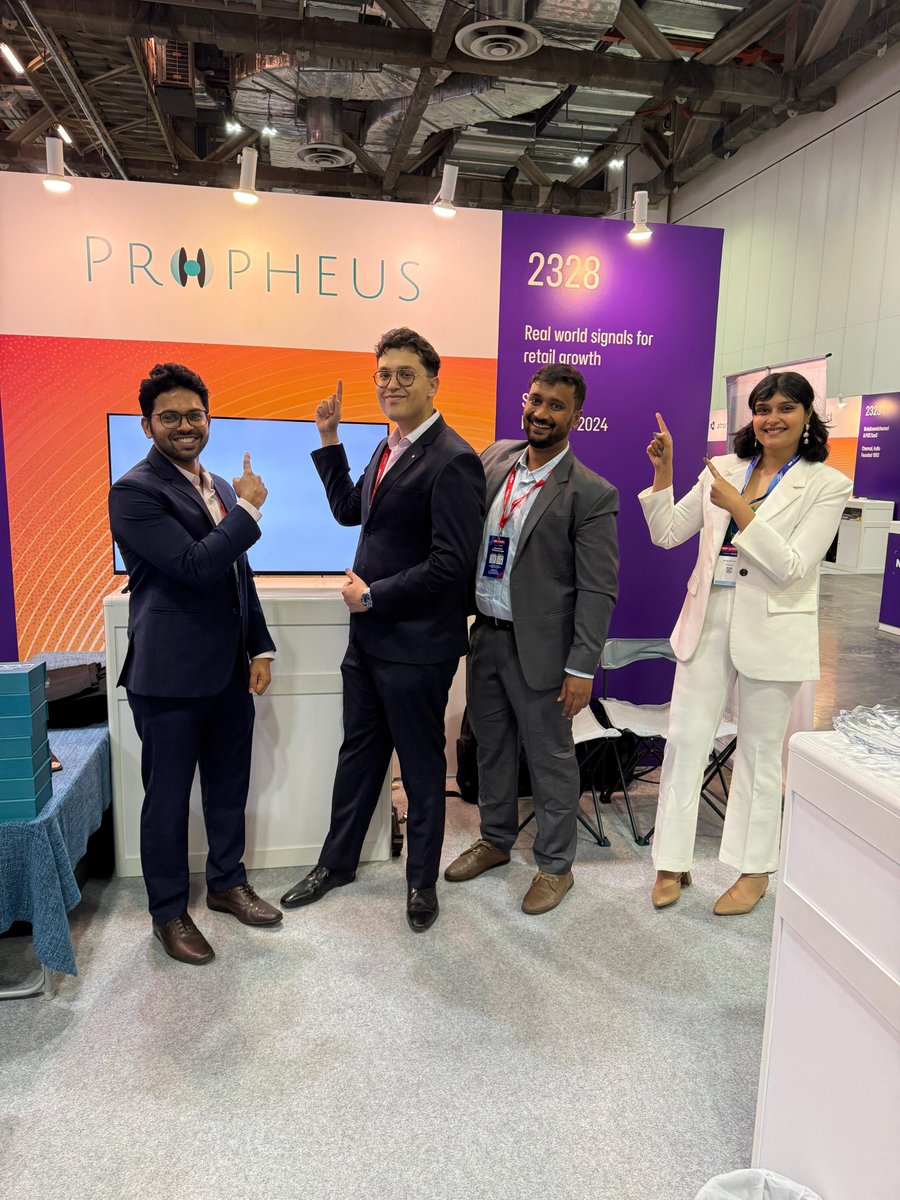
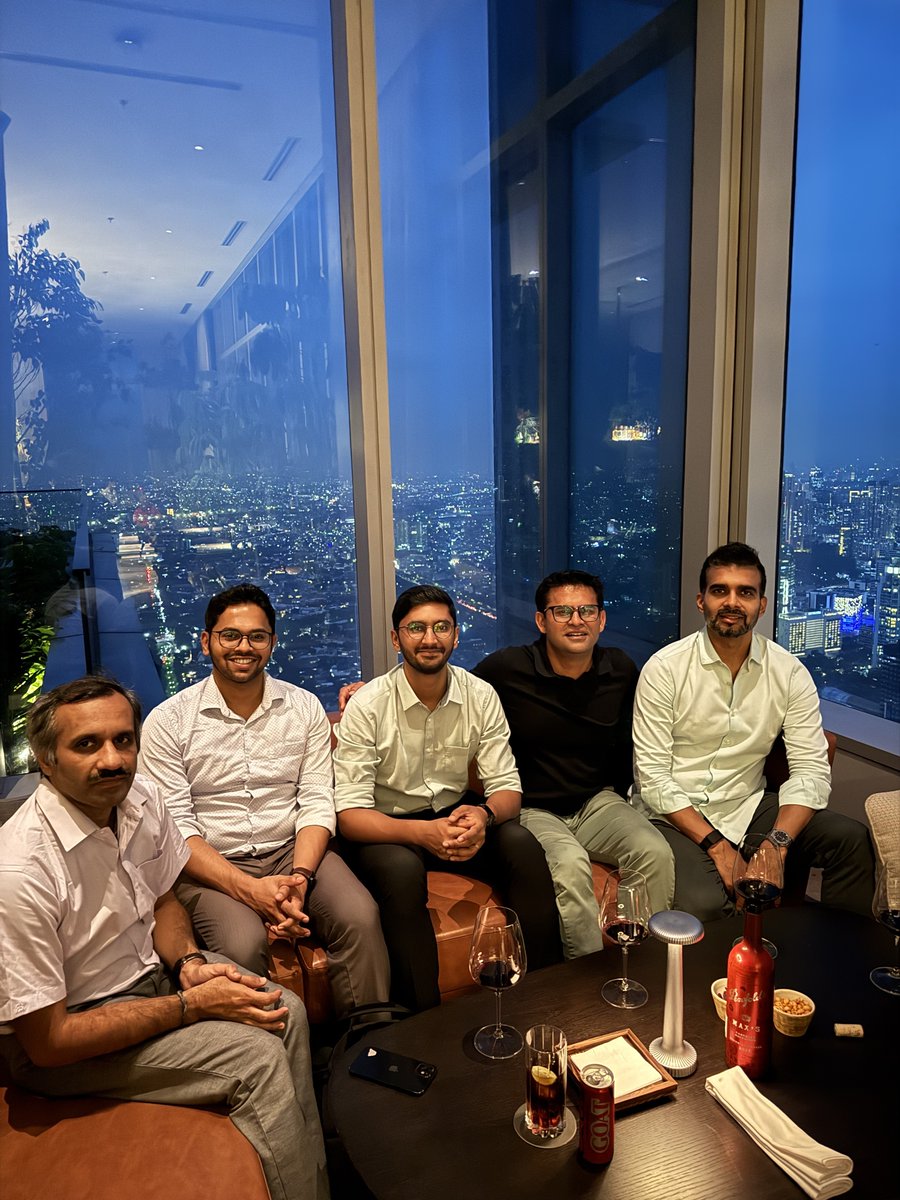
Just wrapped three days at NRF 2026: Retail's Big Show Asia Pacific in Singapore with the @Propheusai team.
What stood out for me was watching the team sell - on their feet, in person, going out of their way to get retailers to stop and listen. The old school way but still the most effective.
For every two people we convinced to visit, there were two we couldn't. Rejections are the reality of selling and can be disheartening. And yet, what made me proud was that nobody slowed down for a second.
The highlight reel for me came from a retailer. He visited our booth on day one. Came back on day two - with colleagues. Spent the next conversation doing the selling himself, explaining Propheus to his own team while we listened.
We didn't ask him to. He just believed in what he'd seen.
That's real validation and what actually matters. A customer who becomes your advocate before they're even a customer yet.
We're coming home with real conversations to progress. Looking forward to what comes next.
@sachinjose | @caesarpratap | @VazElishia | Shrey Sankalp
WORLD MODELS are all the rage, as the AI community tries to pivot from the perceived shortcomings of large language models to AIs that use internal “world” models of the environment in which they act.
Such AIs, instead of predicting the next token, will predict the next set of states of the environment+agent, conditioned on some action that the agent may or may not take. World modeling AIs promise much—but this is not a new concept by any means.
Psychologists, cognitive scientists and now computational neuroscientists have known for a while (the history goes back 150 years) that our brains must be modeling the world and using these models to hypothesize the external causes of sensory inputs. These hypotheses are our perceptions.
In my first post in a series exploring world models for the WHERE MACHINES THINK Substack, I discuss the neuroscientific rationale, and put the current interest in historical context. https://t.co/xqXXSEhpg0
Aravind Srinivas, Perplexity
Aravind Narayanan, OpenAI
Aravind Jain, Glean
Aravind Swami, Kollywood
If you are Aravind, you have to talk AI.
@Aravind_SA your turn
If there's one true egalitarian space, it's Bengaluru's Udupi restaurants. Why do we not have such places elsewhere? Clean, tasty, no nonsense affordable food for all. @peakbengaluru
Can sympathize with him on one thing. Keep visiting the customer and make a passionate pitch, even when you know that there is a nil chance of conversion.
#TheHedgehogStrategy
The Greek poet Archilochus wrote:
“The fox knows many things, but the hedgehog knows one big thing.”
When attacked, a hedgehog does exactly one thing - it curls into a tight, spiky ball. No tricks. No improvisation. Just consistency. The fox, clever and adaptable, tries everything. And still loses.
Jim Collins later popularized this idea in business: long-term winners aren’t those doing many things well, but those doing one thing exceptionally well.
Watching the current AI gold rush, it feels like most companies are choosing to be foxes.
Everyone is chasing the newest model, the latest agent framework, the buzziest feature. Strategy keeps changing. Focus keeps shifting. Effort is spread thin.
You can’t blame them as well — every day brings a new flood of ideas, innovations, and hype in the AI world.
But the teams making real progress in Enterprise AI are doing the opposite.
They’ve made a conscious decision to narrow their scope and go deep. They are focusing on the Last Mile execution.
At @EvamLabs, we’ve chosen to be a hedgehog.
Our focus isn’t on models or hype cycles - it’s helping our customers on the Last Mile execution. That moment where AI actually meets real workflows, real data constraints, and real humans.
That’s our “spiky ball”: E.D.G.E. execution.
The market can throw new models, new narratives, or new competitors at us. But if you keep executing the last mile better than anyone else, you don’t need to chase every trend.
In a noisy market, clarity and not complexity is the real advantage. 🦔
@michellemzhou@sachinjose@caesarpratap@SauravBharadwj@shuklashobhit
@deepigoyal What does a hypothesis even mean?🤣
It’s fascinating how the word has become the adult version of ‘I just made this up but hear me out’ - except now with extra confidence and zero data.
We have been having mini-celebrations over the past months whenever a major customer agrees to do even a trial run with us. Not all of them are wins, but what the heck, we should keep finding reasons to celebrate.
Big customers take time. But when they convert, they can propel a company into an entirely different orbit.
The Databricks-Microsoft partnership is a perfect example of how transformative deals rarely happen overnight. That collaboration faced multiple setbacks at different organizational levels, despite having support from senior leadership including people at the top. But when it did happen, it catapulted Databricks into a whole new level.
There are countless other examples like this: Salesforce - Apple, Spotify - Facebook, and many more. All of them died multiple times before becoming a success.
Over the past months (and it’s early days for me on GTM at this scale), I have picked few nuggets which have been effective in winning customers:
#1 Deliver real impact: Your product has to create clear, unmistakable value. If the impact isn’t meaningful, interest fades quickly - no matter how innovative your tech is.
#2 Patience is a virtue: Enterprise sales and GTM demand long-term commitment. You often have to persuade a broad range of stakeholders, each with unique priorities and concerns.
#3 Expect setbacks: Deals stall. Champions change roles. Priorities shift. The teams that win learn, adapt, and come back stronger.
#4 Over engage: Credibility and trust-building across various customer touch-points and functions increase your chances of winning and sustaining partnerships.
#5 Big wins take big effort: When such deals finally close, they unlock new channels, integrations, and possibilities that justify the effort, often resetting benchmarks in the industry.
And above all not giving up on customers is critical.
@shuklashobhit@michellemzhou@sachinjose@sameer_pendse@caesarpratap@manojumapathy1
Humans in the Loop is a powerful reminder that AI isn’t just code, it’s people. An essential viewing about a first-gen Adivasi data annotator. The movie was a powerful reminder of the hidden human workforce shaping our AI future - with all its biases, empathy and possibility.
@shuklashobhit Questioning the status quo (from past, present ) unapologetically - it’s the first step. Pride with perspective > pride without purpose
@nasqret If discovery in mathematics is as much about choosing what questions matter as it is about solving them, how can a system trained only on existing questions ever transcend the boundaries of its data?