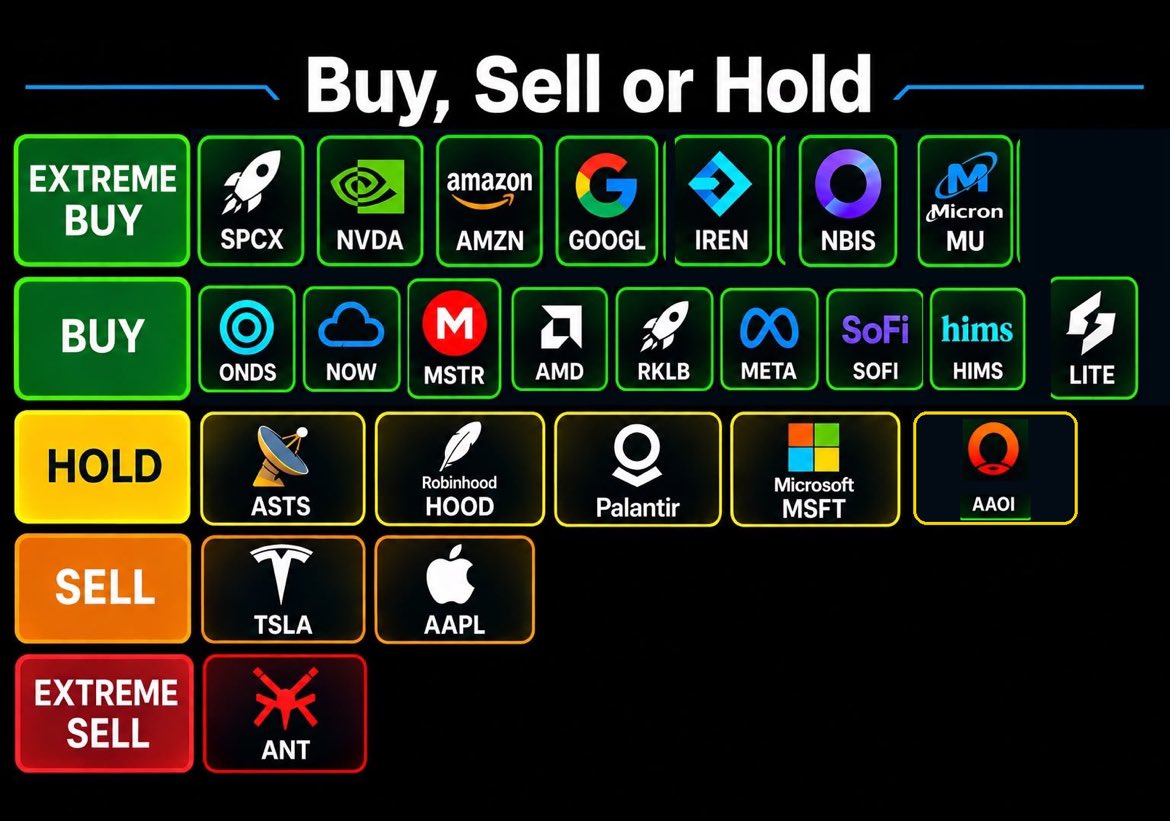
@pdicarlotrader One thing investors shouldn't overlook is downside risk. A strong company doesn't always mean a good entry price. Valuation and timing still matter.
@StockSavvyShay One thing investors shouldn't overlook is downside risk. A strong company doesn't always mean a good entry price. Valuation and timing still matter.
@IncomeSharks One thing investors shouldn't overlook is downside risk. A strong company doesn't always mean a good entry price. Valuation and timing still matter.
@EchoAnalysis Interesting perspective. However, I think the market may be underestimating the long-term growth potential here. The next few earnings reports could be critical.
@Kendallde_ Interesting perspective. However, I think the market may be underestimating the long-term growth potential here. The next few earnings reports could be critical.
@TheWaveCount Interesting perspective. However, I think the market may be underestimating the long-term growth potential here. The next few earnings reports could be critical.
@TedPillows Interesting perspective. However, I think the market may be underestimating the long-term growth potential here. The next few earnings reports could be critical.
@StonkChris Interesting perspective. However, I think the market may be underestimating the long-term growth potential here. The next few earnings reports could be critical.
@AshCrypto Interesting perspective. However, I think the market may be underestimating the long-term growth potential here. The next few earnings reports could be critical.
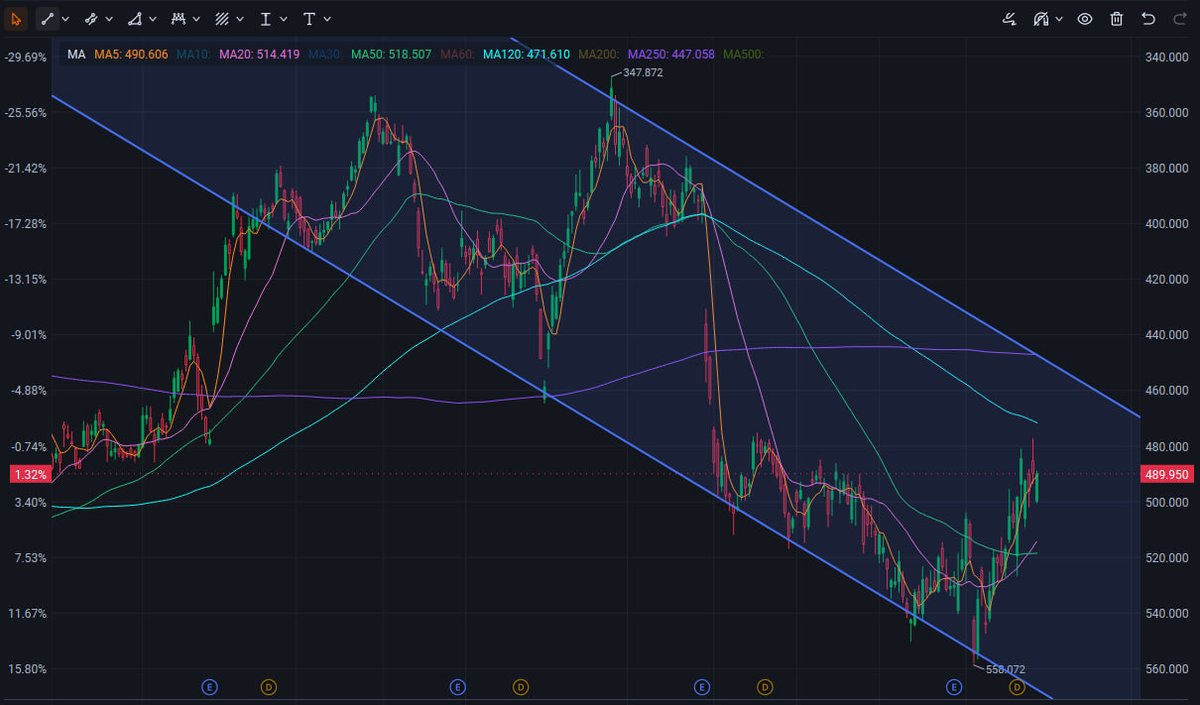
Microsoft $MSFT: Azure is growing 48%, Copilot adoption is accelerating, but Microsoft faces another important challenge — enterprise service reliability.
Microsoft's Q1 FY2027 earnings show that AI is increasingly translating into measurable cloud and enterprise software growth.
1. Azure: AI Infrastructure Demand Remains Strong
Q1 FY2027:
Total Revenue: $92.3 billion, up 19% YoY.
Microsoft Cloud Revenue: $63.9 billion, up 30%.
Azure Revenue Growth: 48%.
Commercial Remaining Performance Obligations: $677 billion, up 73%.
Management expects Azure revenue growth of 49%–50% in constant currency for the next quarter.
Enterprise demand for cloud computing and AI infrastructure remains strong.
2. Copilot: AI Monetization Is Accelerating
Three important developments:
Daily Copilot users increased nearly 50% quarter over quarter and more than 5X year over year.
Customers with over 50,000 paid Copilot seats increased more than 8X year over year.
Copilot customers using consumption-based billing increased over 75% duri
Black Friday, here are the "discounts" of the US stocks I'm tracking 👇
$FPS 19.33 | -71%
$CRDO 111.37 | -64%
$VOYG 19.71 | -62%
$SOFI 13.40 | -56%
$MU 633.02 | -50%
$APP 394.00 | -47%
$NFLX 60.71 | -45%
$NVDA 148.00 | -39%
$GOOGL 271.25 | -34%
$OSCR 27.60 | -28%
$ZETA 32.67 | -16%
I'll start with $MU and $NVDA. Tonight, Micron rose by over 5%, while NVIDIA remained below its previous closing price. Which one are you waiting for?
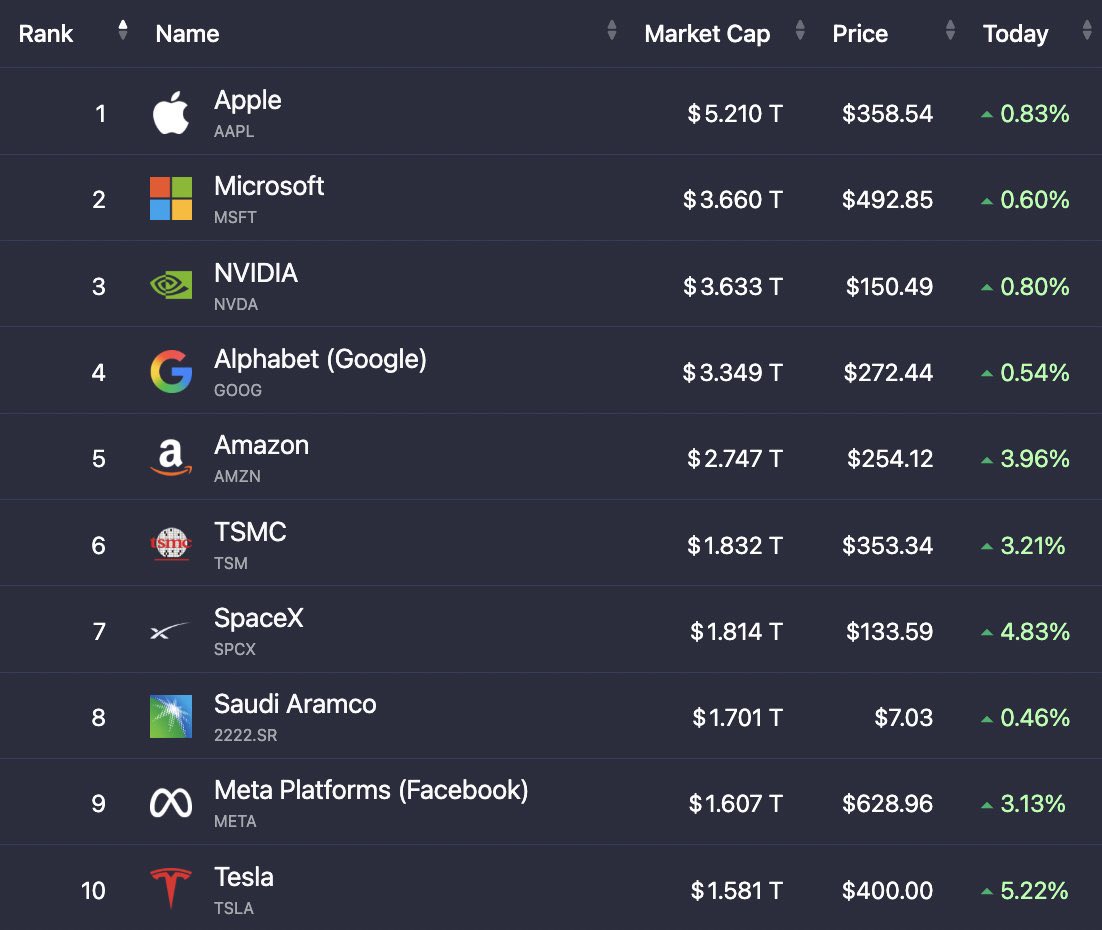
Amazon $AMZN: AI cloud computing is becoming a major growth engine, but its $220 billion capital expenditure plan raises an important question.
Can massive AI investments translate into sustainable long-term returns?
Amazon's Q3 2026 earnings reveal several important developments.
1. AWS: The Key Growth Engine
Q3 2026:
AWS Revenue: $46.0 billion, up 39.3% YoY.
AWS Operating Income: $17.77 billion.
Annualized Revenue Run Rate: Approximately $184 billion.
AWS Backlog: $578 billion.
AWS just delivered its fastest growth in nearly five years, highlighting strong demand for cloud computing and AI infrastructure.
2. Overall Financial Performance
Amazon reported:
Total Revenue: $201.9 billion, up 12% YoY.
Operating Income: $28.1 billion.
Operating Margin: 13.9%, a company record.
Net Income: $20.7 billion.
The company is expanding its business while improving overall operating efficiency.
3. The Biggest Risk: AI Infrastructure Spending
Amazon expects approximately $220 billion in capital expenditures for 2026.
Meanwhile, trailing twelve-month free cash flow was negative $42.4 billion, primarily due to increased AI infrastructure investments.
This raises an important question:
Can massive spending on data centers, servers, and AI infrastructure generate sufficient future returns?
4. What I'm Watching Next
AWS: Can revenue growth remain near 40%?
AI Investment: Will infrastructure spending translate into sustainable revenue growth?
E-commerce: Can holiday demand support retail and advertising performance?
Free Cash Flow: When will these massive investments begin translating into stronger cash generation?
Amazon's Q4 revenue guidance stands at $240–247 billion, with operating income guidance of $28.5–33.5 billion.
My View:
Amazon's long-term investment thesis is evolving beyond traditional e-commerce.
AWS and AI infrastructure are becoming increasingly important to its future growth.
However, strong revenue growth alone is not enough.
The real question is how much sustainable profit and free cash flow these investments can ultimately generate.
Where do you see Amazon's biggest growth opportunity?
A. AWS Cloud Computing
B. AI Infrastructure
C. E-commerce & Advertising
D. AI Assistants & Emerging Businesses
#AMZN #ArtificialIntelligence.
Palantir $PLTR just secured a $300 million defense AI contract with Poland. Europe's defense technology market may be opening a new growth opportunity.
On November 27, 2026, Reuters reported that Poland signed a five-year agreement with Palantir worth approximately $300 million.
The software will use AI to support decision-making by military commanders.
One important detail: Poland says the keys, servers, and information will remain under the exclusive ownership of the Polish Armed Forces.
1. Why Does This Deal Matter?
This is more than another government contract.
Three developments deserve attention:
Defense AI: AI is becoming increasingly important in military decision-support systems.
Data Sovereignty: European governments want greater control over sensitive data and infrastructure.
International Expansion: Can Palantir replicate its U.S. success across European markets?
2. Strong Fundamentals
Palantir's Q3 2026 results:
Total Revenue: $2.313 billion, up 96% YoY.
U.S. Commercial Revenue: $984 million, up 148%.
U.S. Government Revenue: $953 million, up 96%.
Adjusted Free Cash Flow: $1.216 billion.
The company also raised its FY2026 revenue growth guidance to approximately 91%.
3. One Important Detail Investors Shouldn't Ignore
The $300 million agreement spans five years, equivalent to roughly $60 million annually on a simple average basis.
That makes the strategic significance potentially greater than its immediate financial contribution.
Actual revenue recognition will depend on contract execution and delivery terms.
4. What I'm Watching Next
More European defense AI contracts.
Continued U.S. commercial growth.
Expansion of government business.
Sustainable profitability and cash flow.
My View:
Palantir's long-term opportunity isn't simply about winning individual contracts.
It's about becoming an essential AI infrastructure platform for governments and large enterprises.
However, strong business growth does not automatically justify any stock valuation. Execution, competition, and future earnings still matter.
Where do you believe Palantir's biggest growth opportunity lies?
A. U.S. Government & Defense
B. International Defense Markets
C. Enterprise AI Commercialization
D. AI Software & Data Platforms
#PLTR #ArtificialIntelligence
Source: Reuters, November 27, 2026; Palantir Q3 2026 Earnings Release.
For informational purposes only. Not investment advice.
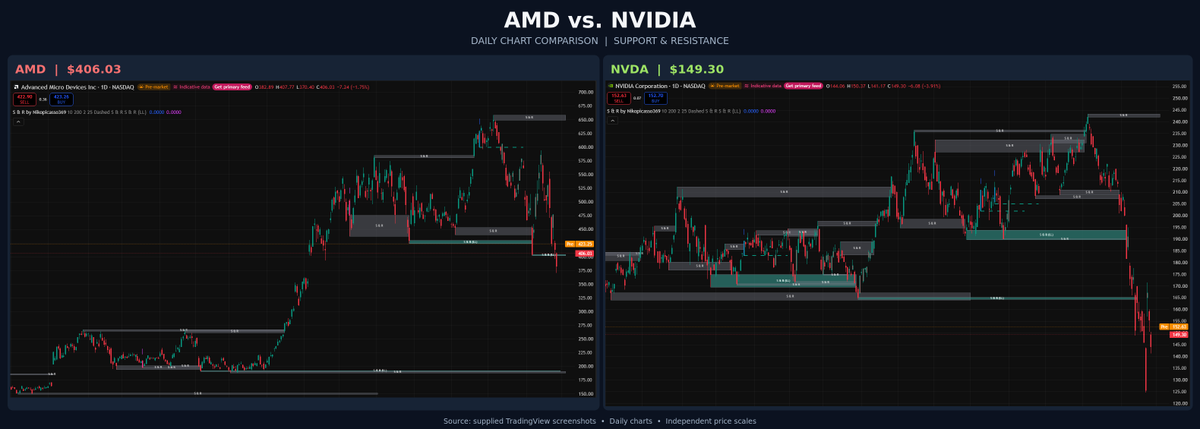
The AI chip battle is entering a new phase.
$NVDA vs. $AMD — who will capture more of the next wave of AI infrastructure spending?
On November 27, semiconductor stocks rebounded in premarket trading. According to Reuters, as of 6:42 a.m. ET:
$NVDA +3.6%
$AMD +4.4%
$AVGO +3.4%
But the bigger story isn't today's price action. It's what the latest earnings reveal about the competitive landscape.
1. NVIDIA: Scale and Ecosystem Leadership
Q3 FY2027:
Revenue: $115.8 billion, up 103% YoY.
Data Center Revenue: $107.6 billion, up 110%.
Gross Margin: 74.8% (GAAP).
Q4 Revenue Guidance: $130 billion, ±3%.
NVIDIA's advantage extends beyond GPU performance. Its CUDA ecosystem, networking technology, and full-stack data center platform remain major competitive strengths.
2. AMD: Accelerating Growth
Q3 2026:
Revenue: $13.4 billion, up 45% YoY.
Data Center Revenue: $8.5 billion, up 97%.
Gross Margin: 54% (GAAP).
Q4 Revenue Guidance: Approximately $17 billion, ±3%.
AMD is expanding its position through Instinct GPUs, EPYC server CPUs, and its Helios rack-scale systems.
3. What Really Matters Next?
Product Performance: Can both companies continue improving AI training and inference efficiency?
Software Ecosystem: Can AMD narrow the gap with CUDA?
Market Share: Will major cloud providers increase their AMD deployments?
Profitability: Can rapid revenue growth translate into sustainable earnings and cash flow?
My View:
NVIDIA still holds a significant advantage in scale and ecosystem maturity.
AMD's opportunity comes from expanding AI demand and customers seeking more supplier flexibility.
I don't believe AMD needs to replace NVIDIA for both companies to benefit.
The bigger question is whether the AI infrastructure market will become large enough to support multiple major winners.
Which company do you believe will capture more incremental AI chip market share over the next two years?
A. NVIDIA $NVDA
B. AMD $AMD
What's your reasoning?
#Semiconductors #AI
Sources: NVIDIA and AMD Q3 2026 earnings releases; Reuters, November 27, 2026.
For informational purposes only. Not investment advice.
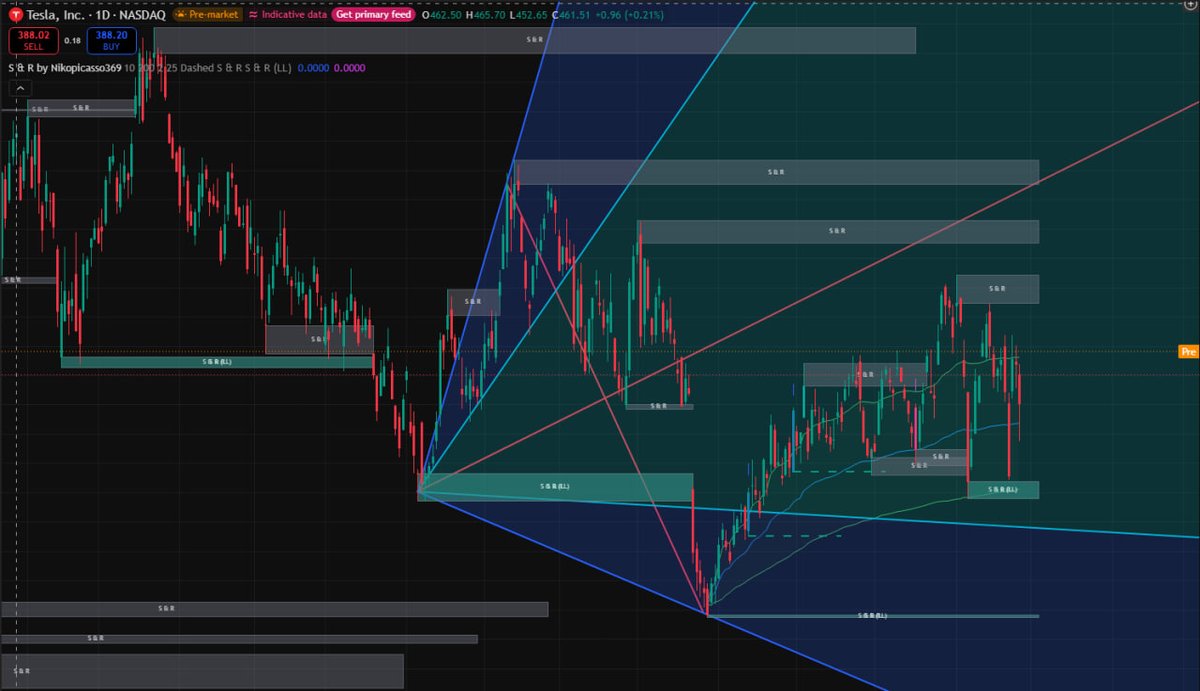
Tesla $TSLA: Its next growth engine may be much bigger than electric vehicles.
The market is increasingly evaluating Tesla's long-term potential in autonomous driving, Robotaxi, and artificial intelligence.
But the opportunity comes with real challenges.
1. Fundamentals: Profitability Remains Under Pressure
Tesla's Q3 2026 results:
Revenue: $28.046 billion, essentially flat year over year.
Operating income: Approximately $700 million, down 56%.
Operating margin: 2.6%.
Free cash flow: $1.5 billion.
Cash and short-term investments: $45.4 billion.
Tesla maintains a substantial liquidity position, but profitability remains an important concern.
2. Growth Opportunities: FSD and Robotaxi
Three areas deserve close attention:
FSD: Can software subscriptions become a more meaningful source of recurring revenue?
Robotaxi: Can autonomous ride-hailing achieve commercial scale?
Cybercab: Can it establish a new mobility business model?
If these initiatives scale successfully, Tesla's long-term revenue structure could change significantly.
3. Latest Regulatory Development
The European Commission has scheduled further discussions on Tesla Assisted Driving for December 15, with a possible vote on EU-wide type approval.
The approval process remains uncertain. Drivers must still remain attentive and supervise the system.
4. What I'm Watching Next
FSD subscription growth.
Automotive gross margin.
Robotaxi expansion and unit economics.
European regulatory developments.
My View:
Tesla's long-term investment thesis is evolving beyond traditional automotive manufacturing.
AI, autonomous driving, and intelligent mobility could create significant opportunities.
However, future technological potential must eventually translate into measurable earnings and sustainable cash flow.
Where do you believe Tesla's greatest long-term value will come from?
A. Electric Vehicles
B. FSD Autonomous Driving
C. Robotaxi
D. AI and Robotics
#TSLA #Tesla
For informational purposes only. Not investment advice.
Black Friday Market Outlook | November 27th
After Thanksgiving, the Nasdaq 100 index futures led the gains, indicating that the US stock market will open strongly. The market closed at 1 p.m. Eastern Time and I am monitoring the first pullback after the opening. Can chip stocks hold onto their upward momentum? Will retailers and banks join the rally?
Semiconductors - $NVDA
NVIDIA closed at $149.30 on Wednesday, having previously risen to $150.37. If the opening price is above $150.37, I hope to see buying pressure holding the level during the pullback. If it successfully re-tests, the $155.38 close on Tuesday will be the focus. If the price drops below $149.30, it indicates that the upward momentum at the opening is weakening.
Black Friday Retail Stocks - $WMT and $AMZN
Walmart's high point on Wednesday was $133.19. I am using this as a reference benchmark. If Walmart's stock can remain at this level and Amazon's performance exceeds the Nasdaq index, this will enhance the rationality of the overall retail stock rally. As early shopping data is released, I am monitoring the discount intensity that drives sales. Strong demand and healthy profit margins are two separate issues.
Financial Sector - $JPM and $XLF
Despite the S&P 500 index's decline, the financial sector rebounded on Wednesday. If JPMorgan Chase and the financial sector ETF continue to perform well, this may indicate that investors are seeking opportunities beyond technology stocks. If chip stocks rise while banks and retail stocks perform poorly, I will be more cautious about the trend for next week as predicted by the shortened trading hours today.
$NVDA $WMT $AMZN $JPM $XLF
Black Friday sales may hit new records, but that doesn't necessarily mean American consumers are getting stronger.
There is an important difference between rising retail sales and improving consumer purchasing power.
Here are four numbers worth watching:
U.S. holiday retail sales are forecast to grow 4%–6% year over year.
The National Retail Federation expects November–December sales to exceed $1 trillion, up 4.2%.
82% of consumers are taking steps to manage holiday spending, including buying less expensive gifts.
Inflation stands at 3.8%, meaning part of the growth in nominal sales reflects higher prices rather than stronger underlying demand.
I would focus on three things next:
1. Consumer Purchasing Power
Are households continuing to increase spending, or cutting back on non-essential purchases?
2. Retail Profit Margins
Could heavier discounts put additional pressure on corporate profitability?
3. Corporate Guidance
Watch $WMT, $TGT, $COST, and $AMZN for sales trends and forward guidance.
Another name worth watching is $MAT. Mattel recently lowered its annual forecast amid rising toy costs and consumer pressure.
My takeaway:
Don't just look at whether retail sales are growing. Look at purchasing power, unit volumes, and corporate margins.
Here's the question:
If consumers are still spending but increasingly choosing cheaper products, is that a sign of economic resilience or growing financial pressure?
Source: Reuters, November 27, 2026.
#StockMarket #Retail
Gold intraday outlook
Spot gold rose 2.9% to $3,670.69/oz by 8:35 a.m. GMT on Nov. 27 as the dollar’s rally paused. I’m watching $3,700. A break above it followed by a successful retest would give the rebound more credibility. A quick move above $3,700 that fades would leave resistance intact.
Fed hike expectations and a stronger dollar have weighed on gold, while profit-taking and fear may have amplified the selloff. After a drop this sharp, I’m watching where buyers step in on the next pullback. A higher low would tell us more about a potential bottom than one strong session.
$XAUUSD