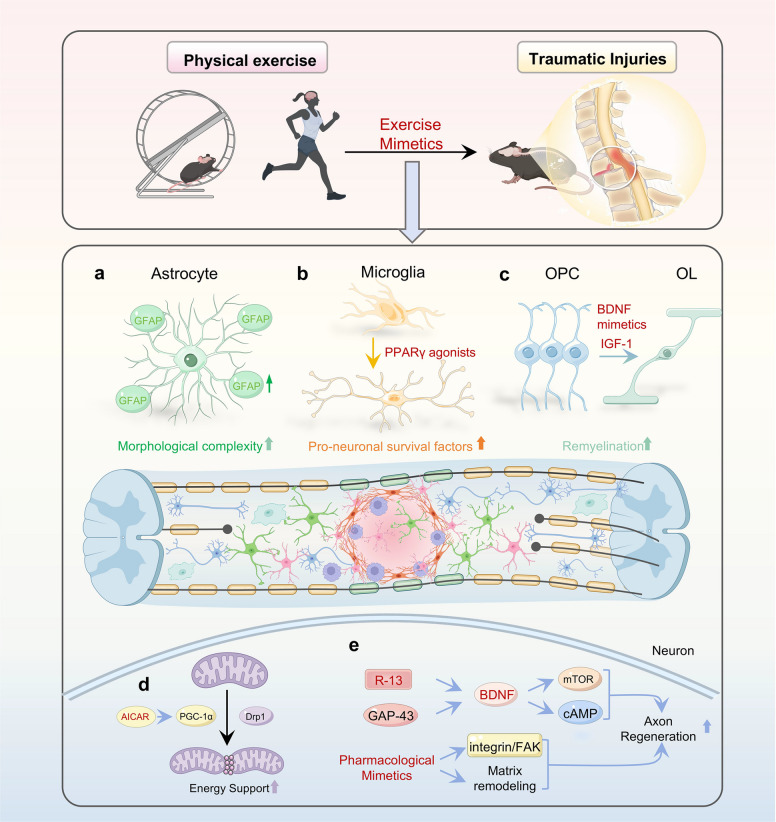
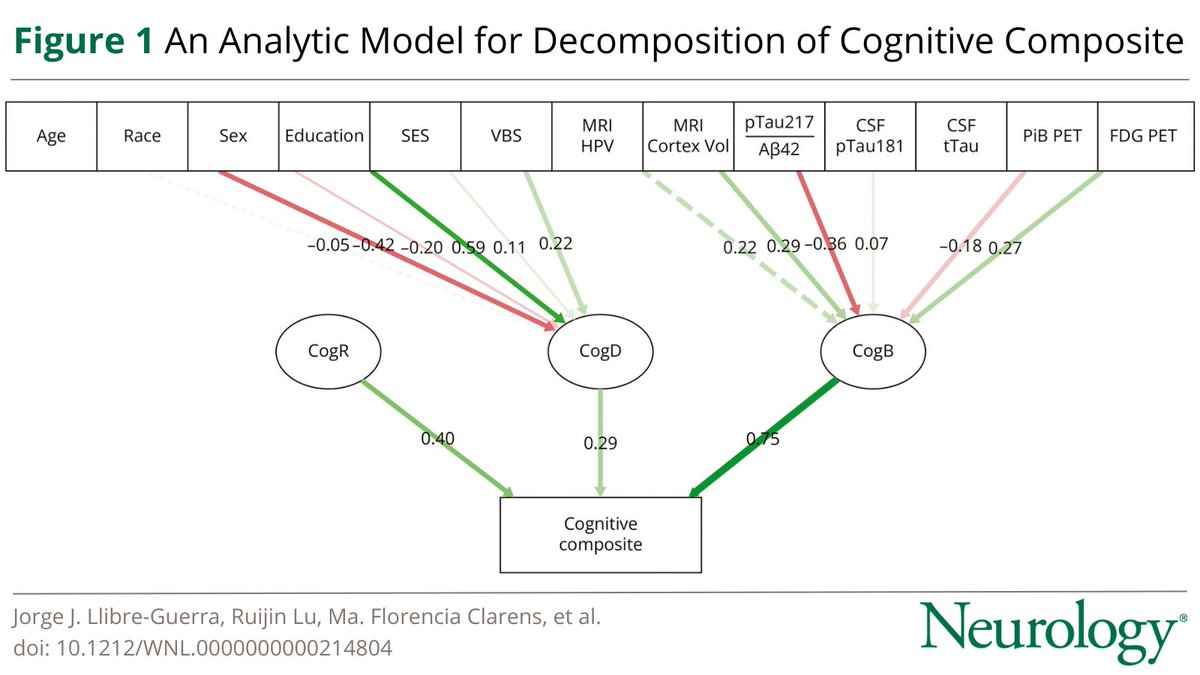
In a new review in @ANAneurology’s Annals of Neurology, we propose a new term, “stocking-glove-hat,” to highlight the risk of cognitive problems and potentially dementia in people with diabetes who have peripheral neuropathy.
@TheSciGency
https://t.co/1BB73JhaMm
Ozempic just took its biggest swing at Alzheimer’s.
…and missed.
That sounds like bad news—until you realize what we finally got:
A clean, Phase 3 answer to one of the most hyped “repurposing” bets in medicine.
Because for a year, the storyline was everywhere:
GLP-1 drugs help the heart.
Help the kidneys.
Help weight.
Help inflammation.
So people started asking the most tempting question of all:
Could they help the brain, too?
The setup was blockbuster-level
Novo Nordisk ran two huge, randomized, placebo-controlled Phase 3 trials—EVOKE and EVOKE+:
→ 3,808 people (ages 55–85)
→ Early symptomatic Alzheimer’s (MCI or mild dementia) with confirmed amyloid positivity
→ Once-daily oral semaglutide 14 mg (Rybelsus) vs placebo
→ 104 weeks of treatment, with a planned 52-week extension
This wasn’t “signals.”
This wasn’t “maybe.”
This was the class getting tested under stadium lights.
The headline outcome
Semaglutide did not slow Alzheimer’s progression.
On the primary endpoint (CDR-Sum of Boxes):
→ EVOKE: estimated difference –0.06 points vs placebo (P = .7727)
→ EVOKE+: estimated difference 0.15 points (P = .4604)
Secondary outcomes didn’t rescue it either:
→ No meaningful functional slowing on ADCS-ADL-MCI
→ No clear benefit on major cognition scales
→ No delay in progression to dementia from MCI (pooled HR 0.96)
And Novo dropped the planned 1-year extension based on the overall results.
Here’s the part most headlines miss
Biology moved. People didn’t.
In a CSF biomarker substudy (199 participants):
→ ~10% “nominally significant” reductions in several AD-relevant markers (including p-tau measures)
→ plus shifts in markers tied to inflammation and synaptic injury
Blood markers also showed something:
→ hs-CRP fell (systemic inflammation signal)
→ but some exploratory markers like NfL and GFAP increased (small but statistically significant in places), complicating the picture
Translation:
Semaglutide wasn’t “doing nothing.”
It just wasn’t doing enough, in the right place, at the right time to change real-world decline.
So why is this exciting?
Because it resolves a major confusion that was fueling false hope:
Prevention signals ≠ treatment success.
A JAMA Neurology–published study in people with type 2 diabetes supported continued investigation by showing lower Alzheimer’s risk in those on GLP-1 receptor agonists (and also SGLT2 inhibitors) compared with other glucose-lowering drugs—and no clear difference between GLP-1RAs and SGLT2is overall.
One line that captures the “why keep looking?” logic:
“patients with type 2 diabetes receiving GLP-1 receptor agonists… had a significantly lower risk of developing AD”
That’s the paradox:
→ In diabetes populations, GLP-1s look protective in real-world data
→ In symptomatic Alzheimer’s, semaglutide doesn’t slow decline in Phase 3
Those two things can both be true if the real opportunity is upstream.
What the trials actually taught us (the “new map”)
Lowering systemic inflammation/metabolic stress isn’t a solo fix once symptoms start.
Timing may be everything. The field is now openly talking about dose, population, and even designing drugs that enter the brain more effectively.
Alzheimer’s is drifting toward an oncology-style era: combinations + precision subgroups.
The follow-up everyone should watch
The story isn’t “done.”
What’s next is the deep dive:
→ subgroup analyses (who, if anyone, benefited?)
→ mechanistic readouts (which pathways moved, which didn’t?)
→ and how to pair metabolic drugs with other disease-modifying strategies
And full EVOKE/EVOKE+ results are expected to be presented at AD/PD in March 2026.
The most credible “exciting ending” here
The Ozempic-Alzheimer’s dream didn’t die.
It evolved.
From:
→ “One blockbuster drug fixes Alzheimer’s.”
To something more realistic—and potentially more powerful:
→ Treat earlier.
→ Target multiple pathways at once.
→ Use blood biomarkers to match the right patient to the right combo.
Alzheimer’s has been the graveyard of single-shot miracles.
EVOKE didn’t give us a miracle.
It gave us something rarer:
A massive, expensive, definitive result that tells researchers exactly where not to stand… so the next trials can finally aim where it might actually work.
New research suggests that higher cognitive and brain reserve may help buffer the cognitive effects of Alzheimer disease pathology. Building these reserves could play a role in strengthening resilience against emerging #AlzheimerDisease pathology: https://t.co/MSJvaDs3Wg
Effect of Cognitive Reserve on Age at Symptom Onset and Cognitive Decline in Individuals With Dominantly Inherited #AlzheimerDisease https://t.co/BGoQ4c4Hg3
Online now!✨Lin, Shao, Shi et al identify a mechanism by which swimming exercise attenuates cognitive decline in Alzheimer's disease mice. Skeletal muscle-derived vesicles act as myokines, regulating lipid metabolism and plaque clearance in microglia https://t.co/fsB54NMZfB
Our paper in @Nature today 🥳 We tracked 6,438 mice from puberty to death and mapped the genetics of *when* you die, not just whether a gene associates with lifespan.
https://t.co/EoeexqJoHk
59 loci. Two decades of data. Thread 👇
#Longevity#Aging#Genetics#Healthspan
The @AANmember and the @american_heart have awarded one of the two 2026 Ralph L. Sacco Scholarships for Brain Health to Cali McEntee, Ph.D., of Ann Arbor, Michigan. She will receive a $150,000 two-year scholarship to support continuing scientific research in brain health.