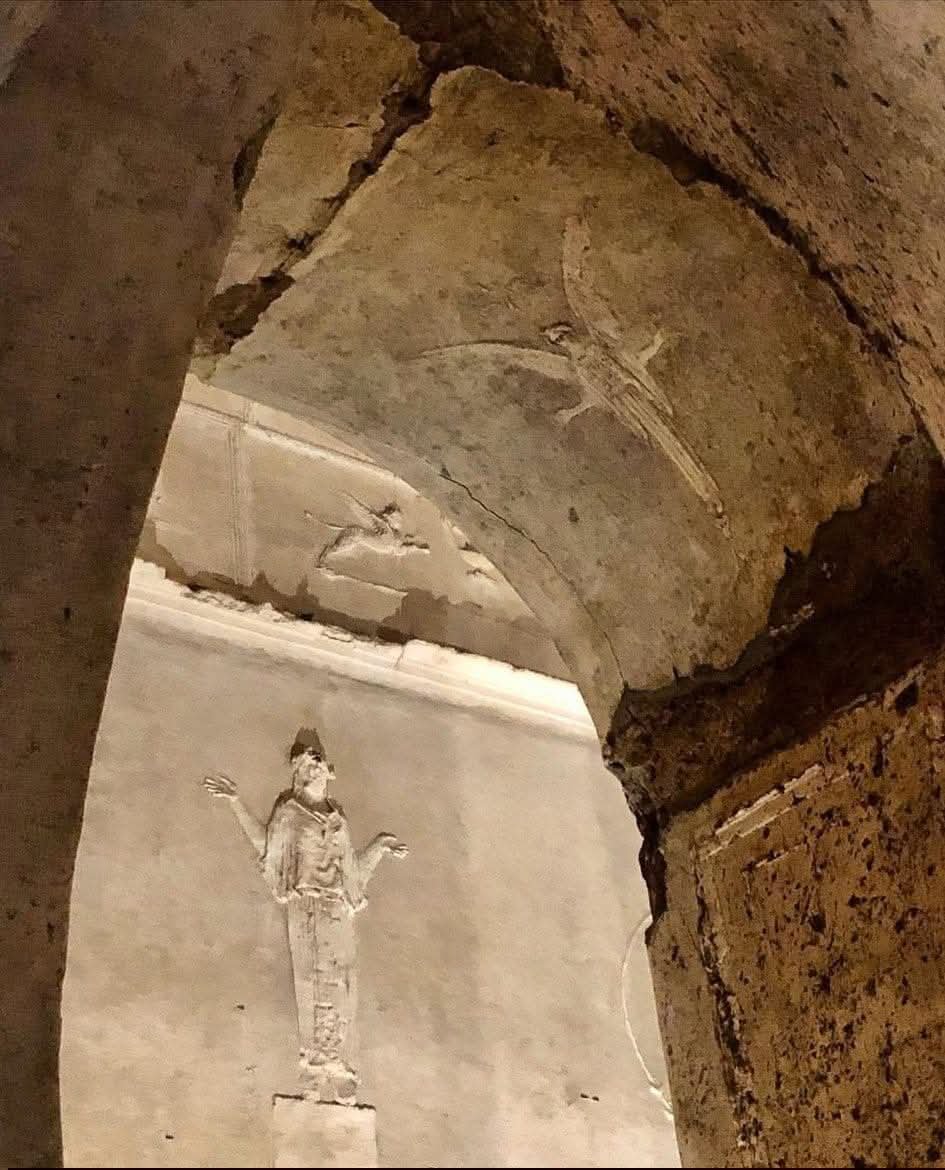
The Underground Basilica of Porta Maggiore (The Basilica of the Mysteries), Rome - Italy 🇮🇹
Built in the 1st century AD, it has been interpreted as a place of mystery cults or as the burial site of the gens to which it belonged — the powerful Statilii family, closely connected to Octavian Augustus and the emperors of the Julio-Claudian dynasty.
Its stucco decorations are the most extensive, richest and best-preserved in the entire Roman world. They were created using crushed mother-of-pearl powder to reflect and amplify the light. For the apse, the precious Egyptian blue pigment was used to evoke the depth of the sea.
This entirely pagan building, which has no connection to Christianity, is the oldest known structure with a basilica floor plan: three naves (a central nave flanked by two side aisles) and an apse — exactly the layout that would later be adopted by Christian basilicas.
Discovered in 1917 during the construction of the Rome–Cassino railway line, the Underground Basilica is a unique monument of its kind and is officially recognized as the oldest pagan basilica in the Western world.
#archaeohistories
The Nile River was the source of life for the ancient Egyptians and so figured prominently in their religious beliefs. At night, the Milky Way was considered a heavenly Nile, associated with Hathor, and provider of all good things. The Nile was also linked to Uat-Ur, Egyptian name for Mediterranean Sea, which stretched out to unknown lands from the Delta and brought goods through trade with foreign ports. Watercrafts were no doubt among earliest conveyances built in Egypt, with small boats appearing in inscriptions in the Predynastic Period (6000-3150 BC). These boats were made of woven papyrus reeds but later were made of wood, grew larger, and became ships.
The ships of the Egyptians were used for commercial ventures like fishing, trade, and travel and also in warfare, but from at least Old Kingdom of Egypt (2613-2181 BC), they also feature in religious beliefs and practices. Ships known as Barques of Gods are associated with a number of different Egyptian deities and, although each had its own significance, their common importance was in linking the mortal world with the divine.
Solar barques were the vessels used by the sun god Ra in ancient Egyptian mythology. During the day, Ra was said to use a vessel called the Mandjet or the Boat of Millions of Years, and the vessel he used during the night was known as the Mesektet.
According to Egyptian myth, when Ra became too old and weary to reign on earth he relinquished and went to the skies. Ra was said to travel through the sky on barge, providing light to the world. Each twelfth of his journey formed one of the twelve Egyptian hours of the day, each overseen by a protective deity. When sun set and twilight came he and his vessel passes through the akhet, the horizon, in the west and travel to underworld.
At times the horizon is described as a gate or door that leads to the Duat. There he would have to sail on the subterrestrial Nile and cross through the twelve gates and regions with each hour of the night considered a gate overseen by twelve more protective deities. Every night enormous serpent Apophis, god of chaos (isfet) attempted to attack Ra and stop sun-boat's journey. After defeating the snake, Ra would leave the underworld, returning emerging at dawn, lighting the day again. He was said to travel across the sky in his falcon-headed form on Mandjet Barque through the hours of the day and then switch to Mesektet Barque in his ram-headed form to descend into the underworld for hours of the night. The progress of Ra upon Mandjet was sometimes conceived as his daily growth, decline, death, and resurrection and it appears in the symbology of Egyptian mortuary texts.
📷 : King Ramses VI in the Evening Barque sailing on the Heavenly Nile, which is the ecliptic. The King is flanked by Atum (at right, wearing the Double Crown) and by a Goddess (at left, with the Uraeus on Her forehead), both holding 'Ankh-signs. To the right, the 3hw-spirits of the Western Horizon. Scene from the "House of Eternity" of King Ramses V (1147-1143 BC, 20th Dynasty) and King Ramses VI (1143-1136 BC, 20th Dynasty), KV9, Valley of the Kings, west 'Uaset-Thebes
#archaeohistories
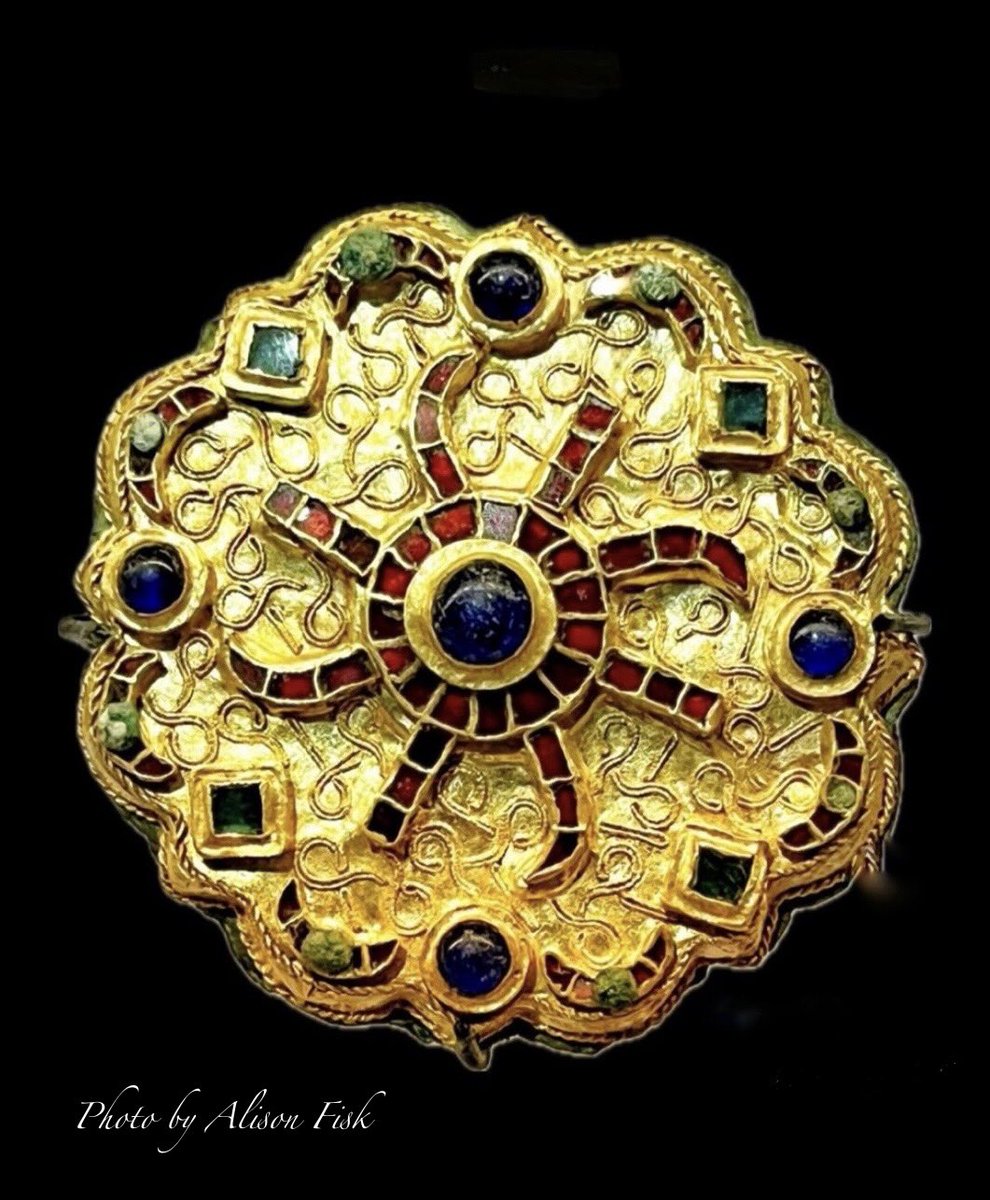
Beautiful Merovingian brooch of the ‘Lady of Quaregnon’, AD 660-670.
Found during excavations ahead of construction works at the Grand Place, Quaregnon, Belgium, in 2008-2009. Gold, silver, copper-alloy, garnet, and glass. Diameter 5.6cm. 📷 by me
#FindsFriday#Archaeology
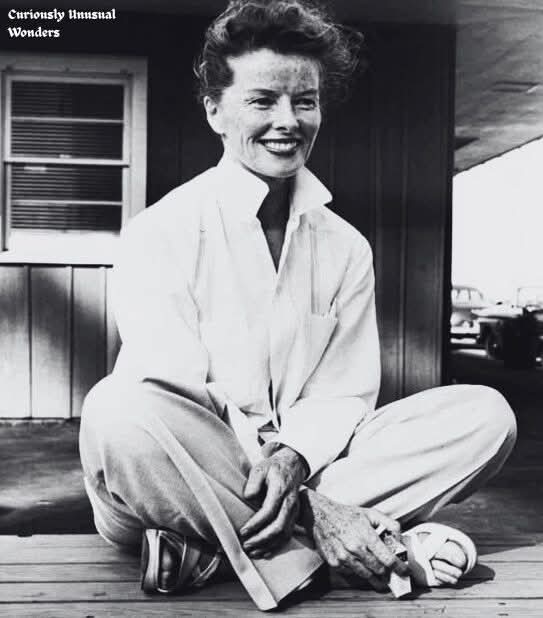
Katharine Hepburn, in her own words:
"Once, when I was a teenager, my father and I were standing in line to buy tickets for the circus. Finally, there was only one family between us and the ticket counter. That family made a lasting impression on me.
There were eight children, all under the age of 12. From the way they were dressed, you could tell they didn’t have much money, but their clothes were clean, very clean. The children were well-behaved, standing in pairs behind their parents, holding hands.
They were so excited about the clowns, the animals, and all the acts they would see that night. From their excitement, you could tell they had never been to a circus before. It was going to be a highlight of their lives.
The father and mother stood proudly at the front of their little group. The mother was holding her husband’s hand, looking at him as if to say, 'You’re my knight in shining armor.' He was smiling, enjoying seeing his family happy.
The ticket lady asked how many tickets he wanted, and he proudly responded, 'I want eight children’s tickets and two adult tickets.' Then she announced the price.
The wife let go of her husband’s hand, her head dropped, and the man’s lip began to quiver. He leaned in closer and asked, 'How much did you say?'
The ticket lady repeated the price.
He didn’t have enough money. How was he supposed to turn around and tell his eight kids that he couldn’t afford to take them to the circus?
Seeing what was happening, my dad reached into his pocket, pulled out a $20 bill, and dropped it on the ground. We weren’t rich by any means. My father bent down, picked up the $20 bill, tapped the man on the shoulder, and said, 'Excuse me, sir, this fell out of your pocket.'
The man understood what was happening. He wasn’t being handed charity, but he gratefully accepted the help in his desperate, heartbreaking, and embarrassing situation. He looked straight into my father’s eyes, took my dad’s hand in both of his, squeezed the bill tightly, and with trembling lips and a tear streaming down his cheek, he replied, 'Thank you, sir. This really means so much to me and my family.'
My father and I went back to our car and drove home. The $20 my dad gave away was what we had planned to use for our own tickets.
Although we didn’t see the circus that night, we felt a joy inside us that was far greater than seeing the circus.
That day, I learned the true value of giving. The Giver is greater than the Receiver.
If you want to be great, greater than life itself, learn to give. Love has nothing to do with what you expect to get, only with what you expect to give—everything.
The importance of giving and blessing others cannot be overstated because there is always joy in giving. Learn to make someone happy through acts of giving."
~Katharine Hepburn