📢 The CORE COGNITION lab (https://t.co/LJBwOPghoe) is looking to hire another PhD student, working on automated scientific discovery and knowledge representation in cognitive science.
Starting date: March to September 2027.
🙏 Please share widely!
Excited to share that I'll be starting as a junior professor and Emmy Noether awardee at the University of Göttingen this October! 🥳
🚀 I'll be hiring PhD students and postdocs across both ML and CogSci: https://t.co/SWO5gf4Y57
Please spread the word! 🙏
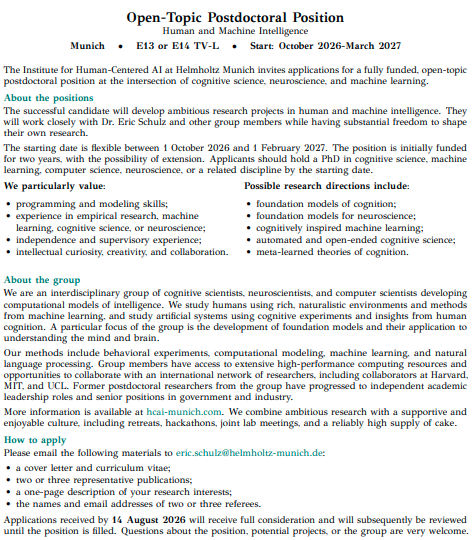
We are looking for a postdoctoral researcher who wants to innovate at the intersection of cognitive science, neuroscience, and machine learning.
📍Munich
📅Flexible start: 10/2026–03/2027
⏳Full consideration by 14/08/2026
💼Funded for 2 years, extension possible
Please share.
Thrilled to finally share some of the work we at @Recursive_SI has been doing since we launched!🔥
We've made a system that autonomously conducts AI research and tested it across three different settings: Small Language Model training, NanoGPT speedrunning, and kernel engineering!
A bit like Karpathy's Autoresearch, but scaled up and designed to be open-ended, we can push our system to optimize models, training algorithms, and kernels in really cool ways.
Blogpost:
https://t.co/Ys7W3MJJqi
Excited to announce that I'll be starting my own lab in Tübingen this October!
Hiring at all levels: Postdoc, PhD & RA.
Want to work on computational cognitive science at scale? Apply: https://t.co/cGX9UfVjwo
Reposts and shares much appreciated 🙏
🚀 We are hiring! 🚀
🔍 Join us as a Postdoctoral Researcher (fully-funded) at the Helmholtz Institute for Human-Centered AI in Munich.
@HelmholtzMunich@helmholtz_ai@ELLISforEurope
New in @PNASNews: https://t.co/95Gs0QTYf4
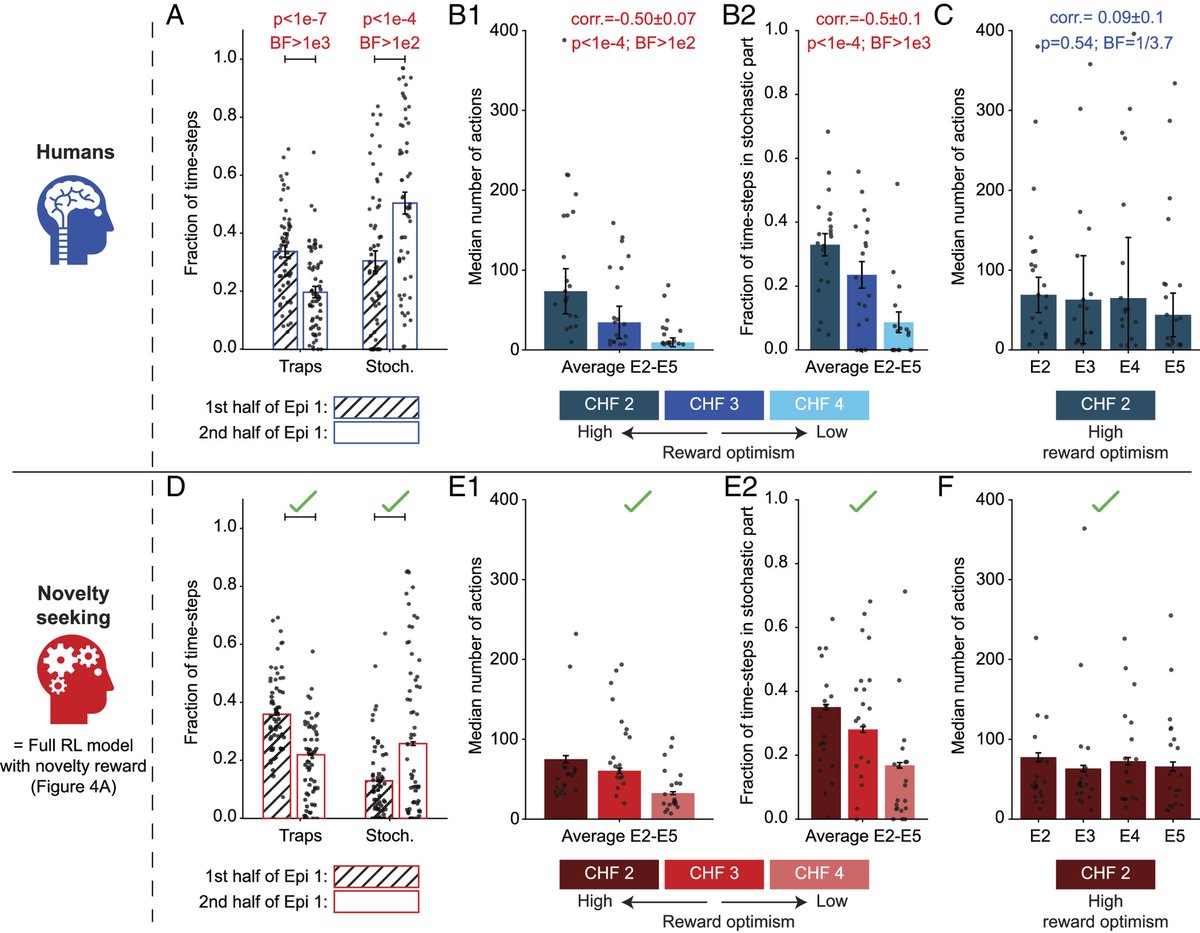
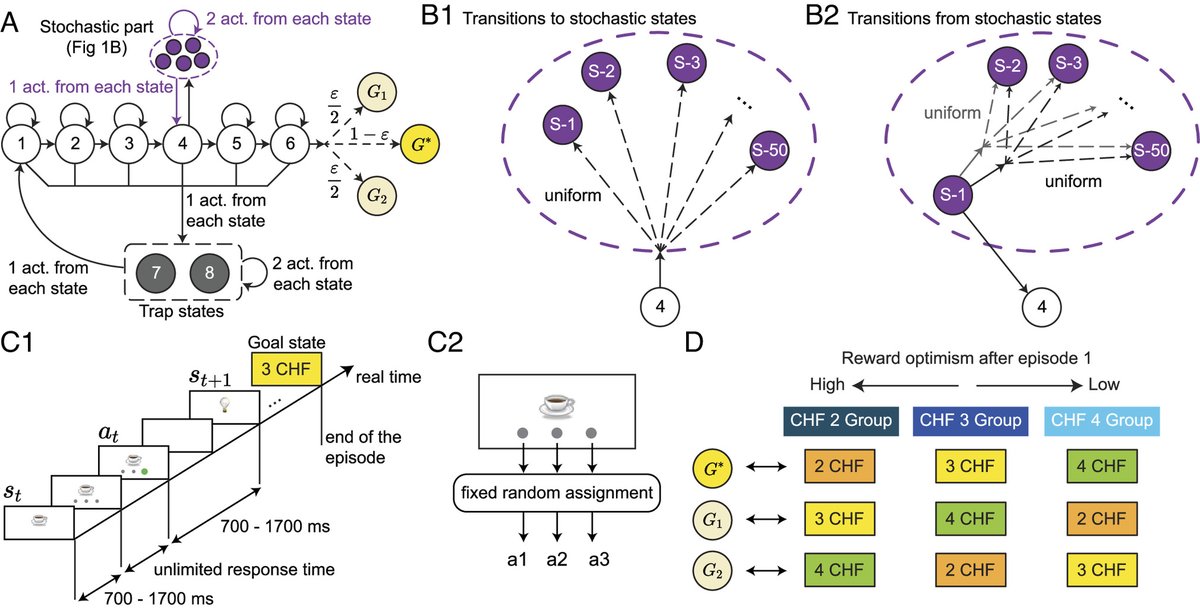
We study how humans explore a 61-state environment with a stochastic region that mimics a “noisy-TV.”
Results: Participants keep exploring the stochastic part even when it’s unhelpful, and novelty-seeking best explains this behavior.
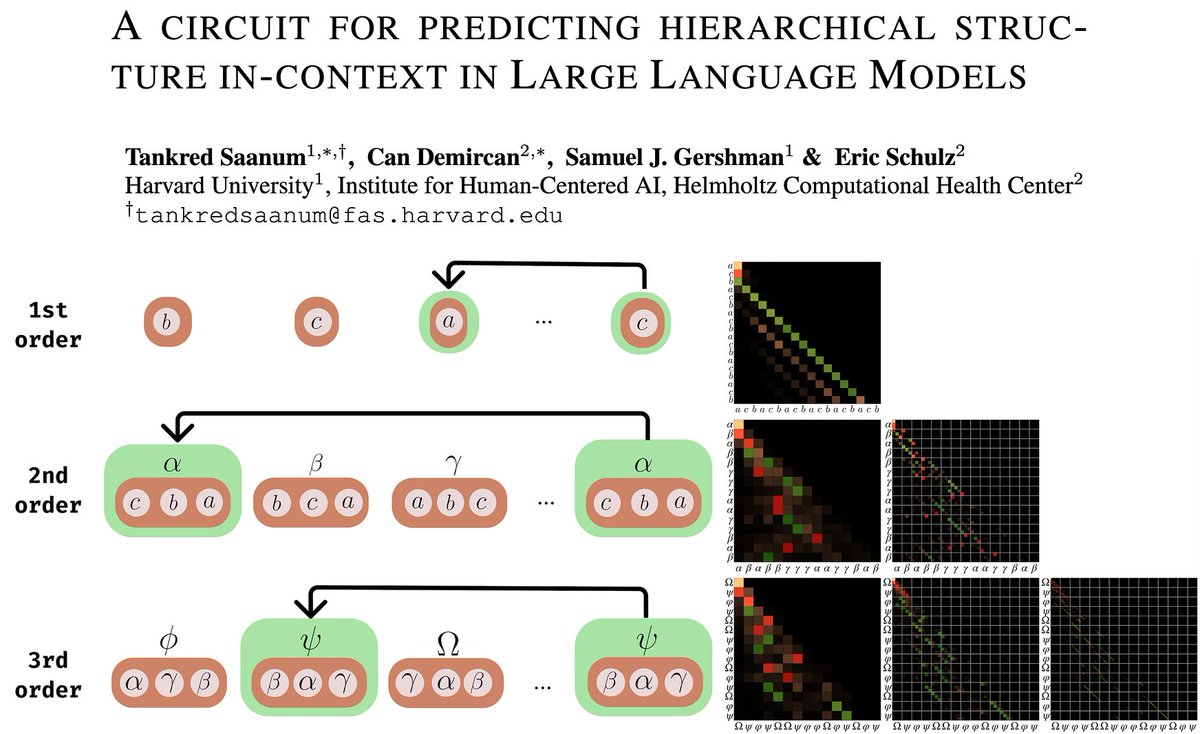
Induction heads are surprisingly powerful. In a new preprint, we find that they can learn what to attend to in-context! We study this in a hierarchical prediction task and uncover a possible mechanism giving rise to in-context learning in induction heads. See thread for details!
In previous work we found that VLMs fall short of human visual cognition. To make them better, we fine-tuned them on visual cognition tasks. We find that while this improves performance on the fine-tuning task, it does not lead to models that generalize to other related tasks:
Super happy that this has been accepted to @iclr_conf !
Me and @can_demircann will be there to talk about what we can learn about in-context learning using SAEs
See you in Singapore 🇸🇬
Many thanks to @TankredSaanum @LeonardoPettini @marcel_binz@doellerlab@mona_garvert@cpilab
Check out the paper here: https://t.co/8ZvfRcKVEj
Please reach out if you're at NeurIPS and wanna talk about representational alignment, mechanistic interpretability, or CogSci!
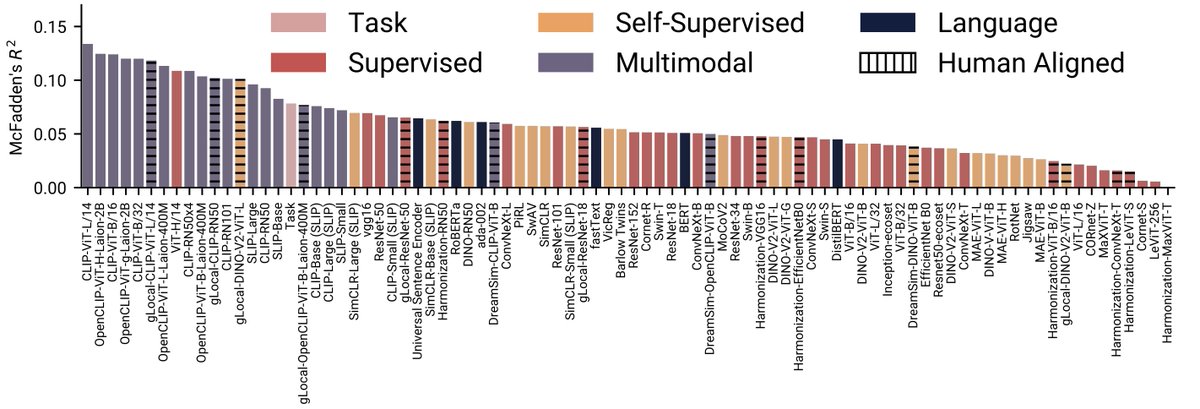
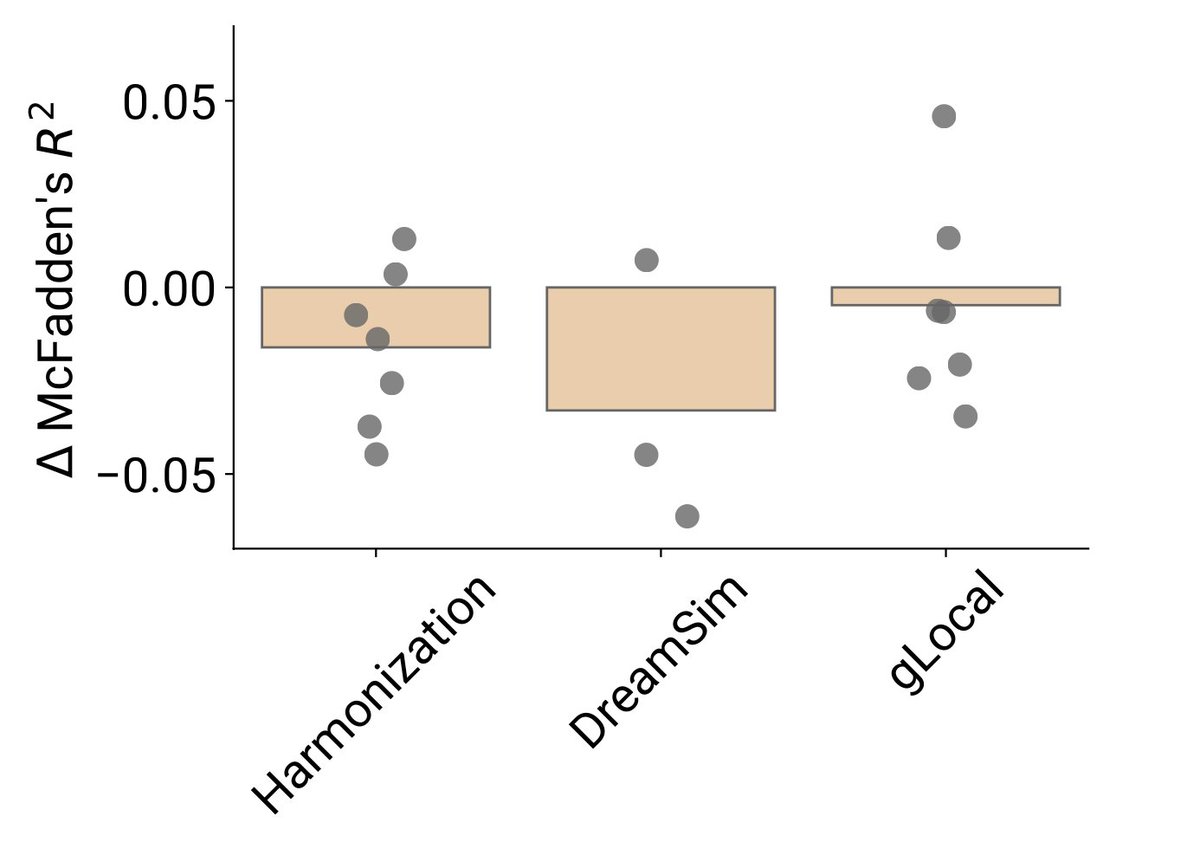
Alignment is more than comparing similarity judgments! How well do pretrained neural networks align with humans in few-shot learning settings? Come check our poster #3904 at #NeurIPS on Wednesday to find out
Super excited to be going to #NeurIPS to present new work on softly state-invariant world models! We introduce an info bottleneck making world models represent action effects more consistently in latent space, improving prediction and planning! Reach out if you want to meet!
🚨Preprint alert🚨
In an amazing collaboration with @GruazL53069, @sobeckerneuro, & J Brea, we explored a major puzzle in neuroscience & psychology:
*What are the merits of curiosity⁉️*
https://t.co/Au2HxPbZQL
1/7