We're partnering with @xai to bring Grok to @Cloudflare AI Gateway.
• Grok LLMs, audio, image, and video models are now available through AI Gateway
• Billed directly through Cloudflare
• No additional auth, env, API keys needed
𝚎𝚗𝚟.��𝙸.𝚛𝚞𝚗("𝚡𝚊𝚒/𝚐𝚛𝚘𝚔-𝚒𝚖𝚊𝚐𝚒𝚗𝚎-𝚟𝚒𝚍𝚎𝚘-𝟷.𝟻-𝚙𝚛𝚎𝚟𝚒𝚎𝚠")
✉️ Trying @Cloudflare's new Email Sending feature today
If you send 1,000,000 emails per month:
- Postmark: $1,206/mo
- Resend: $650/mo
- SendGrid: $600/mo
- Cloudflare: $354/mo
- Amazon SES: $100/mo
So Postmark is now by far the most expensive email provider
And SES and Cloudflare are now the cheapest email providers
I know my friend @marckohlbrugge is trying out SES now so I'll try Cloudflare and see how it is, SES is cheaper but Marc said it takes a bit more managing, and since I already use so much Cloudflare stuff it's nice to use them for email too
With AI especially all of these are just as easy to use and setup in your app/site so economically it makes sense to go for the cheapest, because email is just email, it's all the same and deliverability is good with all of these I think
TL;DR email sending has become a commodity!
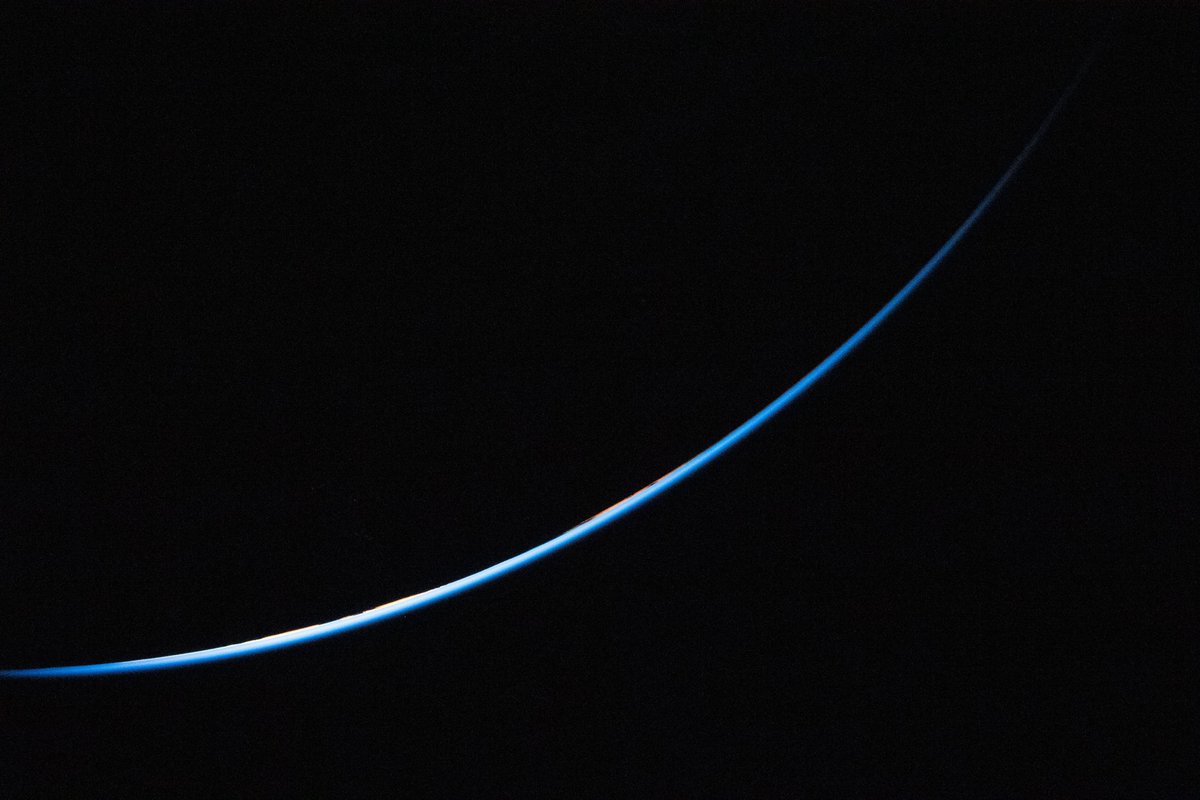
NASA HAS RELEASED OVER 12,000 IMAGES OF THE ARTEMIS II MISSION.
Unbelievable perspectives captured by the Crew! The aurora on the eclipse is incredible.
A tablespoon of honey before bed would have saved me 2 years of thinking I was losing my mind.
Every night around 3am I'd wake up with my heart slamming against my chest. Feeling of absolute dread. Like something terrible was about to happen but I couldn't name it.
Couldn't fall back asleep for 90 minutes. Sometimes longer. Just lying there in the dark convinced something was fundamentally wrong with my brain.
Went to my doctor. "Generalized anxiety disorder." Trazodone for sleep. When that didn't work, he floated Lexapro.
At no point did anyone ask me when I ate my last meal.
I was eating dinner around 6pm. Intermittent fasting because some podcast told me it was optimal. By 2am my liver had burned through all stored glycogen.
Blood sugar dropped below the threshold my brain considers safe.
When that happens your adrenals fire an emergency response. Cortisol and adrenaline flood your bloodstream to force glucose back up.
That adrenaline dump IS the "panic attack."
Heart rate spikes. Pupils dilate. Feeling of impending doom. Not because something is wrong with your mind. Because your body ran out of fuel while you were sleeping and pulled the emergency brake.
The fix was so stupid I almost didn't believe it.
> Raw honey. One tablespoon. 30 minutes before bed. Gives your liver enough fructose to maintain glycogen stores through the night. Blood sugar stays stable. Adrenals never fire.
> Stopped intermittent fasting. Started eating a real dinner at 8pm with carbs, protein, and fat. The fat slows gastric emptying and extends the fuel supply overnight.
> Added a small snack before bed on heavy training days. Banana with almond butter or raw milk with honey.
The 3am wake-ups stopped in 4 days.
Not 4 weeks. 4 days.
Two years of nocturnal panic. Thousands of dollars in appointments. Almost went on a medication that alters serotonin signaling in the brain. And the answer was a spoonful of honey and eating dinner later.
How to confirm this before you fill any prescription:
> Test fasting glucose first thing in the morning. Below 80 mg/dL means you're likely running out of fuel overnight.
> Test cortisol rhythm (4-point salivary cortisol). If nighttime cortisol is elevated, your adrenals are compensating for a blood sugar problem.
> Track when you eat your last meal and when you wake up. If the gap is consistently 8+ hours and the wake-up is between 2-4am, your blood sugar is crashing.
The full nocturnal protocol is on my substack. Every marker to test, what the numbers mean, and how to have the conversation with your doctor before you accept a prescription you might not need.
Ave person checks their phone 186x a day. That's an interruption every 5 min.
This shrinks the brain, causing lost capacity for deep reasoning and sustained thought.
Deep focus strengths neural networks for complex thought.
Finished a seven day social media fast. It feels like the most effective longevity therapy I've done.
Everything got better: mood, sleep, energy, presence, judgment, relationships, and optimism.
Evidence shows a seven day fast produces a reduction of anxiety (16%), depression (25%) and insomnia (15%). The effects felt bigger.
Conversely, dipping back in, I can viscerally feel that my body metabolizes social media similarly to a fast food meal, corrosive relationship, hangover, and sleep deprivation. My body hates it.
After the previous fasts (40/hr and 70hr), I wrote that social media is pollution. Not a vice or guilty pleasure. It’s closer to water toxins, air pollution and microplastics.
This time, the major insight was that social media is a form of intoxication.
Alcohol is honest intoxication. It clearly tells you what it's taking from you. Social media on the other hand does not disclose itself as an intoxicant.
It produces the sensation of being informed, engaged, and connected while quietly evacuating your capacity for depth and independent thought.
You don’t feel drunk, you feel current. But evidence shows that it causes your brain to shrink. The impairment is real by you can't feel it. Making it the more dangerous type.
If you haven't tried it, I strongly encourage you to try a social media fast. Even if for one day.
I did a 40 hr and then a 70 hr social media fast.
I’ve come to believe that social media is pollution.
Not a vice or guilty pleasure.
It’s closer to water toxins, air pollution and microplastics.
Social media has been on my mind because I can feel how bad it is for me. For my health and agency. I am a professional rejuvenation athlete. For five years, I’ve engineered my life around biological renewal and the elimination of decay. After hundreds of experiments across food, sleep, exercise, therapies, and toxins, I’ve developed both data and intuition about what strengthens or degrades my system.
I can viscerally feel that social media is bad for me. It erodes my autonomy and increases cognitive entropy.
Like other toxins, it accumulates. You can’t unsee or unfeel what you’ve consumed. It settles into mental tissue like heavy metals, producing chronic low-grade inflammation. Evidence suggests even after you stop scrolling, attentional fragmentation and emotional priming persist. Your thoughts begin to mirror the algorithm’s incentives. Independent cognition quietly erodes and you don’t notice the loss.
Time away and getting lost in deep focus is the only remedy.
When something erodes your agency, the rational response is elimination. The problem is, elimination isn’t realistic. “Just put the phone down” is as practical as telling someone in 19th century London to stop breathing coal smoke.
You need to know what’s happening in the world, be in touch with your friends and be part of the tribe.
That necessity is what allows companies to harvest your emotions, intellect and time for their profit. You are their raw material they exploit. Then in an ironic twist, the system gets you to exploit yourself by engineering an environment where it takes more effort to stop than to continue scrolling. Pollution exposure by default.
What specifically makes social media toxic is that value and poison are inseparable by design. You go to hear from friends and you leave an hour later absorbed in outrage that serves no biological interest of yours. The water is real. The lead is in the pipes.
The performance metrics (likes, views, etc.) bleed you of independent thought. They create quantified social proof, triggering ancient hierarchy reflexes. You no longer evaluate signal from noise; the engagement metrics do it for you.
Like all toxins, the damage is cumulative. We live inside the exposure long enough that it feels normal. The 40 and 70 hour social media fasts did that for me. Gave me just enough separation to feel and diagnose the poison. The obviousness of it feels like when I went to India and saw their humanitarian crisis of air pollution which no one sees anymore.
So what do we do?
Neither platforms nor individuals are likely to change on their own. AI may be the countermeasure. An AI layer between you and the feed. Filtering rage, removing vanity metrics and translating sensationalism into calm, factual language. Preserving signal and eliminating noise.
I want social media to become a longevity intervention, not a longevity threat. I never want to see the raw feed. I want an AI agent to read it for me, strip the engagement metrics that hijack my judgment, filter the rage, and return only what I actually came for.
Every generation faces its pollutants. When cholera spread through London's water, the answer wasn't telling people to drink less. It was building filtration. The same logic applies here. Best next move is to design the filter to avoid being the raw material.
In January 2015, Google and Fidelity wrote a combined $1 billion check for roughly 10% of SpaceX. The company was valued at $12 billion. Google’s portion: approximately $900 million for 7.4%.
At the time, SpaceX had just successfully landed a Falcon 9 first stage for the first time. Starlink was a PowerPoint presentation. Revenue was a rounding error compared to today.
Ten years later, SpaceX has become the most valuable private company on Earth.
The valuation trajectory tells the story:
2015: $12 billion
2020: $36 billion
2021: $100 billion
2022: $127 billion
2023: $180 billion
June 2024: $210 billion
Late 2024: $350 billion
2026 IPO target: $1.5 trillion
That $900 million investment from Google? At the $1.5 trillion IPO target, it would be worth approximately $111 billion.
A 123x return. From one check.
To put that in perspective: Adobe’s entire market cap is $144 billion. Google’s single 2015 investment in SpaceX would be worth more than 75% of one of the largest software companies on the planet.
But here’s where it gets interesting.
In Q1 2025, Alphabet reported $8 billion in unrealized gains from a “non-marketable equity security in a private company.” Bloomberg confirmed it was SpaceX. That $8 billion boost represented nearly 25% of Google’s entire net income for the quarter.
One investment. One quarter. Almost a quarter of their earnings.
And that was based on the $350 billion valuation from late 2024. If SpaceX hits the $1.5 trillion target, the paper gains from this single position could exceed $80 billion more.
The financial return alone would justify calling this one of the greatest venture investments ever made. But the financial return is actually the boring part.
Look at what SpaceX has become.
Starlink went from zero subscribers in 2020 to 1 million in 2022 to 4.6 million by end of 2024 to 8 million by November 2025. They’re doubling annually. Revenue hit $7.7 billion in 2024, up from $1.4 billion in 2022. Projections for 2025: $11.8 billion. Starlink now represents 58% of SpaceX’s total revenue and the majority of its profits.
SpaceX has reused a single Falcon 9 booster more than 20 times. They completed 134 Falcon-family launches in 2024. They’re on pace for 150+ in 2025. They now account for approximately 90% of the world’s payload mass delivered to orbit.
Read that again. One company. Ninety percent of global payload mass.
The reusability breakthrough is what made Starlink possible. You can’t launch 7,500+ satellites on expendable rockets. The math doesn’t work. But when you can reuse boosters 20 times and turn launches around in under 30 days, you can build an orbital internet constellation that would have been economically impossible for any other company on Earth.
And then there’s the government money.
SpaceX CEO Gwynne Shotwell said the company holds $22 billion in government contracts. Pentagon contracts alone total nearly $8 billion. The Space Force just awarded SpaceX $5.92 billion for satellite launches through 2029. The National Reconnaissance Office signed a classified $1.8 billion contract for Starshield, SpaceX’s militarized satellite network for intelligence and surveillance. The Pentagon plans to acquire more than 100 Starshield satellites for its future satcom architecture.
SpaceX is now the dominant launch provider for the U.S. military, the U.S. intelligence community, and NASA. They have more government contracts than most defense contractors, but they’re valued like a tech company because they actually are one.
Starlink isn’t just consumer internet anymore. It’s 75,000 vessels with maritime connectivity. 300 cruise ships. United, Air France, Hawaiian Airlines. Direct-to-cell service launching with T-Mobile. Military encrypted communications via Starshield. Ukraine’s battlefield connectivity runs on Starlink.
This used to be a rocket company. Now it’s a telecom company that happens to own the rockets.
A major additional factor should be considered.
Satellites with localized AI compute, where just the results are beamed back from low-latency, sun-synchronous orbit, will be the lowest cost way to generate AI bitstreams in <3 years.
And by far the fastest way to scale within 4 years, because easy sources of electrical power are already hard to find on Earth. 1 megaton/year of satellites with 100kW per satellite yields 100GW of AI added per year with no operating or maintenance cost, connecting via high-bandwidth lasers to the Starlink constellation.
The level beyond that is constructing satellite factories on the Moon and using a mass driver (electromagnetic railgun) to accelerate AI satellites to lunar escape velocity without the need for rockets. That scales to >100TW/year of AI and enables non-trivial progress towards becoming a Kardashev II civilization.
This is the most jaw-dropping 4 minutes and 21 seconds you will watch this year.
Nicole Shanahan — ex-wife of Google co-founder Sergey Brin, former running mate of RFK Jr., and someone who personally signed nine-figure philanthropy checks — just went full whistleblower on the entire Silicon Valley “tech wife mafia” and how they were used.
Her exact words (full clip attached):
“I don’t think many of the tech mafia wives realize… they were used to set the groundwork for what Klaus Schwab calls The Great Reset.
Their money especially was being conscripted through a network of NGO advisors, Hollywood, Davos, and their own companies.
A really small group of people… completely blind to how their groundwork is being used to enable these Great Reset policies.”
Then she turns the knife inward:
“These women find their meaning through philanthropic work. I really believed I was helping Black communities and indigenous communities rise up.
But now the problems have gotten worse. Crime worse. Mental health worse. The whole model is broken.
At the end of the day they always go: ‘But climate change.’
Social justice + climate change — it gets progressive women 100% of the time.”
She even says many now believe the biggest “climate change issues” are actually geoengineering issues.
This isn’t some random podcast bro.
This is a woman who lived in the mansions, sat on the boards, flew private to Davos parties… and is now saying:
“We were the useful idiots.”
Watch the full unedited 4:21 below. Sound on.