Open Access:
Autonomic dysfunction is common in #SIH.
In patients w imaging-confirmed spontaneous intracranial hypotension, >50% had orthostatic #autonomic abnormalities, w #POTS the most common phenotype - perhaps explaining SIH's orthostatic symptoms
🔗https://t.co/tqYkzDEyOm
Physicians: if you think you are seeing a lot of cases of SIH/Spinal CSF Leak these days, and struggling to get or give appropriate care, imagine what it is like in places where people are not even looking.
This is a global problem.
ISSCL is committed to global care.
One of the biggest mistakes pain clinicians can make is assuming their patients experience pain the same way they would.
Full Soulture episode with @DrSeanMackey: https://t.co/OqIxgXQmvJ
Now online in @TheAJNR :
In patients with suspected #spinalCSFleak but negative myelography, higher spinal compliance was associated with clinical benefit after subsequent empiric blood patching.
Not a decision rule, but an interesting physiologic signal in a tough subgroup.
https://t.co/KueEoWECGW
New @TheAJNR#CSFLeak paper out today:
https://t.co/7pOA0dlPT0
We focused specifically on low-Bern patients, the diagnostically ambiguous group where clinical history often drives the decision to pursue myelography for suspected CVF.
One of the most interesting findings was… ↓
New in Cephalalgia!
The estimated disability weight (DW) of 0.432 indicates a substantial patient-reported health loss specific to Spontaneous intracranial hypotension (SIH) prior to definitive treatment.
https://t.co/oxF9HwnPbe
#migraine#headache#brain#pain#neurology #neuroscience
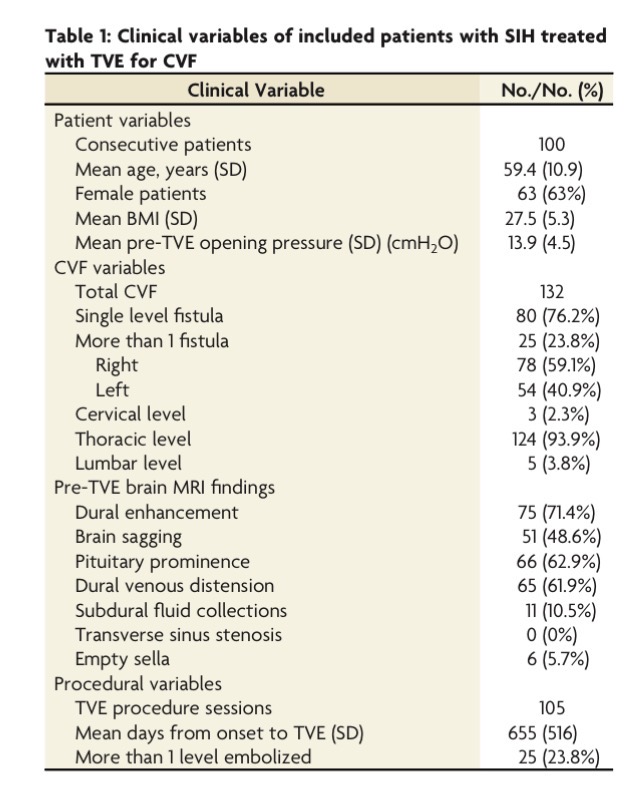
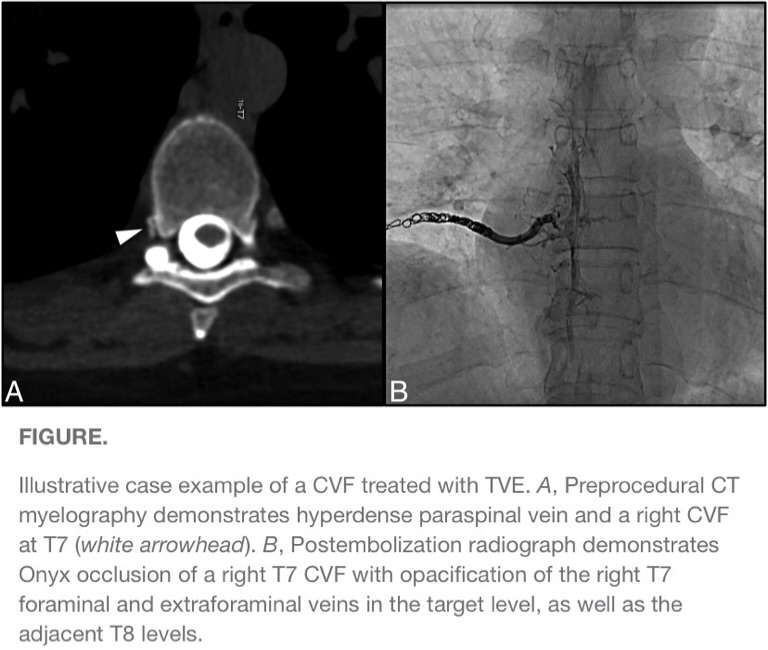
Check our Editor’s choice for the month: ‘’ Incidence and Predictors of Rebound Intracranial Hypertension after Transvenous Embolization of CSF-Venous Fistulas’’
In this single-center retrospective study, the incidence and severity of rebound intracranial hypertension after transvenous embolization for CSF-venous fistulas causing SIH appeared to be 80%, with 54% of patients experiencing moderate-to-severe symptoms and 7.6% requiring therapeutic lumbar puncture. Treatment of a single fistula and higher preprocedural opening pressures were associated with an increased risk of more severe RIH and need for intervention.
https://t.co/ZS2RrlnrxY
@TheAJNR My 🔥hot take:
If you aren’t seeing rebound intracranial hypertension after TVE, it’s because you either aren’t embolizing fistulas or you aren’t asking about it
@DocNavarrow (Not an MD) Cool case! If ppl are looking for Chiari, it’s also worth looking for signs of SIH in the differential. (+) Bern Score (or positional HAs, but I recognize this pt is asx) points toward a CSF leak instead of CM-1. Fixing a leak can resolve the syrinx w/o decompression.
@Beckystephens21@SolidEvidence It’s all about the dose. To reach the levels needed to stop a virus in your system, you’d have to take ‣‣ 50 to 100 times the safe human limit. At that concentration, the drug stops being medicine and becomes a neurotoxin that the human body could not survive.
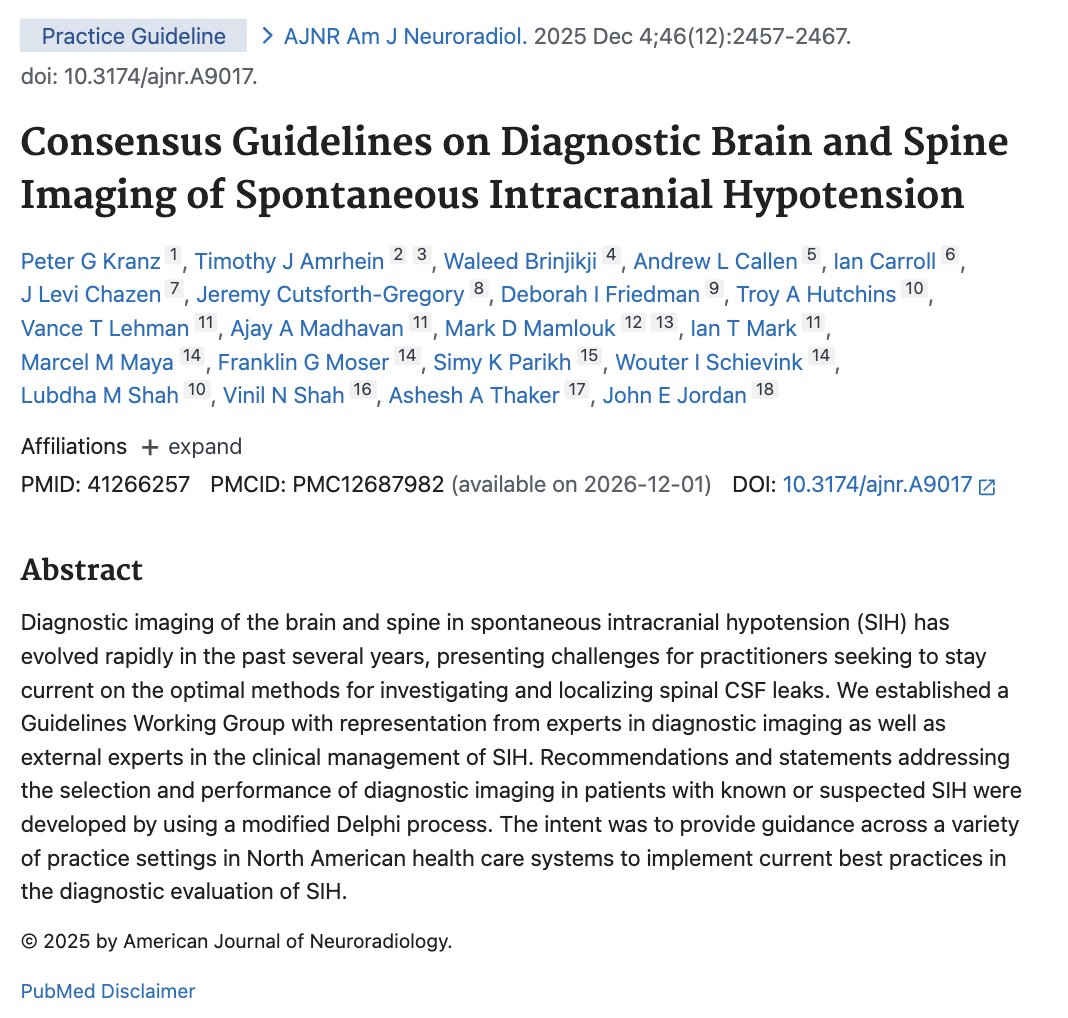
"The Diagnostic Burden of Spontaneous Intracranial Hypotension: Imaging Volume and Specialists’ Involvement Prior to Diagnosis"
https://t.co/brE8qPd6M2
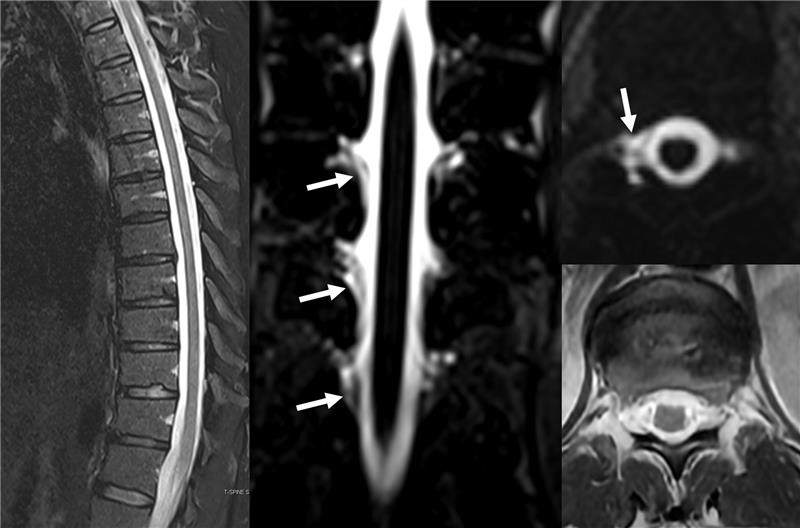
We see more and more lateral dural tear #CSFleaks with small epidural fluid missed because the correct MRI sequences were not obtained. 3DT2FS really shines in this context. Sometimes the 🔑 isn't new technology, but re-understanding how to look at existing data.
I’ve been reflecting on advances in spinal CSF leak care over the past five years — and I truly believe it represents one of the most rapid and transformative evolutions in modern medicine.
@pmkmann If you go to the linked page, click on "Info & Metrics", and scroll down, you'll see the contact email address. Shoot them an email politely asking for a copy of the paper. Author responses can vary, but this is pretty customary for personal use.