Ideas, Productos y Servicios... ¿Crees que tu idea, producto o servicio es una verdad universal que beneficia al mundo entero? Entonces... sácala a pasear por todo el mundo y mira, escucha y siente cómo la usa o desusa esa misma gente de este mundo 🌎
Hay una tribu que solo cuenta “uno, dos, muchos”. Y tú y yo en el fondo, tampoco llegamos más lejos.
Un pueblo del Amazonas, los pirahã, apenas tiene números. Distinguen entre “poco”, “algo más”, y basta. Durante años los lingüistas los trataron como una rareza.
Hasta que alguien hizo la pregunta: ¿y si los raros somos nosotros?
Porque tu cerebro, ese kilo y pico de materia que presume de mandar sondas a Marte, en realidad solo capta cantidades pequeñas. A partir de cuatro ya empieza a decir “bastantes”. Se llama subitización. Y viene de serie.
Carl Sagan decía que la edad y el tamaño del universo están fuera de lo que los humanos somos capaces de comprender. Cuando hablaba de miles de millones de estrellas, tu cabeza no veía miles de millones. Veía “muchas”. Exactamente lo mismo que el pirahã, solo que con mejor vocabulario.
Tu cerebro no evolucionó para entender el tejido del espacio-tiempo. Sino para no morir cuando contar tres leones era cuestión de vida o muerte. Contar tres mil estrellas no servía para nada.
Sin embargo… ahí seguimos. Levantando la cabeza hacia un cielo que nuestro hardware no puede procesar.
No entendemos el cosmos. Somos un primate diseñado para huir y comer. Pero nos plantamos bajo las estrellas y nos preguntamos de qué demonios están hechas.
Sagan tenía razón: el universo nos queda grande.
Pero qué gusto da ponerse de puntillas.
#LaTraumatologaGeek
🇩🇪 Google held 34 meetings with top German government officials to discuss suppressing "hate speech" and "disinformation" online.
Most were confidential and some were deemed "not suitable for public knowledge."
The meetings, revealed through a parliamentary question filed by the opposition AfD, included then-Chancellor Olaf Scholz and Google CEO Sundar Pichai, who attended 4 personally.
The implications go beyond Germany. Under the EU's Digital Services Act, content removed or algorithmically downranked applies globally, not just within EU borders.
If the secret meetings between a government and Google to shape what people can find online aren't information control, what is?
Source: Daily Sceptic, ZeroHedge / Writer: Julie
In 1942, C.S. Lewis predicted a future dystopia where:
-Education is leveled to a mediocre state to avoid hurt feelings
-The middle class is hollowed out, removing the primary champions of private excellence
-"Avoiding trauma" becomes the excuse to stop pushing students to their full potential
The obsession with perfect equality ends up destroying human greatness — and it’s fueled by state education, where schools become more like nurseries than academic institutions.
Seems like Lewis’s dystopia is already here.
In 1898, an Austrian physicist published a radical mathematical theory that claimed the entire universe was slowly, irreversibly ticking toward its own death.
The elite scientific establishment mocked him so relentlessly that he slipped into a deep depression and eventually took his own life.
Only a few years later, the world realized he was entirely right.
His name was Ludwig Boltzmann.
Today, his breakthrough formula is carved onto his tombstone in Vienna.
Yet outside of the physics community, almost no one understands the brutal, mind-bending philosophical truth he discovered about how our lives actually work.
In the late 19th century, physics was neat, orderly, and beautiful. Scientists believed that if you knew the exact position and velocity of every particle in the universe, you could predict the future perfectly.
The universe was a flawless clock.
Boltzmann looked at the world and realized that was an illusion.
He wanted to solve a deceptively simple riddle: Why does time only move forward? Why does a dropped coffee mug shatter into a hundred pieces, but a hundred scattered pieces never spontaneously jump back together to form a mug?
The laws of standard physics said it could happen. The math didn't forbid it.
So why didn't it?
Boltzmann realized the establishment was looking at the problem completely wrong. They were trying to track every single particle individually. It was an impossible formula.
Instead, Boltzmann decided to use probability and statistics. He stopped looking at individual atoms and started looking at the chaos of the crowd.
He invented a concept called Entropy, the mathematical measure of disorder.
His breakthrough was simple but devastating:
There is only one specific way for the atoms in your coffee mug to be perfectly arranged. But there are trillions of disordered ways for those same atoms to be scattered across the floor.
Things don’t break because the universe is malicious. They break because chaos is statistically overwhelming. Order is rare; disorder is infinite.
Boltzmann proved that the universe is constantly, inevitably moving from a state of low entropy (perfect order) to high entropy (maximum chaos). This cosmic slide toward disorder is the very reason time exists. The "arrow of time" is just the universe getting messier.
The professors of his day were furious. They hated his math because it relied on probability instead of certainty. They refused to believe that the fundamental laws of reality were governed by statistics.
But Boltzmann’s math laid the groundwork for quantum mechanics and explained the fate of the cosmos.
The philosophical lesson Boltzmann left behind is a cold, liberating truth for everyday life:
Order requires deliberate energy. Chaos is free.
Most people treat problems in their lives, a collapsing relationship, a chaotic career, a messy mind, as a sign of personal failure. They think they did something uniquely wrong.
But Boltzmann’s math proves that if you leave any system alone, it will naturally decay into chaos all by itself. Your room doesn't get messy because you are a bad person; it gets messy because the laws of physics dictate that there are infinitely more ways for your clothes to be on the floor than in the closet.
If you want to maintain order, sanity, or success in any area of your life, you cannot rely on things "just working out." The universe is actively trying to scramble your plans.
What is an area of your life right now that is sliding into chaos? Stop waiting for it to fix itself. Chaos is the default setting of the universe. What is the precise, deliberate energy you need to inject into that system today to fight back against the entropy?
𝐒𝐇𝐄 𝐖𝐄𝐍𝐓 𝐈𝐍 𝐅𝐎𝐑 𝐀 𝐊𝐍𝐄𝐄. 𝐒𝐇𝐄 𝐂𝐀𝐌𝐄 𝐎𝐔𝐓 𝐖𝐈𝐓𝐇𝐎𝐔𝐓 𝐀 𝐋𝐄𝐆. 𝐓𝐇𝐈𝐒 𝐈𝐒 𝐖𝐇𝐀𝐓 “𝐅𝐑𝐄𝐄” 𝐇𝐄𝐀𝐋𝐓𝐇𝐂𝐀𝐑𝐄 𝐀𝐂𝐓𝐔𝐀𝐋𝐋𝐘 𝐂𝐎𝐒𝐓𝐒
Roseanne Milburn, 61, of Winnipeg, had a routine procedure turn into an amputation — not because the surgery failed, but because Canada’s government-run system couldn’t find her a bed.
A surgeon at Winnipeg’s Health Sciences Centre removed dead tissue from her knee, then sent her to Concordia Hospital with the plan to bring her back that same day so a specialist could stitch the wound (CBC News). She was never brought back.
There was no bed at HSC. So she sat at Concordia with an 𝐨𝐩𝐞𝐧 𝐬𝐮𝐫𝐠𝐢𝐜𝐚𝐥 𝐰𝐨𝐮𝐧𝐝 𝐟𝐨𝐫 𝐞𝐢𝐠𝐡𝐭 𝐝𝐚𝐲𝐬, waiting for the system to make room.
As the video narrator put it: “𝘌𝘪𝘨𝘩𝘵 𝘥𝘢𝘺𝘴 𝘸𝘪𝘵𝘩 𝘢𝘯 𝘰𝘱𝘦𝘯 𝘸𝘰𝘶𝘯𝘥 𝘪𝘯 𝘊𝘢𝘯𝘢𝘥𝘢. 𝘕𝘰𝘵 𝘪𝘯 𝘊𝘶𝘣𝘢, 𝘯𝘰𝘵 𝘪𝘯 𝘔𝘢𝘥𝘢𝘨𝘢𝘴𝘤𝘢𝘳, 𝘯𝘰𝘵 𝘪𝘯 𝘴𝘰𝘮𝘦 𝘧𝘢𝘳-𝘧𝘭𝘶𝘯𝘨 𝘵𝘩𝘪𝘳𝘥-𝘸𝘰𝘳𝘭𝘥 𝘤𝘰𝘶𝘯𝘵𝘳𝘺. 𝘕𝘰, 𝘯𝘰, 𝘯𝘰, 𝘪𝘯 𝘊𝘢𝘯𝘢𝘥𝘢.”
By the time a bed opened, the wound had rotted past saving. The doctors told her the leg couldn’t be salvaged. On a Friday in December, Roseanne Milburn lost her 𝐫𝐢𝐠𝐡𝐭 𝐥𝐞𝐠 — over a missing hospital bed.
This is not a freak accident. It is the predictable output of a system that rations care by making people wait.
In 2025, the median Canadian waited 𝟐𝟖.𝟔 𝐰𝐞𝐞𝐤𝐬 from a GP referral to actual treatment (Fraser Institute). For orthopedic surgery — the exact category Milburn needed — the median wait is 𝟒𝟖.𝟔 𝐰𝐞𝐞𝐤𝐬. Nearly a full year. By design.
That is 222 percent longer than the 9.3-week wait Canadians faced in 1993 (Fraser Institute). The system isn’t getting better. It’s getting slower — and the waiting list itself becomes the rationing mechanism.
Defenders call it “𝘧𝘳𝘦𝘦”. It is not free. Roseanne Milburn paid for it. She paid with her leg.
Every politician selling “𝘔𝘦𝘥𝘪𝘤𝘢𝘳𝘦 𝘧𝘰𝘳 𝘈𝘭𝘭” is selling this — the bed that never opens, the specialist who never comes, the wound that turns black while a bureaucrat shuffles a list.
𝐀 𝐰𝐚𝐢𝐭𝐢𝐧𝐠 𝐥𝐢𝐬𝐭 𝐢𝐬 𝐣𝐮𝐬𝐭 𝐚 𝐝𝐞𝐧𝐢𝐚𝐥 𝐰𝐢𝐭𝐡 𝐚 𝐜𝐚𝐥𝐞𝐧𝐝𝐚𝐫 𝐚𝐭𝐭𝐚𝐜𝐡𝐞𝐝.
⚠️ El problema no es que el 66% de los universitarios use IA. El problema es para qué la está usando.
Ocho de cada diez estudiantes la utilizan para generar textos y trabajos académicos. Eso significa que una parte importante de la adopción de la IA no está ocurriendo para investigar más, comprender mejor o desarrollar nuevas habilidades, sino para cumplir tareas más rápido y obtener una nota.
La paradoja es brutal: tenemos acceso a la herramienta de aprendizaje más poderosa de la historia y muchos la están usando como una máquina de hacer deberes.
La culpa tampoco es exclusivamente de los estudiantes. Durante años el sistema educativo premió la memorización, los trabajos repetitivos y la producción de páginas, no el pensamiento crítico. La IA simplemente está exponiendo las debilidades de un modelo que ya estaba roto.
Lo que viene es aún más incómodo. Si una IA puede hacer la tarea, redactar el ensayo y responder el examen, entonces el verdadero valor ya no será producir respuestas, sino formular mejores preguntas, verificar información y pensar por cuenta propia.
Quien use la IA para evitar aprender quedará atrás. Quien la use para multiplicar su capacidad intelectual tendrá una ventaja imposible de alcanzar para el resto.
La tecnología no está reemplazando la inteligencia humana. Está revelando quién realmente la está utilizando.
Invented Before The American Independence, You Use It Daily And May Not Know.
Look under your sink for a brilliant design unchanged since 1775.
With zero moving parts, it uses the very water it drains to block explosive sewer gases from entering your home. It is the plumbing trap.
Before the late 18th century, indoor plumbing was just a straight pipe connecting a sink or early toilet to a cesspit below.
The problem with a straight pipe is that it acts as a two-way street. While wastewater goes down, fumes—methane, hydrogen sulfide, ammonia, and the putrid smell of human waste—come right back up.
These volatile gases made early indoor plumbing almost unbearable and frequently dangerous.
In 1775, a Scottish watchmaker named Alexander Cumming realized he could solve the problem just by changing the geometry of the pipe.
He bent the pipe into a sharp "S" curve (which was later refined into the wall-mounted "P" trap used under modern sinks).

In a modern P-trap under a sink the dip in the pipe retains enough water to block sewer gases from traveling backward.
By forcing the pipe to dip downward and then immediately curve back up before continuing to the sewer, Cumming ensured that a small amount of water would always pool at the bottom of the curve after the water was shut off.
That trapped pool of water acts as an airtight, liquid seal.
When you run the faucet, gravity pushes new water through the trap, washing the old water out. But the moment the faucet is turned off, the last bit of water settles in the bottom of the dip.
This small physical plug blocks foul odors, toxic fumes, and insects from traveling back up the pipe and into the home.
Without the simple curve of the plumbing trap, dense modern cities could not exist.
The invention allowed toilets and sinks to be safely integrated directly into the living quarters of homes, apartment buildings, and skyscrapers without turning them into open exhaust vents for the municipal sewer system.
You've seen the meme: one opossum eats 5,000 ticks a season. Unfortunately, it's wrong.
When researchers dissected the stomachs of 32 wild opossums, they found zero ticks. The number came from a single lab study that got stretched into folklore, and it still gets repeated everywhere.
But the opossum doesn't need the lie. It's the only marsupial in North America. It cleans up carrion, rotting fruit, slugs, snails, and the rodents you'd rather not have around. It eats copperheads and rattlesnakes, because it's immune to their venom. And it almost never carries rabies, since its body runs too cool for the virus to take hold.
So when one waddles through the yard at night, you're not looking at a pest, you're looking at the cleanup crew that works for free.
El País publica hoy que Europa se adentra en una arquitectura centrada en el control: vallas, muros, devoluciones y vigilancia externalizada. Lo llama trumpización. Yo lo llamaría algo más sencillo: llegar tarde a la realidad. Schengen fue diseñado para europeos que quitaban fronteras entre países con Estados, salarios y normas parecidas. No fue diseñado para que redes de tráfico humano, mafias y gobiernos irresponsables decidieran quién entra en Europa. Durante años la élite europea trató cualquier control migratorio como una vergüenza moral. Mientras tanto los barrios cambiaban, los salarios bajos sufrían, los servicios públicos se saturaban y la seguridad se deterioraba. Ahora los mismos gobiernos que daban sermones levantan controles y pagan a terceros países para hacer fuera lo que no se atrevieron a defender dentro. Una frontera no es odio. Es una línea administrativa sin la cual no hay contrato social. Si cualquiera puede entrar, quedarse y luego exigir derechos financiados por contribuyentes que no votaron esa política, la democracia se vacía. Europa está descubriendo, demasiado tarde, que un país que no controla sus fronteras acaba perdiendo el control de su política.
Voyager 1 is 24 billion kilometers from Earth.
It communicates with us using a 23-watt transmitter.
Less than a refrigerator light bulb.
The signal takes 22 hours to reach us, traveling at the speed of light.
By the time it arrives, it's 20 billion times weaker than the power of a digital watch battery.
NASA's Deep Space Network picks it up using 70-meter dish antennas cooled to near absolute zero to reduce electronic noise.
The engineering required to hear a 23-watt signal from 24 billion km away is arguably more impressive than the spacecraft itself.
Launched 1977.
Still transmitting.
Still being heard.
We built something that works perfectly, 47 years later, in conditions no one has ever tested in.
That's what engineering for the long term looks like.
In 1880, a reclusive, self-taught telegraph operator with no university degree went to war with the greatest scientific minds in the British Empire.
He won, changed the mathematics of physics forever, and quietly built the foundation for the entire modern electrical grid.
Yet today, almost no one outside of electrical engineering and applied mathematics even knows his name.
His name was Oliver Heaviside.
The story of how he solved one of the hardest engineering problems in human history is a masterclass in why book smarts fail where deep, messy intuition succeeds.
In the late 19th century, the world was trying to lay massive underwater telegraph cables across the Atlantic Ocean. But they had a crippling problem: the signals kept distorting. You would type a message in London, and by the time it reached New York, it was a smeared, unreadable mess of electricity.
The top physicists of the day, using traditional university math, said the solution was simple: make the cables purer and reduce resistance. They spent millions of dollars trying to make the lines perfect.
It didn't work. The signals still broke.
Heaviside looked at the exact same problem from his messy, self-taught perspective and realized the elite academic establishment was blind.
They were treating an electrical wire like a water pipe. They thought the electricity was inside the copper.
Heaviside figured out that electricity doesn’t flow inside the wire; it flows in the electromagnetic field around the wire.
Then, he did something that made mainstream mathematicians furious. He invented a bizarre shortcut called operational calculus. Instead of spending weeks solving complex, multi-page differential equations to map these fields, he treated calculus like basic algebra.
To the professors at Cambridge, this was a sin. They called his math clumsy, unrigorous, and nonsense.
Heaviside didn't care. His famous response to them was: "Should I refuse my dinner because I do not fully understand the process of digestion?"
He used his illegal math to propose a mind-bending solution: to fix the distorted signal, engineers didn't need to make the cable cleaner. They needed to deliberately add more corruption to it. He suggested wrapping the cables in iron wire to introduce "inductance", intentionally fighting one distortion with another.
The establishment ignored him for years. But when AT&T finally tried his method, the results were instant. Long-distance communication was solved.
Heaviside wasn't trying to pass a math exam or impress a peer-review board. He wanted to solve a real-world problem.
In the process, he took James Clerk Maxwell’s famously complex 20 equations of electromagnetism and condensed them into the 4 beautiful formulas that every single physics student is forced to memorize today. Heaviside did the heavy lifting, but Maxwell got the name.
The lesson Heaviside left behind is a philosophical blueprint for navigating a complex world:
The people who memorize the proper formulas are excellent at solving textbook problems. But they are entirely dependent on the rules staying the same.
The people who understand the underlying system don't care about the rules. They break them to find what actually works.
Most of us approach our life's problems like the 19th-century British establishment. When something goes wrong in our career or relationships, we try to make our existing wire purer. We try harder at a broken method.
But sometimes, the problem isn't that you aren't trying hard enough. The problem is that you are looking inside the wire instead of looking at the field around it.
What is a distortion in your life right now that you keep trying to fix with the standard advice? What happens if you stop trying to follow the textbook formula and start looking at the hidden forces causing the noise?
In 1978, a student working a summer job at minimum wage could earn enough to cover an entire year of in-state tuition at a four-year public university, often without needing to take on debt.
In 1978, a student earning the federal minimum wage could realistically pay for an entire year of in-state tuition at a public four-year university with a typical summer job. With minimum wage set at $2.65 per hour and average annual tuition and required fees around $688, a student working 40 hours a week for 12 weeks could earn about $1,272 before taxes—more than enough to cover tuition and still have money left for books, transportation, and other expenses.
That reality has largely disappeared. While the federal minimum wage has remained at $7.25 per hour for years, average in-state tuition and fees at public four-year universities have climbed to roughly $11,000 annually. Covering tuition alone at minimum wage would now require more than 1,500 hours of work before taxes, the equivalent of nearly 38 weeks of full-time employment—far beyond what a student could earn during a normal summer break.
🚨⚠️La directora del Banco Central Europeo, Lagarde DICE:
"El cambio cl¡mático" exige una revisión total de toda la economía... incluida la necesidad de reducir nuestra huella de carbono en todo lo que hacemos... para "reducir nuestra huella de carbono" hay que eliminar el dinero en efectivo ⚠️
Son la mayor estafa sobre el planeta. ¿Alguno de ustedes ha votado por este demonio? Yo no. 🔥
New stricter rules for acquiring Swedish citizenship were introduced today on the National Day of Sweden.
- 8 years of residence instead 5
- A self-sufficiency requirement
- Swedish language & society exam
- Good character (the most controversial change)
The conduct requirement was strengthened from “hederligt levnadssätt” (honest way of life) to “skötsamt och hederligt levnadssätt” (orderly and honest way of life).
Applicants now must have been living “an orderly life”
This means that you can forget about citizenship if you have:
- A criminal record
- Restraining orders
- Financial irresponsibility (debts and patterns of non-payment)
- Repeated minor offences
- Non-compliance with authorities
- Ties to groups involved in grave human rights abuses
And a number of behaviors that aren’t illegal but deemed unwanted in Sweden.
The intellectual life was never something that only the elites enjoyed.
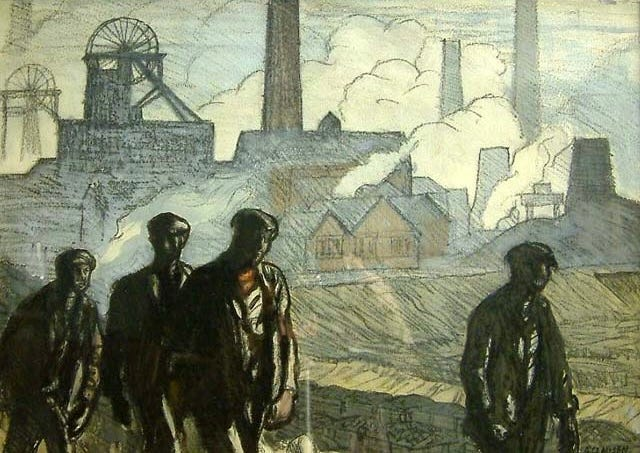
In England there has long existed a massive, self-directed culture of education among working-class people. Coal miners in industrial England read voraciously, with many even self-studying Latin or history after long shifts underground or in factories.
Coal miners, mill workers, and mechanics built their own libraries and formed reading societies to study Shakespeare, Dickens, Milton, even Plato. A grassroots intellectual movement that grew independent of elite institutions.
Jonathan Rose makes this case in "The Intellectual Life of the British Working Classes", one of the most illuminating cultural histories of recent decades.
While elites might have consumed culture for status, ordinary readers engaged with it morally and personally, seeing in Shakespeare and the classics a means of moral development and self-mastery. This revelation directly challenges the 20th-century academic assumption (inspired by postmodernism and Marxist cultural studies) that "high culture" is inherently exclusionary.
Pulling from autobiographies and letters, Rose shows that workers often described reading as a form of inner liberation, citing writers like Ruskin, Carlyle, and Dickens as their moral guides. They read with a degree of seriousness we rarely see today, treating their books as beloved companions in a lifelong pursuit of wisdom.
The rise of mass media and television following WWII made a preference for reading slowly give way to one for passive entertainment.
And the democratization of education paradoxically coincided with a lowering of intellectual standards — just like how more people than ever attend university today, yet popular culture as a whole is much less intellectually vibrant than it was 50 years ago.
¿Quieres saber por qué te negaron un préstamo o te pidieron garantía adicional?
Tu banco te estudia cada vez que usas la app.
Cada pago, cada transferencia, cada vez que revisas el saldo a medianoche — entra a un modelo de riesgo.
Con eso saben tu ingreso real, tu estrés financiero, tus hábitos.
Y lo usan para decidir cuánto crédito mereces.
En RD existe la Ley 172-13 de Protección de Datos. Pocos la invocan.
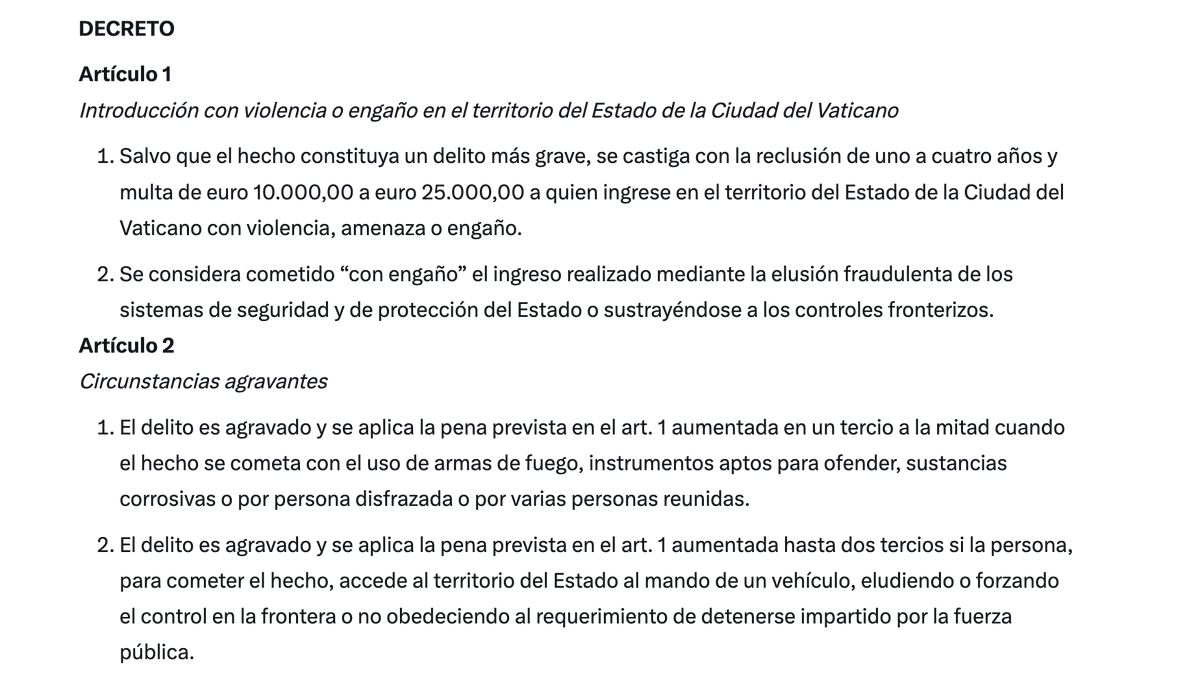
Aquí tienen el texto del decreto del Vaticano para combatir la inmigración no autorizada en el territorio de la Santa Sede.
Personalmente me declaro partidario de copiar textualmente y de inmediato al Vaticano las medidas con que se persigue y condena a cárcel, multa y prohibición de entrada en el territorio a todo intruso que cruce sus fronteras no autorizado.
There was once a bird in America so numerous it darkened the sky for days when it passed, and it was the cheapest meat in the country. Then, inside a single lifetime, every last one of them was gone.
The passenger pigeon. Three to five billion of them, the most abundant bird in North America, possibly in the world. Flocks a mile wide that took hours to fly over. And because there were so many, they were the meat of the poor, netted by the thousand, packed into barrels, and shipped by the railway carload into New York and the other growing cities to be sold for next to nothing.
It was free protein on a scale that is hard to even picture now. A working family fed itself on a bird that cost a few cents because the sky was full of them and always had been.
The railroad and the telegraph were what finished it. Hunters could now find a nesting site by wire and ship the slaughter to market by rail, and they did, year after year, faster than the birds could breed. The flocks thinned, then collapsed, then were simply gone. The last wild one was shot around 1900.
On the first of September 1914, a bird named Martha died alone in a cage at Cincinnati Zoo, and the most numerous species on the continent was extinct. They froze her in a block of ice and sent her to the Smithsonian.
From more birds than anyone could count to none at all, in about fifty years, because we treated something free and infinite as though it could never run out. The poor lost a meal. Everyone lost the bird. Nobody got either back.
Marc Andreessen just explained how the United States assassinated its own future.
In the 1970s, the Nixon administration launched something called Project Independence.
The mandate was absolute.
Andreessen: “Build a thousand new civilian nuclear power plants in the US by the year 2000.”
One thousand reactors. Unlimited, carbon-free baseload power. Enough electricity to move the entire country to electric vehicles four decades ahead of everyone else.
But it went further than energy.
Andreessen: “It’s called Project Independence because it means the US won’t have to be involved in the Middle East anymore, because we won’t need the oil.”
No oil dependence. No Gulf Wars. No generations of soldiers stationed in deserts protecting supply chains that never needed to exist.
A complete strategic withdrawal from the Middle East. Permanent.
And none of this was hypothetical.
Andreessen: “France ran for a long time almost entirely on nuclear power. Japan ran for a long time almost entirely on nuclear power.”
Other nations proved it worked at scale. America had more capital, more engineers, and more ambition than all of them.
Andreessen: “How many nuclear power plants were built out of the thousand? Rounds to zero.”
Zero.
Not because the physics failed. Not because something superior replaced it.
Because the same administration that drafted the blueprint for unlimited energy also created the institution that killed it.
Andreessen: “They never got built because the Nixon administration also created the Nuclear Regulatory Commission, which made it its purpose in life is to stop nuclear power plants from getting built.”
Same government. Same decade. Same pen.
One directive launching the most ambitious energy program in American history.
Another creating the bureaucracy that would quietly dismantle it from the inside.
Andreessen: “The Nuclear Regulatory Commission did not approve a new nuclear plant design for 40 years.”
Forty years of zero approved designs. Not because no one submitted them. Because the institution built to regulate nuclear energy became the institution built to prevent it.
That’s not oversight.
That’s abolition dressed as due diligence.
We spent the next fifty years fighting wars in the desert for a resource we never needed.
Choked the atmosphere with carbon we didn’t have to burn.
Terrified an entire generation with the illusion of scarcity.
And the entire time, the physics already worked.
The government didn’t fail to navigate the energy crisis.
They took the densest source of energy in the universe and drowned it in paperwork.
Every war fought for oil. Every carbon debate. Every geopolitical crisis of the last half century.
All of it was a policy choice.
We didn’t lack the technology to power the future.
We let a committee outlaw the math.