Over the past few days I came across interesting research pieces by @TheOfficialSBI and the insightful @capitalcalculus on India's rising prosperity. I have cited these works and shared a few thoughts on @LinkedIn. Do read... https://t.co/NBTVsulbHU
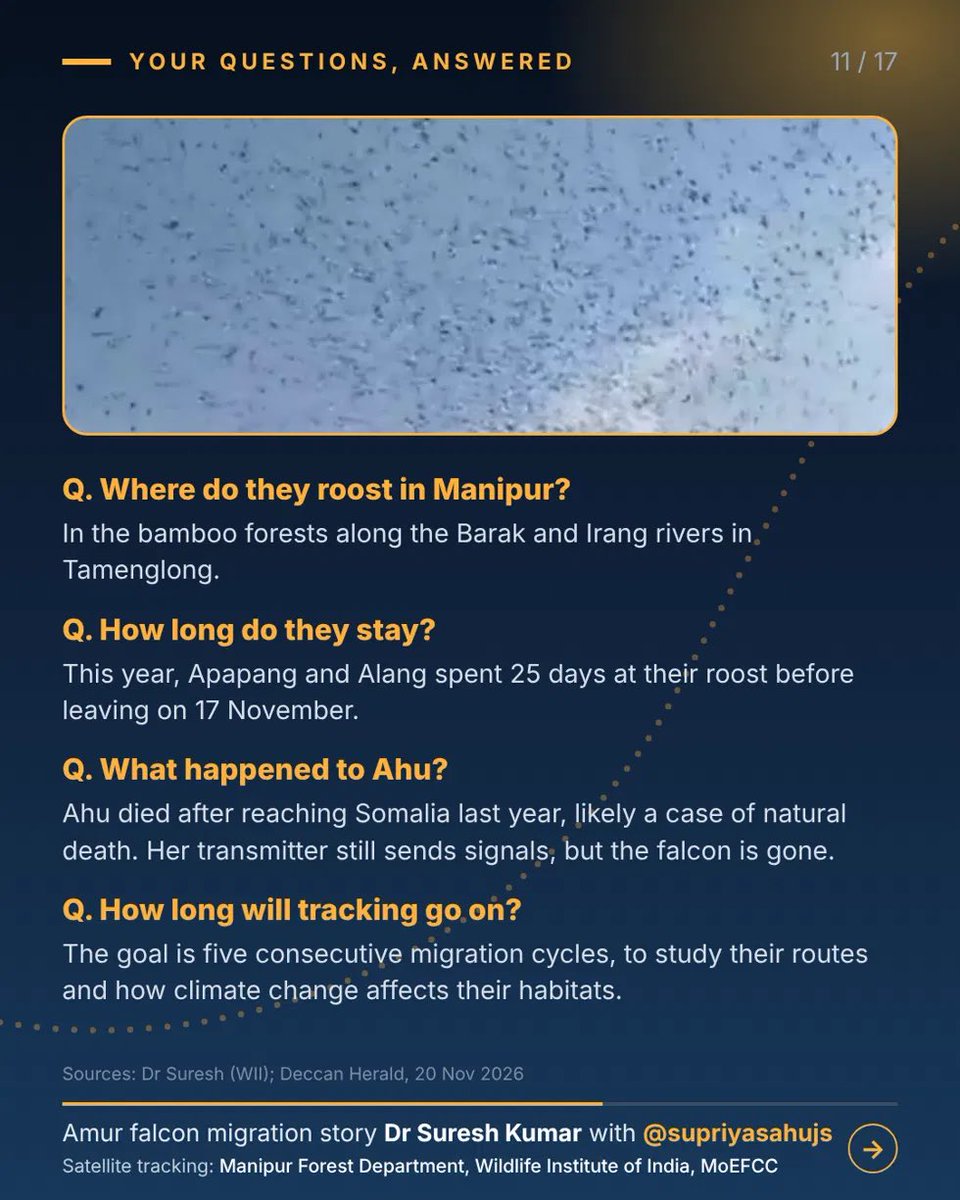
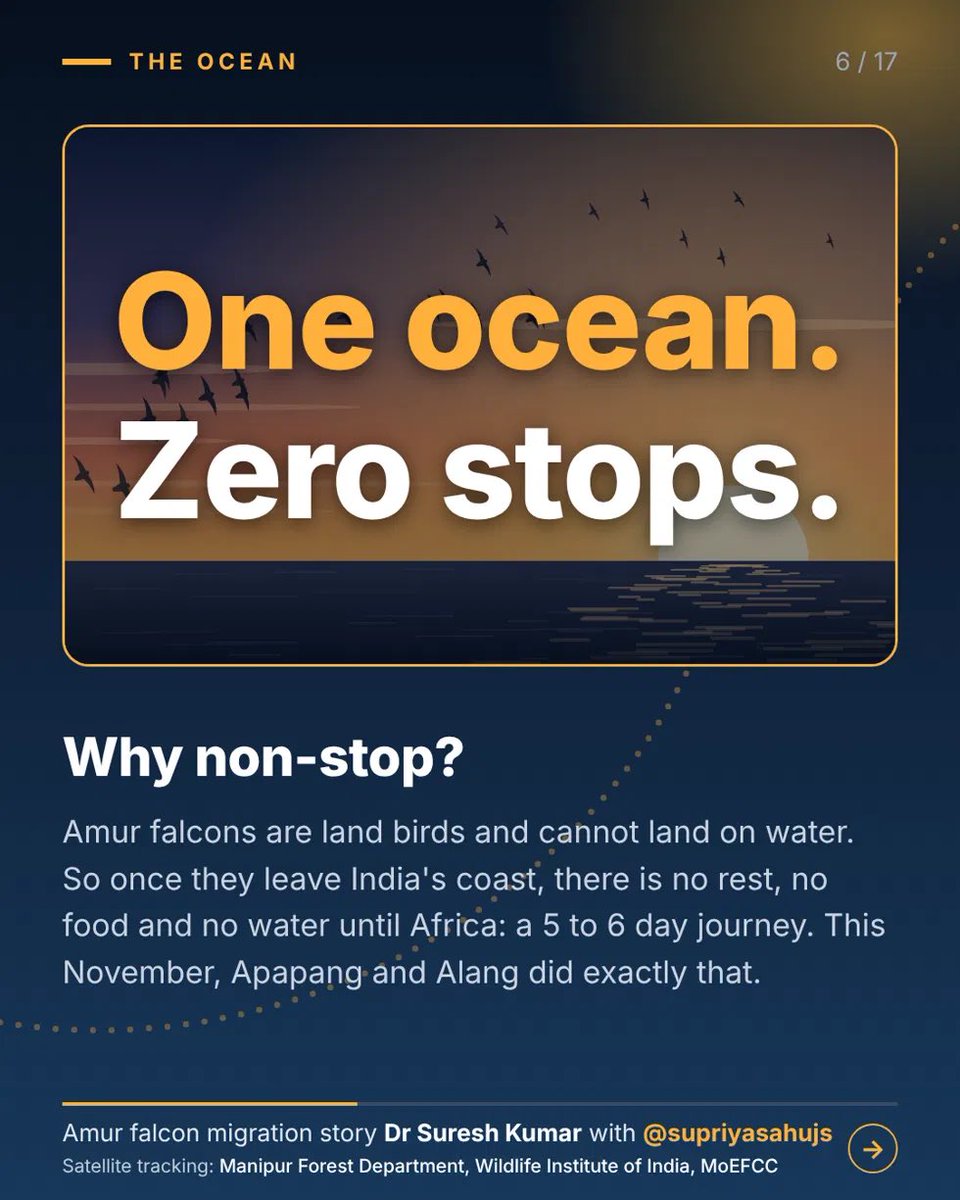
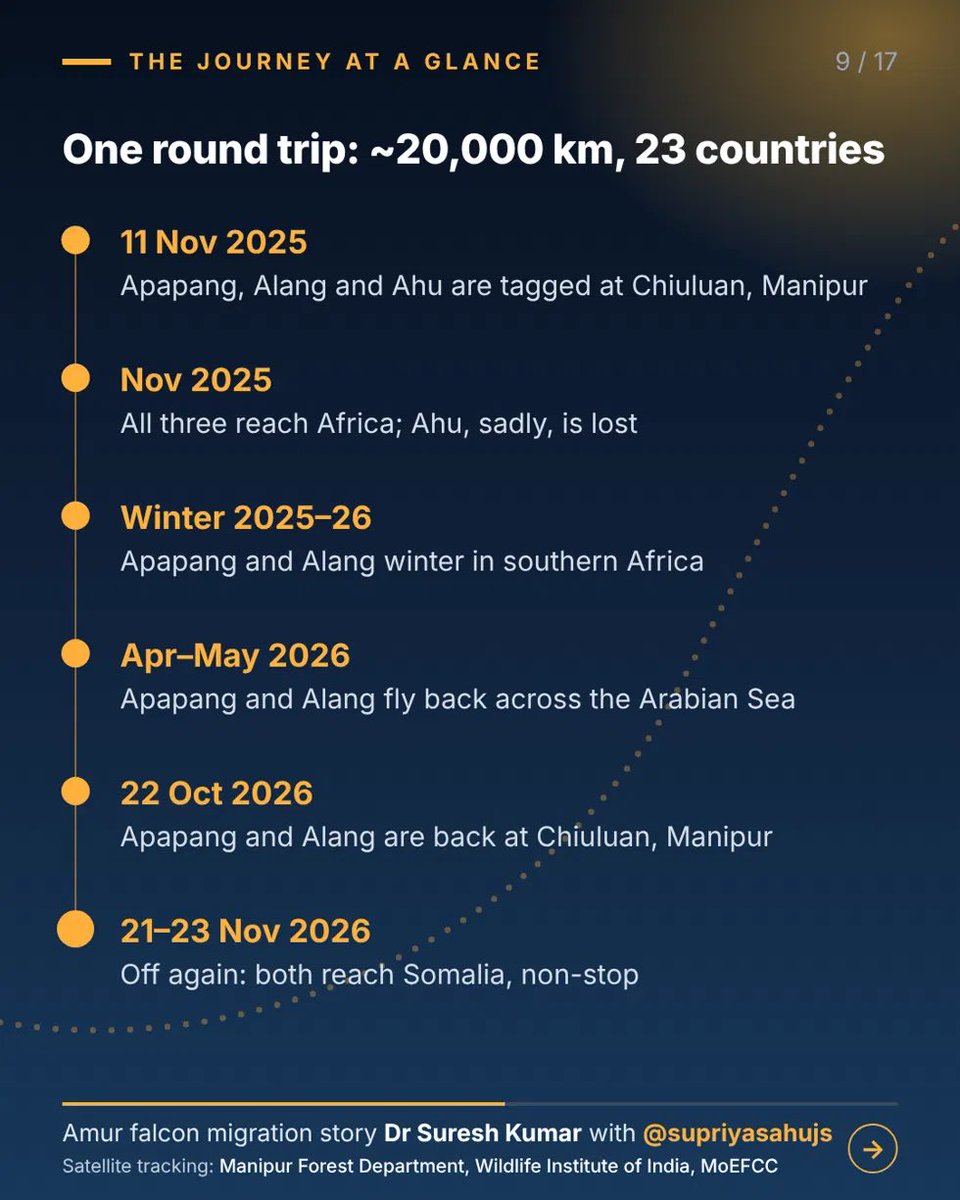
For all those who have been following the epic journey of Amur falcons, I have put together a small deck exploring the most fascinating parts of their journey, with a few of your questions answered along the way. The work belongs to Dr Suresh Kumar and the scientists at the Wildlife Institute of India (MoEFCC), the Manipur Forest Department, and the local communities who protect these birds. I do believe this incredible migration will move something in us, so that each of us are inspired to do our bit to keep these ancient journeys going, forever. 🤛 as told to @supriyasahuias by @sureshwii
#AmurFalcon #Migration #Manipur #Conservation @moefcc
More foreign tourists land at Gaya airport than at Jaipur airport.
2024: Gaya 47,500. Jaipur 16,069. (Government of India's own tourism data)
Most of them come in these winter months. Pilgrims from Thailand, Vietnam, Japan, Myanmar and Bhutan fly in to see the land where Buddha attained enlightenment.
And this is how Gaya "International" Airport welcomes them. Heaps of garbage near the parking. Pathetic and ancient Terminal Infrastructure and management.
We are sitting on a gold mine of tourism. I have been watching this for 2 decades now, and the condition is still ancient.
This isn't just Gaya's embarrassment. It's India's face in front of the world.
@MoCA_GoI@AAI_Official@tourismgoi, wake up and act.
Clean it up, fix the approach and exit road, and give Gaya an airport worthy of the word "International". The terminal needs a major overhaul!
Capital Calculus 🎥 || India Needs a New Poverty Goalpost
Watch Anil Padmanabhan speak with Himanshu, Associate Professor, Jawaharlal Nehru University
@capitalcalculus@himanshujnu@nitingokhale
https://t.co/9XD97K3f4u
While it's easy to laud the late Rahul Bajaj for "speaking truth to power" lets not forget @ShekharGupta that as the face of the '90s 'Bombay Club,' Mr Bajaj lobbied hard against liberalisation - to shield Licence Raj monopolies from foreign competition so that entrenched, businesses kept their monopolies 𝙎𝙖𝙪 𝙘𝙝𝙪𝙝𝙚 𝙠𝙝𝙖𝙠𝙚 𝙗𝙞𝙡𝙡𝙞 𝙝𝙖𝙟 𝙠𝙤 𝙘𝙝𝙖𝙡𝙞. @sardesairajdeep
Hurray ! And he has landed !
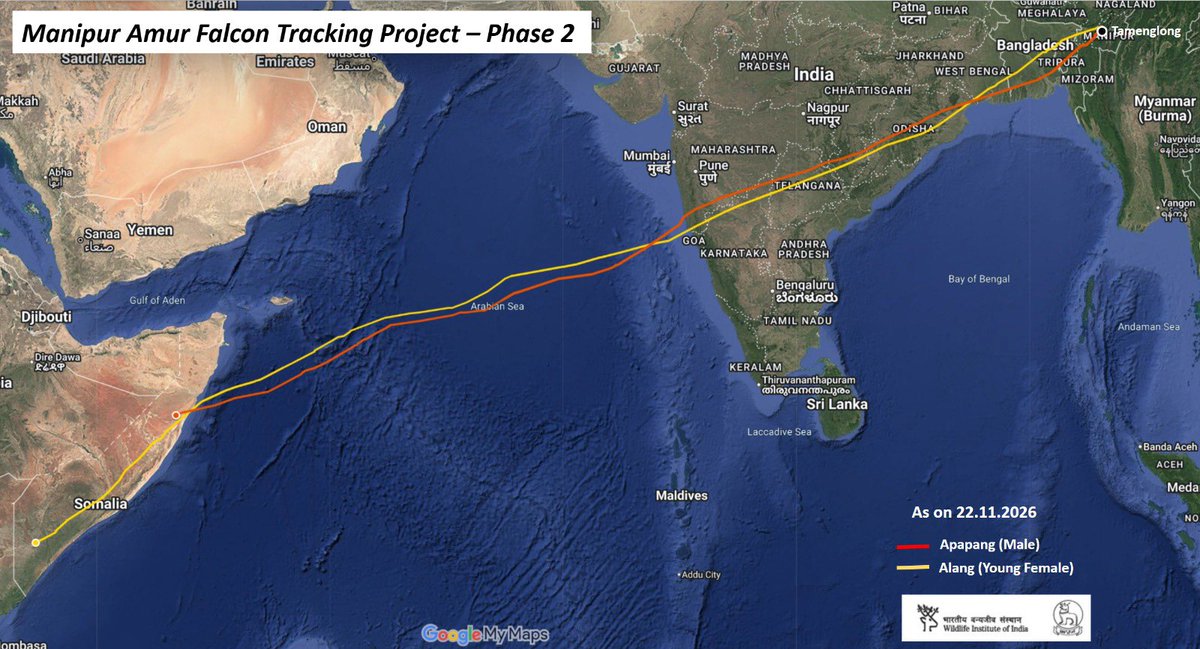
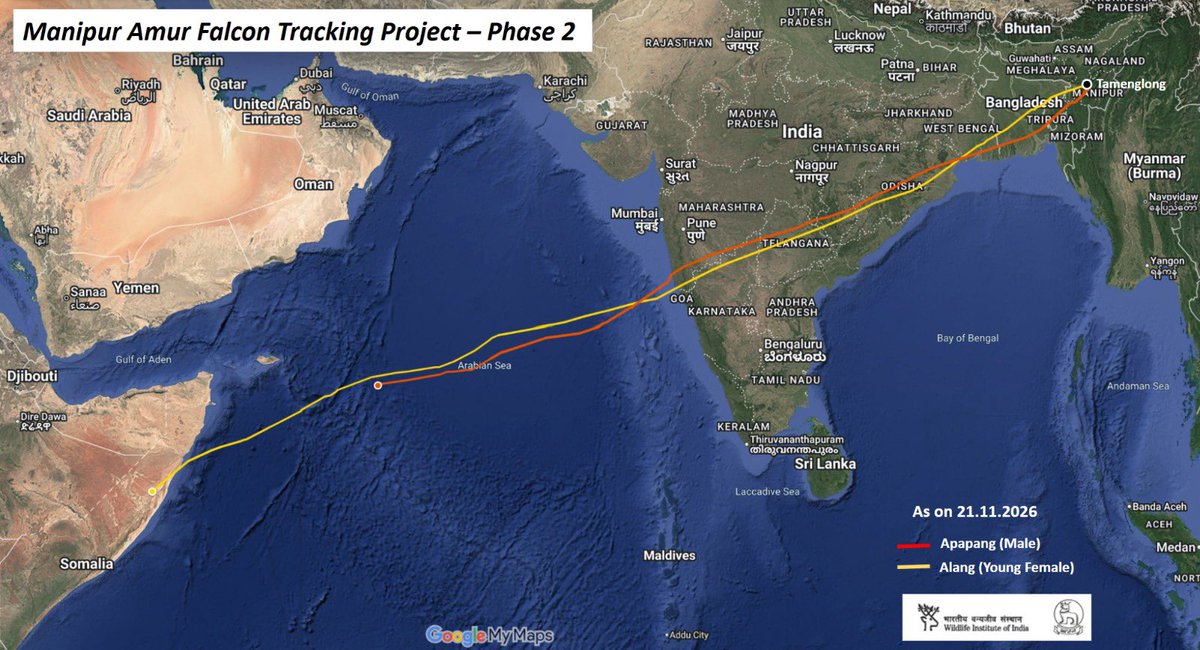
Apapang too has done it, arriving in Somalia after 5,400 Kms NONSTOP flying . Apapang, the male Amur Falcon, has reached the shores of Somalia after an epic nonstop flight from Tamenglong, Manipur India ! With Alang the young female Amur Falcon already in Somalia, both our winged travellers have now completed this breathtaking leg of their transcontinental migration. From the hills of Manipur to the Horn of Africa. We are witnessing a true miracle of nature @sureshwii #AmurFalconMigration
The Council of Scientific and Industrial Research (CSIR) transferred six indigenous technologies, including bio-bitumen derived from agricultural residue, to industry partners.
The technology, jointly developed by CSIR-Central Road Research Institute and CSIR-Indian Institute of Petroleum, converts rice straw, known as parali, into a biomass-derived material capable of partially replacing conventional petroleum-based bitumen in road construction.
#DYK
A #murmuration is a mesmerizing aerial display where thousands of starlings swirl across the sky as one shape-shifting cloud. 🐦✨
With zero leaders, each bird simply mirrors its 7 closest neighbors—creating an instant chain reaction to confuse predators at dusk.
#Nature #Wildlife #upsc @UPSC_Notes@upscnetwork4@Ecology4UPSC
Spot on!
Friction in the economy favours the big firms. Smaller enterprises are unable to overcome it. Sure shot way of creating duopolies and grow corruption.
"There is insufficient competition in a range of industries coupled with high barriers to entry due to incomplete factor market reforms. The reasons for this are structural ......
For example, a micro/small enterprise exporting Rs 20 lakhs / month worth of goods is likely to get crushed by the paperwork and compliance demands imposed by entities like DGFT and RBI. It is rational not to try or persist.
Why do these frictions persist despite years of representation made by policy researchers, as well as industry groups of all sizes?"
The key thing to consider is, what are the incentives of industry.
There is insufficient competition in a range of industries coupled with high barriers to entry due to incomplete factor market reforms. The reasons for this are structural - it not only a “cultural” issue with India Ltd. Culture is anyway the accumulation of behaviours and attitudes shaped by wrong policies persisted with for decades. So government policies are also responsible for the present situation - not culture or behaviour alone.
For example, a micro/small enterprise exporting Rs 20 lakhs / month worth of goods is likely to get crushed by the paperwork and compliance demands imposed by entities like DGFT and RBI. It is rational not to try or persist. Why do these frictions persist despite years of representation made by policy researchers, as well as industry groups of all sizes?
Does Competition Commission of India have sufficient capacity and capability to enforce competition in different industries? The answer is No.
Does anybody question if banks making huge profits is actually beneficial for the real economy - should lending institutions capture supernormal profits? Then how do we expect manufacturing to perform?
If India wants a different type of corporate landscape - reform credit markets, inject competition into industries. Reduce barriers to entry. This is not rocket science. https://t.co/MirRGP9lex
Light the asses of corporate India on fire, let them sweat about how they will *survive* 10 years down the road.
Today nobody has any such fear. It is this fear which animates successful market economies, of the type @udaykotak referred to recently.
They invest in R&D out of their own interest in survival, not out of the goodness of their hearts or patriotism.
If India wants to become the world’s biggest economy in 20-25 years - this is what we have to do. Else we can keep fooling ourselves to think pygmies are colossuses!
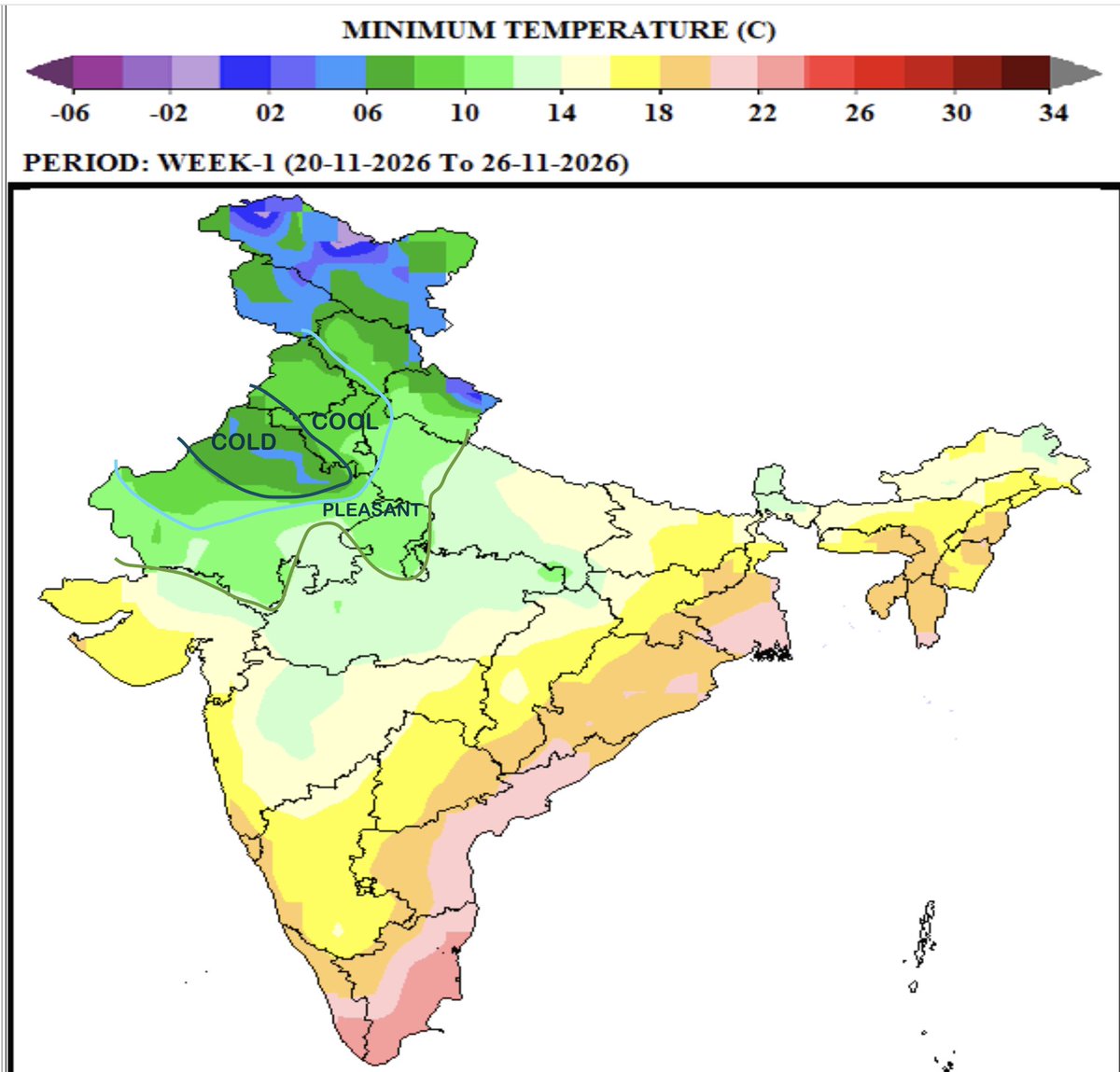
"From 23/24th November hence nights and mornings are expected to get colder with New Delhi to report season's first single digit minimum temperature by Tuesday / Wednesday."
Winter nights coming up next week 📉
Northwest winds are expected to return early next week that should result in drop in minimum temperatures by 2-3°c from current levels across north west India from 23/24th November hence nights and mornings are expected to get colder with New Delhi to report season's first single digit minimum temperature by Tuesday / Wednesday.
T-min forecast for next week:
NW Rajasthan: 5 to 8°c
Rest of Rajasthan: 8 to 13°c
Punjab: 6 to 10°c
Haryana: 7 to 11°c
Chandigarh: 8 to 10°c
Delhi: 9 to 12°c
NW UttarPradesh: 8 to 12°c
Rest to UP: 13 to 17°c
Expect NW RJ and west Haryana minimum temp will be near normal in rest of plains. Currently day (Max temp) are not expected to fall significantly till December first week restricting proper winter onsets.
Unbelievable but true ! Alang has made it to Somalia ! 5,700 km in 101 hours of NONSTOP flying! No rest, no landing, just sheer endurance across the Arabian Sea! And Apapang is still flying ! 4,100 km covered in 95 hours, NONSTOP!
Magnificent little champions are blazing across the skies 💪
Info Dr Suresh @sureshwii@wii_india@IUCN@moefcc
"Our research finds that almost half the beneficiaries we studied now have access to market credit at normal interest rates, with loans of up to ₹1 lakh. Business growth of street vendors has also accelerated.
The repayment record built through PM SVANidhi has helped lenders assess borrowers who previously lacked a formal credit history.
This is a textbook example of government addressing a market failure: helping borrowers establish creditworthiness, taking some initial losses for filtering, enabling commercial lenders to step in, and creating a path for government support to withdraw.
Policymakers from other emerging economies have shown interest in replicating this approach."
PM SVANidhi, the street-vendor loan scheme launched during Covid, is one of the government’s less celebrated successes. It has materially changed the lives of street vendors.
Our research finds that almost half the beneficiaries we studied now have access to market credit at normal interest rates, with loans of up to ₹1 lakh. Business growth of street vendors has also accelerated. The repayment record built through PM SVANidhi has helped lenders assess borrowers who previously lacked a formal credit history.
This is a textbook example of government addressing a market failure: helping borrowers establish creditworthiness, taking some initial losses for filtering, enabling commercial lenders to step in, and creating a path for government support to withdraw. Policymakers from other emerging economies have shown interest in replicating this approach.
We at the Centre for Analytical Finance, ISB, have studied the scheme since its inception and worked closely with the Ministry of Housing and Urban Affairs. Yesterday, the Ministry honoured our contribution with a special recognition.
My colleague Mohan Ramanatha received the award from the Honourable Minister for Housing and Urban Affairs. A gratifying recognition of our team’s work on a programme that deserves much greater attention.
I will write more about the scheme and our findings in the future.
This is the right ght kind of admonishment Indian corporates deserve, not the Leftist Islamist @INCIndia@RahulGandhi type who berate corporates for making profits!!!
Indian Tax bureaucracy is (the most) Notorious in the World.
As I have been tweeting for years, despite several good rounds of tax reform, Tax reform and simplification remains the most important pending Central Govt reform, along with elimination of all criminal penalties in economic laws. For instance, inverted tariff duty structure has been on budget agenda for 5-7 years.
Imports of Scotch whisky in Bulk Spirit form: Customs must reconsider its stand on classification
A major tariff battle is brewing over Scotch whisky in India—and it threatens to undermine a centerpiece concession of the India–UK trade deal just four months after it took effect. 🥃🇮🇳🇬🇧
Here is what’s happening, why Indian Customs’ new stance doesn't hold up under global trade rules, and why it matters:
The Dispute: 75% vs. 162.5% Duty
Under the India–UK Comprehensive Economic and Trade Agreement (CETA), which took effect in July 2026, India slashed the basic customs duty on bulk Scotch whisky (containers >2 litres, HS 22083092) from 150% to 75%.
However, starting November 2026, Indian Customs began reclassifying bulk Scotch imports under a newly created tariff line (HS 21069051) for "compound alcoholic preparations used to manufacture beverages."
Basic duty jumps from 75% to 150%.
With a 5% consumption levy, the effective tax hits 162.5%
Customs' Argument
Bulk Scotch arrives at cask strength (58%–63% ABV).
Because Indian bottlers dilute it with water or blend it with domestic neutral grain spirit before selling it, Customs argues it is an "industrial input" rather than a finished, consumable beverage.
Why This Classification Fails Global Rules (The GTRI Breakdown)
Under the Harmonized System (HS) of tariff classification, goods must be taxed based on what arrives at the border, not what happens to them later in a factory.
Heading 2208 vs. Heading 2106:
Heading 2208 (Allows lower tariffs under FTA) explicitly covers spirits and undenatured ethyl alcohol under 80% ABV.
Heading 2106 (used by Customs) is a catch-all for food preparations "not elsewhere specified."
Because cask-strength Scotch already possesses the aroma, flavour, and chemical profile of whisky at the border, it belongs in 2208—automatically ruling out 2106 under Rule 1 of Interpretation of HS rules.
Adding Water Doesn't Change Character:
Even if Customs views cask-strength Scotch as "unfinished," Rule 2(a) states that an unfinished product carrying the essential character of the finished good is classified as the finished good.
WCO Explanatory Notes explicitly confirm that ~60% ABV whisky remains "whisky" even if it will be diluted before bottling.
Domestic Caps Don't Dictate Import Codes:
While FSSAI caps domestic retail spirits at 50% ABV, India and international HS tariff rules allow spirits up to 80% ABV.
The Safety Net:
Even if a specific shipment somehow failed the strict definition of Scotch whisky, it would still fall under the residual spirits category (HS 22089099)—which carries a 110% CETA duty, not 150%.
The Bigger Picture
Shipping Scotch in a bulk tank instead of a glass bottle doesn't strip it of its Geographical Indication or turn it into a generic food preparation.
By applying a post-import "end-use" test, Customs risks eroding a specific, hard-won concession India explicitly agreed to under the UK trade pact.
To justify a 150% duty, Customs has to prove the liquid isn't a spirit at all when it lands at the port—and simply pointing to a bottle of demineralized water waiting at the factory won't cut it.
#IndiaUKTrade #ScotchWhisky #Customs #TradePolicy #GTRI #CETA