Disclaimer: Backed by 20+ years in health & wellness, we share insights on the use of two-piece empty capsules, not medical advice. We’re not doctors. Consult a professional.
Zinc form is where most people go wrong. Picolinate and citrate absorb significantly better than oxide. At 20-30mg elemental, a size 3 HPMC capsule fits cleanly. At 50mg, move to a size 2. HPMC over gelatin for mineral stability, no shell degradation issues. Most testosterone studies used 25-30mg daily, with deficiency correction at 30-50mg over 4-8 weeks
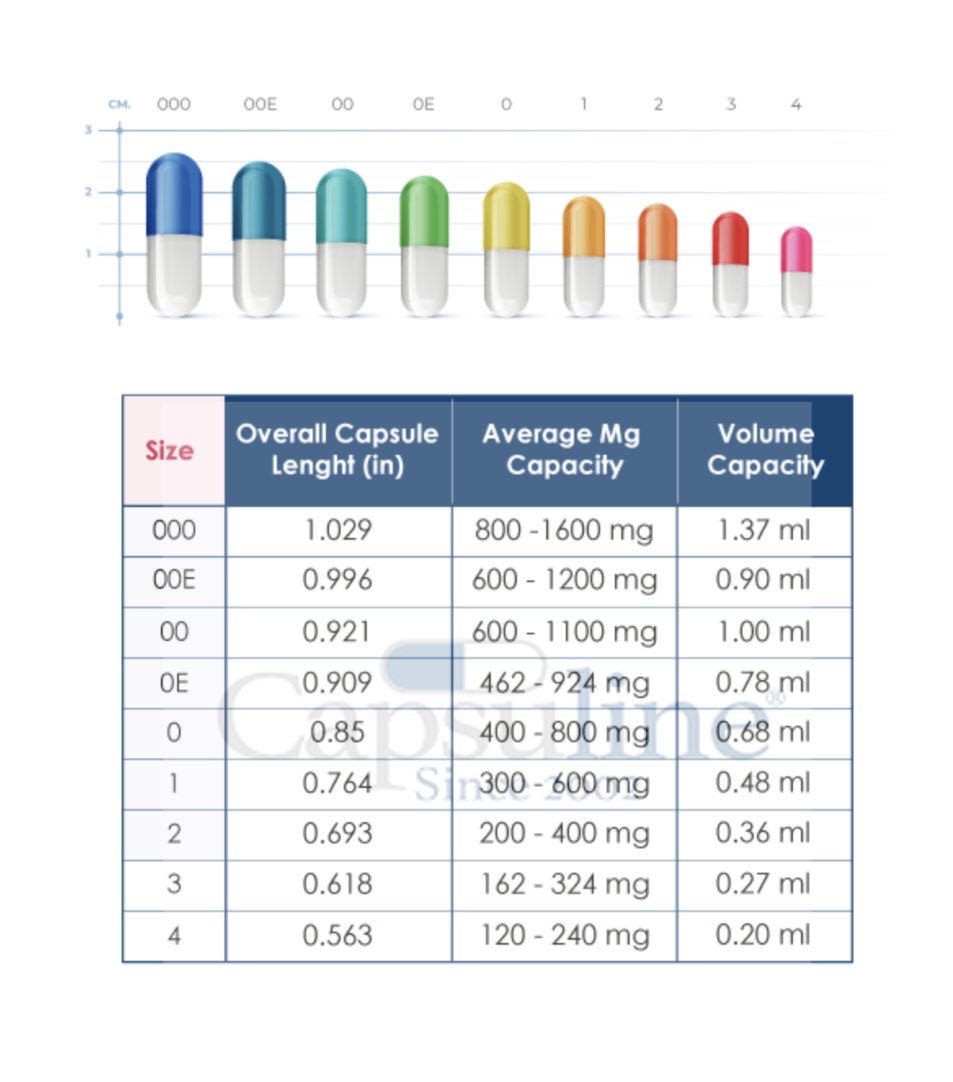
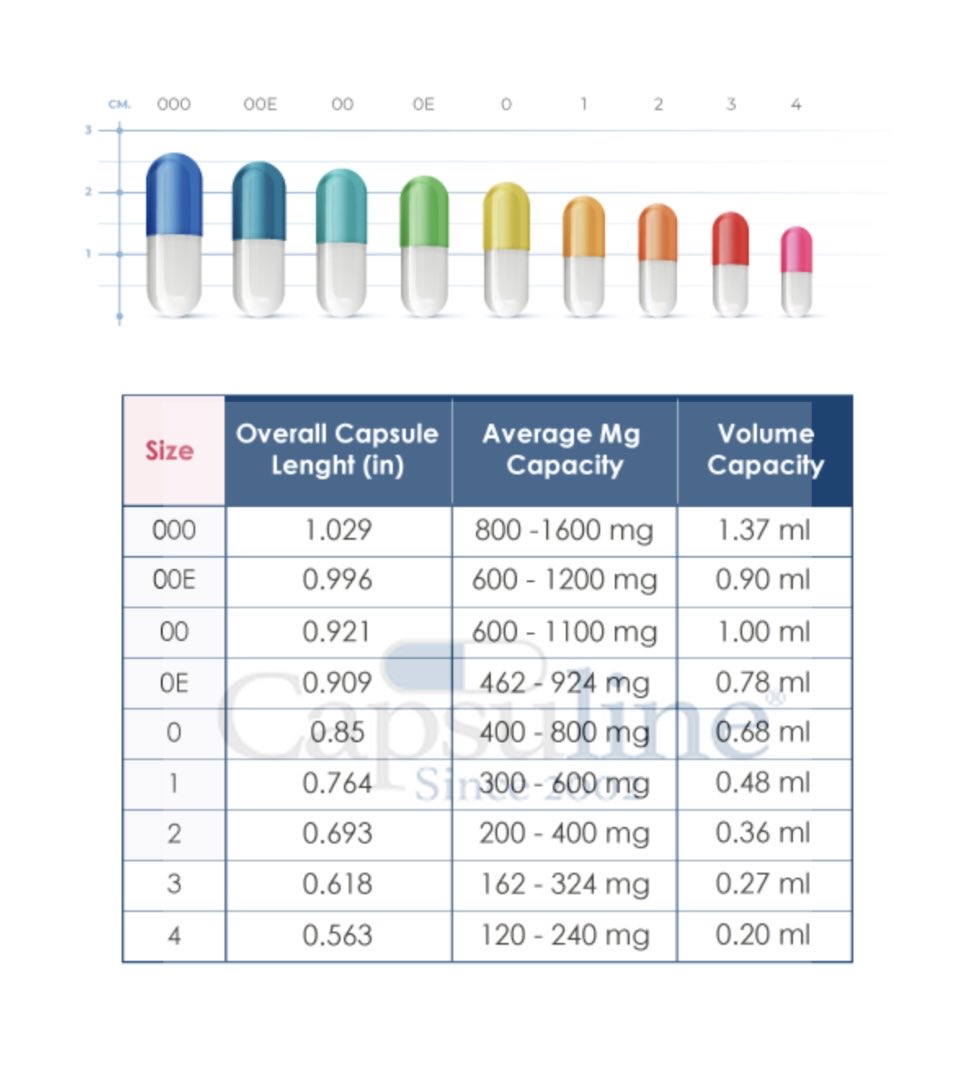
Psyllium husk is seriously underrated. For a 1500mg dose, 2 size 00 HPMC capsules work well (each holds 600-1100mg). Go HPMC over gelatin since psyllium absorbs moisture quickly and gelatin can soften prematurely. For context, cholesterol reduction studies typically use 6-15g daily in divided doses, so 1.5g is a solid starting point with a lot of room to scale
Good stack. For the encapsulable items on this list, here are the sizes that work:
Shilajit (300-500mg): size 1, HPMC preferred, moisture-sensitive
Cistanche (500-1000mg): size 00, HPMC
Fenugreek (500-1000mg): size 0, gelatin or HPMC both work
Tribulus (300-750mg): size 0 or 1
Zinc (25-50mg): size 3 or 4, pair with copper
Boron (3-10mg): size 4
Maca at effective doses (1500-3000mg) takes 3-6 size 0 caps. A standardized extract brings that down
Zinc is one of the more straightforward ones to encapsulate. Studies run 15-50mg daily for most uses, with some protocols going higher short-term. Standard daily supplementation at 25-30mg fits a size 3 or 4 HPMC cap. Zinc picolinate and bisglycinate absorb considerably better than sulfate or oxide. HPMC over gelatin since zinc compounds can degrade in humidity. Worth pairing with 1-2mg copper long term at higher doses
Good stack. Here is how to capsule each for best absorption:
Zinc: size 3 or 4 HPMC, 15-30mg per cap. Take with food (empty stomach causes nausea). Studies use 15-50mg daily.
Maca root: size 0 or 00 HPMC, gelatinized form absorbs better than raw. Research doses range from 1500-3000mg/day, split across 2-3 caps.
Magnesium glycinate: size 0 HPMC, 300-420mg. Glycinate is best absorbed and easiest on the gut. Take at night.
D3: size 4 HPMC with oil-based filler, 1000-2000 IU. Fat-soluble so it needs fat to absorb. Pair with K2 to direct calcium to bones.
HPMC over gelatin across the board. Dissolves in 5-10 min and no animal sourcing
Zinc form matters as much as dose. The RDA for men sits at 11mg elemental daily, but clinical supplementation studies typically run 20-30mg for correction. Zinc bisglycinate shows about 43% higher bioavailability than gluconate in head-to-head trials. Oxide is the most common form on shelves and one of the least absorbed.
A size 3 HPMC capsule fits 15-30mg elemental zinc cleanly. Size 4 works if you are running lower doses. HPMC holds up better to moisture than gelatin, which matters since zinc compounds can degrade in humid storage. Avoid pairing with high-dose iron supplements since they compete for absorption
@CoachDanGo Size 00 or 000 for psyllium husk (600-1600mg per cap). Studies support 7-15g/day, so you're looking at 5-20 capsules depending on the target. HPMC over gelatin since psyllium is hygroscopic and will degrade gelatin over time. No delayed release needed
For anyone encapsulating this stack at home:
Magnesium glycinate at 300-400mg fits a size 0 or size 1 HPMC capsule. Selenium runs 100-200mcg and zinc 15-30mg, both trace doses that fit a size 4. HPMC works well for all three since none require fat-soluble delivery. Size 0 is the practical choice for the magnesium to keep your daily pill count down
Smart picks from a cardiologist. Here is how both translate to capsule form:
Vitamin D3: fat-soluble, so it needs dietary fat to absorb properly. Take it with your heaviest meal. Maintenance research clusters around 1000-5000 IU daily depending on baseline levels. A size 3 or 4 HPMC cap handles that range. HPMC is the better shell choice for moisture stability.
Magnesium glycinate: studies run 200-400mg elemental per day, with most sleep and muscle recovery research clustering around 300mg. A size 0 HPMC cap fits the standard dose. Glycinate absorbs significantly better than oxide and is easier on the gut long term
The SIRT1 upregulation and Nrf2 pathway findings are significant. This study points to cellular protection mechanisms that go well beyond the psychoactive effects researchers originally focused on.
For precision delivery, capsules are the most consistent format for psilocybin. Microdosing protocols typically run 100-300mg of dried mushroom material. A size 1 HPMC capsule handles that range cleanly.
HPMC over gelatin specifically because psilocin alkaloids degrade faster in gelatin under heat and moisture. HPMC is moisture resistant, which keeps potency more stable over time. Dark, airtight storage extends shelf life further
Ashwagandha is one of the most researched herbs for encapsulation. Studies on KSM-66 use 300-600mg daily, often split as 300mg twice a day. Sensoril works at a lower 125-250mg range due to its higher withanolide concentration.
Size 0 capsule (400-800mg capacity) fits a full 600mg dose in one cap. Size 1 (300-600mg capacity) works well for standard 300mg doses. HPMC vegetarian capsules hold up to moisture better than gelatin, which helps preserve potency over time
Solid stack. If there is a gap, magnesium glycinate is the one most people skip. Studies run 300-400mg elemental magnesium daily for healthy adults, with some athletic protocols using up to 500mg. Since glycinate is 14-18% elemental, the typical dose is 300-400mg of the chelated compound per serving. A size 0 or 1 HPMC capsule handles that range well.
The methylated multi is the smart pick over standard forms. Methylcobalamin and methylfolate absorb more reliably than cyanocobalamin and folic acid across the general population.
Yohimbine at 5mg fits a size 4 HPMC capsule if you ever want to cap your own doses
Delivery format matters as much as what you take. D3 and K2 are fat-soluble, so a size 2 HPMC capsule with oil-based fill improves absorption over tablets. Studies use 1000-5000 IU of D3 daily, with most research clustering around 2000-4000 IU. HPMC capsules dissolve in 5-10 minutes. Tablets can take 30+ minutes and often pass through partially intact
Good list. Here is how the commonly encapsulated ones break down for anyone building their own:
Mucuna pruriens (400-800mg standardized extract): size 0 or 1 HPMC. L-DOPA content varies by brand so look for verified standardization.
L-Phenylalanine (500-1000mg): size 0 HPMC.
Ginseng (200-400mg): size 1 or 2 HPMC.
Phenylethylamine/PEA (10-50mg): size 3 or 4 HPMC.
Forskolin (100-250mg at 20% standardization): size 1 or 2 HPMC.
Nuciferine/lotus extract (25-50mg): size 3 or 4 HPMC.
Rhodiola (200-400mg at 3-5% rosavins): size 1 HPMC.
Uridine monophosphate (150-300mg): size 1 HPMC.
Sulbutiamine (200-400mg): size 1 or 2 HPMC. Fat-soluble so take with food.
Vitamin C (500-1000mg): size 0 HPMC.
HPMC across all of these for moisture stability
Zinc glycinate and gluconate are the most bioavailable forms for this. A standard 25-50mg elemental dose fits in a size 3 or size 4 HPMC capsule. HPMC is the better shell over gelatin as zinc can interact with it over time. Studies work with ranges of 15-30mg elemental zinc daily, with most protocols staying in that window
BPC-157 is one of the few peptides that actually survives oral delivery.
Most peptides break down in the stomach before reaching the bloodstream. Animal models show BPC-157 holds up at 10-20% oral bioavailability, versus under 5% for most peptides. The oral route concentrates delivery in GI tissue before first-pass metabolism. That makes it structurally suited for gut-targeted applications.
Capsule specs:
Size 4 HPMC two-piece hard capsule
Holds 250-500mcg per cap
HPMC over gelatin: plant-based shell provides better moisture protection, which matters for peptide stability
The FDA PCAC is reviewing BPC-157 for 503A compounding list eligibility on July 23-24, 2026.
Oral peptide delivery is advancing faster than most people realize.
@LongevityCode_ Good choice. Magnesium glycinate has high bioavailability and minimal GI side effects. Studies use 200-400mg elemental per day, with most sleep research clustering around 250mg. Size 0 caps fit the standard dose. HPMC shell is the cleaner option for daily long-term use
Oyster zinc and acerola cherry are solid whole food choices. For anyone with shellfish restrictions or following a vegan diet, zinc bisglycinate in capsule form is the most bioavailable alternative. Research shows bisglycinate has roughly 43% higher oral bioavailability than standard zinc forms, with clinical doses running 15-30mg elemental zinc daily. That fits a size 3 HPMC capsule well.
Acerola vitamin C translates to capsule form too. Studies use 500-1000mg per dose and the natural bioflavonoid matrix improves retention compared to synthetic ascorbic acid. Size 0 HPMC handles that range.
HPMC over gelatin for both, vegan-compatible and more stable under heat and humidity
Solid list. Here is how each one encapsulates for anyone building their own:
Magnesium glycinate - size 00 HPMC, the chelate form is bulky so 2 caps typically covers the 200-350mg elemental range studies use
Vitamin D3 + K2 - size 3 or 4 HPMC, microdoses fit easily, take with your fattiest meal for D3 absorption
Creatine - size 000 HPMC but at 3-5g you need 3-4 caps per dose, most people prefer powder for this one
Omega-3 - oil-based so soft gel or liquid format, hard caps are not the right vehicle here
Apigenin - size 3 or 4 HPMC, the 50-120mg range used in research fits perfectly in a single cap
Si tomas estos suplementos en cápsulas, aquí van los tamaños recomendados.
Magnesio (300-400mg): tamaño 0 o 1, preferiblemente bisglicinato o citrato.
Vitaminas B1, B6 y B12 (hidrosolubles): tamaño 3 o 4, en formas metiladas (metilcobalamina para B12, piridoxal-5-fosfato para B6).
Vitamina C (500-1000mg): tamaño 0.
Zinc y B3: tamaño 3 o 4.
Las cápsulas HPMC vegetales preservan mejor la potencia de cada nutriente