The steps and defiance that Emmett Till’s mother took were very brave. The disobedience with the law to create a campaign for social justice and equality makes her an admirable figure during the beginnings of the Civil Rights movement. #ARTH287
“Instead of revising African American appearance according to European beauty canons, the hair straightening process of North American slaves may represent a complex set of adjustments to new circumstances... “ #ARTH287
The article points out that there is a key difference between “community” and “articulated collectivity.” What are some ways we can see this distinction not only in AfriCOBRA but in other African American art as well? #ARTH287
@hobson_sherrill Interesting point that I definitely think should be brought up for discussion; there could be many underlying meanings as to why they weren’t published #ARTH287
@KevynRobinson You could even look into something like a history textbook and see many versions of history. If you look into most American history books, they fail to address many oppressive acts by whites, not only to African Americans but to native Americans as well #ARTH287
The photograph we see of the police officers brutally arresting the woman is quite alarming in itself, but what’s even more alarming, as the author points out, is that not a single newspaper publicized this heinous abuse of power. #ARTH287
@sarahkha111 Prof Bowles mentioned how Piper painted this while her lover was moving to the north during the great migration. I think the title represents how difficult it was for her when he moved away. #ARTH287
@flarebrwn Charlie Parker was a famous Jazz musician who was lynched. Abercrombie used the work to help address to racist music culture that Dizzy Gillespie was also very famous for speaking out on. #ARTH287
Why do you think Charles White so greatly dramatized the facial features of his subject? I’m specifically intrigued by how he squared the subject’s head #ARTH287
Gertrude Abercrombie use the medium of oil on Masonite as opposed to canvas. It gives the piece a sheen and a rough texture. What is the significance of using this medium? #ARTH287
@cameron_putnam I agree with Jake, in that I didn’t realize that these were the colors of the Pan-African movement flag. I think it serves as a unifying factor for these people in the sense of the movement and the trials they have experienced #ARTH287
I like how Lawrence depicted these various scenes within the piece, but simultaneously left the faces blank. What it does is make what we see seem universal, as in it could have happened to anyone #ARTH287
@gbroughton11 I wonder the same thing. Maybe he wants society to consider that as another step towards equality. Equality shouldn’t just be written out on paper, it’s an idea that is instilled within someone so they respect and view all equally.
“Certainly there is, for the American Negro artist who can escape the restrictions the more advanced among his own group would put on him, a great field of unused material ready for his art.” #ARTH287
@carly_amendola To me it looks like they’re staring up at the crane like figure going across the top. And this crane is amongst some older monuments and mansions as a way to signify the work Africans had to do but also how now it’s time to build something new in the sense of equality #ARTH287
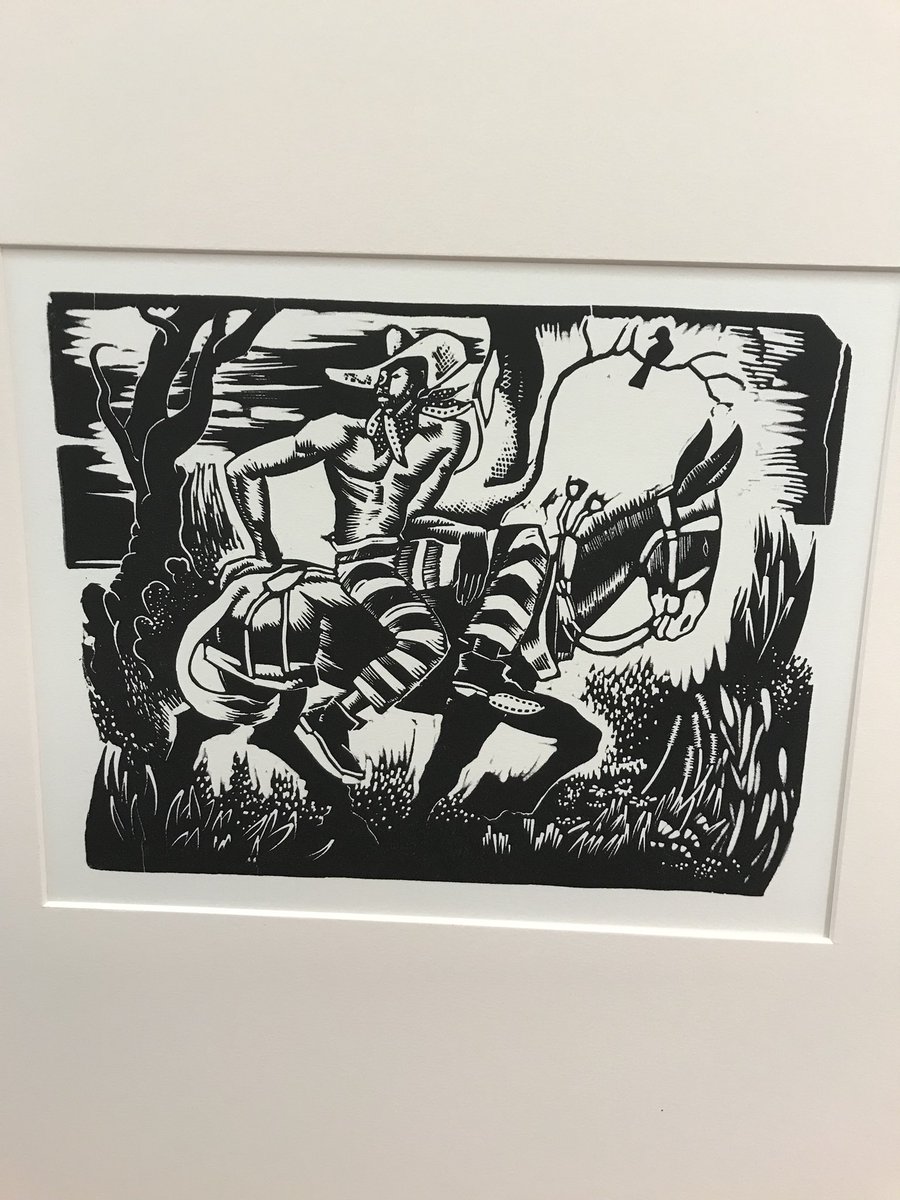
In Woodruff’s “Trusty on a Mule” there are a lot of different designs featured on the rider’s clothing. Do you think there is a significance to this or just the artist’s style? #ARTH287