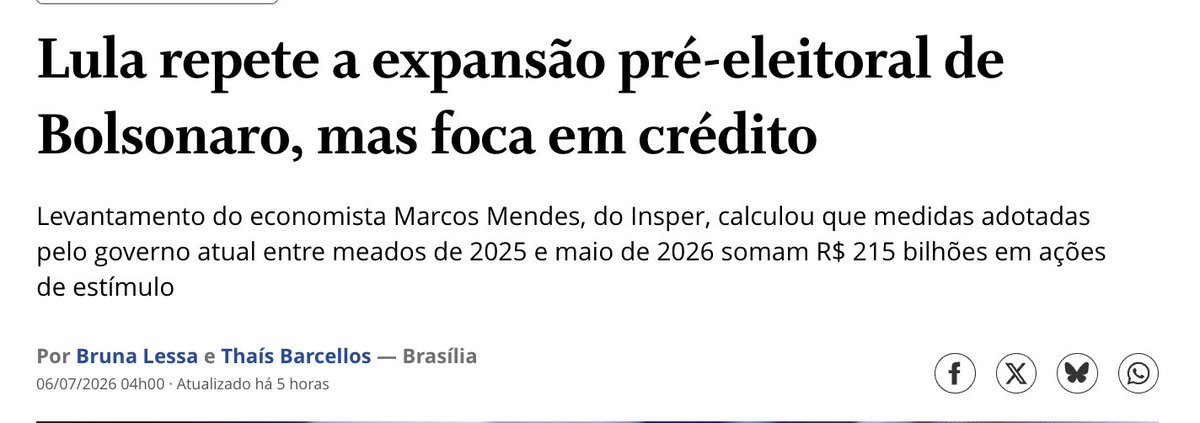
Marcos Mendes, do Insper, fez a conta: o governo Lula já anunciou R$ 215 bilhões em estímulos desde meados de 2025. Isenção de IR, Desenrola, Gás do Povo, Luz do Povo, crédito subsidiado. A PEC Kamikaze do Bolsonaro era R$ 41 bi e escandalizou todo mundo.
A diferença é o método. Bolsonaro gastou direto e furou o teto. Lula empacota tudo em crédito subsidiado que não entra no arcabouço fiscal. Do total, apenas 4% passa pelo teto de gastos. O resto é fundo extra-orçamentário e linha subsidiada que não aparece no resultado primário.
No fim, os dois aumentam a dívida pública, que é o termômetro real. O contorcionismo fiscal muda, o resultado não.
vc vê a diferença no profissionalismo das facões brasileiras quando o PT chama adversários para o governo transformando-os em vassalos completos, e os Bolsonaros queimam seus próprios aliados transformando-os em párias
de fato não dá pra dizer que são iguais. é como comparar o chefão do tráfico internacional com o viciado que virou vapor de uma boca em juazeiro do norte
Today Enter became the first AI unicorn out of Latin America.
Mateus, Michael and Henrique are building the best Legal AI product in the world from São Paulo. Not a copilot, an AI litigator that absorbs the entire workflow end-to-end and is already running 300,000+ lawsuits a year for clients like Airbnb, Bradesco, Nubank, Latam and Azul.
At @KaszekVentures we could not be prouder to back this team. Congrats Mateus, Michael, Henrique and everyone at Enter.
Most people think Brazilian assets are cheap because something is wrong with Brazil.
They're wrong.
Brazilian assets are cheap because of a structural wiring problem between where the money is and where the opportunity is.
92% of global institutional capital is allocated to the US, Europe, and developed Asia.
Emerging markets get 8%.
Brazil gets a fraction of that 8%.
The average American pension fund has 0.1-0.3% exposure to Brazil. The average endowment: similar.
When you ask why, you get the same five objections every time.
"The taxes are too high."
Brazil's corporate tax rate is 34%. The US effective corporate rate (federal plus state) averages 25-27%. The gap is real but it's single digits, not the chasm people imagine. And Brazil just passed the largest tax reform in its history (2023), replacing five overlapping consumption taxes with a single dual VAT system. The new system takes full effect by 2033. Every multinational that set up in Brazil before the simplification captured the discount. Every one that waits until after pays full price.
"The bureaucracy is impossible."
The bureaucracy is complex, slow, and very real. It's also completely navigable. JBS built an $86 billion company inside that bureaucracy. Nubank built an $85 billion company inside it. WEG built a $40 billion company inside it. Embraer, Suzano, Ambev, TOTVS, Localiza, Rede D'Or. Every one of these was built inside the same system that foreigners say is impossible. The bureaucracy filters out everyone who won't do the work. The ones who do the work operate in a market with less competition precisely because everyone else quit at the paperwork.
"The currency is volatile."
The real has traded between R$4.80 and R$6.30 against the dollar over the past three years. Volatile, yes. But every time the real weakens, Brazilian exporters become more competitive globally and dollar-denominated investors buy assets cheaper. The BCB holds over $330 billion in reserves. It intervenes actively. It raised rates to 13.75% before the Fed started hiking and fought inflation faster and harder than most major central banks in the 2021-2023 cycle. BCB independence was formalized by law in 2021 with fixed four-year terms. This is not the currency regime of the 1990s.
"The political environment is unstable."
Brazil has held uninterrupted democratic elections since 1989. Power has transferred peacefully between left and right multiple times. The central bank operates independently of the president. The judiciary blocked executive overreach from both Bolsonaro and Lula. The institutions held. Compare that to the US in January 2021 or the current state of French politics. Every country has political risk. The difference is that Brazilian political risk is priced in. American political risk is priced as if it doesn't exist.
"Corruption is systemic."
Lava Jato (Operation Car Wash) was one of the largest anti-corruption investigations in the history of any democracy. It prosecuted sitting presidents, senators, governors, and the CEOs of the largest companies in the country. Billions were recovered. Executives went to prison. The system exposed its own corruption and punished it publicly. Very few countries have investigated and convicted their own leaders at that scale. Brazil didn't hide from corruption. It prosecuted it on live television.
Now look at what that money is missing while it debates these objections...
A factory in Joinville, Santa Catarina producing precision components at 25% margins with zero debt trades at 4-8x EBITDA. The identical factory in Wisconsin trades at 10-15x. Same product. Same margins. Same customers. Half the price.
The Ibovespa trades at under 11x forward earnings. The S&P 500 trades at 21x.
Brazilian farmland costs $5,200/hectare in MATOPIBA. Iowa costs $49,400. Both grow soybeans. Brazil harvests twice per year.
Brazilian beef exports generated $18 billion in 2025 (up 40% in a single year). The companies that produced it trade at a fraction of their American and Australian equivalents.
Nubank is worth $85 billion and serves 110 million customers. It was founded 13 years ago by three people with no bank.
WEG is a $40 billion industrial manufacturer from a town of 180,000 people that exports to 135+ countries. Most global investors cannot name it.
Embraer builds half the regional jets flying in America. Its market cap is a rounding error compared to Boeing or Airbus.
The discount has nothing to do with risk. The infrastructure connecting global capital to Brazilian opportunity doesn't exist yet.
Nobody covers it. Goldman doesn't have an office in Maringá. JP Morgan doesn't have an analyst in Campo Grande. Morgan Stanley doesn't follow mid-market manufacturers in Caxias do Sul. Without coverage there's no capital flow. Without capital flow there's no price discovery. The asset stays cheap regardless of quality.
Meanwhile in the last 18 months:
Chinese FDI in Brazil grew 113%.
The US committed $565 million to critical minerals.
The EU signed its largest trade deal ever (720 million consumers, 90%+ tariffs eliminated).
The Ibovespa hit 16 all-time records in 2026. Up 22% YTD. Up 30%+ in dollar terms in 2025.
BTG Pactual reported "enormous increase in interest from large pension funds and sovereign funds."
The objections haven't changed in 20 years. The taxes. The bureaucracy. The currency. The politics. The corruption.
The smart money heard all five objections and invested anyway.
The discount isn't permanent. It never is.
The question is whether you position before the bridge is built or after everyone else has already crossed it.
Brazil isn't broken. Most of the world just hasn't figured out what's here yet.
They will.
Opinião impopular: a profissão de juiz é a que mais merece ser substituída pela IA no Brasil.
Custo absurdo, morosidade ridícula, ineficiência e subjetividade pura na hora de interpretar a lei. Deixar uns poucos só pra revisão já bastava. Hora de modernizar essa bagunça.
Hoje o STF decidiu limitar os penduricalhos a "35% do salário". Na média os penduricalhos estavam passando de 100% do salário, então até parece uma melhora. Mas só à primeira vista.
A raiz de todos os problemas com o gasto astronômico do judiciário brasileiro é a violação da separação dos poderes. A partir do momento em que o judiciário e o MP roubaram para si o direito de se auto-concederem benefícios, todos os privilégios que vemos hoje são mera consequência.
Esse percentual arbitrário de 35% não está em lei alguma. O STF não deveria ter o direito de definir arbitrariamente qual é a remuneração do judiciário nem do MP. Pela Constituição, o teto é definido pelo salário dos ministros do STF, não tem isso de teto +35%. Se fosse para mudar essa leitura, seria tarefa do Legislativo, e não do STF, fazer essa mudança.
E o Legislativo, por que fica de braços cruzados? A população é esmagadoramente contra os privilégios do judiciário, por que nenhum partido abraça essa bandeira?
Porque nosso legislativo é comprometido. O percentual de congressistas que tem processos criminais ativos contra eles é tão grande - sem contar os que sabem que terão -, que na prática é impossível formar maioria no legislativo para se opor aos roubos do judiciário.
Da forma como o nosso legislativo está organizado, os partidos preferem aproveitar a festa dos privilégios ilegais do judiciário para aprovaram eles também mais privilégios para o próprio legislativo com menos resistência.
A população não tem muito o que fazer para trocar quem manda nas instituições do judiciário, mas poderia trocar o legislativo. Porém, com o tamanho do fundão eleitoral que foi montado com dinheiro público, é difícil imaginar como diminuir o poder dos partidos e políticos que mandam no país hoje.
O Agente Secreto representa o Brasil, sim. Duvido que exista no mundo alguma outra história em que um agente secreto passa metade do tempo dele em um cartório.
Vão eleger 30 senadores com pauta única de impichar ministro do STF e já tô até vendo o texto do Safatle: "onde a esquerda errou? Não radicalizou propostas que combatam as contradições do capitalismo".
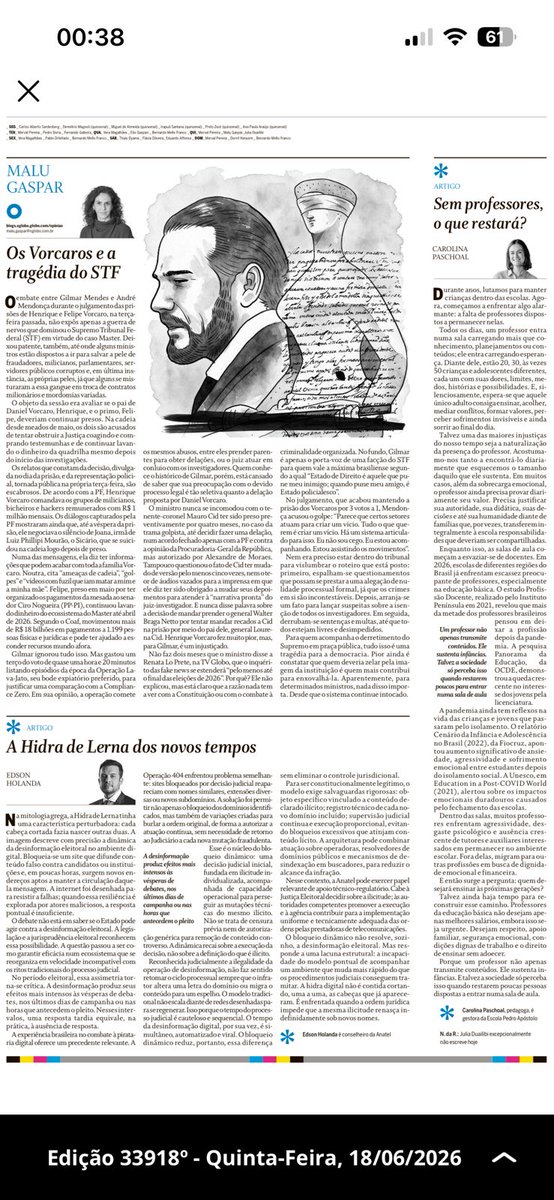
Brasília arde em chamas às 22h de uma sexta-feira, com o STF no epicentro da crise do Banco Master, e o ilustre decano achou que seria um bom momento para recomendar um livro de Processo Penal.
No próximo post ele vai nos mandar comer brioches.
Lava Jato: Juiz troca figurinhas com promotor
"É gópi!"
Caso Banco Master: Juiz vai de zap com investigado
"Estão atacando a honra do Supremo. Isso é um ataque à democracinha!"
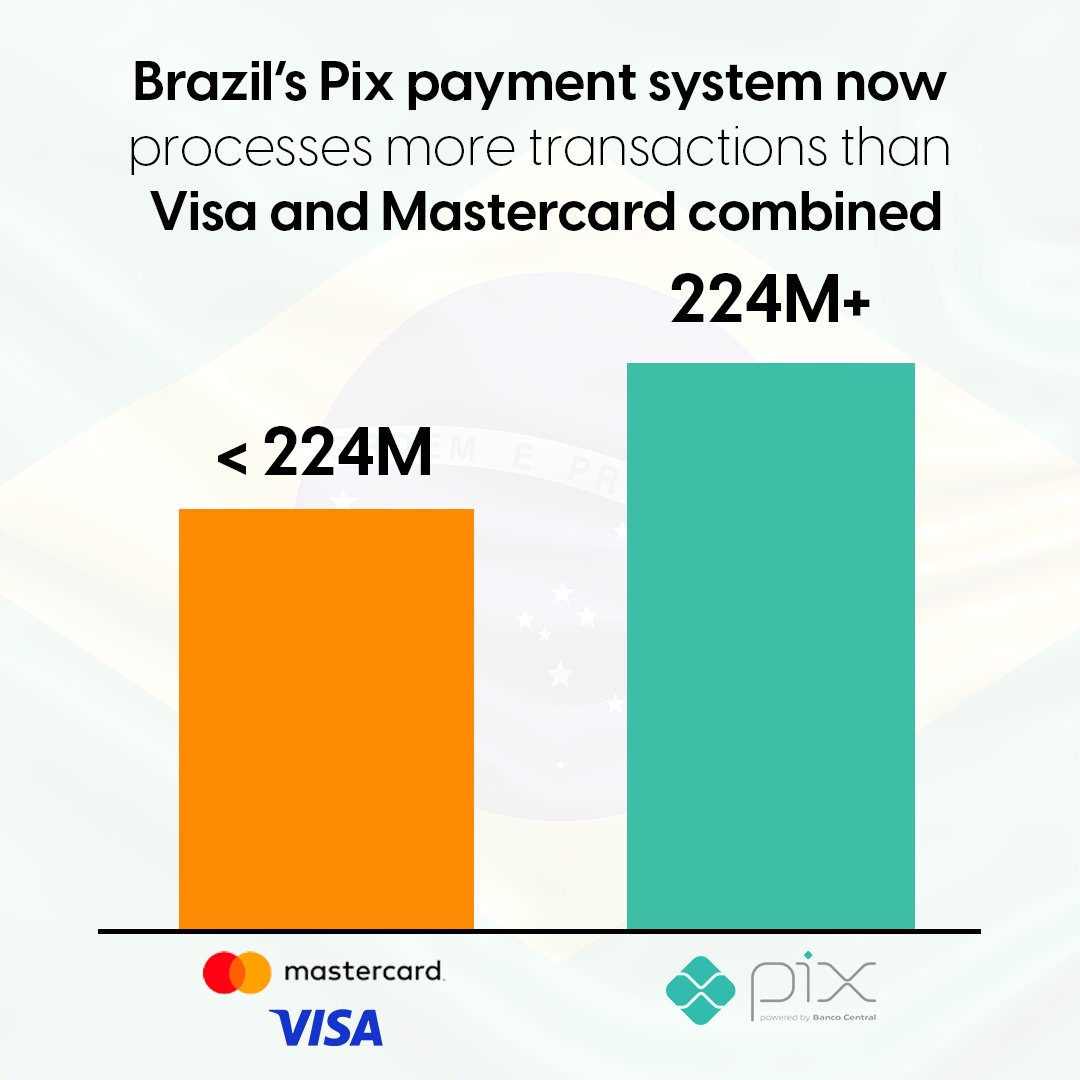
🇧🇷 Brazil’s Pix payment system now processes more transactions than Visa and Mastercard combined 🤯
According to Banco Central do Brasil, Pix handled 224+ million transactions in a single day, overtaking the combined domestic volumes of Visa and Mastercard.
Let’s put that into context.
Pix launched in November 2020.
In under five years, it became the default payment method for more than 150 million Brazilians, roughly 70% (❗️) of the population.
It’s:
• Instant
• 24/7
• Free for consumers
• Near-zero cost for merchants
• Mandatory for large banks
That combination changed everything.
For decades, Brazil’s merchants paid 2–5% per card transaction.
Pix removed most of that friction overnight.
For a street vendor in Recife or a small business in São Paulo, the math became obvious.
But this isn’t just about transaction volume.
Pix brought an estimated 71 million unbanked or underbanked Brazilians into the digital economy. That’s one of the largest financial inclusion shifts in modern history.
And strategically, this is even bigger:
A government-built rail is directly competing with — and outscaling — private global card networks.
This raises a fundamental question for the global payments ecosystem:
If public, low-cost, interoperable infrastructure can scale this fast…
what does that mean for the long-term economics of interchange?
Brazil may not just have built a payment system.
It may have built a blueprint.
Together with 🇮🇳 India’s UPI, this might be the most successful payments story of the past decade.
What do you think? Will more central banks follow this path?
Um desconhecido me perguntou:
- Quais as chances de um advogado direcionar um pedido em uma ação já arquivada, da qual seu cliente nem era parte, e o juiz conceder o pedido, sem que houvessem juiz e advogado combinado tudo antes?
Eu: