I Was a 48-Year-Old Dead Man Walking, Until a juicy ribeye Said, ‘Not Today, Dumbass.’
I felt the decline creeping in—a subtle, unshakable sense that the end was drafting its terms. Arthritis stiffened my joints, brain fog dulled my edges, depression murmured its old promises, and my energy ebbed like a tide I couldn’t call back. (Thread)
2027 Prediction: Apple finally enters the AI game with a nuke. Agent Centric MacOS. Not a bolt on AI. Not a slightly less dumb and less slow Siri.
A deep refactor.
Agent first from the ground up. Synchronized across devices. Pro-active engagement. Voice interaction. Context awareness.
Speak to your phone. Make things happen.
Bookmark this post and check me on it next year :)
Milton Friedman's greatest regret.
The federal government discovered the perfect crime in 1943: make employers collect taxes before workers ever see their paychecks. You think you earn $60,000 per year, but you actually earn $75,000 and hand over $15,000 to politicians without ever touching it. The psychological difference is enormous.
Before payroll withholding, Americans wrote quarterly checks directly to the Treasury. Picture yourself sitting at your kitchen table, writing a $3,750 check to the IRS every three months. The pain was immediate and visceral. Politicians faced constant pressure to justify every dollar because citizens felt the extraction in real time.
Withholding transforms this concrete loss into an abstract accounting entry. Your employer becomes an unpaid tax collector, and you never experience the actual cost of government. Worse, most people celebrate their tax refunds as government generosity rather than recognizing them as interest-free loans they provided to politicians. The Treasury collects your money throughout the year, spends it immediately, then returns your own cash and receives gratitude.
This system enables the explosion in government spending you witness today. Defense contractors billing $640 for toilet seats, agricultural subsidies for corn syrup, and congressional salaries for 535 people who rarely show up to work. When taxation feels painless, voters stop demanding accountability for how their money gets spent.
Milton Friedman helped design withholding as a wartime emergency measure and later called it his greatest regret. Free market economists recognized that the psychological pain of direct taxation creates political pressure for fiscal restraint. The temporary always becomes permanent in government hands, and the emergency justification disappears while the extraction mechanism remains forever.
Activist: "Beef uses an obscene amount of water. Fifteen thousand litres per kilo."
Farmer: "Where did the water come from?"
Activist: "What?"
Farmer: "The fifteen thousand litres. Where was it before it was on the bill."
Activist: "I don't know. A river?"
Farmer: "The sky. About ninety-four percent of that figure is rain that fell on the field and got drunk by the grass. The cow ate the grass. The rain was on its way down whether the cow was here or not."
Activist: "But it still counts as water used."
Farmer: "By the grass. Which would have used it whether I farmed or moved to Spain. The cow isn't commissioning the rainfall. The rain isn't on the cow's payroll."
Activist: "Then just don't have the cow."
Farmer: "The rain still falls. The grass still drinks it. The water cycles back into the air anyway, just without anyone getting fed in the middle."
Activist: "It's not that simple."
Farmer: "It's rain, grass, cow, river. Or it's rain, grass, rot, river. Same circle, fewer dinners. Meanwhile every almond in your milk took a gallon of pumped aquifer water in California to grow. That one you might want to worry about. The rain in Wales is doing fine without your concern."
Your bank knows every transaction you make.
Your credit card company knows every transaction you make.
The "free" budgeting app you downloaded last year knows every transaction you make. It also sells that data to advertisers, lenders and credit card networks.
The paid budgeting apps charge you $100 to $180 a year to track the same data. On their servers. Where their employees can read it.
Plaid, the bank-link layer powering most of these apps, settled a $58 million class action in 2022 for harvesting user banking credentials and transaction data without authorization.
There is a tool that does envelope budgeting on your own laptop. No cloud. No server. No middleman. Ever.
It's called Actual Budget. 26,177 stars on GitHub.
Your budget lives in a SQLite file on your device. Sync between your devices is end-to-end encrypted. Your data never sits readable on a third-party server. Not even Actual's.
Actual cannot stop your bank from seeing your transactions. No software can. What it stops is the second layer: the budgeting app that reads your spending, profiles you, sells the data, and gets breached every other year.
Here's what it does:
→ Envelope budgeting. The same zero-based system YNAB charges $109/year for.
→ Multi-device sync between phone, laptop and desktop. End-to-end encrypted with a key only you hold.
→ Bank import via OFX, QFX, CSV or optional GoCardless and SimpleFIN connectors.
→ Custom reports. Net worth, cash flow, category trends, calendar heatmap.
→ Schedules and rules to auto-categorize recurring transactions.
→ Investment account tracking with cost basis.
→ Multi-currency support for international households.
→ Goal templates for debt payoff, savings buckets and sinking funds.
→ Self-host on your own server, or run fully offline on one device.
→ Web app, desktop app, iOS and Android. No account. No sign-up. Open the file. Done.
Here's the wildest part:
There is no Actual Budget cloud. There is no Actual Budget company holding your data. There is no recurring fee. The sync server is open source and you can run it yourself. There is nothing between your devices except an encrypted tunnel.
YNAB updated its privacy policy in March 2024 to permit "sharing" data with advertising and marketing networks. Plaid was sued for harvesting credentials. The "free" finance apps make money by selling loan and credit card recommendations based on what you spent last Tuesday.
Actual Budget can never be breached at scale. Because your transactions were never on their servers.
YNAB: $14.99/month. $179.88/year monthly billing.
Monarch: $14.99/month. $99.99/year annual.
Rocket Money: $59.88/year. PocketGuard Plus: $74.99/year.
Actual Budget: $0. Unlimited transactions. Unlimited categories. Unlimited devices. Your hardware. Your money. Forever.
608 contributors. 54+ releases. 2,381 forks. Battle-tested since 2022.
Run by the Actual Budget community. A volunteer-led project.
MIT licensed. Local-first. SQLite. Free forever.
100% Open Source.
Pro Marketing Tip:
If your company had to pay tariff revenue to the government over the past year, run a huge Tariff Refund Sale.
I mean deep discounts, down to nearly your cost of goods sold.
You're getting a refund with interest. Pass this down to your customer. You know your tariffs were paid by price hikes so it's our money anyway.
If you do this right, you increase market penetration and engender trust while providing a modicum of relief to consumers.
If you dont do it or half-ass it, well, there will be judgement.
I'm looking at you:
- General Motors — projected $4–5 billion in tariff costs for 2025, with plans to mitigate roughly 30% of the impact. GM took a $1.1 billion hit in Q2 alone.
- Apple — absorbed about $3.3 billion in tariff costs from April through December 2025, with quarterly costs rising from $800 million to a projected $1.4 billion, putting the annual run-rate above $5 billion.
- Ford — projected roughly $2.5 billion in added costs for 2025, with plans to offset about $1 billion.
- Caterpillar — expected a full-year tariff burden of $1.3–1.5 billion, with about $350 million hitting in Q2 alone.
- Procter & Gamble — flagged roughly $1 billion annually in tariff exposure.
- 3M — told investors tariffs would cost it as much as $850 million a year — but only if it took no steps to blunt the impact.
- Honeywell — projected approximately $500 million in 2025 tariff impact.
- GE HealthCare — projected roughly $500 million in 2025 tariff impact.
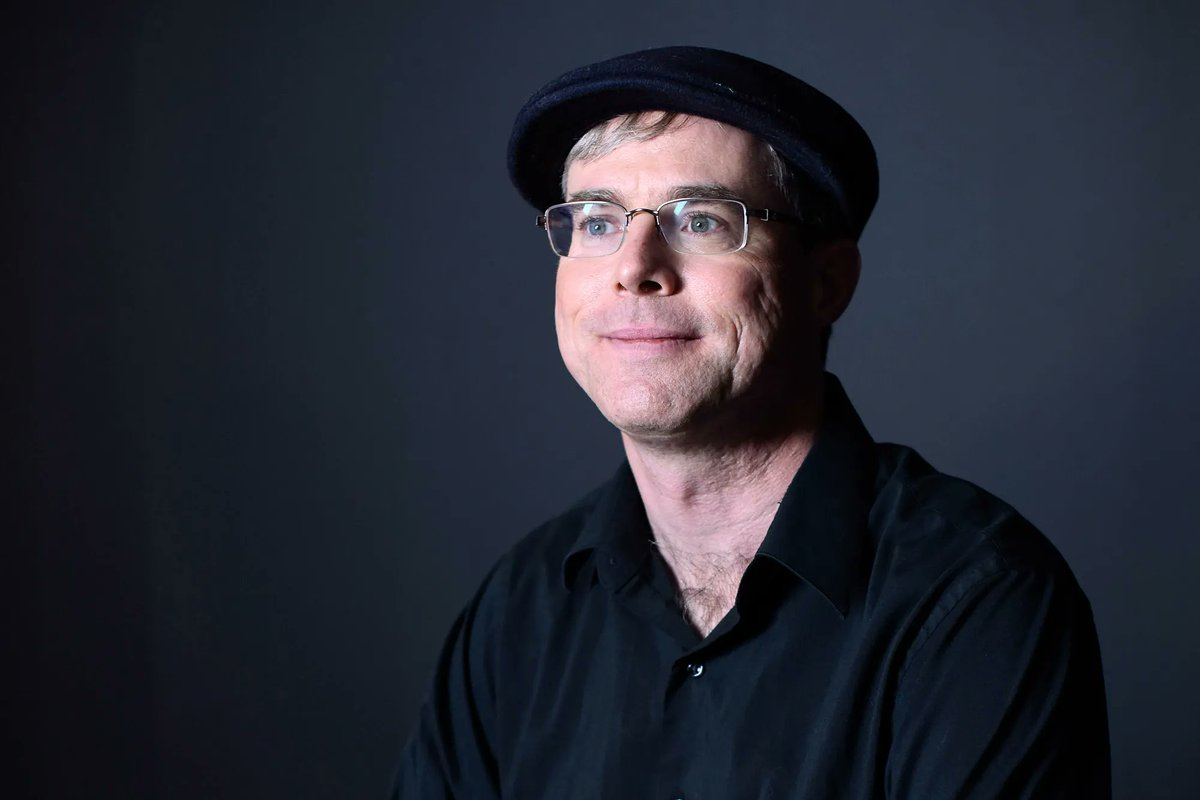
Project Hail Mary writer Andy Weir on social commentary in books:
"I dislike social commentary. Like… I really hate it. When I’m reading a book, I just want to be entertained, not preached at by the author. Plus, it ruins the wonder of the story if I know the author has a political or social axe to grind. I no longer speculate about all possible outcomes of the story because I know for a fact that the universe of that book will conspire to ensure that the author’s political agenda is validated. I hate that."
"I put no politics or social commentary into my stories at all. Anyone who thinks they see something like that is reading it in on their own. I have no point to make, and I’m not trying to affect the reader’s opinion on anything. My sole job is to entertain, and I stick to that."
"To that end, I also don’t talk about my personal political opinions publicly. I don’t want readers to even know, honestly. I don’t want that in the back of their minds as they read my stuff."
Is this why he has the #1 sci-fi movie in decades?
Project Hail Mary writer Andy Weir on social commentary in books:
"I dislike social commentary. Like… I really hate it. When I’m reading a book, I just want to be entertained, not preached at by the author. Plus, it ruins the wonder of the story if I know the author has a political or social axe to grind. I no longer speculate about all possible outcomes of the story because I know for a fact that the universe of that book will conspire to ensure that the author’s political agenda is validated. I hate that."
"I put no politics or social commentary into my stories at all. Anyone who thinks they see something like that is reading it in on their own. I have no point to make, and I’m not trying to affect the reader’s opinion on anything. My sole job is to entertain, and I stick to that."
"To that end, I also don’t talk about my personal political opinions publicly. I don’t want readers to even know, honestly. I don’t want that in the back of their minds as they read my stuff."
Is this why he has the #1 sci-fi movie in decades?
GenX inherited skepticism without optimism.
We got the armor without the weapon.
We're really good at not being fooled. At seeing through the bullshit. At expecting nothing so we can't be disappointed.
What we're not practiced at is using that clear sight for something.
I wrote about the harder discipline.
I spent most of my adult life calling myself a realist.
Which is what cynics call themselves when they want to feel smart about it.
Then I read one line from Nick Cave and it broke something open.
Hope isn't a feeling you wait around to experience. It's an action you take whether you feel it or not.
Nick Cave: "Hopefulness is not a neutral position. It is adversarial. It is the warrior emotion that can lay waste to cynicism."
Adversarial. Not naive. Not passive. A discipline.
As a GenX dad who spent decades calling cynicism "realism" — this line rewired something in me.
What's the small, repeated act that keeps you in the fight?