Education researcher. Passionate about equity in school finance & foundational learning outcomes in low income countries & communities. Let's raise the floor!
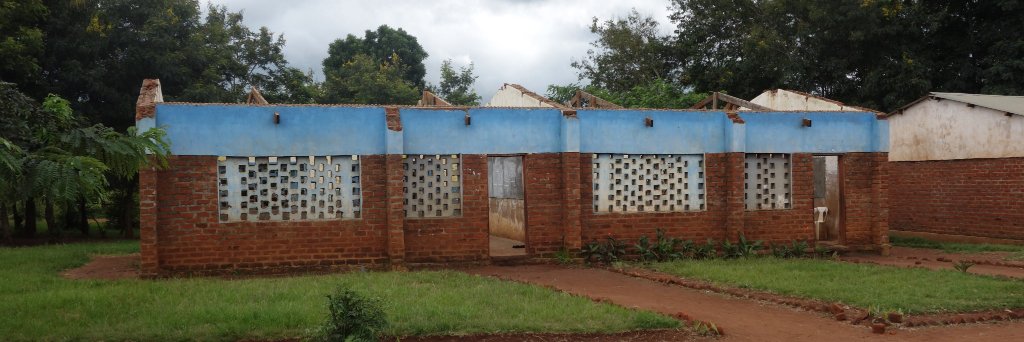
Our latest paper on teacher management in Malawi is now live at the International Journal of Educational Development! Where new teachers were allocated to schools in accordance with data-driven equity-focused rules, repetition and dropout rates improved.
https://t.co/zZP4cAzADr
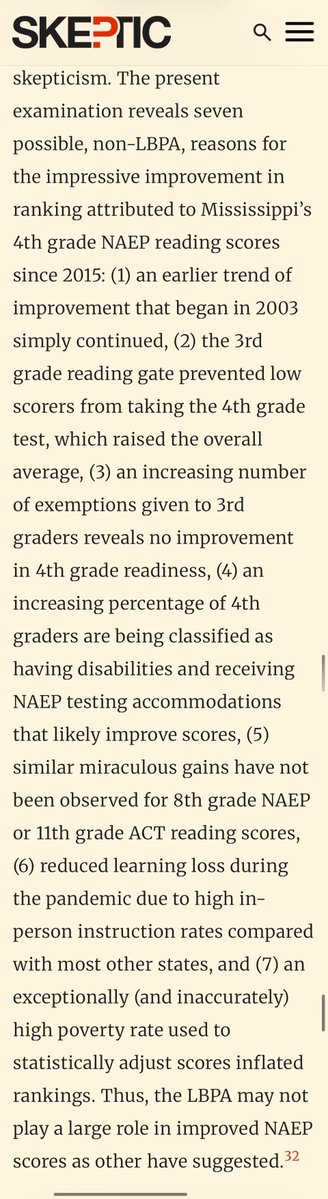
This piece presents some compelling reasons to be sceptical of the “Mississippi Miracle,” but its mixing of limitations and alternative explanations reveals the same kind of wooly thinking of which the authors accuse the alleged miracle’s proponents
https://t.co/BEBQ7apqIX
Thank you to Arnie Arnesen @pchowder for having me on her show, The Attitude, to talk about AI and when its ability to personalize feedback for students crosses the line into harmful stereotyping. https://t.co/2k12zfvqaR
The buried lede: “For academic achievement, average effects on test scores are consistently close to zero. High schools see modest positive effects,
particularly in math, while middle schools see small negative effects.“
Schools across the U.S. have sharply restricted student smartphone use during the school day. A new paper evaluated the effects of these bans.
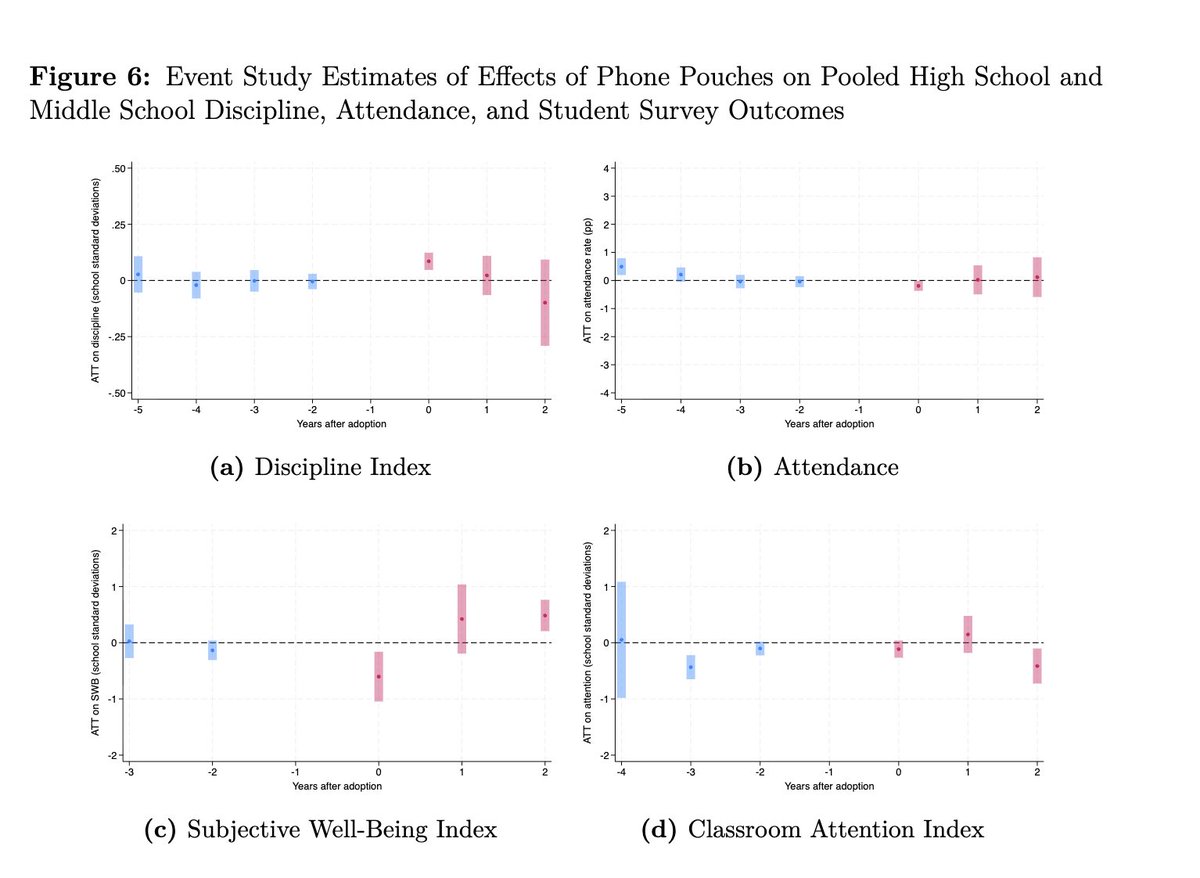
The main benefit was increasing student well-being.
Initially, student well-being falls, but the effects on well-being eventually become positive as kids adapt. This is the main positive effect.
But there is little evidence of effects on school attendance, self-reported classroom attention, or perceived online bullying.
https://t.co/fodGqNtPfi
Congratulations Kennedy Scholar and former Chair of the Trust, Lord Peter Hennessy (Harvard 1971) on his appointment to the Order of the Garter by King Charles III.
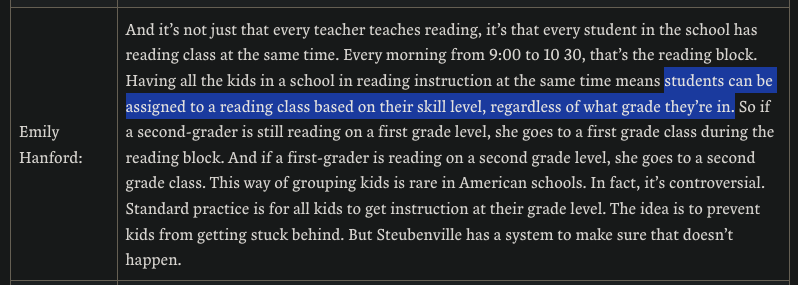
@casleygera Good discussion. I would say my position is a 5th option that Claude did not mention: simply teach grade level standards, and don’t worry about students being behind for the purposes of that class. Provide extra support and intervention (separate class) to those who are behind.
It’s time to abandon the false premise—and false promise—of differentiated instruction. We can teach the same thing to everyone at the same time. We can’t teach different content to different students at the same time. That’s magical thinking.
A parasite that has been eating people for 3,500 years is about to be wiped off the planet. It infected 3.5 million people in 1986. Last year, it infected 10. And I have not seen it make a single front page.
It is called Guinea worm. You drink contaminated water from a pond in a poor village. A year later, a worm up to three feet long starts coming out of your leg through a burning blister. There is no pill that stops it and no surgery that works. You wrap the worm around a stick and pull it out slowly, over days or weeks, inch by inch. If you rush, the worm breaks inside you and causes a fresh infection.
Guinea worm is ancient. Preserved worms have been pulled out of Egyptian mummies from around 1000 BCE. The Ebers Papyrus, an Egyptian medical scroll from 1550 BCE, describes pulling the worm out with a stick. For three and a half thousand years, that was the best humans could do.
Then in 1986, public health workers decided to kill the parasite off. They had no vaccine and no drug. What they had was cheap cloth water filters and a small army of volunteers willing to walk from village to village for decades.
The plan was simple. Give everyone who drinks from a pond a cloth filter to strain out the tiny water fleas that spread the parasite. Then send volunteers walking house to house, year after year, teaching people how to use the filters and keeping anyone with an emerging worm out of the water.
It worked. From 3.5 million cases a year to 10. Four were in Chad, four in Ethiopia, two in South Sudan. The other four countries where the worm used to be common, Angola, Cameroon, the Central African Republic, and Mali, had zero human cases for the second year in a row. The World Health Organization has already certified 200 countries as Guinea worm free. Six are left.
The last hurdle is dogs. Cameroon had 445 infected animals last year and Chad had 147, so a lot of the remaining work is on animals, not humans. Strays get leashed, and crews treat ponds to kill any remaining worms. The campaign keeps watching until the number hits zero.
When Guinea worm hits zero, it becomes the second human disease ever erased from the planet. The first was smallpox. It will also be the first parasite humans have ever wiped out, and the first disease ever ended without a single dose of medicine. Volunteers walked village to village with cloth filters for 40 years. Now a plague from the age of the pharaohs is about to be gone.
This is a great piece from Russell Shaw—head of Georgetown Day School—on how we should change our thinking about so-called “difficult” kids. https://t.co/lRfO6pyCWD
Its 10 years since Govt Zambian launched its Catch Up program, based on the Teaching at the Right Level approach designed by @Pratham_India. A new RCT by @andydebarros & Lubozha find impacts when run by govt at large scale and impacts on G7 leaving exam! https://t.co/3ncN6NK5y0
PDFs aren’t enough.. Reading research articles as PDFs on a phone screen is miserable. LLMs consume plain text more easily.
I used Claude to write a pipeline to convert my LaTeX to HTML with the Tufte CSS.
Here’s Dingel and Neiman (2020) as a webpage: https://t.co/qCBsTRI6DX