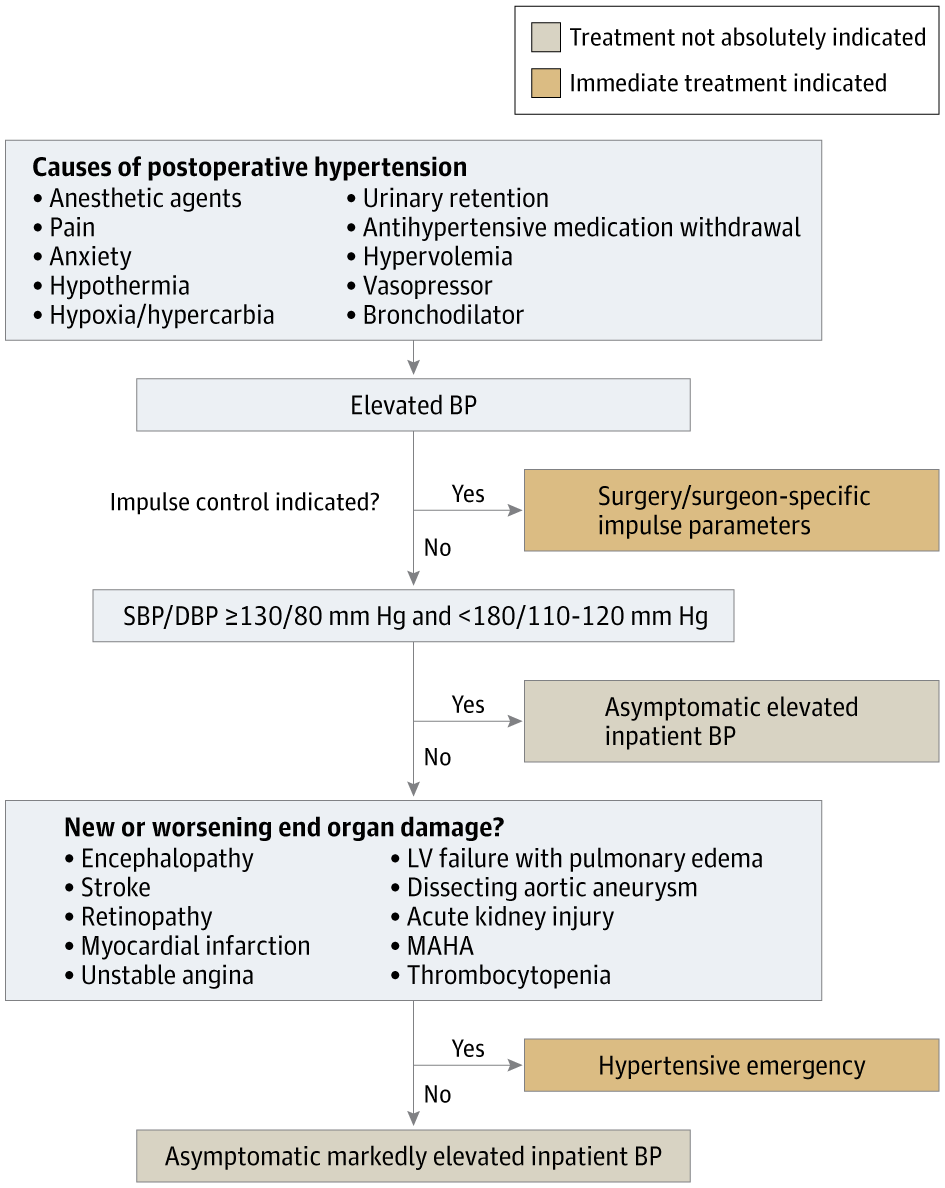
#PostoperativeHypertension should be treated only when symptomatic. As-needed medications for asymptomatic hypertension increase risk of adverse outcomes, supporting a conservative management approach. https://t.co/B9my7GAKUp
Trocar placement for laparoscopic abdominal procedures: a simple standardized method
George S Ferzli et al. J Am Coll Surg. 2004 Jan;198(1):163-73.
doi: 10.1016/j.jamcollsurg.2003.08.010.
PMID: 14698326
George S Ferzli , Abe Fingerhut. #LaparoscopicSurgery#RoboticSurgery #GeneralSurgery #SurgicalSafety #MedEd #SurgicalEducation #SurgEd #MISurgery #SoMe4Surgery
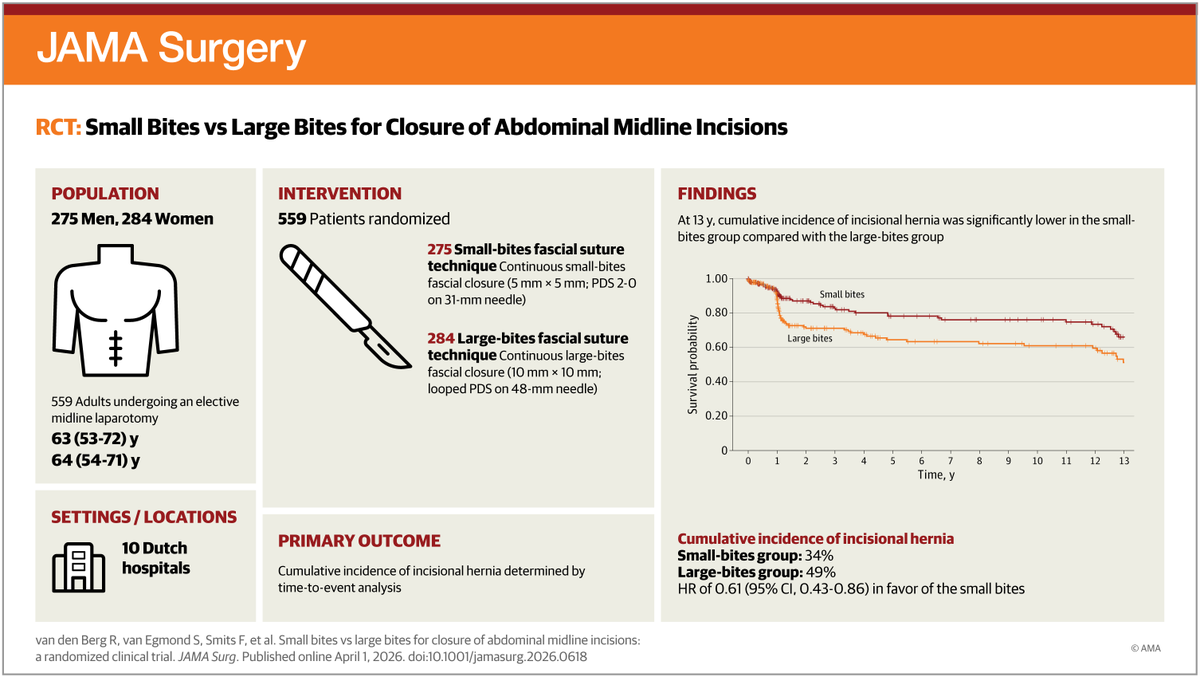
Small-bites fascial closure after elective midline laparotomy reduced long-term risk and size of incisional hernia vs traditional large-bites technique, supporting small bites as standard practice for abdominal closure. https://t.co/QlsAKiNraq
HR+/HER2− breast cancer at #ASCO2026 in one infographic.
This year's story was not about doing more—it was about doing better.
🧬 OPTIMA: genomics-guided chemotherapy de-escalation
💊 lidERA BC: oral SERDs move into early disease
🎯 NATALEE: adjuvant ribociclib benefit across molecular subtypes
🩸 SERENA-6: ctDNA-guided intervention before radiologic progression
⚡ VIKTORIA-1 & INAVO120: expanding options after CDK4/6 inhibitor resistance
⚖️ persevERA BC: a reminder that precision matters more than escalation
The direction is clear: Less chemotherapy. Earlier molecular intervention. More biomarker-driven treatment.
#BreastCancer #HRPositive #Oncology #ASCO #CancerResearch #MVOnco
Las nuevas Guías Latinoamericanas de Pancreatitis Aguda (2026). Puntos importantes:
🟢 Cambio en el paradigma (gracias a WATERFALL Trial y otros): reanimación hídrica moderada a 1.5 ml/kg/h, con bolo SOLO en caso de haber hipovolemia franca.
🟢 No uses antibióticos profilácticos, solo en caso de necrosis pancreática infectada.
🟢 La CPRE es urgente (<24 horas) solo si hay colangitis aguda, sino no.
🟢 Menos es más; intenta diferir por lo menos 4 semanas la intervención de colecciones pancreáticas. Y si se necesita, idealmente endoscópico transluminal guiado por ultrasonido.
🟢 La hipertrigliceridemia es una causa (sobre todo si >500-1,000 mg/dL). El tratamiento: insulina en infusión.
Las voy a leer a fondo para actualizar las apps (https://t.co/FZoAsLTFc2).
Anastomotic leak after colorectal surgery: current landscape and future directions
➡️ https://t.co/JhVNo8RuJQ
🔗 Anastomotic leak remains one of the most feared complications after colorectal surgery, with major consequences including sepsis, reoperation, permanent stoma, and poorer oncological outcomes
📊 Leak rates remain substantial despite modern care: 3–6% after ileocolic anastomoses and up to 10–20% after low colorectal anastomoses
🧬 Anastomotic healing is multifactorial, involving surgical technique, perfusion, host immune response, and the gut microbiome
💡 ICG fluorescence angiography may improve perfusion assessment, particularly in rectal cancer surgery, but standardized quantitative thresholds are still needed
🦠 The microbiome is emerging as a key contributor, with collagenase-producing bacteria potentially weakening the anastomosis
🎯 Future prevention will likely require personalized risk stratification and targeted interventions rather than a one-size-fits-all approach
Work by Jack A Helliwell , Aaron Quyn , David G Jayne
#SoMe4Surgery #MedTwitter #SurgEd #Surgery @RCPSGTrainees @aecirujanos@SEIQuirurgica@iss_sic #MedicalTechniques @BJSAcademy@young_bjs@BJSOpen@evanscolorectal@robhinchliffe1@bplwijn@MalinASund@nfmkok@TejedorPat@paulo_sutt@PVaughanShaw@JJEarnshaw@juliomayol@ksoreide #colorectalsurgery #StepUp4CRC @FightCRC@ACPGBI #ERAS @dice_europe #Crohn #proctology @Dukes_Club@ACPGBI_EduTrain@AECP_FAECP@PelvExGroup@escp_tweets@YouESCP #TeachMeColoproctology
#Some4COLoprocto
I’ve created a dedicated Surgical Video Library at https://t.co/i1ZpZkmjXj
Patients and colleagues frequently ask for specific videos from my procedures. Rather than searching through YouTube, this AI-powered site allows easy keyword search across my entire collection. I can also edit and update content directly.
Feedback welcome. @AmerUrological@SocietyGURS@SocietySURS
The Traverso-Longmire III procedure better
known as the pylorus-preserving Whipple was
first performed for chronic pancreatitis in
1977 at UCLA. It was adapted to cancer with
RCTs confirming oncologic equivalence.
Can you describe the I, II procedures?
La idea no es solo “entrar”: es crear una visión más directa para una estrategia diferente: disección lateral a medial.
Cuando el triángulo de Calot está oculto por adherencias, empezar por el infundíbulo puede ser peligroso. Esta posición permite orientar mejor los instrumentos hacia el borde inferolateral del hígado, exponer el fondo vesicular y avanzar de forma ordenada, protegiendo tres estructuras críticas: colon transverso, duodeno y porta hepatis.
📌 Mensaje clave:
En vesícula difícil, la seguridad empieza antes de disecar: una buena colocación de trocares mejora la exposición, la triangulación y evita forzar Calot desde el inicio.
Pancreatic cancer is not Non-Small Cell Lung Cancer.
Not Colorectal Cancer.
Not Renal Cell Carcinoma.
If anything, it behaves more like Small Cell Lung Cancer. Systemic early.
The PELICAN trial makes that point… again.
Locally advanced pancreatic cancer
Stable after induction chemo
Randomized to RFA + chemo vs chemo alone
Results:
• OS: 12.1 vs 11.6 mo (HR 1.07, NS)
• PFS: 5.8 vs 6.9 mo (NS)
No efficacy signal.
• ≥G3 AEs: 27% vs 11%
• QoL: clinically meaningful decline with RFA
Local therapy has a role in very select cases.
But broad application in LAPC? The data just doesn’t support it.
Treat the biology.
https://t.co/Aub5EZ26W3
@OncoAlert@TheGutOncLab@Onco_Nexus
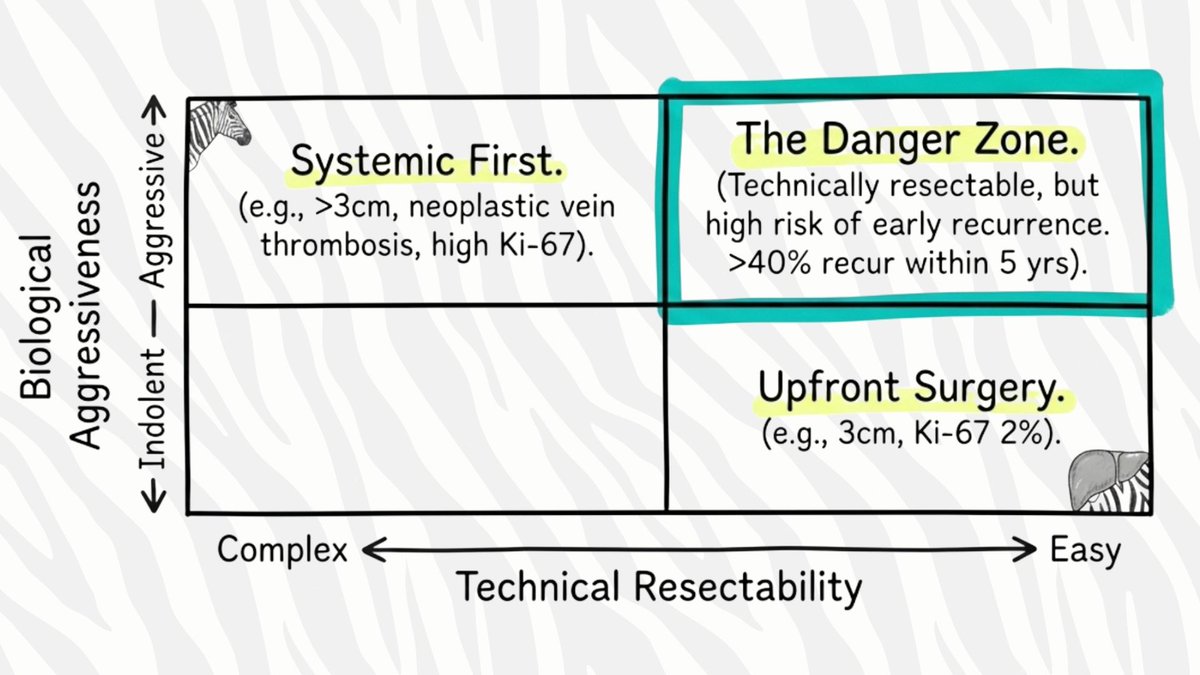
🦓PanNETs @BJS_Surgery Commission: surgery in NF PanNETs >2 cm?
>40% recur within 5 yrs‼️
🔬Need to define "borderline resectable" biologically, not just technically
💊Preop therapy 🔑 to test biology & downstage
🔗https://t.co/fqS90z6MkO
@spartelli
First jejunal vein, jejunal trunk and anatomical relations relevant to Pancretobiliary surgery, especially the Whipple procedure.
An in-depth review in a high impact journal. Can mail on [email protected] for full article.
Article Link - 10.1007/s00423-023-02849-w
1/7
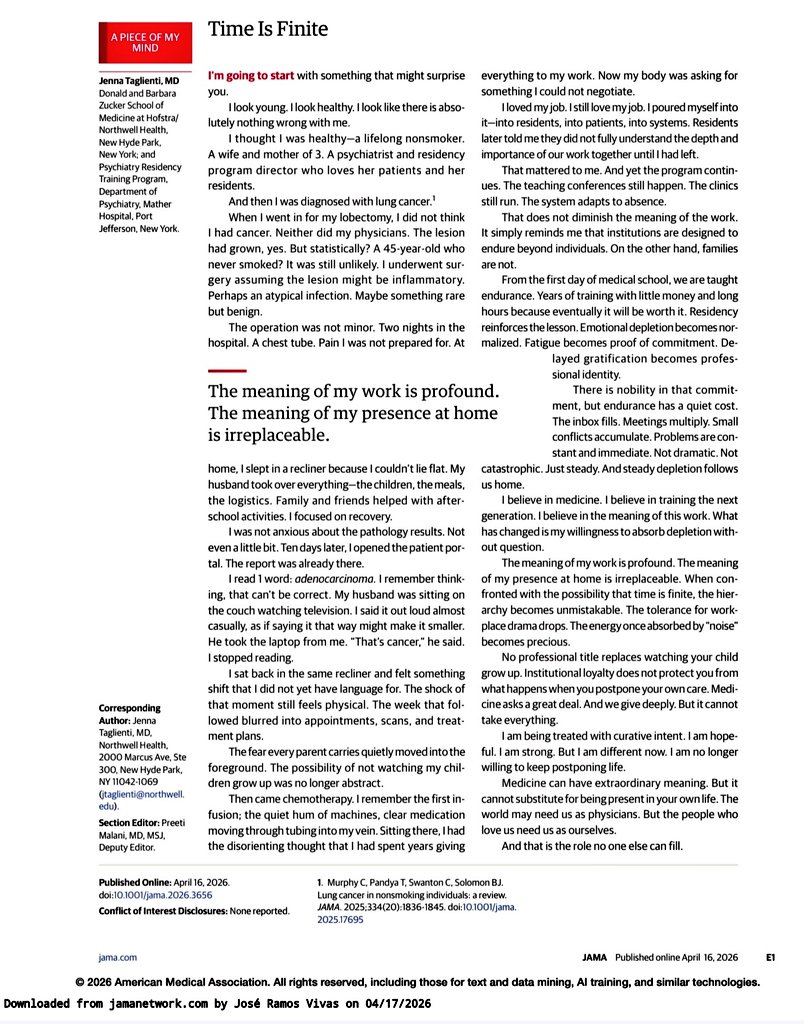
"Soy joven, no fumo, soy médica y madre de tres. Pensé que era invulnerable hasta que el portal del paciente mostró una palabra: adenocarcinoma."
La historia de la Dra. Jenna Taglienti es una sacudida de realidad para los que posponemos nuestra vida por el trabajo.🧵⬇️
🩻Contrast-induced AKI:
one of the biggest myths still shaping clinical decisions
For decades we were taught:
👉 “Contrast damages the kidneys”
👉 “Avoid CT with contrast in CKD”
👉 “Hydrate, protect, delay imaging if needed”
But what if… most of this is wrong?🤔
->The uncomfortable reality
Modern evidence shows:
👉 Low-osmolar contrast rarely causes true nephrotoxicity
👉 Even in CKD, AKI, and ICU patients
👉 The risk is often overestimated—or nonexistent
So where did the fear come from?
📍 1950s high-osmolar contrast (actually toxic)
📍 Poorly controlled observational studies
📍 “Creatinine rise = contrast injury” assumption
👉 Correlation became causation
👉 And the dogma stayed
⚠️What recent data tells us
✔ No difference in AKI rates with vs without contrast
✔ No benefit from bicarbonate, NAC, or aggressive hydration
✔ Even ICU and AKI patients show no worsening outcomes
->Translation to real life
👉 The patient was going to develop AKI anyway...Not because of contrast!!
->The real problem: “Renalism”
👉 Avoiding necessary imaging
👉 Delaying diagnosis
👉 Choosing inferior tests
And that leads to:
❌ Missed PE
❌ Delayed sepsis source control
❌ Worse outcomes
->Clinical mindset shift
Instead of asking:
👉 “Will contrast harm the kidneys?”
We should ask:
👉 “Will NOT doing the scan harm the patient?”
->Who still deserves caution?
✔ eGFR <30
✔ Severe hemodynamic instability
✔ Multiple nephrotoxins
Even then:
👉 Optimize volume
👉 Minimize dose
👉 Don’t delay critical imaging
🤓Bottom line
✔ Contrast nephrotoxicity exists… but is rare
✔ The fear is bigger than the risk
✔ The harm of NOT imaging is often greater
In critical care
👉 We don’t treat creatinine
👉 We treat patients
And sometimes…
👉 The most dangerous thing is NOT the contrast
👉 It’s hesitation.
📃Reference
Florens N, Demiselle J.
Kidney360 7: 445–449, 2026. doi: https://t.co/CWzi7WC9Wx