Placemaking zealot. “Cities have the capability of providing something for everybody, only because, and only when, they are created by everyone." ~Jane Jacobs
I’m constantly astonished that billionaires would rather ignore the climate crisis and prepare to live in a bunker with dvds and baked beans than devote a modicum of their bottomless wealth to saving the planet where we have fresh fruit and soft grass and blue skies.
Ban screens but don't provide anything for teens to do anywhere at any time or for an affordable price and if the teens get together in public spaces the cops will be called. Great.
BBC: “What was your screen time?”
Student: “Nine hours.”
BBC: “You’re gong to have a lot more time to fill. What will you do?”
Student: “Stare at a wall.”
The expedition of Pánfilo de Narváez had gone catastrophically wrong. Of the 600 men who set out to conquer Florida, only a desperate handful remained, clinging to makeshift rafts as the Gulf of Mexico battered them toward the Texas shore.
When the Karankawa people discovered these starving, disease-ridden strangers on their beach, they faced a choice that would define this forgotten chapter of American history.
Instead of attacking the vulnerable foreigners, the Karankawa showed remarkable compassion. They wept at the sight of the suffering men, shared their limited food, and nursed many back from the brink of death.
Among the survivors was Álvar Núñez Cabeza de Vaca, who would spend eight years living among various Native American tribes, learning their languages, and serving as a healer and trader.
Cabeza de Vaca's later account reveals a profound truth that challenges the narrative of inevitable conflict between Europeans and Native Americans.
The Karankawa's choice of mercy over hostility demonstrates the complex humanity of first contact moments. This wasn't the beginning of colonization as we typically imagine it, but rather an extraordinary example of intercultural compassion that predates the Mayflower by nearly a century.
While Plymouth Rock dominates our textbooks, this Texas beach witnessed something equally significant.
The Karankawa could not have known that they were saving men whose countrymen would eventually devastate indigenous peoples across the continent.
Their act of kindness remains a powerful reminder that history's first chapters were written in shades far more complex than we often acknowledge.
My dispatch from the largest citrus graveyard in America, the Orange necropolis, where, seemingly unbeknownst to most, the iconic breakfast beverage of the great American century—Orange Juice—finally ran dry. https://t.co/iNHHIRr0sv
So you’re telling me that the Moon’s many craters are from billions of years protecting Earth by pulling space rocks into her orbit. The moon who is depicted as a woman in countless cultures and timelines? You’re saying her craters and stretch marks are evidence of care? Has someone informed the poets about this?
Nonprofits we NEED you to step up! And it's for your own good!
"Nonprofits Are Sitting on a Powerful Antidote to America’s Loneliness Epidemic"
https://t.co/vWa8JYfgQ7
I thought it was weird when people on the far right started spouting paranoia about 15 minute cities. Then I thought about it and yep. Who's really about freedom?
https://t.co/5nhBR9jh9N
Wake up, kids
We got the dreamers disease.
‘Radical’ comes from a Latin word meaning "root."
Because roots are the deepest part of a plant, ‘radical’ came to describe things understood as fundamental or essential.
‘Radical change’ was a change at the root of a system.
To be truly fluent in English,
you must know your shits
Dogshit: Very poor quality
Bullshit: Not true
Horseshit: Nonsense
Apeshit: Rambunctious
Batshit: Insane
Chickenshit: Cowards
Ratshit: Poor quality
No shit: Obviously
Holy shit: Unbelievable
Hot shit: Very good
Dipshit: Total dumbass
Tuff shit: Take it or leave it.
Jack shit: Nothing
The shit: Perfection
Now that Artemis II has launched we have 10 days to get everyone on Earth a Planet of the Apes costume so we can do something hilarious when the astronauts return 😁
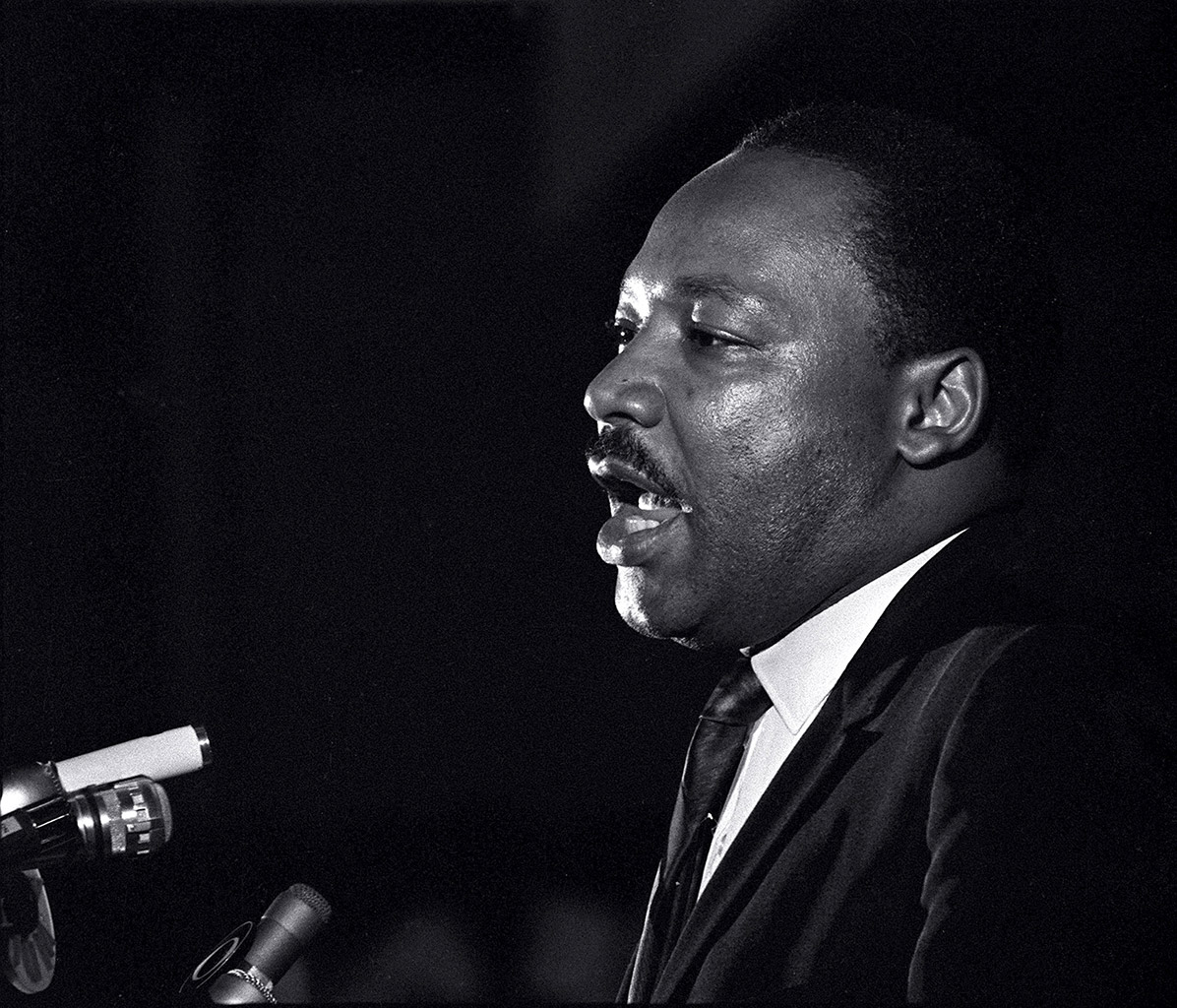
On April 3, 1968, the night before he was assassinated, my father delivered what would be his final speech, “I’ve Been to the Mountaintop.”
He spoke with a clarity that came from conviction, not certainty. He acknowledged the difficulty of the days ahead, yet he was not moved by fear. He was anchored in purpose and in a faith that justice would prevail.
What stands out to me is not only what he said, but how he said it. He was preparing people to stay committed, to stay disciplined, and to continue the work, even without him.
His words are not just history. They are instruction.
Watch the full speech: https://t.co/o3QZvVc4GT
#MLK #BelovedCommunity #Nonviolence365
Liftoff.
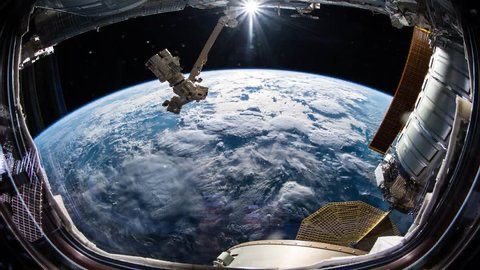
The Artemis II mission launched from @NASAKennedy at 6:35pm ET (2235 UTC), propelling four astronauts on a journey around the Moon.
Artemis II will pave the way for future Moon landings, as well as the next giant leap — astronauts on Mars.
If you're under 53 years old, you have never once been alive while a human was farther than 250 miles from Earth. Tonight, four astronauts are heading 252,000 miles out. That's a thousand times farther than any person has gone in your lifetime.
The 250-mile ceiling is where the International Space Station floats. Every astronaut since December 1972 has been stuck in that zone. Spacewalks, science experiments, cool photos from orbit, sure. But nobody left the neighborhood.
The last crew to go farther was Apollo 17. December 1972. Nixon was president. The internet didn't exist. Cell phones were 11 years away. The youngest member of that crew is now 90 years old.
The farthest any human has ever been from Earth is 248,655 miles. The Apollo 13 crew set that number in 1970, and they didn't mean to. Their oxygen tank blew up, and the emergency route home took them farther out than anyone before or since. Tonight's crew will break that record on purpose.
And the crew itself. Victor Glover becomes the first Black astronaut to leave Earth's neighborhood. Christina Koch becomes the first woman. Jeremy Hansen, a Canadian fighter pilot, becomes the first non-American to do so. When they come home, they'll slam into the atmosphere at 25,000 mph, faster than any human has ever traveled.
The Moon's south pole has ice. Water ice, sitting in craters so deep that sunlight hasn't hit them in billions of years. A 2024 NASA study found way more of it than anyone expected. You can split water into hydrogen and oxygen, which gives you rocket fuel, breathable air, and drinking water, all made on the Moon instead of hauled up from Earth. George Sowers at Colorado School of Mines calculated that Moon-made fuel could shave $12 billion off a single trip to Mars. The Moon is a gas station on the road to Mars.
NASA Administrator Jared Isaacman announced last week a $20 billion plan to build a permanent base at the South Pole over the next seven years, with landings every six months. China is developing its own lunar lander and spacesuit, aiming for a crewed landing by 2030. The Artemis program has burned through $93 billion so far, and the first actual surface landing is penciled in for 2028. There's a real question of who gets there first this time around.
Harrison Schmitt walked on the Moon in December 1972 as part of Apollo 17. He's 90. Asked about it this week, he sounded pretty relaxed. "Mars is attainable," he said. "We're humans. That's what we've always done."
This is our God: Jesus, King of Peace, who rejects war, whom no one can use to justify war. He does not listen to the prayers of those who wage war, but rejects them, saying: “Even though you make many prayers, I will not listen: your hands are full of blood” (Is 1:15).
Went down the rabbit hole on this. A firefly spends up to two years underground as a larva, hunting slugs in the dirt. Then it crawls out, grows wings, and gets maybe three weeks as the glowing thing you remember from childhood. Three weeks to find a mate and reproduce. Then it's dead.
So when the tweet says "some scientist" warned we're the last generation to see them, that's real. A Belgian firefly researcher named Raphaël De Cock said it, and the clip blew up on TikTok. But I dug into the actual science, and the picture is weirder than the headline.
We know of about 2,200 firefly species worldwide. Scientists have studied fewer than 150 of them. That's less than 7%. Of the ones they looked at, about 14% are at risk of extinction. And here's the part that got me: we know so little about more than half the species we've found that scientists can't even tell if they're dying off. If those mystery species are disappearing at the same rate, 1 in 3 North American fireflies could be in trouble. We might be losing species nobody's even properly named yet.
A major 2024 study by Penn State, the University of Kentucky, and Bucknell examined 24,000 citizen surveys across the eastern U.S. The number one thing killing fireflies turned out to be weather and climate shifts. Their larvae need wet soil to survive those two years underground. Too dry, they die. Too flooded, they drown. The second biggest killer: artificial light. Night skies are getting about 10% brighter every year. A quarter of Earth's land is now lit up at night. And fireflies talk to each other with light. Their whole mating system runs on flashing patterns in the dark. Flood that with streetlights and porch lights, and the signal disappears.
This isn't abstract. In Hong Kong, one firefly species lived along 1.8 kilometers of a single hiking trail. Street lamps went up in 2018 and 2019. The population is gone. Critically Endangered now. In Delaware, the Bethany Beach firefly exists in a few tiny salt marshes, and coastal construction is eating them up.
But your common backyard lightning bug, the one called Photinus pyralis, is fine. Ben Pfeiffer, who runs Firefly Conservation and Research, said it straight: "We won't be the last generation to see fireflies." What's actually vanishing is the variety. The weird ones. The specialists. They get replaced by the one tough generalist that can survive anywhere.
One last thing that stuck with me. A firefly turns chemical energy into light at about 41% efficiency, with almost zero heat lost. Our best LEDs just recently hit about 40%. We spent decades of engineering to match what a beetle worked out 100 million years ago.
And we're blinding them with the lights we built to copy them.