Delighted that my very first PhD paper is available online in Briefings in Bioinformatics, I really enjoyed working on this project! Here’s a quick thread on some pitfalls (with solutions) for converting single nucleotide variants between genome builds (1/9)
🚨 A patient with a mysterious disease has been admitted to St. James’ Hospital! Your team must solve medical challenges, gather clues & uncover the cause before time runs out!⏳👩🔬👨🔬
🔹 EventBrite tickets
🔹 Teams up to 6
🔹 1 hour incl. TTMI tour
🔹 Part of #ERN2025@tcddublin
In an unprecedented move, the NIH will soon disinvite dozens of scientists who were about to take positions on advisory councils that make final decisions on grant applications for the US agency, Nature has learnt.
https://t.co/dpqnoigp6A
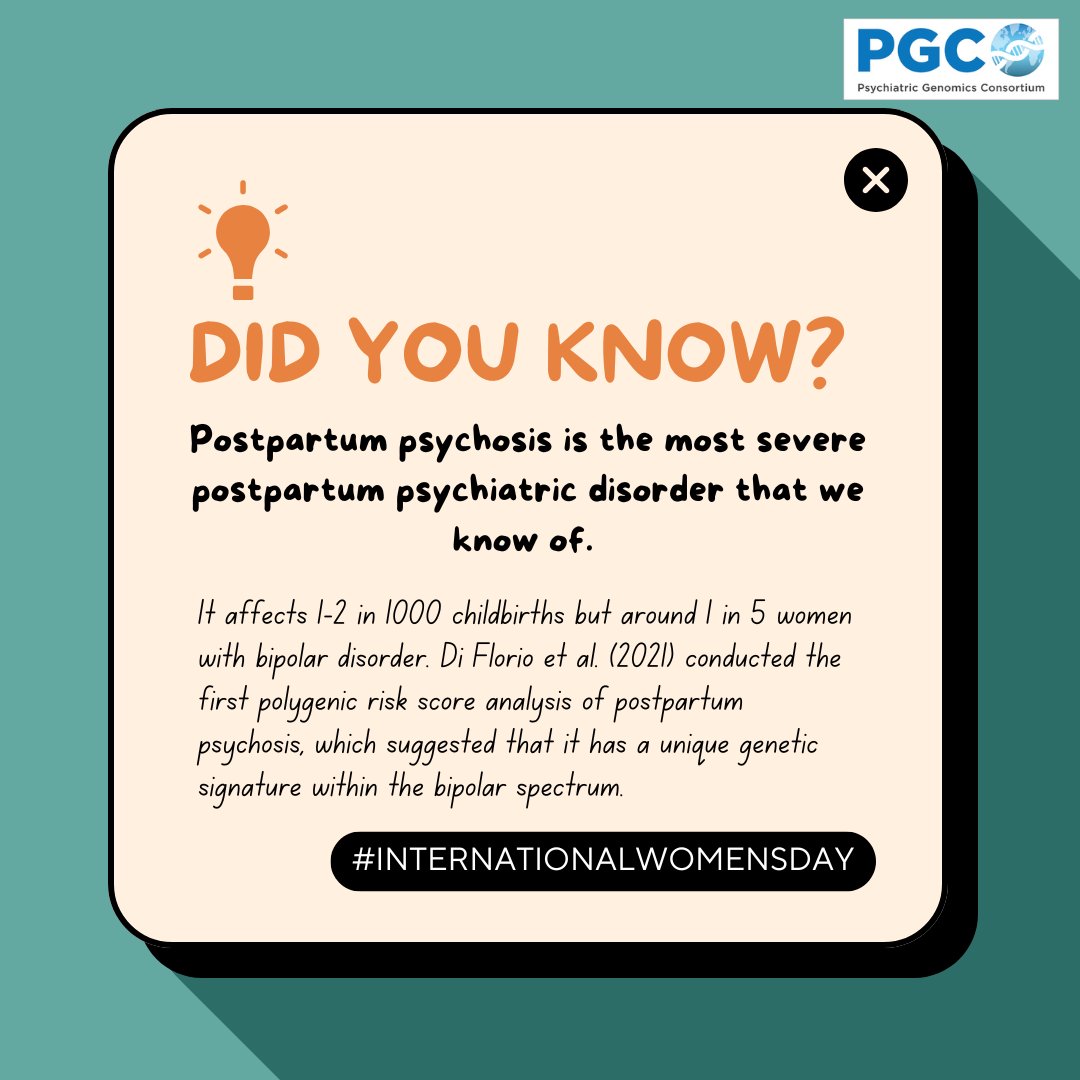
1/ The postpartum period is a time of significant risk for psychiatric disorders for women yet we still know little about postpartum psychosis—Is it bipolar disorder triggered by childbirth, or something distinct? 🤔
A recent paper suggests PP has a unique genetic profile. 🧬🧠
As we speak, scientisists across the country (including myself) are trying to to take care of simple administrative tasks related to the grants that we have recieved from the National Institutes of Health... 1/n
In 2018 the irresponsible experiments done by He Jiankui showed the world why it was a bad idea editing one gene on human embryos. Now, a team of Australian scientists led by P. Visscher and J. Savulescu speculates in @Nature on heritable polygenic editing
https://t.co/bJ2StuLWp2
Wow! Peter Visscher and colleagues have published a provocative paper in Nature speculating that "polygenic gene editing" of embryos might prove effective in reducing disease risk, should the technology advance enough to become safe in the future.
The authors argue that for polygenic diseases like type 2 diabetes or schizophrenia, theoretically, editing only a handful of variants might produce dramatic reduction in the disease prevalence among the edited embryos. And this approach will prove more effective than embryo screening. Of course, the authors have acknowledged that this is speculative and discussed all the challenges and ethical issues associated with embryo gene editing.
Further, Nature has thoughtfully published a well-balanced News and Views titled "Human embryo editing against disease is unsafe and unproven — despite rosy predictions" by experts in this topic (@ShaiCarmi@WiringTheBrain and @HankGreelyLSJU) arguing that though theoretically possible the idea might never work.
Visscher et al. Nature
https://t.co/iTe4URlJLU
For each point Q on Earth:
T(Q)=air temp,
P(Q)=air pressure
Q* = antipodal point to Q.
F(Q) = ( T(Q) - T(Q*), P(Q) - P(Q*) ).
Must there be a point with F(Q) = (0,0)? Why?
(Assume continuity.)
Have we an intuitive argument for Borsuk-Ulam Theorem?
Rare copy number variants (CNVs) have been implicated in many psychiatric disorders, but identifying CNVs can be challenging. PECAN is designed for WGS data, combining four calling methods, structural variant genotyping and pedigree information.
https://t.co/zm1s121p30
Family studies can identify rare genetic variants using much smaller numbers than case-control studies. See this pedigree study which identified a missense variant in ATP2B2 – a gene previously associated with bipolar disorder, schizophrenia & autism.
https://t.co/QPOWoMv2NR
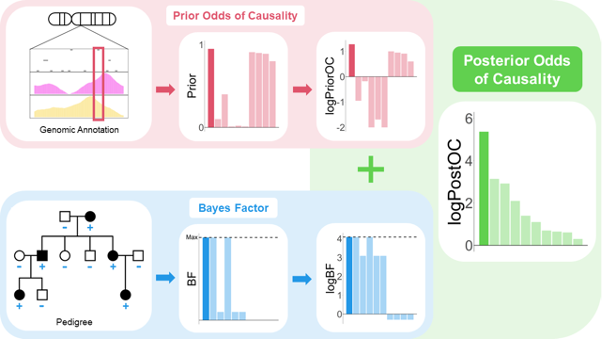
Identifying plausible disease-causing variants from pedigree WGS data, within a robust statistical framework is challenging. Introducing BICEP: a Bayesian inference tool for rare variant causality evaluation in pedigree-based cohorts. Publication imminent!
https://t.co/viY01aiR3Y






![Ireland_Votes's tweet photo. SEAT PROJECTIONS BASED ON EXIT POLL:
SF: 41 [40-45]
FG: 39 [39-46]
FF: 35 [31-37]
SD: 9 [3-12]
LAB: 7 [4-12]
PBP-S: 5 [2-7]
AON: 4 [1-6]
GP: 4 [0-5]
Others: 29 [25-30]
@Ireland_Votes Projections based on RTÉ/TG4/Irish Times/Trinity/Ipsos B&A Exit Poll
#GE24 https://t.co/G5O12wzzx3](https://pbs.twimg.com/media/GdleI3WWEAASX8g.jpg)