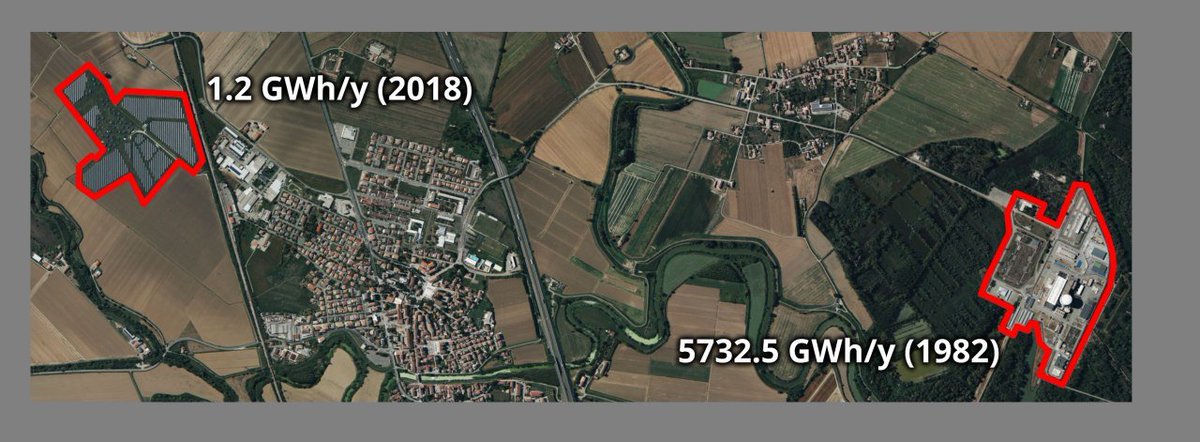
Centrale Nucleare di Caorso
Area: 17,8 hm²
Potenza netta nominale: 860 MW
Energia prodotta (1982): 5 732,5 GWh
Energia generata totale (1981-1986) 27 725 GWh
Fattore di disponibilità energetica: 62%
@_rickroll_@Kezi___ Ho discusso con lui almeno 2 ore sul fatto che doveva mettere 1 cifra decimale su entrambi, ma ha voluto flammare finché non gliel'ho data vinta lol
@HannoKlausmeier You are comparing apples to pears. ElectricityMaps measures greenhouse gas emissions gCO₂eq/kWh, CO₂Map only measures direct CO₂ emissions (gCO₂/kWh), and it does not calculate the construction emissions.
La “piattaforma” blocca indirizzi di Akamai, di CloudFlare, di Hetzner (che è un provider cloud di infrastruttura quindi chissà quanta roba ci sta dietro)…
Se questa lista è corretta, si tratta di un disastro annunciato ma persino più grosso di quanto prevedessimo.
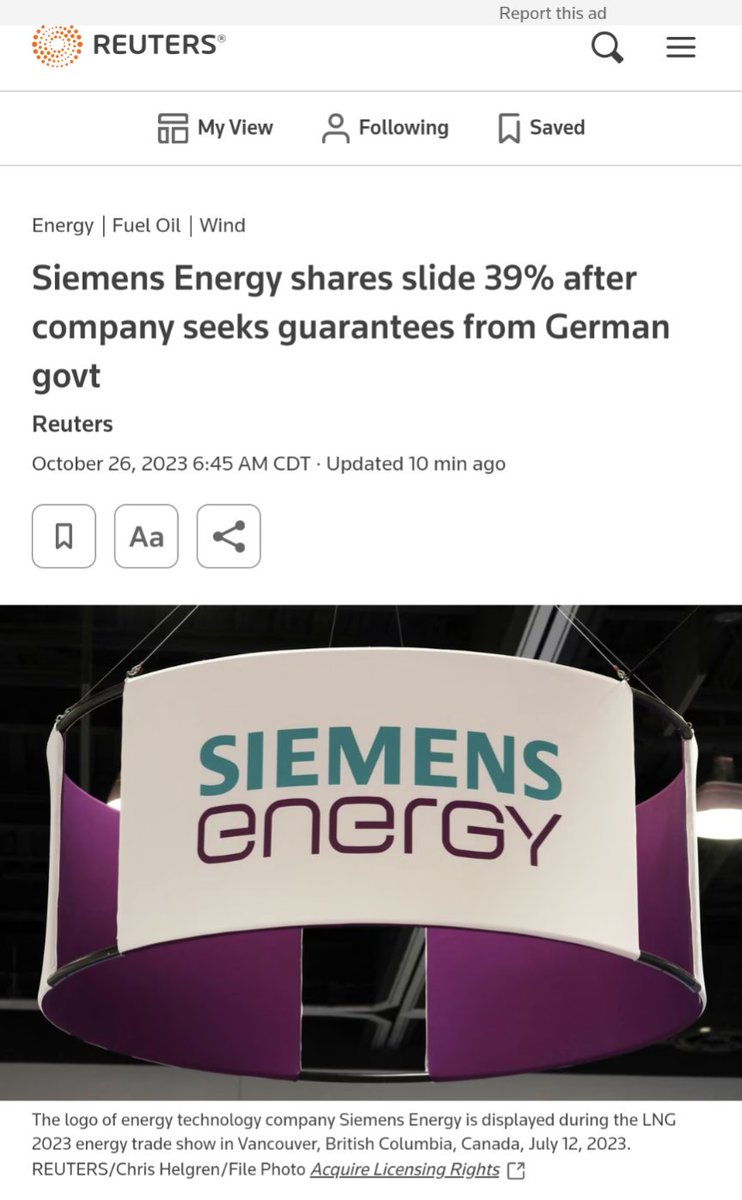
Siemens Energy stock is getting crushed today as the company asks the German government for a financial lifeline.
Things are turning ugly as higher interest rates raise the cost of new wind turbines, but the ones already built don't work well.
Shares down another 39% today after major drops earlier this year.
The German government is having to bet the farm on wind, as the solar industry has gone almost totally to China and nuclear was forcibly stopped.
But will Germany guarantee Siemens's dodgy turbines? We're about to find out.
Nuclear struggles hard to get built in the west these days, but after it does, reactors enjoy an extremely long lifetime of steady power production to recover construction expenditures.
Parent company Siemens AG wisely spun off Siemens Energy before the €4.5 billion (and counting) losses hit this year, but remains the top shareholder at 25.1%.
Hard decisions about the future of European clean energy are coming up.
@AvvocatoAtomico@Kezi___ Farla a ridosso del lago non sarebbe più costoso o equiparabile al costo di farla in periferia di Milano? Andrebbe considerata la differenza dei costi tra il costruirne uno in pianura e costruirne uno su una altura. Dal punto di vista di centri abitati avresti gli stessi problemi
Poland is starting to build a fleet of large reactors TODAY, immediately after signing contracts.
They have this one great chance to bury Germany economically.
Germany's economy was based on large and middle-sized industrial companies running on cheap energy.
Where did that energy come from?
It came from three places: brown coal under German soil; insecure Russian pipeline natural gas; and its outstanding nuclear reactors, the world's most prolific.
Germany urged Europe to tax its own brown coal so severely that it multiplies the cost by more than four times.
So its own coal isn't cheap any more.
Russia always meant its gas to be a weapon of control. They simply turned off the flow at a time of their choosing in order to assist with launching a war. Only after the flow was stopped did the Nord Stream pipelines get blown up, locking the loss into place.
Now Germany has to buy liquefied gas from ships, including from Russia. It's much more expensive than the Russian pipeline gas used to be.
So the cheap gas is gone.
That left only nuclear for cheap energy. Germany just months ago in late 2021 had enough ultra-cheap clean nuclear electricity to power a third of its industrial sector at extremely competitive rates. Those plants would last for 50 more years at least.
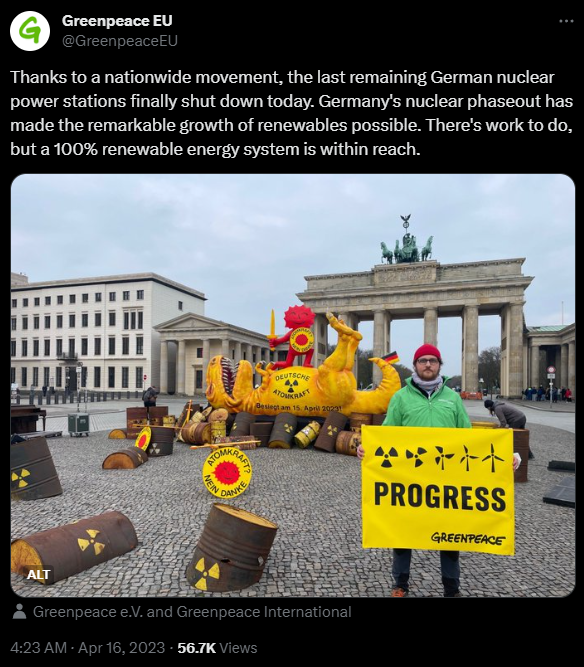
But Germany shut down nuclear anyway.
Now there is nowhere for German companies to turn to get cheap industrial (read: steady, long-term contract) electricity.
German factories can't buy cheap power just from wind and solar because those energy sources can't guarantee they'll be available. And once you stabilize their power not with cheap nuclear but with expensive coal and gas, it's not cheap enough to be competitive.
Meanwhile Poland opened a new natural gas pipeline from Norway and is launching their nuclear program construction today.
This means if you're a German industrial manager looking to locate the next multi-billion investment that must purchase power for the next few decades, you can't justify placing it in Germany. But you might justify placing it in Poland to coincide with the arrival of its nuclear power.
And if you're a German small business owner, you can't get the cheap electricity that your French competitors get from their giant nuclear fleet. Might as well move over the river to France if possible, or close down if not.
Germany can still turn its nuclear fleet back on within a few years but may destroy it instead at the behest of a tiny number of ideology-poisoned politicians.
I predict that this colossal energy system shift will reverberate through the rest of this century.
Germany’s nuclear shutdown is like Brexit: a needless act of self-harm, driven by misinformation and the irrational allocation of blame.
https://t.co/3etHkbFQ95
@gonufrio 80 di quei 120 TWh sono la differenza tra il 2021 e il 2022.
O hai problemi di comprensione, o sei consapevole di disinformare giocando coi dati