What I am about to describe ain’t AGI; it’s a sign of a trillion dollar trainwreck.
If I had told you in 2022 that the 2026 version of GPT (which by the way would only be GPT 5.5 and not GPT-6 or 7 like many people fantasized about) would still have strange quirks like inserting the word “goblins” in random places, y’all would have called me either “crazy” or “a hater” or both.
“Scaling”, you would have shouted. “Deep learning is conquering walls!”, you would have said.
And yet here we are.
OpenAI can’t even align their systems well enough to get them to stop talking about goblins without putting a bunch of utterly hack-y goblin-specific crud in their system prompts like (and I am not making this up) “never talk about goblins, gremlins, raccoons, trolls, ogres, pigeons, or other animals or creatures unless it is absolutely and unambiguously relevant to the user’s query."
Meanwhile, this nonsense varies by “persona”. An actual quasi-scientific report on their website reports, without humor, “Across all datasets in the audit, the Nerdy personality reward showed a clear tendency to score outputs to the same problem with “goblin” or “gremlin” higher than outputs without, with positive uplift in 76.2% of datasets.”
Instead of actual computer science, we are left with alchemy.
Might as well be chanting magic incantations.
Good luck solving AI safety with this tech. 🙄
One of the problems engineers had with recovering Voyager 1 was there was no emulator or assembler for the computer they had to reprogram.
Vintage computer fans had wanted to document this hardware for years, but when we asked NASA for info they said no.
Finally someone tracked down some old JPL memos in a filing cabinet in Kansas and got all the information needed to build and emulator for the hardware.
Imagine how much easier the Voyager 1 recovery would have been if NASA had just said 'Yes' to those inquisitive vintage computer nerds a decade ago.
https://t.co/Nvnf7QU3fO
This is actually huge news. Well on the way to more easily dealing with radiation in space.
Korean scientists just created an ultra-thin radiation shield: thinner than a human hair, stretchy like rubber, and highly effective against both electromagnetic waves and neutron radiation.
The new composite material blends carbon nanotubes (for blocking electromagnetic waves and conducting heat/electricity) with boron nitride nanotubes (excellent neutron absorbers). Even at minimal thickness, it blocks 99.999% of electromagnetic waves and cuts neutron radiation by ~72%.
The material is extremely lightweight, flexible (stretches to double its length), and easily 3D-printable into custom shapes (honeycomb patterns boost shielding performance by an extra 15%). And, it performs well across a variety of extreme temperatures and environments.
Lead researcher Joo Yong-ho explained: “This material represents a completely new concept in shielding technology — it is as thin as tape and as flexible as rubber, yet simultaneously blocks both electromagnetic waves and radiation.”
Perfect for protecting satellites, spacecraft electronics, nuclear propulsion systems, and astronauts without adding much mass. It could also find uses here on Earth in medical devices, semiconductors, and terrestrial nuclear applications.
📸 Korea Institute of Science and Technology
Source: https://t.co/fEKjcEnX0p
There's a common misconception that Brutalist buildings were unpainted, but thanks to microscopic analysis of the exteriors we can now recreate what they looked like in their prime.
🧵 THREAD
1/ Online age verification is the hill to die on.
Not a fight you can sit out. Not a battle you can skip. Not a policy you can afford to ignore while you focus on something else.
This is it. This is the line. This is the infrastructure that enables every other piece of the digital control grid.
If we lose this fight, we lose everything.
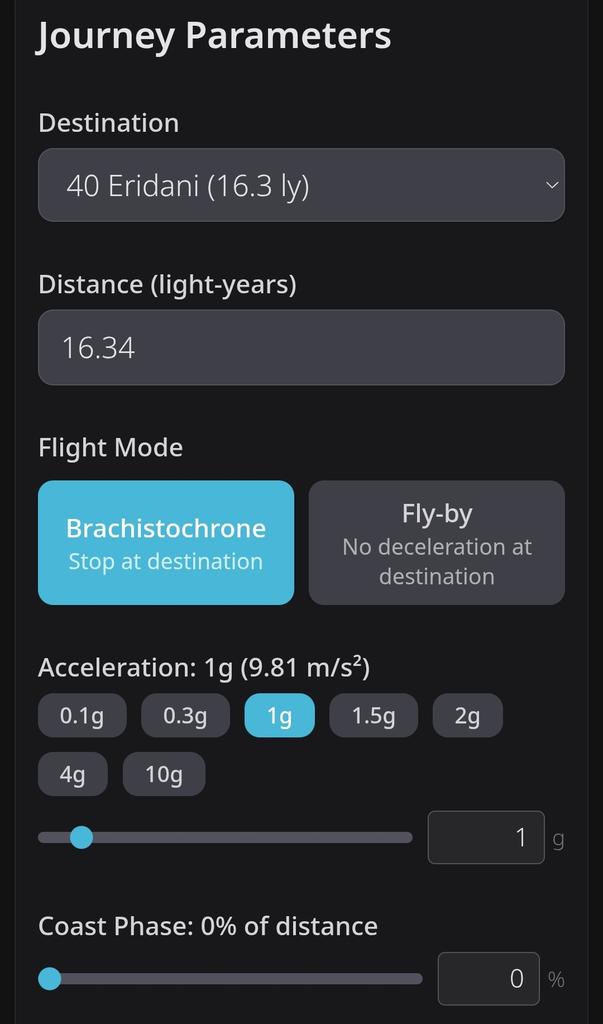
Enjoy this relativistic travel calculator with an interactive map of interstellar distances and how far they 'feel' thanks to time dilation:
https://t.co/T4ADE38UXf
The FBI cut the phone lines during the 1977 disability rights sit-in. Then they turned off the hot water.
They locked the doors from the outside. One hundred and fifty people were trapped on the fourth floor. Half of them used wheelchairs. The government assumed they would leave.
Kitty Cone was thirty-three. She had muscular dystrophy. Her muscles were failing, but her logistics were flawless. She knew how to organize people.
The federal government had promised to sign regulations protecting disabled Americans from discrimination. The policy was known as Section 504. They printed the promise on paper. Then they stalled. Without a signature, it was just typography.
The protesters entered the regional Health, Education, and Welfare building in San Francisco on a Tuesday morning. They took the elevators to the director's office. They brought sleeping bags and catheters. They informed the staff they were not leaving until the law was signed.
By sunset, the police surrounded the exits. Kitty sat near the windows. She organized the floor plan. She assigned committees for security and sanitation. She kept her medication in a small cooler.
According to federal memorandums released decades later, the strategy to end the occupation relied on medical attrition. The building was not equipped for long-term habitation. The FBI calculated that a population requiring ventilators, specialized diets, and daily medical aides would voluntarily evacuate if the environment became sufficiently hostile. They instituted a blockade.
The blockade went into effect immediately. No food deliveries allowed. No medical supplies permitted through the lobby. Guards stood at the main doors checking identification.
Kitty's muscles deteriorated faster under the physical strain. She couldn't walk. When the phone lines went dead, the fourth floor lost contact with the press. The government waited for the quiet.
Kitty dropped to the floor. She realized the barricades were designed for standing adults. The police had blocked the hallways at waist height. They hadn't blocked the linoleum.
The floors were covered in cigarette ash and spilled coffee. She dragged her body through it. She crawled under the barricades to reach the restricted elevator shafts and unguarded offices.
She carried notes in her pockets. She found a single working payphone the FBI missed. She called the local news desks. She called the mayor's office.
She crawled back. When her arms failed, someone pulled her by her ankles. The Black Panthers heard the news reports. They crossed the police lines with hot meals. The FBI could not stop them without a riot.
They shut off the elevators, so she crawled.
The occupation lasted twenty-five days. It remains the longest non-violent occupation of a federal building in American history. On April 28, the Secretary of HEW signed the regulations without a single alteration.
The protesters left the building the next morning. They went back to their apartments. The Rehabilitation Act regulations laid the groundwork for every accessibility law that followed. The HEW building still stands on United Nations Plaza. The elevators run on a schedule. The doors are heavy glass.
Kitty Cone: the woman who crawled under the barricades.
It makes sense.
I remember reading years ago that when they surveyed astronauts about what skills they wanted in a fellow l astronaut should have, the top of the list was that they can fix anything.
Not amazing piloting skills, not deep understanding of math or physics, not physical strength, certainly not the ability to talk well. The ability to fix things.
This makes so much sense when you consider the situation of an astronaut. You’re up there and you’re completely dependent on hundreds of esoteric mechanisms around you all working properly. If something breaks, and you REALLY need it to work, can you actually fix it?
Watching The Martian (2015) as a NASA fan in 2026 can be a little distracting.
The movie was made before NASA brought back the glorious Worm, with an unprecedented level of support from NASA (they saw it as their Top Gun). So, even though it's set in 2035, the movie is almost a commercial for NASA Meatball logo merchandise.
In the scene where the Hermes crew debates going against NASA's orders, they're all wearing Meatball logo shirts and drinking out of Meatball logo cups.
In 2020 NASA brought back the Worm for SpaceX launches, and in 2023 it was officially brought back full time. That means when they made Project Hail Mary, they could use the awesome logo alongside the Meatball.
Let's hope they never bury the Worm again!
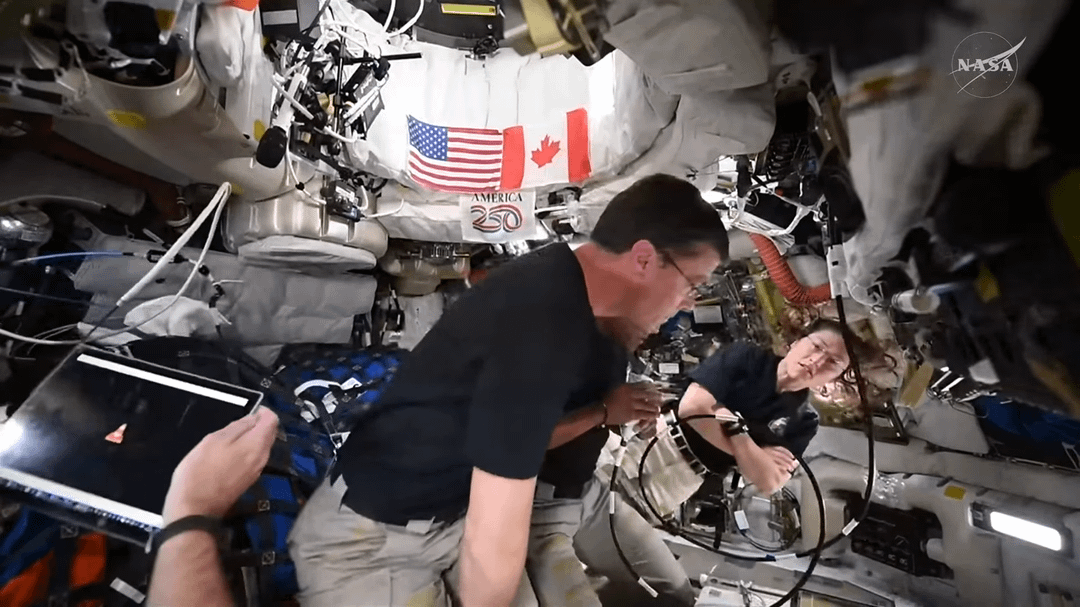
Our crew on the @Space_Station caught a glimpse of the @NASAArtemis II crew as they re-entered the atmosphere from their journey to the Moon! We first saw a bright light and a trail as the service module burned up. We didn’t see the Orion capsule itself as it re-entered, but we saw the wispy trail it left behind in the upper atmosphere. Overjoyed that our friends are safely back on Earth after their awe-inspiring mission!
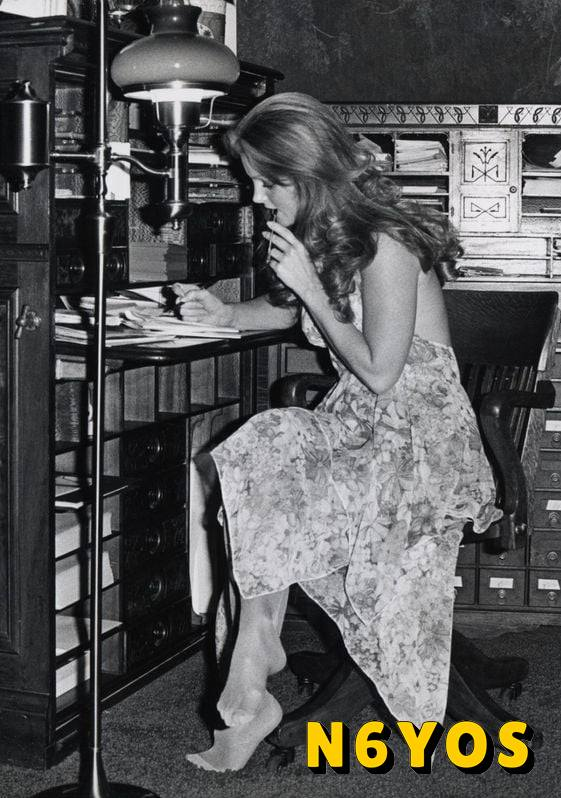
Priscilla Presley – a Film star and who was married to Elvis Presley, was a Ham Radio Operator and her call sign was N6YOS. Yes, Priscilla Presley was a licensed ham radio operator in the 1990s. She held the call signs N6YOS and KC6IWA. She was reportedly active in a repeater group before letting her license expire in 2000, describing the hobby as "addictive".
There's a Youtube video on the Turnin Rust channel called "Elvis’s Abandoned Limo Found in Junkyard! | 1963 Pink Cadillac Will It Run | Turnin Rust" where at 1:51:22 they find a Grandmaster CW memory keyer tucked into a corner under a back seat.
Priscilla's ham radio license was under her maiden name folks:
Call Sign: N6YOS, Previous Call Sign: KC6IWA, Grant Date: 04/10/1990, Expiration Date: 04/10/2000, Cancellation Date: 04/11/2002, Registrant: Lou Lou Beaulieu, Beverly Hills, CA 90213
Read more: https://t.co/FmerFn3xAb
#yloperator #hamradio #hamradiocommunity Priscilla's ham radio license
Christina Koch was a firefighter at the South Pole at -111°F before she ever applied to be an astronaut. That was maybe the fourth most interesting line on her resume. She grew up in North Carolina, got three degrees from NC State, and her first real job was building deep-space instruments at NASA.
Then she left for Antarctica. Spent three and a half years bouncing between the Arctic and Antarctic as a research scientist, including a full winter at the South Pole base. That means going months without sunlight or fresh food, with a crew of about 50 people and no way out until flights resume. While she was down there, she also joined the glacier search-and-rescue team.
After coming back, she went to Johns Hopkins and built instruments for two NASA missions (one of them is still orbiting Jupiter right now). She figured out how to start a tiny vacuum pump that NASA designed for a future Mars rover. Johns Hopkins nominated it for their Invention of the Year in 2009. Then she went back to the field. More time in Antarctica and a stretch up in Greenland. A government research station in northern Alaska, near the top of the world. Then she ran another one in American Samoa, near the equator.
In 2013, NASA selected her from 6,300 applicants. Eight people got in. Her first space mission was supposed to be a normal rotation on the International Space Station, but NASA extended it. She ended up staying 328 straight days and orbiting Earth 5,248 times, covering about 139 million miles (roughly 291 round trips to the Moon). Up there, she ran over 210 experiments, including tests of cancer drugs in zero gravity and 3D printers that can build structures close to human tissue. Six spacewalks, 42 hours floating outside the station. She learned Russian for the training. She flies supersonic jets.
Right now, Koch is on Artemis II, heading for a flyby behind the far side of the Moon. The crew launched on April 1 and is on track to travel about 252,000 miles from Earth, which would break the all-time human distance record of 248,655 miles set by Apollo 13 in 1970. That record has stood for 56 years, and it was set during a disaster that nearly killed the crew. Fred Haise, one of the Apollo 13 astronauts, is 92 now. He told Koch: "I heard you're going to break our record."
Nobody had left Earth's neighborhood since December 1972. Koch and her three crewmates are the first in 53 years, and they are coming home at about 25,000 mph. That is faster than any crewed spacecraft has ever come back through the atmosphere.
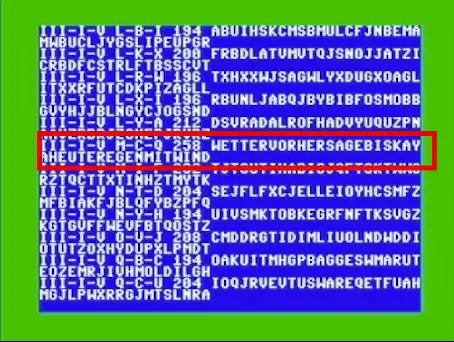
I let a Commodore 64 run for three and a half days straight. 87 billion instructions, 303 billion clock cycles, 5.9 million candidate settings tested. It cracked an Enigma message in German without knowing a single character of the plaintext.
🧵1/2
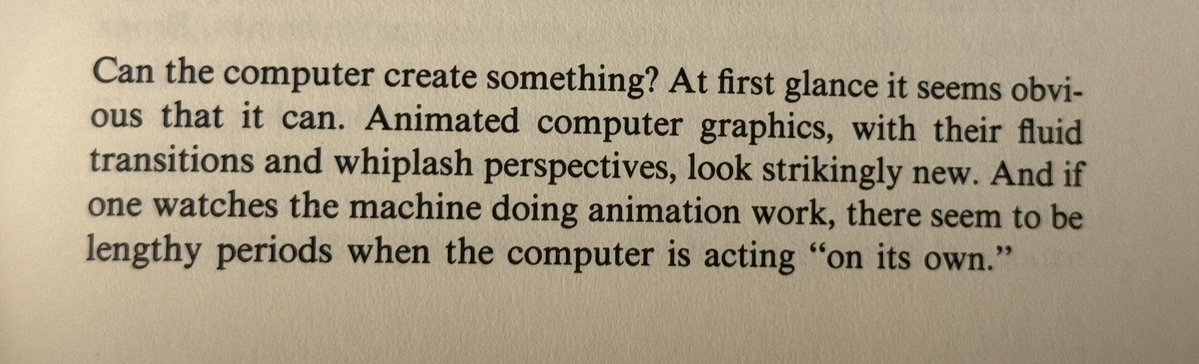
Reading Michael Crichton’s book on computers from 1983- something that would have been useful if you were trying to decide whether to buy an Apple 2 or Commodore 64 and learn what a floppy disc is. However, Crichton was always extremely prescient and often he strays into philosophy territory. Like here- when you can read what would have been his opinion on AI generated art had he been alive to see it.
at google this was known as "buying the gnome". there's like a billion tweets about this already but basically the story goes back in like 2005 or something they were building out their shopping search system, and it was working pretty well. except for the fact that if you searched for sneakers, the top result was a garden gnome. engineers were going crazy trying to fix the ranking bug, but eventually someone noticed that the gnome listing was on ebay, and there was only one of them, and it cost like $50. so they just bought the gnome and suddenly the listing was gone, problem solved. why bother fixing software issues when you can just change the world to fit your software instead?