Why is the Chinese public so optimistic about AI? Why are they not worried about job displacement? Why do so many people rush to use OpenClaw?
People in China and the US are not different species with opposite societal and technological expectations. It is because the massive layoffs three decades ago taught the Chinese that every transformation is "the last bus" — miss this one, and history will progress without you.
My new article @asteriskmgzn. Thanks @anton_d_leicht and @Scott_R_Singer for their feedbacks, and the editorial team for all the hard work.
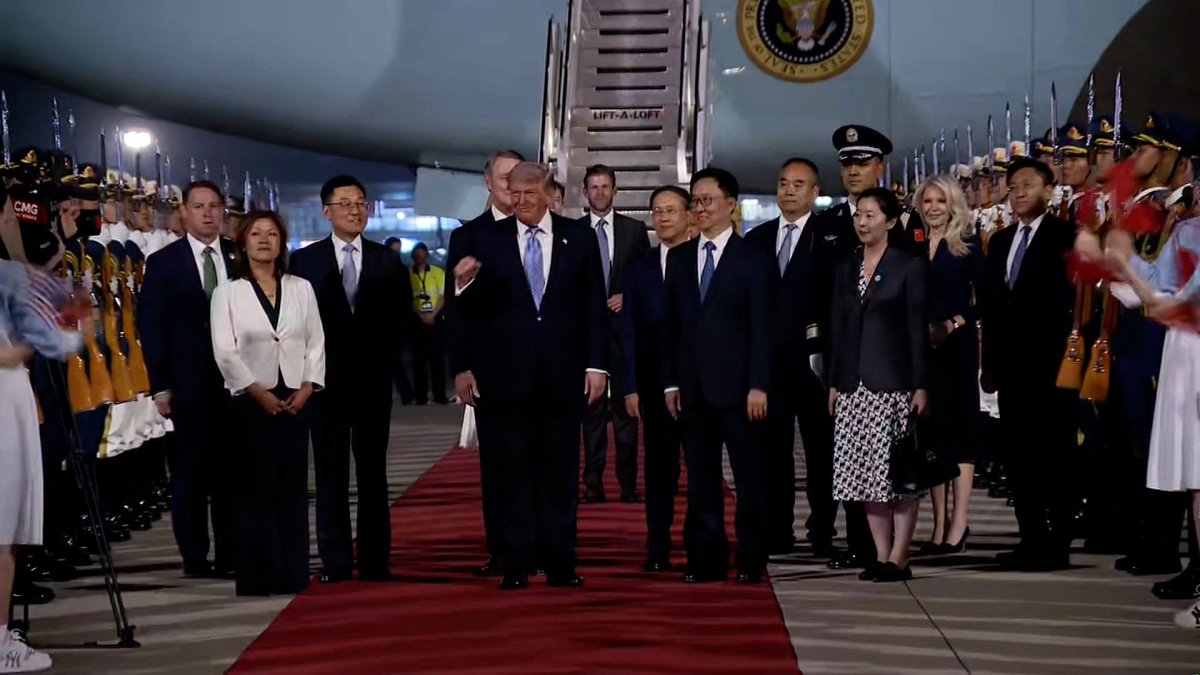
1/ #China's intellectual and policy elite are reading #Trump’s Beijing visit as more than a temporary thaw.
For many, the summit suggests something bigger: Washington has been forced to accept a more equal relationship with Beijing.
🧵🧵
Some takeaways from the Beijing summit, now that Trump is back on Air Force One. Short version: this was a stability-preservation exercise, both sides knew it, both sides got what they came for, and yeah I call that win-win. 🧵
China’s first court ruling on AI-generated fake reviews is here.
A Hangzhou court found two companies guilty of unfair competition for running an AI tool specifically designed to generate fake product reviews for Xiaohongshu (RED). The tool had dedicated modules mimicking Xiaohongshu’s content categories, marketed itself as generating posts that “match the platform’s tone,” and encouraged users to publish AI-fabricated personal experiences. Lifetime access cost just ¥168 (~$23).
The court established a four-part test for holding generative AI providers liable:
whether the service qualifies as generative AI, whether it targets a specific platform, whether it induces users to post fabricated content, and whether it operates as a commercial business.
Damages were only ¥100K, but the precedent matters. China is now building AI content liability through case law.
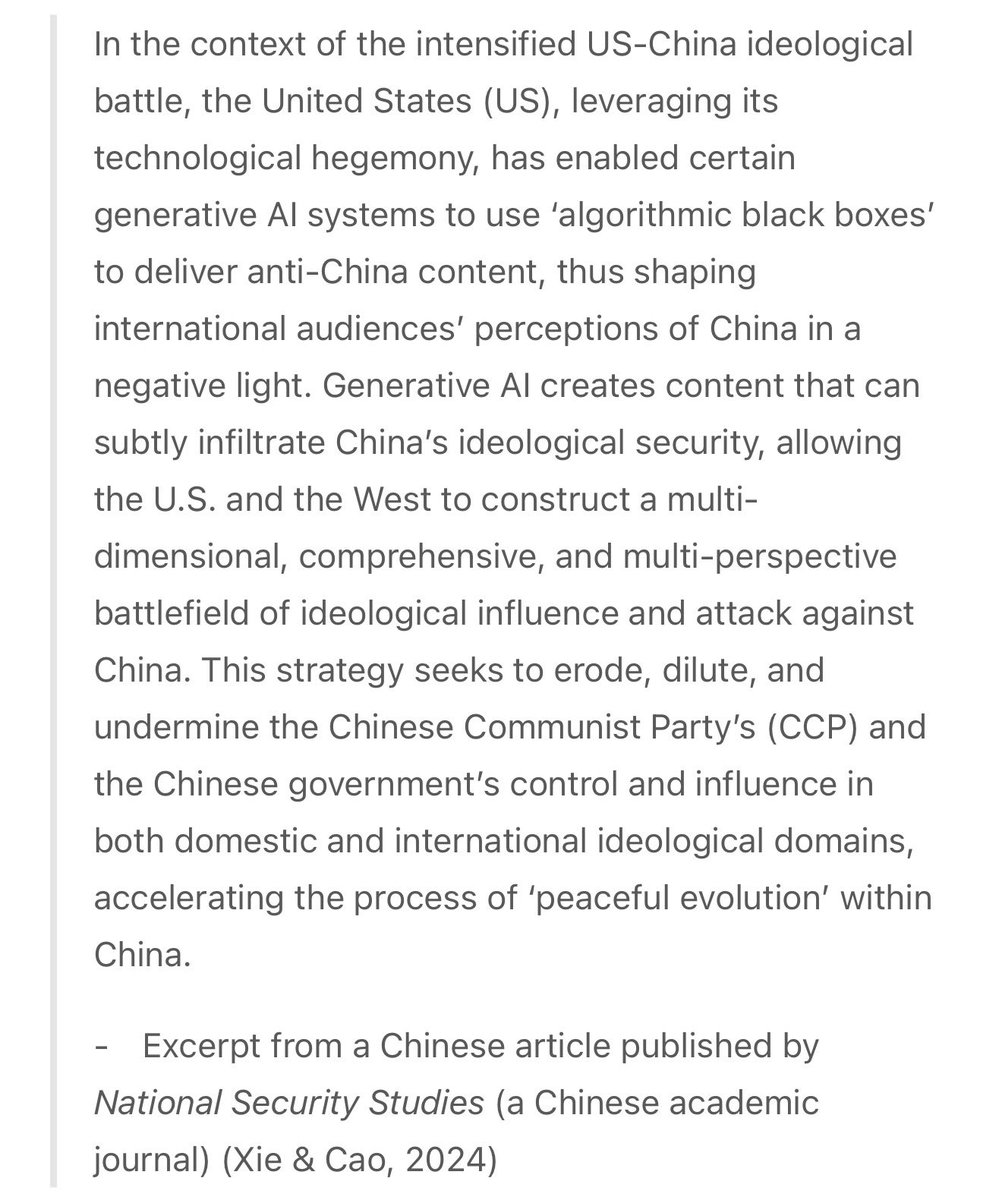
It’s very ironic that while the US was worried about TikTok secretly spreading content against US national interests, China was worried that ChatGPT would basically do the same thing.
Very interesting research article by @Jinghan_Zeng
a very illuminating read!!
the “china AI race narrative” is now so deeply lodged in people’s minds that many ai people — policy wonks, researchers, founders — seem to view china almost entirely through the narrow lens of capabilities: compute, parameters, benchmark scores, open-weight releases, chip stockpiles.
what that misses is the much larger industrial project china is pursuing, of which AI is only one part.
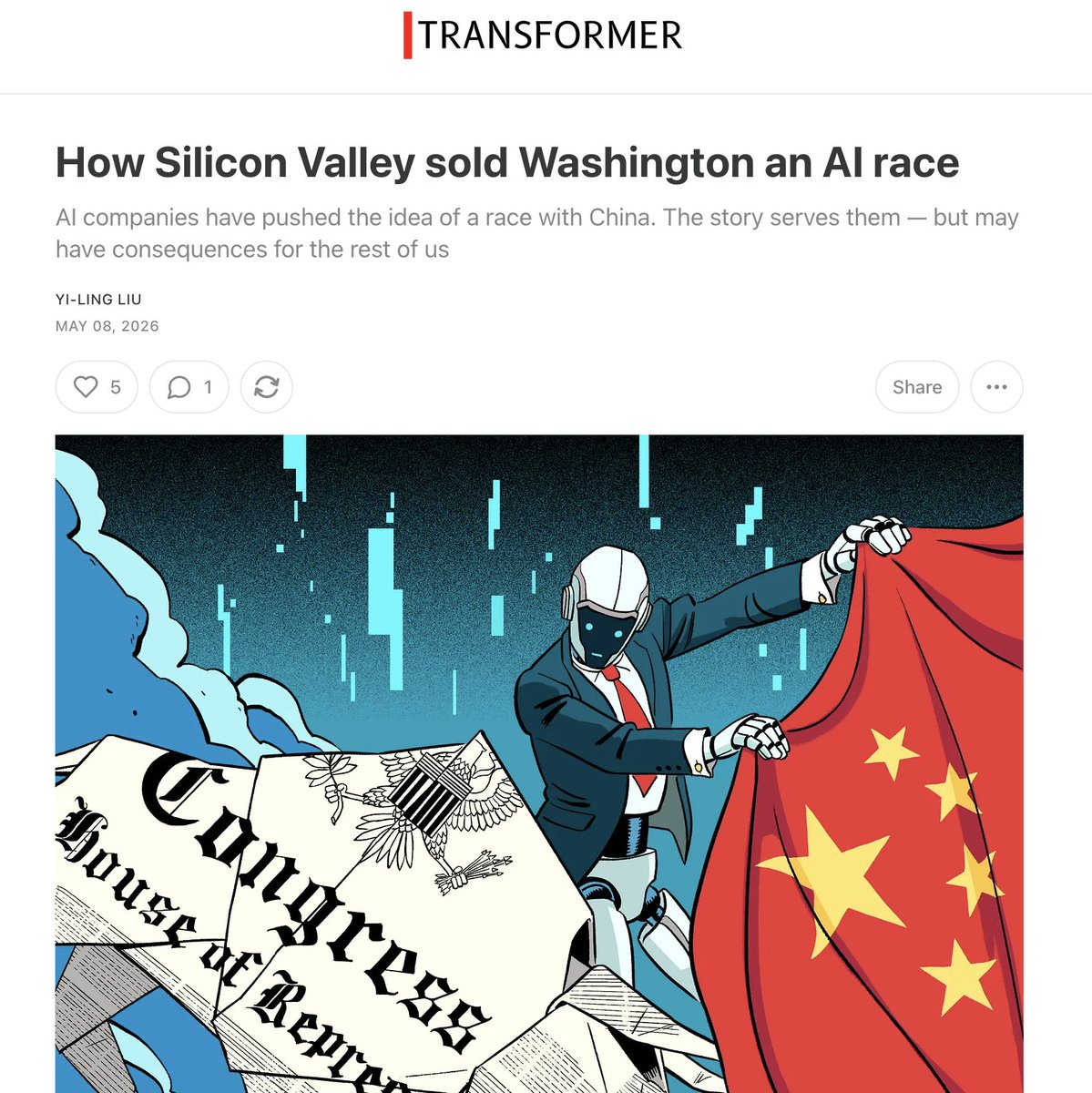
For @ReadTransformer, I wrote about how US tech companies have used the China AI race narrative to push a sweeping policy agenda — from military contracts to export controls to rolled back regulation.
The consequences of this narrative could be disastrous. It's undermining prospects for international cooperation at exactly the moment it's most needed.
And as @S_OhEigeartaigh has written: "the world should not be lost on the basis of a fiction."
Exciting to see @washingtonpost's reporting on Chinese organized crime which I worked on with @rebtanhs + @stronghead_yo recognized by @sopasia as a finalist for the Carlos Tejada Award for Excellence in Investigative Reporting!
Sharing some truly surreal news:
My colleagues and I have won the Pulitzer prize for International Reporting.
An incredible honor. And a real team effort.
https://t.co/hGxC3ookPq
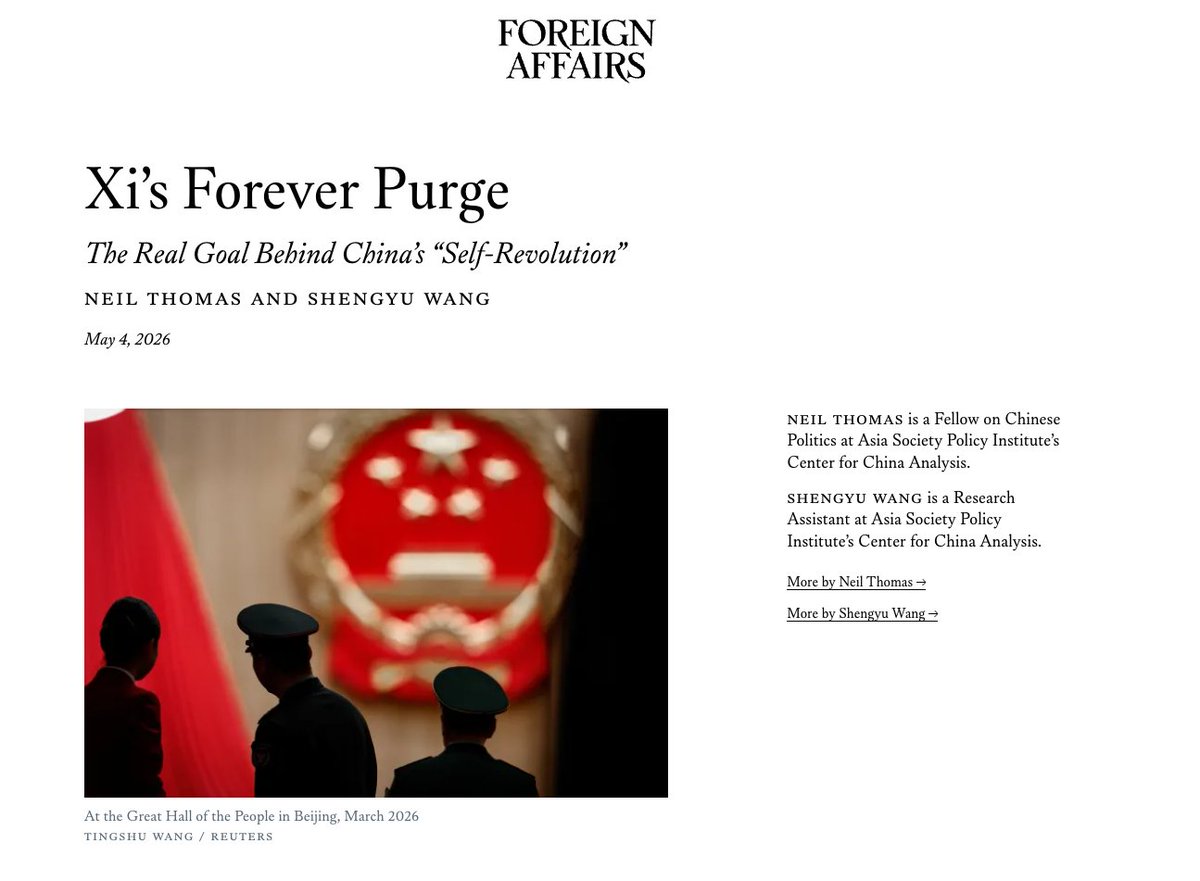
Why is Xi Jinping purging so many people?
The standard explanation is simple: power. He is crushing rivals to stay in office.
That's not wrong but it's incomplete. Xi is trying to help the CCP rule forever.
Delighted to debut in @ForeignAffairs (w/@shuizaiping2)
1/ Short 🧵
I was surprised when a friend mentioned that a former Harvard scientist convicted for lying about his China ties had moved to Shenzhen.
I was even more surprised when I did some digging and found he’d rebuilt his lab with Chinese government funding.
https://t.co/WNTmhiVTnr
Most people I know in AI think the median person is screwed, and they have no idea what to do about it.
I spent the last 3 months talking to dozens of researchers, economists, and policy experts about AI's impact on work; including reps from every frontier lab and several Congressional offices. Unfortunately, I was not reassured.
The AI industry is raising the alarm, but can't change course. These companies' core business model relies on the disruption they are warning about: their faith in full automation only makes them go faster.
Policymakers are waking up, but still paralyzed by data and debates. Econ wonks disagree on plenty, but even the limited scenario looks like a "painful transition" that will disempower millions of workers.
But an "underclass" is not inevitable, but rather a societal choice — and one we can and should stop. Instead of waiting for impact, we should start planning now to support workers through AI disruption. Whether policymakers can assuage concerns about economic security may determine if we get to reap AI's gains at all.
New from me for @NYTOpinion. I put a ton into researching what I think may be the biggest topic of the year, so hope you read it (gift link here!) https://t.co/NiGJpjyjzH
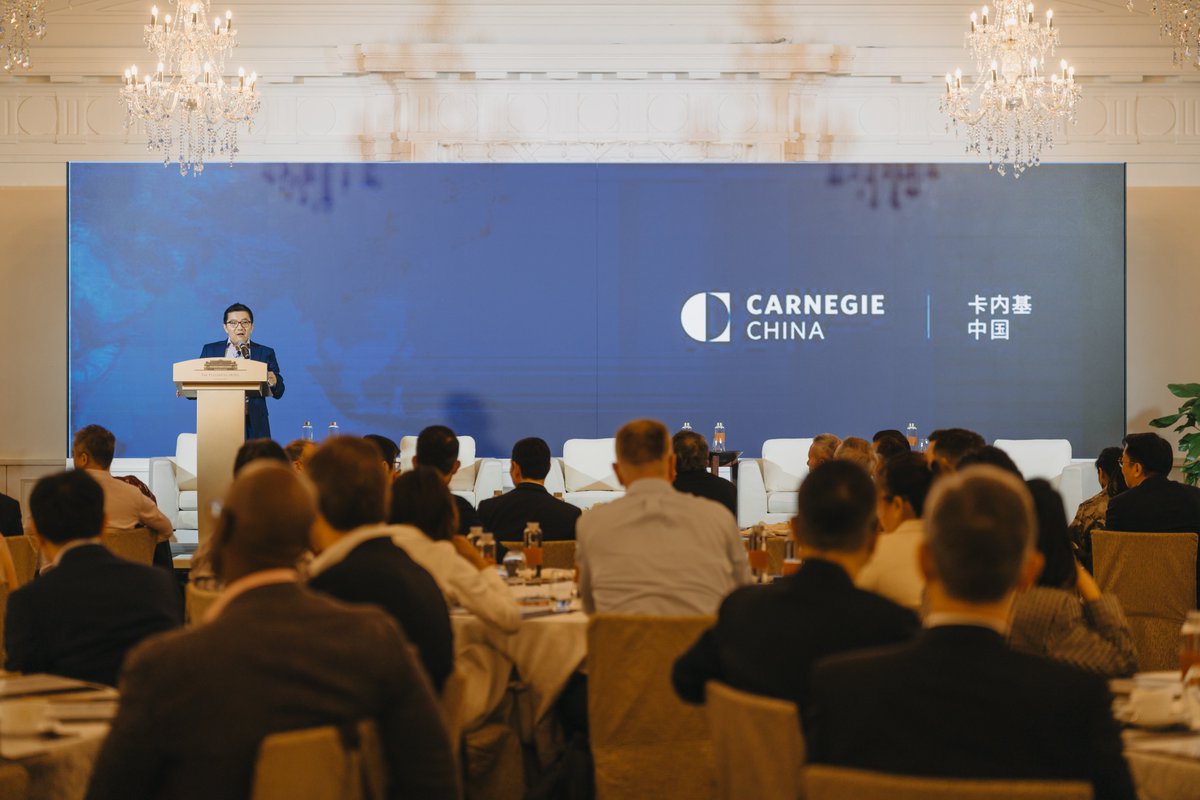
Having been in “stealth mode” for a little while, this week I can finally say that @CarnegieChina is officially open for business.
It was wonderful to see familiar faces and meet new friends. We couldn’t have asked for a warmer reception in Singapore.
Great appreciation for our distinguished guests who traveled from Beijing, Delhi, Jakarta, and DC to celebrate with us. What a fantastic line-up of speakers that covered the waterfront from tech and geopolitics to Asian agency and whether we’re moving to a “multilateral world with strong bipolar features.”
It was a privilege to be alongside @CarnegieEndow leadership Tino Cuéllar @EvanFeigenbaum and Daniel Baer for this special occasion.
I remarked at the outset that grappling with China’s arrival as a great power is a team sport – having a community of scholars, industry practitioners, thought leaders, and policymakers and diplomats is essential. We intend to continue to build and strengthen it.
As the first and only American think tank with a physical presence in Singapore, I’m excited about what lies ahead. This may be a new chapter for Carnegie China, but it is only the first chapter.
The China watcher sphere on X is currently dominated by geopolitics, tech dominance, he green transition, and macro finance. But framing issues exclusively through the lens of "great power competition" masks the intense, complex social changes happening on the ground.
A recent viral controversy in Shenzhen perfectly illustrates what we are missing. (https://t.co/GtBtMFozE2)
Last week, a man and a woman got into a physical altercation at a bus stop after she tried to stop him from smoking. Both were detained and refused to settle. In response, police subjected the woman to a forced strip search—sparking massive public outrage regarding law enforcement overreach.
But the controversy itself isn't what caught my attention. It’s the woman at the center of it: 29-year-old Wang Ronghao.
It turns out Wang is a meticulous, active chronicler of the grueling service industry. Over the past 9 years, she has worked at Haidilao, Hema Fresh, Lawson, and various other gig economy jobs, documenting the crushing reality of modern labor. Reading her diaries, you realize that the mechanisms of control over labor have evolved right alongside economic development, taking on terrifying new forms. (A report from 2025: https://t.co/0qqWA9E0F3)
Her writings expose the invisible, often dehumanizing architecture required to maintain "extreme service":
Algorithmic Panic: At Hema grocery, strict "30-minute fresh delivery" timers force kitchen workers to literally reach into 100°C steamers without gloves to grab RFID tags just to avoid algorithmic penalization, leaving them covered in burns.
Panopticon Management: At Haidilao hotpot, a relentless reporting culture and surveillance enforce "16 zero-tolerance rules." If a customer pours their own water before a server can sprint over to do it, the server faces docked pay and public reprimand.
Systemic Overwork: A total deprivation of basic human needs. Convenience store clerks are forced to stand for 10+ hour shifts even when the store is empty, and workers battle for corners on the street just to sleep for 20 minutes.
I don’t want to frame this merely as a "China labor story." It is clear that we are seeing the exact same algorithmic exhaustion in Amazon warehouses and among Uber drivers in the U.S. It could be any country.
The very "substrate" of society is shifting globally. In both countries, and in many others, the driving forces are identical: the relentless optimization of technology and the unchecked leverage of large, powerful companies.
It is not a question of which country is "better" or who is winning a geopolitical rivalry. Beneath the high-level macro narratives and great power posturing, this is plainly an age-old labor struggle, evolving alongside technology, that never actually left.
@tphuang See for eg this take from Guancha https://t.co/fR8F9dxYNj: DeepSeek launching V4 on Huawei chips may not immediately replace Nvidia technologically "but narratively, it breaks the idea that CUDA is the only starting point."
"I feel like Jensen really gets it," says @tphuang. "He wants to make sure Nvidia has the monopoly... He doesn't want a scenario where China's domestic scenario gets totally figured out... Once China gets into something, the profit is gone in that industry."
I've been looking forward to this for a long time.
@tphuang and I talk about China & AI supply chains:
- DeepSeek V4 + Huawei chips
- AI bottlenecks
- Energy infrastructure
- Edge AI
- Robotics supply chains
Special crossover episode of High Capacity podcast & China Tech Talk👇
@tphuang It's interesting that many Chinese commentators backed Huang in his debate up with Dwarkesh -- not just out of self-interested desire for Nvidia chips, but also because they agree that the only way to defend Nvidia's dominance is to go head-to-head with Huawei.
Had a great time chatting w/ @lauryndsw@CSIS_Tech about what it means for SpaceX & Huawei to suddenly be competing head-to-head in AI chips. The structural similarities btwn the two companies allows us to really compare the US & China innovation models
https://t.co/OhqdhgO09A
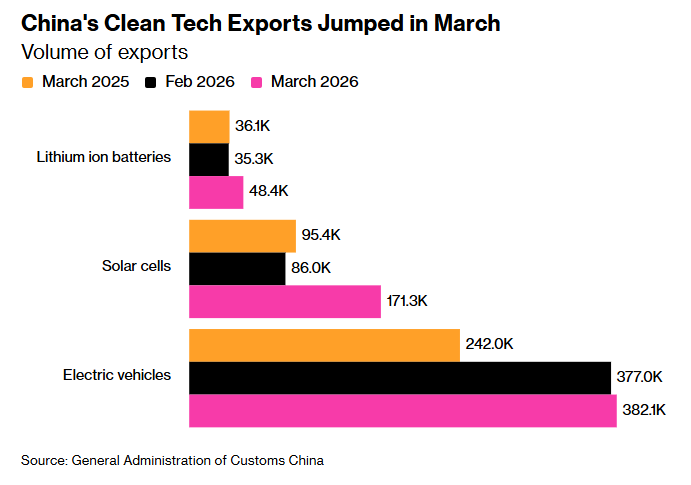
Chinese export data released this weekend and statements from Chinese firms suggest that the closure of Hormuz is leading to new interest in Chinese cleantech, as we've heard in cities across Asia.
https://t.co/2sQmjKlQmv