Doing my best to connect energy researchers with opportunities today. I cannot promise super fast responses but feel free to fill this out: https://t.co/90sS8mHSYO (usually I send this to PhD students and postdocs, but opening it up more broadly given the circumstances)
We ♥️ our collaborators at https://t.co/39GpE5dGWz! Thank you to @schmidtsciences for supporting the partnership. The https://t.co/B6RbLEPcIF tool is now lightening fast and primed for impact 🙌 https://t.co/7VfafiTA9W
🔔#Earthquake (#sismo) M3.1 occurred 12 mi NE of San Francisco (#California) 3 min ago (local time 09:23:45). More info at:
📱https://t.co/QMSpuj6Z2H
🌐https://t.co/VKNhE7atDE
🖥https://t.co/ak0h5zkQhA
Thanks to @BerkeleyLab for the commitment to outreach. It is always one of my kids' favorite spots on the Solano Stroll. Educating the next generation of scientists 👩🔬🧑🔬
The Energy Biosciences Institute (EBI) connects industry with world-class research at UC Berkeley, LBNL & UIUC. With 7,000+ faculty/postdocs & 100,000+ students, we help sponsors grow research portfolios through one contract, driving #impact in #energy & #sustainability.
In a cross-country collaboration, researchers from CABBI, @GLBioenergy and @jbei developed industrially feasible techniques for second-generation #biofuel production from oilcane, a variety of sugarcane, to help meet the growing demand for fuels.
News ➡️ https://t.co/bQ01DUzsfQ
Another @jbei publication hot off the presses! 7 herbaceous, 9 woody, 4 food processing residues, and 2 blends all decontructed using butylamine. We can hit $1.3 to 6.1/kg sugar now, process intensification needed to hit $0.45–0.79/kg. https://t.co/TnMXYsPzuA
So what does this mean? Well, you can engineer plants to increase the glucan to xylan ratio. You can select feedstocks with a more favorable ratio. And/or you can focus on hosts and other bioprocessing strategies to enable full consumption of both sugars in less time.
Using lignocellulosic biomass for biomanufacturing has long been the dream. Low-input grasses, ag residues, you name it. One challenge remains: microbes consume xylose more slowly than glucose. Our @jbei team digs into what this means in our new paper https://t.co/yrOVHFlqWy
How much xylan vs. glucan is in your original feedstock REALLY matters. Capital-constrained biorefineries operating with shorter residence times can justify paying up to 1.5X to 2X the price for feedstocks with very high glucan to xylan ratios.
If you're submitting an #AGU2025 abstract on #enhancedrockweathering biogeochemistry, microbiology, hydrology, modeling, MRV, public policy or social science, consider session B037, Enhanced Weathering for Carbon Dioxide Removal & Improved Soil and Agronomic Properties -due 7/30!
Mike has been a really wonderful leader. Supportive, curious, and a true believer in the important mission of the national labs. I feel so lucky to have spent so much of my career at LBNL with him at the helm.
Lab Director Mike Witherell will retire in June 2026. Witherell has led the Lab through a historic period of scientific achievement and recognized operational excellence, with a deep commitment to developing the next generation of scientists.
More ⬇️
https://t.co/1OINYbGus7
@ScottMoura Putting my accounting nerd hat on...using primary energy is likely to be confusing to people because that's energy INTO a generator, not energy out. This likely treats VRE as 100% efficient (so less "primary energy" in) while including the full heating value of fuels combusted.
In light of news that they might get their budget cut, I just want to share how absolutely amazing the CSB’s investigations and videos for the public are. I used them for teaching. It always made me proud that our government supports stuff like this: https://t.co/RjEjpuBa8g
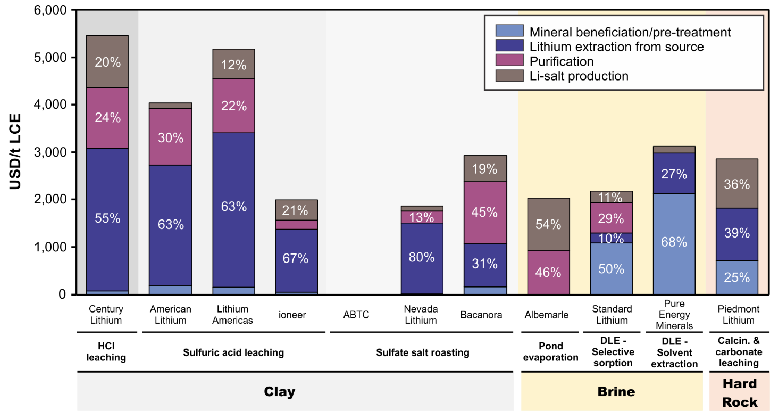
We have a team of rising stars at @BerkeleyLab@BerkeleyLabETA who are doing incredible work in critical materials & supply chain research. Keep an eye out for more from this team. Here are just a few recent papers (including preprints):