Director at Solminds. Creates solutions using software, heads a small team at Solminds, has worked at TCS and Cordiant in the past. Most RTs are endorsements
I don't believe we still have to say this, but our govt keeps pushing its propaganda that India "did well to control the pandemic" which is far from the truth 👇🏼
A 🧵on the new cabinet of Kerala, other than CM VD Satheesan, in the order they are swearing in:
PK Kunhalikutty: the swearing-in crowd cheered big for a reason, the don of the Muslim League is back, 85327 votes from Malappuram is not the total votes polled for him, that's his winning margin (the biggest ever for a Kerala MLA).
Going to be a towering figure in this cabinet by sheer experience of having seen it all done it all already, fifth time as minister now (imagine being a CM who was never a minister and now has to work with a man who was already Industries Minister in 1991 when you were yet to be even elected anywhere).
First won an assembly seat in 1982 at the age of 31, had his face scrubbed in the mud over the ice cream parlour case in which he was never formally charged but the political fallout cost him his ministership and his only electoral defeat in 2006.
The 3 bills considered today by Lok Sabha were:
- Constitution (131st Amendment) Bill, 2026
- Delimitation Bill, 2026
- Union Territories Laws (Amendment) Bill
Not sure why these are being termed Women’s Reservation Bill which was already passed by parliament in 2023.
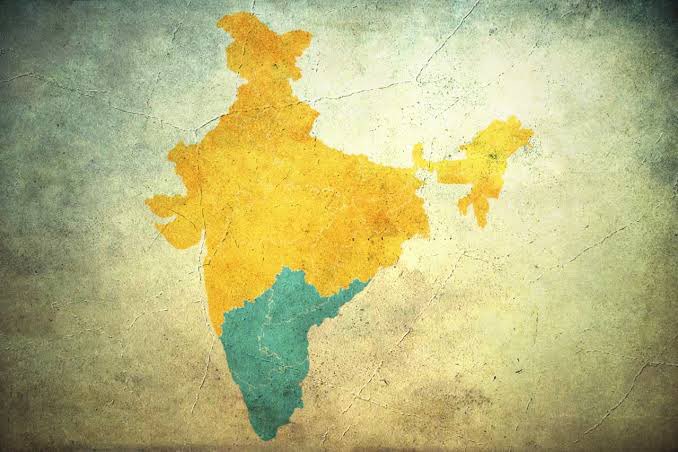
South India controlled its population.
South India educated its women.
South India built its hospitals.
South India industrialised.
South India pays more into the national treasury than it receives back.
By every metric of responsible governance, South India did everything right.
And Bill No. 107 of 2026 is the result.
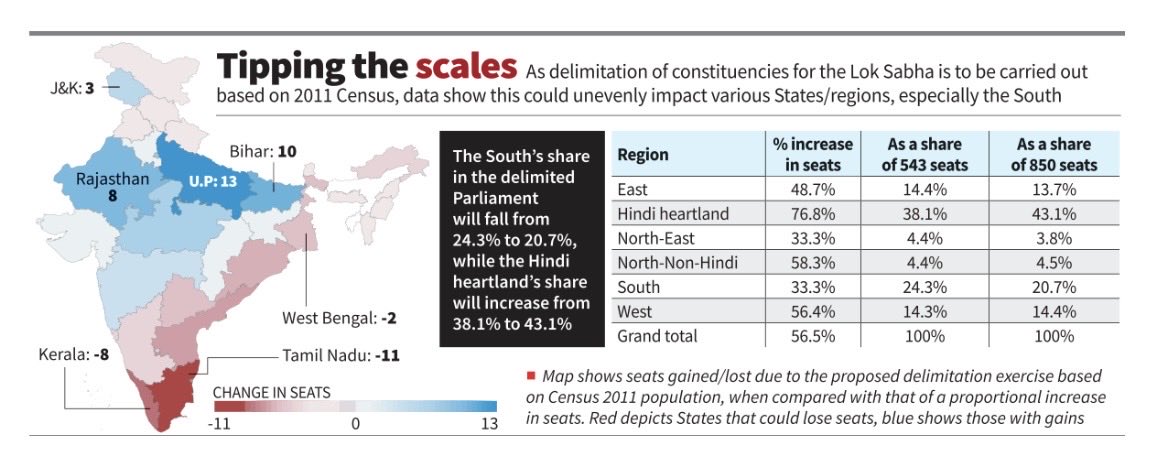
• Fewer seats in Parliament.
• No constitutional protection in the Bill’s text.
• Boundaries redrawn by a Commission with no Southern representation.
If following the rules, building your state, controlling your population and paying your taxes leads to THIS. What exactly are we teaching the next generation of states about what India rewards?
(7/8)
The answer can be found in Europe, where the principle of degressive proportionality is applied to the composition of the European Parliament — since they have the same problem of small and big states coexisting in one Union.
India also needs a compromise between strict democratic representation (one person, one vote) and the necessity of ensuring smaller political entities have a meaningful voice. It essentially means that while larger populations get more seats, the ratio of citizens to representatives increases as the population grows.
In the European Parliament, the allocation must follow these constraints:
*Minimum Threshold: No member state can have fewer than 6 seats.
*Maximum Ceiling: No member state can have more than 96 seats.
*Inverse Ratio: The "efficiency" of a vote must decrease as population increases. For example, a Member of the European Parliament (MEP) from Malta might represent roughly 80,000 citizens, while an MEP from Germany represents roughly 850,000 citizens.
The goal is to prevent the "Big Four" (Germany, France, Italy, and Spain) from holding a permanent absolute majority that could override the collective interests of the smaller nations, thereby maintaining the federalist spirit of the Union.
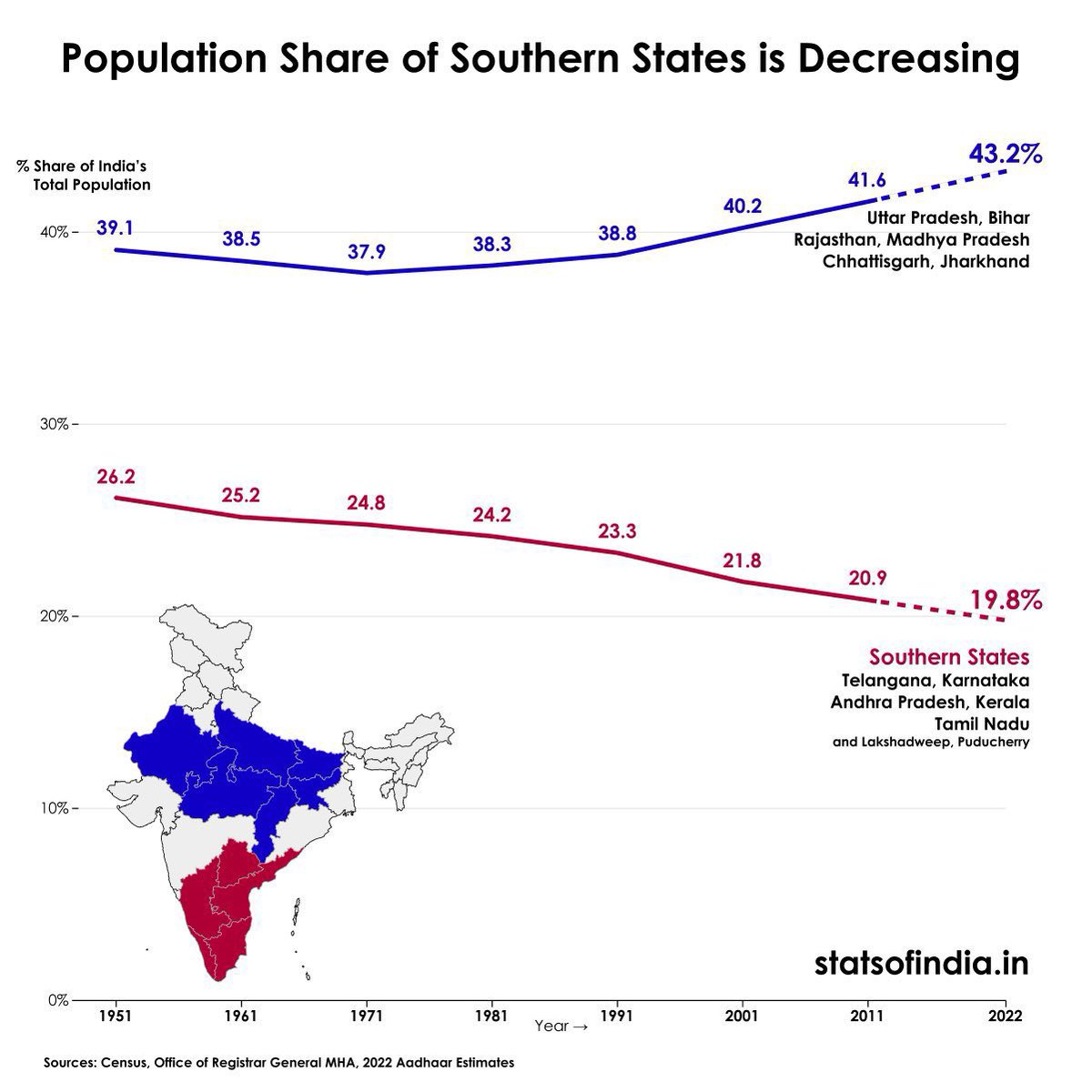
Applying this to India is what we need to debate, not women’s representation which no one objects to. We need to address the North-South divide that has arisen over delimitation. A strict population-based reallocation (proportional representation) would drastically increase seats for northern Hindi-belt states like Uttar Pradesh and Bihar, while states that successfully implemented population control (like Kerala and Tamil Nadu) would see their relative political influence diminish.
If India were to adopt a degressive model, the Parliament could be structured to balance population with federal equity. Similar to the EU, a "floor" could be set for smaller states (e.g., Goa, Sikkim, or the Northeast) to ensure they aren't reduced to insignificance. Instead of a fixed ratio of, say, 2 million citizens per MP, the ratio could scale. A state with 200 million people might have 2.5 million citizens per MP, while a state with 30 million might have 1 million per MP. This is to ensure no state feels disenfranchised. As @revanth_anumula suggests, another factor could be a state’s contribution to national GDP. It would be dangerous for our federalism if smaller states felt their prosperity & human development were being punished with relative disenfranchisement.
One could argue that the Rajya Sabha already exists for federal representation. However, degressive proportionality in the Lok Sabha would provide a "weighted" democratic mandate that acknowledges population without penalizing states for their developmental successes.
Finding a mathematical formula that satisfies both the high-growth and low-growth states, and both the large and small states, would require a level of bipartisan and interstate cooperation that it is in the interests of the central government to promote. I urge PM @narendramodi to initiate extensive consultations, with all parties and with all states, before rushing into a hasty delimitation process that leaves the core underlying issues unaddressed.
There is a tendency, especially in Western and some Indian commentary, to wrap Israel’s actions in the language of “security necessity” until the reality becomes unrecognisable. That instinct to soften, qualify, and contextualise can easily slide into evasion.
But the record of the present conflict does not permit that comfort.
Israel has not merely responded. It has driven escalation through choices, expanding targets, widening the theatre, and privileging force over restraint in ways that have predictably hardened positions and drawn others in. That is not incidental. It is strategic behaviour with consequences.
To say this is not to deny that others act, retaliate, or contribute to the spiral. But it is equally not credible to pretend that all actors are operating on the same scale or with the same intent.
What should trouble us is this:
When a state begins to act as if overwhelming force can reorder an entire region, it does not stabilise the system. It unsettles it.
And that unsettling is now visible:
•in the widening geography of conflict
•in the erosion of norms
•and in the growing sense that escalation is no longer a risk, but a method
Force is outrunning judgement .
And on that count, Israel’s role in pushing this crisis outward and upward cannot be wished away.
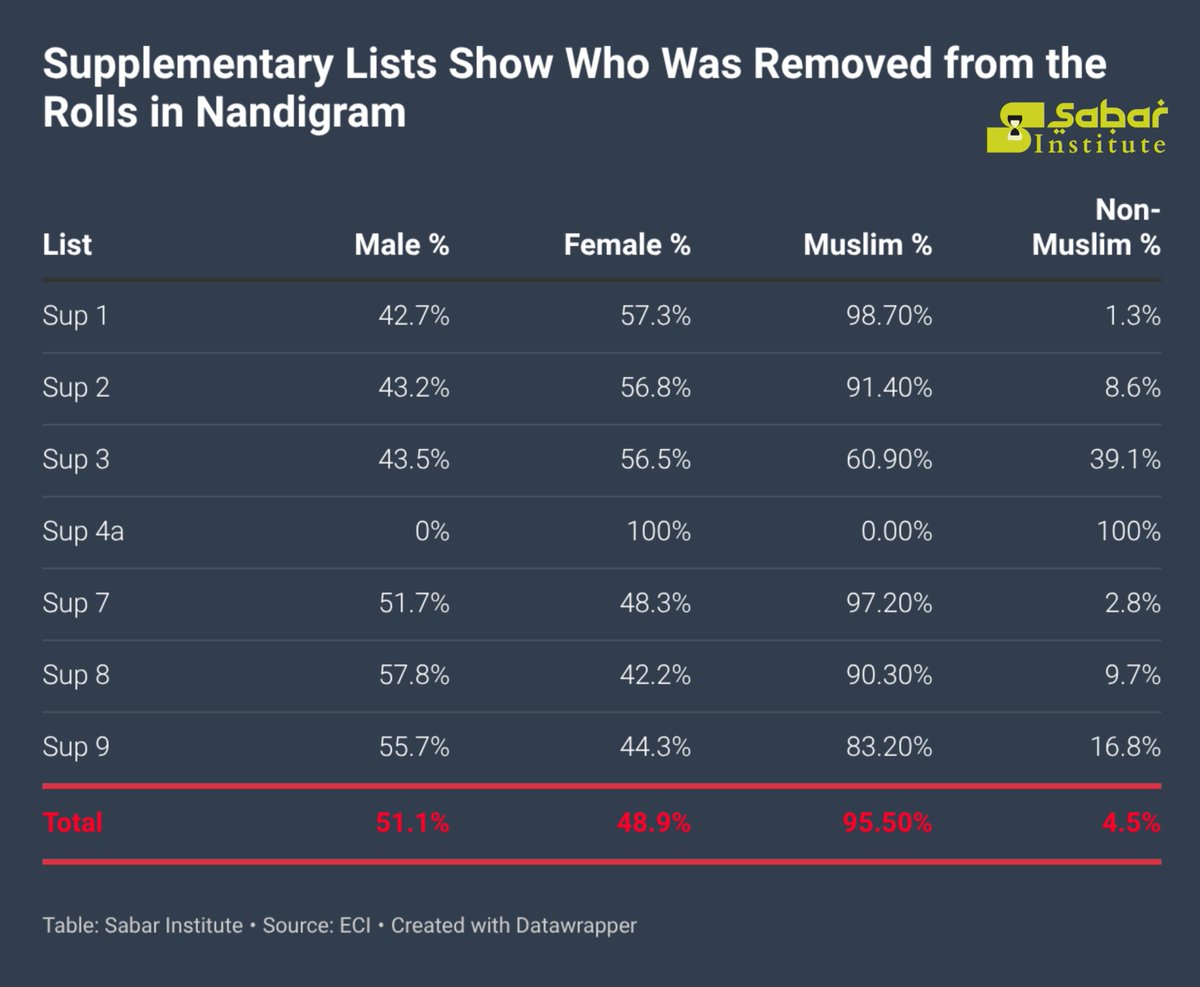
For the first time, a full analysis of supplementary list deletions in Nandigram Assembly constituency reveals a stark and alarming disproportionality
95.5% of those deleted are Muslims, despite being just 33.3% of the Dec 2025 ASDD list and roughly 25% of the population
This raises serious concerns about the SIR process and its impact
Among those deleted, 48.9% are female and 51.1% are male, showing the issue cuts across gender, but disproportionately affects a community
#DataForBetterLives
1/2
Dear Friends,
I never wanted to become a doctor. I always wanted to write and tell stories. And yet, over the years, medicine gave me the most extraordinary stories I could never have imagined - stories that lived in hospital corridors, outpatient rooms and inside terrifying ICUs; in the trembling hands of a father carrying his jaundiced daughter, in the silence between a prognosis spoken and a family's world shattered.
Today, I am proud and deeply moved to announce my first book, The Liver Doctor: Stories of Love, Loss and Regeneration, published by @HarperCollinsIN .
This book is where my two worlds finally collide.
My childhood love for writing and telling stories. And my adultdhood, as a medical doctor.
Through the lives of real patients and their families - their courage, their grief, their impossible choices - I tell the story of the most misunderstood, most indispensable, and only self-regenerating organ in the human body: the liver.
But this is not just a medical book. It is a journey through ancient myth and modern science, through Prometheus and Wilson's disease, through Mesopotamian clay tablets and liver transplant waiting lists, through the history of healing itself.
I wrote it for doctors, so they may remember why they chose this life. I wrote it for patients and families, so they may know when to fight and when to find peace. I wrote it for myself, to make peace with what I have lost and what I will lose.
This book shoulders that one truth I have learned in all my years at the clinical bedside: I did not become a doctor to help people cheat death, but to help them understand it.
This book is my offering - to medicine, to storytelling, and to you. Lose yourself in these pages, as I have.
Pre-orders are open now
The Liver Doctor : Stories of Love, Loss and Regeneration - https://t.co/MoTf7ZCiPG
Those who saw’A Beautiful Mind’, would remember that John Nash’s doctoral thesis had just 26 pages and 2 references, yet it was instrumental in advancing “Game theory”. What if I told you there is a scientist whose achievement is so astounding that he is perhaps the only Indian to “create” an intersectional branch of science? What if I told you that every year, his name echoes across the hallowed halls of science in foreign lands, but most of our students haven't even heard of him?
Aneesur Rahman was born in Hyderabad in British India in 1927. His father was a professor and a philanthropist. His family generously donated their property for the creation of Urdu Hall in Hyderabad. His maternal uncle was a professor too. Rahman had a natural flair for subjects that would terrify ‘normal’ students — maths and physics. After getting BSc in Mathematics, he went on to get Tripos in Mathematics and Physics at the prestigious Cambridge University in the UK. From there, he went to Louvaine University in Belgium and got DSc in Physics under Professor Mannenbeck. It’s here that Rahman met a Chinese student Yueh-Erh Li who was doing MD( called Dr Jady by friends). They fell in love and got married.
He came back to teach in Osmania university along with his wife. Soon after, he developed interest in the structure of water molecule - especially the polarisation of the hydrogen atom. Unfortunately research in India was at infancy in those days and Dr Rahman realized he was a whale in a tiny pond. He had to move to the ocean. He joined the Argonne National Laboratory in Illinois.
His foundational paper in 1964 birthed “molecular dynamics” , one of the two pillars on which a vast body of computational physics rests.(the other is Monte Carlo method). His equation made it possible to calculate the trajectory of large number of interacting atoms with ease.
His work, like Ramanujan’s , was so ahead of his time - that even today, potential applications are being discovered. The Nobel prize in physics for 2013 went to Karplus, Levitt and Warshel whose work depended heavily on Dr Aneesur Rahman’s.
Some say there is an inverse association between genius and compassion -Dr Rahman was a prominent exception. He was known not just for his intellect, but also kind nature and mentored many students all over the world. His quiet, unassuming nature made him a much loved professor — and he remained so, until he got Non Hodgkin’s lymphoma — a cancer that took him away from us prematurely, at the age of 59. Perhaps he might have got a Nobel, if only he had lived longer.
American Physical Society honors him as the father of computational physics and has instituted an annual award in his name.
As a doctor with little idea of theoretical physics, writing Dr Aneesur Rahman’s portrait has been difficult , because of the complex nature of his work that straddles so many areas of science : mathematics, physics, computer science and chemistry. His equations are mind boggling, even intimidating, but
what I do understand is this : Dr Rahman didn't just have a beautiful mind, but also a beautiful heart.
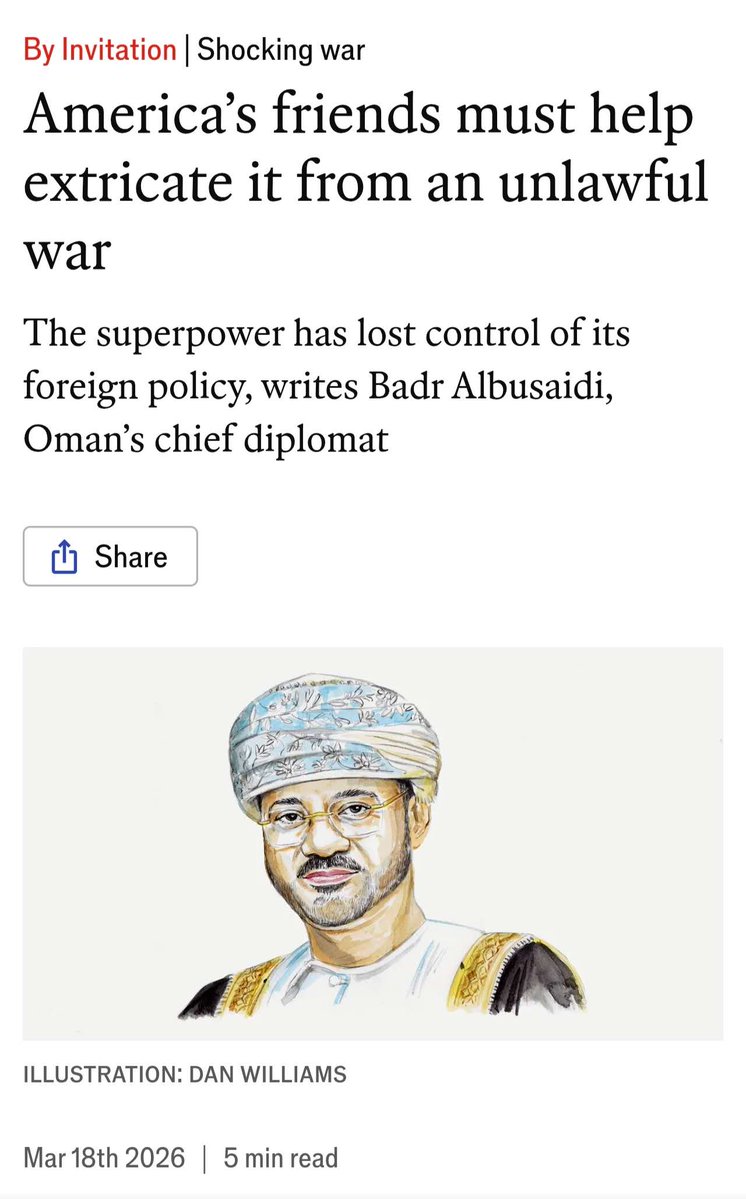
This is probably the most important article of the month: an op-ed by Oman's Foreign Minister, who mediated the talks between the U.S. and Iran, in which he writes that the U.S. "has lost control of its foreign policy" to Israel.
He repeats that a deal was possible as an outcome of the talks (something confirmed by the UK's National Security Advisor, who also attended: https://t.co/XkfSpkMjCf) and that the military strike by the U.S. and Israel was "a shock."
Interestingly, given he is one of Iran's neighbors and given that Oman has been struck multiple times by Iran since the war began (https://t.co/IXNdwD6f3j), he writes that "Iran’s retaliation against what it claims are American targets on the territory of its neighbours was an inevitable result" of the U.S.-Israeli attack. He describes it as "probably the only rational option available to the Iranian leadership."
He says the war "endangers" the region's entire "economic model in which global sport, tourism, aviation and technology were to play an important role." He adds that "if this had not been anticipated by the architects of this war, that was surely a grave miscalculation."
But, he adds, the "greatest miscalculation" of all for the U.S. "was allowing itself to be drawn into this war in the first place."
In his view this was the doing of "Israel’s leadership" who "persuaded America that Iran had been so weakened by sanctions, internal divisions and the American-Israeli bombings of its nuclear sites last June, that an unconditional surrender would swiftly follow the initial assault and the assassination of the supreme leader."
Obviously, this proved completely wrong, and the U.S. is now in a quagmire. He says that, given this, "America’s friends have a responsibility to tell the truth," which is that "there are two parties to this war who have nothing to gain from it," namely "Iran and America."
He says that all of the U.S. interests in the region (end to nuclear proliferation, secure energy supply chains, investment opportunities) are "best achieved with Iran at peace."
As he writes, "this is an uncomfortable truth to tell, because it involves indicating the extent to which America has lost control of its own foreign policy. But it must be told."
He then proposes a couple of paths to get back to the negotiating table, although he recognizes how difficult it would be for Iran "to return to dialogue with an administration that twice switched abruptly from talks to bombing and assassination."
That's perhaps the most profound damage Trump did during this entire episode: the complete discrediting of diplomacy. If Iran was taught anything, it is: don't negotiate with the U.S., it's a trap that will literally kill you.
The great irony of the man who sold himself as a dealmaker is that he taught the world one thing: don't make deals with my country.
Link to the article: https://t.co/FZxtqV3RC4
VERY IMPORTANT ANNOUNCEMENT.
Dear friends, we have published the largest analytical study of Ayurveda, Homeopathy, Siddha, Unani and Folk-Traditional Medicinal products that have harmed patients - presenting with liver damage - to our department. This is the most exhaustive analytical study that correlated clinical outcomes in such patients.
Interestingly, one of the Reviewers who peer-reviewed our paper (notification after paper publication) and cleared it for publication is a senior professor of Ayurveda (Rasashastra and Bhaishajya Kalpana) at All India Institute of Ayurveda. This makes our paper even more impactful.
Here is a plain language summary of the study's major findings, highlighting what patients and the public need to know about the safety of alternative medicines:
Severe Liver Damage is a Major Risk: The study looked at 386 alternative and complementary medicines taken by patients who experienced liver damage. It found that these products frequently triggered a severe, life-threatening form of liver failure, called Acute-on-chronic liver failure (or ACLF) which resulted in death for nearly 40% of the patients who developed it.
Unlabeled Products Can Be Deadly: Taking "unlabeled" products—those sold without proper ingredient lists, manufacturer details, or batch numbers—was a strong predictor of death. The risk of dying increased the more unlabeled products a patient consumed, showing how dangerous an unregulated supply chain can be. Data revealed a dose-response relationship where death rates escalated progressively, reaching 42.9% among patients who consumed three or more unlabeled products.
Dangerous Levels of Heavy Metals: A shocking number of the tested products were heavily contaminated with toxic metals like mercury, lead, arsenic, and cadmium, often at levels far above safety limits. Exposure to cadmium, in particular, was strongly linked to patients developing the most severe form of liver failure. Exposure to cadmium was strongly and significantly associated with the development of ACLF (75.9% in exposed versus 22.6% in unexposed patients).
Hidden Prescription Drugs: Almost one-third of the products secretly contained modern pharmaceutical drugs, meaning patients were taking them without knowing. These hidden drugs included steroids, antibiotics, and painkillers, and some were even banned or well-known to cause liver damage.
"Natural" Doesn't Always Mean Safe: Over 40% of the products contained plant ingredients that are medically documented to be toxic to the liver. Well-known herbs like Giloy (Tinospora cordifolia) and Ashwagandha were among the most common potentially harmful plants found in the products.
Secret Animal Ingredients: Testing revealed that nearly a third of the products contained undisclosed animal ingredients (such as dairy, marine products, or animal extracts). This is a major concern for vegans, vegetarians, and people with religious dietary restrictions who believe they are taking plant-based medicines.
Risks from Concentrated Plant Extracts: The study discovered that high concentrations of certain common plant fats and compounds (called phytosterols) were tied to higher rates of severe liver failure. This shows that highly concentrated "natural" extracts can act differently in the body and become harmful, even if they come from everyday plants.
Lead Reseacher: @arifhussaintm
FULL PAPER (free to read): https://t.co/3RIqoZdXyD
When I look at the current mess, I see the real specter of a serious strategic defeat for the United States in the Middle East. And I don't say that lightly, considering the knock-on effects that could ripple all the way back to the sustainability of the U.S. bond markets.
Reuters reports that the U.S. Navy has basically admitted there's no way to escort commercial vessels through the Strait of Hormuz right now because it's just too dangerous. That's quite an admission from the Navy.
A lot of the commentators I follow are skeptical about Iran's ability to mine the strait effectively, but I've read of intelligence reports saying Iran has anywhere from 2,000 to 6,000 sea mines, including ones like the Chinese EM-52 rocket-propelled rising mine that can be remotely controlled, and the Iranian Fajr-5 that can deploy seamines from coastal launchers. Not many mines are needed — only enough to create the fear factor that screws up global oil flows. It is not clear to me how U.S. minesweepers are supposed to clear the place if the Navy itself thinks entering is too dangerous. All of that is on top of Iran's anti-ship missiles and electric torpedoes. Reopening the Strait for commercial traffic looks near impossible anytime soon unless Iran permits it to occur.
By way of a short excursus, I do wonder who the thought bombing alone would topple the Iranian regime? Right up until the bitter end of WW2, both the German and Japanese states held their societies together despite bombing campaigns that were way more brutal than anything the U.S. could throw at Iran right now.
So, what now?
In the news this morning, I saw Sen. Richard Blumenthal (D-Conn.) saying after a classified briefing on March 10, 2026, that the U.S. seems headed for putting American boots on the ground in Iran. But how does Congress sell a full-on land war to the public, given how tired everyone is of Middle East quagmires—or maybe they just don't care what the people think?
But can the U.S. anyway afford another Middle Eastern war morally and financially - and especially one that could drag on into an endless grind with very high casualties, possibly far exceeding anything seen since WWI ? And even if the US somehow "wins" and defeats Iran, its stuck with nation-building again.
If the U.S. can't pull off a clear victory, that's basically strategic defeat for America, with all the knock-on disasters that follow.
The options are stark: Walk away now and swallow the strategic loss, or barrel into something bigger and uglier that the American people don't want anyway - and which it is not impossible could also end in US defeat.
This is nothing less than a total fucking mess, and possibly the only ones who can unlock it now are the U.S.'s adversaries, Russia and China. Put differently, America might need its adversaries to bail it out from total defeat. Trump and Netanyahu may have handed the American and Israeli people the biggest disaster since World War II. If you think I'm overstating it, picture what happens when the world—especially U.S. allies—loses all faith in America's ability to project power. And then think about how U.S. voters will handle the U.S.-Israel relationship going forward. You couldn't dream up a better gift for America's rivals to bring it to its knees.
"It was outside Indian waters" is the most pathetic cope I've seen in a while. We invited the IRIS Dena to Vishakhapatnam for International Fleet Review 2026, the Indian Navy tweeted welcome photos talking about "bridges of friendship," and the ship got torpedoed on its way home 40 nautical miles off Sri Lanka. 87+ sailors dead and at least 60 more missing.
Sri Lanka launched rescue operations while India, the host country, the self-proclaimed net security provider of the Indian Ocean, has said nothing. But sure, it was technically outside our EEZ so let's all pretend our guest didn't just get murdered walking out of our driveway because the property line ends at the gate.
Under any other government, if a ship from a friendly nation, returning home after naval exercises with us, was attacked and sunk, it would have been a major diplomatic fiasco. But luckily for the US, this Surrender government is their poodle and will just tamely wag its tail.