Council on Energy, Environment and Water. Among Asia's top not-for-profit independent policy research institutions, impacting sustainable development at scale.
🚨 57% of Indian districts, home to over 76% of the population, are currently at high to very high risk from extreme heat.
Our district-level heat risk assessment covers 734 districts and 35 indicators spanning hazard, exposure, and vulnerability. Going beyond just daytime temperatures, it includes night-time heat and relative humidity, offering a clearer picture of how climate change has altered the frequency, intensity, and duration of heat hazard from 1982 to 2022. It finds that the top ten most heat-risk-prone states and UTs are Delhi, Andhra Pradesh, Goa, Kerala, Maharashtra, Gujarat, Rajasthan, Karnataka, Tamil Nadu, and Uttar Pradesh.
India’s growing #heat crisis isn’t just about hotter summers—it’s about how early heat arrives, where it concentrates, and who is most exposed. Our study recommends 5 ways to build resilience:
👉 Go beyond just daytime temperatures when planning for heat risk reduction
👉 Tap into State Disaster Mitigation Funds
👉 States with over 50% high-risk districts should declare #heatwaves as state-specific disasters
👉 Promote heat insurance to protect livelihoods of outdoor workers & vulnerable communities
👉 Create a national Heat Action Plan repository to track progress and share learnings across states
🔗 Read 'How Extreme Heat is Impacting India' at https://t.co/3wKCN8PacM
Your old phone might be richer than a gold mine. 📱⛏️
In this week’s #CEEWExplains, researcher Aishwarya Jain unpacks why e-waste is more than just trash—it’s a growing source of the critical minerals India needs for batteries, EVs, and the clean energy transition.
At #Bonn , a proposed global target to raise electrification to 35% of final energy demand by 2035 has put the spotlight on this recurring question: how can countries cut emissions while strengthening #energy security?
As @Dr_VaibhavCh , Senior Fellow, CEEW points out, electrification offers a pathway to both. In a world marked by volatile #FuelPrices and geopolitical uncertainty, it can help reduce import dependence, improve resilience, and support long-term #climate goals.
#COP31 #COP31Presidency
�� Can India strengthen #EnergySecurity while reducing its dependence on imported fossil fuels?
As India works towards energy independence by 2047, strengthening energy security has become a strategic priority. While the country continues to diversify its energy mix, domestic production remains constrained and import dependence continues across key fuels. At the same time, #NaturalGas, currently accounting for only about 5% of India's primary energy mix, offers significant potential across sectors such as steel, heavy-duty transport, and city gas distribution.
Join us for a CEEW webinar on How Secure is India's Energy Future?, where we will launch two new studies on India's energy security landscape and the role of natural gas in supporting a more #resilient energy future.
📅 17 June 2026
🕑14:30–16:30 IST
💻 Register here: https://t.co/6TIOLSwXap
The webinar will also feature a discussion with experts from the energy, #policy, and gas sectors on managing #FossilFuel risks, improving resilience, and identifying pathways to enhance India's long-term energy security.
🗣️ Lydia Powell, Alay Patel, @rkmediratta, @debajitpalit, David Fedor, @HemantMallya, Dharshan Siddarth Mohan, Sabarish Elango
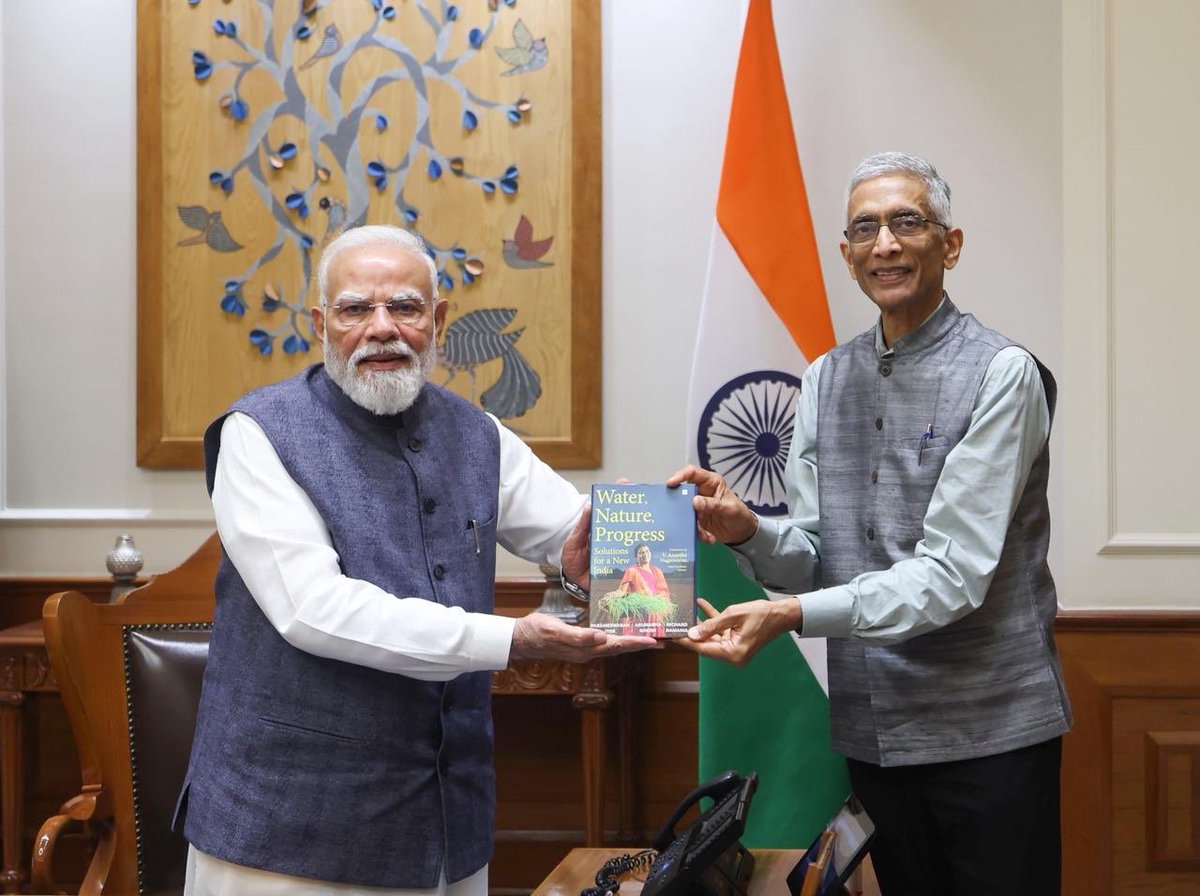
A great honour to present our book to PM @narendramodi , a Water visionary who is globally renowned for his stellar leadership on water governance, including inspiring transformational programmes like @jaljeevan_ & @swachhbharat missions, especially benefitting women and girls.
#Opinion | Indian #CEOs: stop asking what it costs to go green, and start asking what it costs not to
With geopolitical tensions, technological disruption, and #ClimateRisks disrupting the markets, this article argues that going #green is no longer a #sustainability exercise. It has increasingly become a business strategy. From resilient supply chains and resource efficiency to new growth opportunities, companies that act early stand to be better positioned for the future.
✍️ @ajainme in today’s @FinancialXpress👇
The pattern of heat in India is changing, from hotter nights to humid days.
The Indo-Gangetic Plain, one of India’s most populous and agriculturally vital regions, now sees 40–50% relative humidity in summer, up from 30–40% during 1982–2011. Delhi has seen a nearly 9% increase; Chandigarh, Jaipur, and Lucknow are up by 6–9%.
This matters because humidity doesn't just make heat feel worse, it actively slows down the body's ability to naturally cool itself. Sweating only works when moisture can evaporate. When the air is already saturated, it can't. The result is faster heat stress, at lower temperatures than most people expect.
Coastal cities have always lived with this. The Indo-Gangetic Plain hasn't—and its infrastructure, agriculture, and public health systems weren't designed for it.
The monsoon, long counted on as relief, no longer fully delivers it. Hot and humid conditions during the monsoon season are now extending the duration of heat stress well beyond summer. This is the hidden dimension of India's heat crisis: not just how hot it gets, but how hard it becomes to recover.
📊 Read more in our latest study, How Extreme Heat is Impacting India: https://t.co/3wKCN8PacM
@vishchi@Shravanverse
At the same time, this challenge presents a major opportunity. Achieving the 30 GW residential rooftop solar target by 2027 could unlock market opportunities worth INR ~5,400 crore for cleaning services alone and INR 14,400 crore for bundled maintenance services, while supporting over 3.3 lakh #jobs.
To strengthen system performance, the report recommends:
🔹 A national data platform for real-time monitoring of RTS performance
🔹 Consumer awareness campaigns and #AI-based digital alerts for maintenance needs
🔹 Standardised O&M guidelines and service protocols across the states
As India expands rooftop solar adoption, success will depend not only on installing more systems, but on ensuring they continue to perform for decades to come.
📘 Read Maximising Rooftop Solar Performance by Enabling a Robust O&M Ecosystem: A Multi-billion Market Opportunity in India’s Residential RTS Segment: https://t.co/xdU56WYk6y
✍️ Debanjan Bagui, @prateekddun
India’s residential #RooftopSolar sector has crossed a major milestone, with over 12 GW of installed capacity and more than 4 million households already adopted rooftop solar. But as rooftop solar sales soar to new heights, a new challenge is emerging: maintaining system performance over time.
Our #NewStudy, Maximising Rooftop Solar Performance by Enabling a Robust O&M Ecosystem, finds that maintenance remains one of the weakest links in India’s residential RTS ecosystem. Although five years of free maintenance is mandated under PM Surya Ghar: Muft Bijli Yojana, service delivery is often reactive, cleaning services are typically excluded, and maintenance standards vary widely across vendors.
The consequences can be significant. Poor maintenance can reduce #electricity generation, erode household savings, extend payback periods, and undermine the long-term value of rooftop solar investments.
As part of the event, CEEW will launch its new report, "Behaviour Change Approaches to Tackle Stubble Burning at Scale: Reimagining Crop Residue Management," which draws on field evidence from #Punjab to examine how targeted communication interventions can influence #CropResidue management practices.
The programme will feature senior leaders from government, philanthropy, industry, and civil society, with discussions spanning:
💠 How crop residue management policies can better reach farmers
💠The role of corporate philanthropy in supporting long-term solutions
💠What behavioural science can teach us about designing more effective air quality interventions
🗣️ Shri A.N. Meshram, @santoshharish1, Chhaya Bharti, Archana Tripathi, Chandrakant Pandit, @prarthana_delhi, @KurinjiSelvaraj@Ak8671, Ayushman Saboo
Behaviour change may be one of the most powerful and least utilised tools in India's fight against #AirPollution.
On 16 June, CEEW will convene policymakers, researchers, practitioners, and industry leaders in New Delhi for a dialogue on "Shifting Behaviours for Mitigating Agriculture Residue Burning at Scale."
While technological and regulatory interventions remain critical, lasting improvements in air quality will also depend on whether awareness translates into sustained changes in behaviour. What drives farmers to adopt alternatives to #StubbleBurning? Which communication strategies actually work? And how can behavioural insights be integrated into policy design at scale?
📅 16 June 2026
🕙 10:00 AM – 2:00 PM IST
📍 The Oberoi, New Delhi
🔗 Register here: https://t.co/FzlTxCi7py
The report argues that the next decade must focus on implementation and accountability. Countries that are off track will need to accelerate near-term action, strengthen the credibility of their 2035 targets, and avoid pushing #emissions reductions further into the future.
At a time of growing geopolitical uncertainty, rebuilding trust in the climate process will require both faster domestic action and stronger support for developing countries through #finance, technology, and capacity building.
📘 Read the full study at:
https://t.co/9iVPvyS3JS
✍️Simran Sukhija and @sumitprd
Ten years after Paris, many wealthy economies are not on track to meet their own climate targets, while several major developing economies are closer to delivering on theirs.
Our new study, Holding up the Mirror: Tracking Climate Action across UNFCCC Negotiating Groups in the Era of Geopolitical Uncertainty, assesses whether countries are on track to meet their 2030 and 2035 #climate commitments using their own transparency reports submitted under the #ParisAgreement.
The findings are a reminder that delivery is the only currency of trust.
🔹 Many developed economies are collectively projected to fall short of both their 2030 and 2035 targets, despite having greater resources and historical responsibility for emissions.
🔹 Several major developing economies, including India, #China, Brazil, and South Africa, are more closely aligned with their 2030 commitments, even while navigating significant development challenges.
🔹 Since the Paris Agreement was adopted, emissions growth has slowed across all major negotiating groups. But progress remains uneven, raising important questions about the credibility of long-term climate pledges.
🧵(1/2)
We are proud to partner with @CIICESD, @ADPCnet and The World Business Council for Sustainable Development (WBCSD) as knowledge partners for SAARTH (Sustainable Action Alliance for Resilient Tomorrow), launched at the #CIIClimateActionSummit! 🤝
SAARTH aims to bring together industry, MSMEs, governments, financial institutions, knowledge partners, and development agencies to enable practical solutions and strengthen climate resilience at scale.
Our white paper, 'Towards Climate-Resilient Indian Industries', highlights that isolated action isn't enough—collective public-private adaptation is critical to protect our industrial corridors, supply chains, and workforce from mounting climate risks.
🔗 Read the full study here: https://t.co/ExrxCHmPaa
@ITCCorpCom@GodrejEntGroup@AdityaBirlaGrp@MahindraRise@AdaniOnline@TataMotors@MaricoLimited@Hindustan_Zinc_@Vedanta_Group@TataPower@DCMShriramLtd@larsentoubro@TataSteelLtd
The Union Budget 2026–27 has allocated INR 20,000 crore over the next five years to advance carbon capture, utilisation and storage (CCUS) across power, steel, cement, refineries, and chemicals—sectors where cutting emissions remains especially challenging.
Why does it matter? @CEEWIndia analysis finds that around 56% of emissions from India’s existing steel and cement capacities can only be abated through CCUS. Beyond reducing emissions, a strong CCUS ecosystem could lower transition costs, reduce the risk of stranded assets, create new markets for low-carbon fuels and chemicals, and strengthen India’s industrial competitiveness.
In their latest blog, @deepakyadav_25 and @HemantMallya outline four priorities for building a competitive CCUS ecosystem—from developing low-cost capture technologies and unlocking geological storage potential to creating value from captured carbon and aligning with global markets.
🔗 Read more at https://t.co/gPPIUOPwzZ
Every generation inherits challenges that seem larger than the tools available to solve them. For ours, those challenges include intensifying heat, growing resource pressures, energy insecurity, and the urgent need to decarbonise while continuing to grow.
To build for that world, India will need to look both above and below the surface.
This World Environment Day, we focus on the infrastructure of possibility: the markets, regulation, finance, skills, and physical systems needed to bring moonshot solutions within reach. The point now is to recognise where the future has already arrived, and build the systems that let it scale.
Read the full edition here ▶️ https://t.co/4sR8cU93yN
#WorldEnvironmentDay
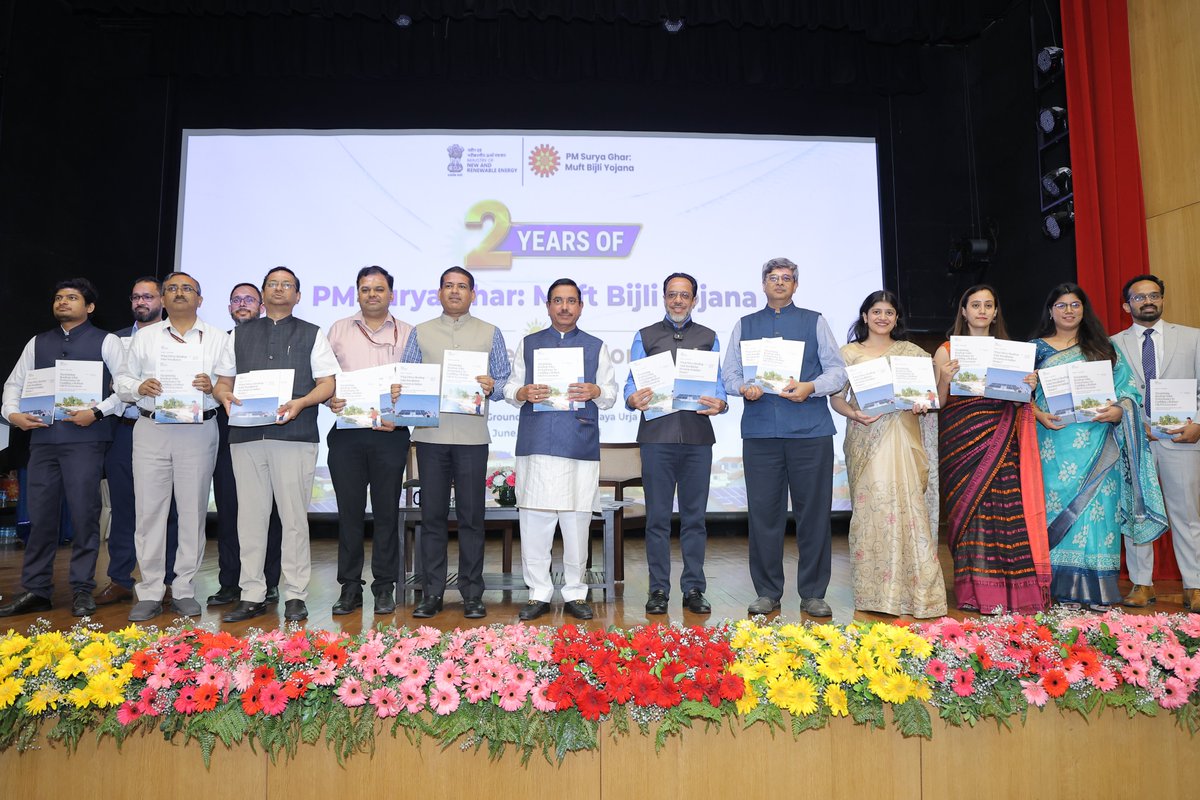
At the event commemorating two years of @PMSuryaGhar : Muft Bijli Yojana, Hon'ble Union Minister for New & Renewable Energy , Shri @JoshiPralhad, participated in a Fireside Chat with Shri Arunabha Ghosh, CEO, @CEEWIndia, on scaling India's rooftop solar revolution.
The Minister highlighted that under the visionary leadership of Hon'ble Prime Minister Shri @narendramodi, PM Surya Ghar: Muft Bijli Yojana has accelerated rooftop solar adoption, strengthened energy self-reliance, and supported India's rise as the world's 3rd-largest renewable energy capacity holder. He also stated that 40 lakh households who are beneficiaries are the Brand Ambassadors for India's rooftop solar revolution.
Learn more: https://t.co/WStmv4OLzA
#PMSuryaGhar #SolarEnergy #MNRE #ViksitBharat
How do Indian households actually decide whether to go solar?
Hon’ble Union Minister @JoshiPralhad, @mnreindia Secretary @SantoshSarangii, CEO @GhoshArunabha and key dignitaries launched India’s first national consumer-side survey report on residential rooftop solar, a study covering 17,000+ households across 22 states and 308 districts, alongside a new study on building a robust O&M ecosystem for rooftop solar.
📘 Read the full @CEEWIndia reports at
What drives Rooftop Solar installation decisions in Indian homes? Understanding Household Decision-making through a Pan-India survey: https://t.co/wYXxyWsBd9
✍️ Megha Chaudhary, Saakshi Purohit, Manas Vijayan, and @BhawnaTyagi17
Maximising Rooftop Solar Performance by Enabling a Robust O&M Ecosystem - A Multi-Billion Market Opportunity in India's Residential RTS Segment: https://t.co/xdU56WYk6y
✍️ Debanjan Bagui, @prateekddun@rjain88
A fireside conversation between Hon’ble Union Minister @mnreindia, Shri @JoshiPralhad and CEEW CEO @GhoshArunabha reflected on how @PMSuryaGhar: Muft Bijli Yojana is delivering lower electricity bills, greater energy independence, and citizen-led clean energy adoption.
The Hon'ble Union Minister emphasized the role of PM Surya Ghar: Muft Bijli Yojana and other related schemes in strengthening domestic manufacturing and advancing India’s clean energy transition. He noted that more than 40 lakh people associated with it are the ambassadors of the scheme. They will help spread its message across the country and inspire more people to become part of this movement.