New and #OpenAccess: In "On Minds," computer scientist Paul Rosenbloom offers reflections & perspectives on the study of minds arising from a multidecade career focused largely on cognitive architectures: https://t.co/sOzPFjhOWM
Možná si vzpomínáte na rozruch, který před pár lety způsobila studie, která údajně vyvrátila mýtus o dělbě práce mezi lovci-sběrači. "Ženy lovily!" zdůrazňovalo se tehdy napříč médii.
Když se potom ukázalo, že studie je metodologicky vadná a závěry nadsazené, už se o tom nepsalo a zbyl jen první dojem.
Teď se příklad opět objevil v textu/manifestu o krizi v humanitních a sociálních vědách – viz dnešní komentář. 👇👇👇
"Dnes a denně slýcháme, že politici mají naslouchat expertům. Velkým tématem se to ostatně stalo i při povolebních čistkách na Úřadu vlády a jednotlivých resortech. A jistě: nikdo rozumný nechce, aby o složitých problémech rozhodovali samouci a diletanti. Ke kritice politiků, kteří odborné poznání ignorují, je však třeba dodat i druhou polovinu příběhu.
Formální expertiza sama o sobě už jako záruka důvěryhodnosti nestačí. Některé vědecké obory – zvláště ty, které promlouvají o společnosti, a jsou tedy pro politické rozhodování nejdůležitější – procházejí hlubokou krizí legitimity, která je z nemalé části zasloužená.
Volat „věřte vědě“ a dovolávat se autority titulů, institucí a odborných časopisů proto nestačí. Autoritu si věda již nemůže jen tak nárokovat; musí si ji znovu zasloužit kvalitou důkazů, otevřeností vůči kritice a ochotou připustit i politicky nepohodlné závěry. Významná část akademické produkce dnes těmto nárokům neodpovídá – a nedůvěra, kterou vyvolává, proto není pouhým projevem nevzdělanosti či populismu."
The human brain is strikingly modular, with distinct networks for language, formal reasoning, social reasoning, and physical reasoning. Is this a fundamental principle of how intelligent systems are built, or an accident of biological evolution?
In our latest preprint, we find that a similar modular organization emerges in Large Language Models, another class of intelligent system.
Brains and LLMs are shaped by entirely different kinds of optimization (biological evolution vs. gradient descent). That they arrive at the same modular design anyway suggests modularity may be a fundamental property of intelligent systems.
🌐 Web: https://t.co/ZKrnTSSuSf
📄 Paper: https://t.co/ZibBXz3PUy
💻 Code & data: https://t.co/uBo5iOYNjy
Using circuit analyses across 46 tasks spanning four cognitive domains, we find:
1️⃣ Tasks that draw on the same network in humans recruit overlapping units in LLMs, while tasks drawing on different networks recruit distinct units.
2️⃣ These units are causally linked to model behavior. Ablating the units critical for one domain impairs performance in that domain (−26% accuracy) but barely touches the others (−2.5%).
This project has been in the works for a while :) Huge thanks to my advisors @jacobandreas@ev_fedorenko@devarda_a, and to @Nancy_Kanwisher for valuable conceptual input and feedback throughout. #MIT
Another paper in the same vein (oscillators) but for classification and reasoning: https://t.co/P5mJy1hOFm
It seems that oscillators allows for good performance at much smaller parameter count. This is a super exciting line of work.
Our paper is now in print in @Nature . If you're interested in local field potentials, especially #high-gamma activity, and/or #spikes, check it out! TL;DR: High gamma is not mainly filtered spikes, but mainly summed nearby PSPs.
https://t.co/7r4UGzMclb
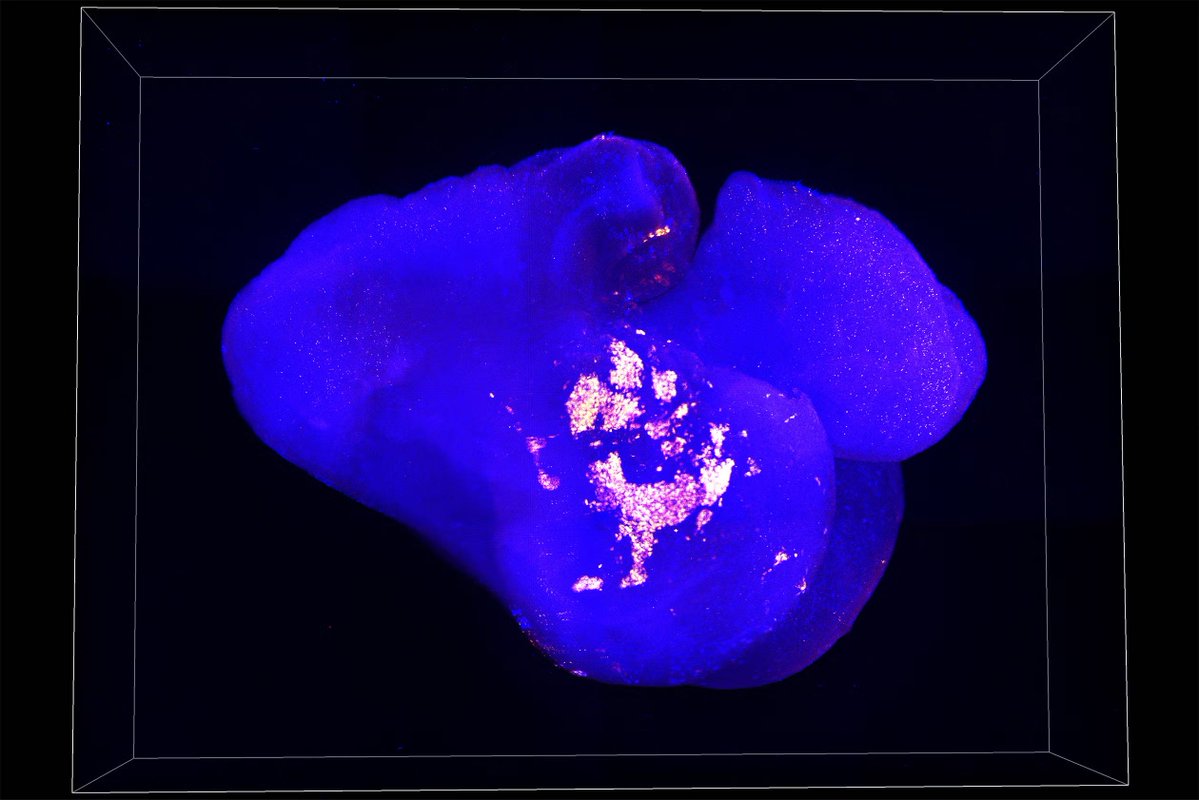
Your organs aren't just following orders from the brain.
A new Yale study finds that organs like the heart, lungs, and intestines build and shape their own nervous systems, then communicate back to the brain in a two-way conversation. One of the most striking findings is that heart tissue can reprogram neurons from the gut to start behaving like heart neurons.
Researchers say the discovery could eventually open new paths for treating conditions like Parkinson's disease and other organ-based illnesses. See what else researchers found: https://t.co/82WnnIPmra
@tomashalikftw Za jedno každý vánocování Vánoc umře jedno koťátko. Nemůžu si pomoct, ale paní profesorka se nedostala přes úvod Býti a čas, a už takhle s Marxem? Ta to snad nikdy nedočte.
@wilderko@GrapheneOS Díky za za článek. Nicméně možná blbej dotaz. Když ale odhlédneme od filosofické stránky věci, nedá se to nějak obejít, že by X jelo v něčem jako sandbox, kde by běžel ofiko Google android? Ano překombinované, ale teoreticky?
@tomashalikftw Jakože můj tata neni můj tata? Nebo jak? Já fakt žasnu. Myslel jsem, že je trochu zmatená a plete hrušky z baňama především na heideggerovském poli sbítí. Tohle je ale už ovšem NewtonTornádo 🙈. Tu sebedůvěru ale cením.