How are US tariffs showing up in prices and trade?
Developed by @LRojasSuarez and Kate Barnes, our new Monitor tracks US import prices and trade flows across 200+ countries, down to the product level.
Explore the Monitor: https://t.co/9LnItHGAWl
Are we really paying for results in global health? 🩺
New CGD analysis of 46 @WorldBankGroup health projects finds fewer than 2% of funding-linked indicators measure health outcomes.
@JocilynEstes and Rosie Eldridge explore lessons for US health financing.
https://t.co/za3fMJ1fVx
Back in the 1960s, the US did $9bn in sovereign lending a year. That died out in the 1980s. Time to bring it back. From a new paper by Clemence Landers Justin Hurley and Erin Collinson.
Do trust and aid transparency still matter?
Join CGD and @aidtransparency on November 4 for the launch of the 2026 Aid Transparency Index, featuring a keynote by @AfDB_Group President Dr. Sidi Ould Tah.
https://t.co/Hhw3jPTWxY
📢 𝗡𝗲𝘄 𝗥𝗲𝗽𝗼���𝘁 | 𝗠𝗼𝗿𝗲 𝗖𝗿𝗶𝘁𝗶𝗰𝗮𝗹 𝗧𝗵𝗮𝗻 𝗘𝘃𝗲𝗿: 𝗦𝘁𝗿𝗲𝗻𝗴𝘁𝗵𝗲𝗻𝗶𝗻𝗴 𝗚𝗿𝗼𝘄𝘁𝗵 𝗮𝗻𝗱 𝗥𝗲𝘀𝗶𝗹𝗶𝗲𝗻𝗰𝗲 𝘁𝗵𝗿𝗼𝘂𝗴𝗵 𝘁𝗵𝗲 𝗠𝘂𝗹𝘁𝗶𝗹𝗮𝘁𝗲𝗿𝗮𝗹 𝗗𝗲𝘃𝗲𝗹𝗼𝗽𝗺𝗲𝗻𝘁 𝗕𝗮𝗻𝗸𝘀
Building on the Triple Agenda report, the 2024 G20 Roadmap set out 13 recommendations for bigger, better, and more effective multilateral development banks. This report asks how far the MDBs have delivered, and how far they still have to go.
A joint publication of @CGDev, @ODI_Global, and 𝗜𝗖𝗥𝗜𝗘𝗥, authored by Dr. Homi Kharas and @MasoodA_, it finds the MDB response has been broad-based and, by past standards, close to dramatic: expanded balance-sheet headroom while preserving credit ratings, record private mobilisation, and more joint working as a system, with some lending timelines cut from 19 months to 9.
Yet it still falls short of what 2026 demands. Commitments have grown just 1% a year in real terms since 2000, much of the new headroom remains unused, and private mobilisation has fallen in low-income countries, even as developing economies face slowing growth and rising vulnerability. The report makes the case for an urgent push on sustainable infrastructure and human capital.
📄 Read the report: https://t.co/eIIEwYciVn
#MultilateralDevelopmentBanks #MDBs #DevelopmentFinance #G20 #ICRIER
Could sovereign loans help US foreign aid go further?
@ClemenceLanders, @e_collinson, and @justinrhurley's new proposal makes the case for a small, transparent US lending pilot.
https://t.co/VFcmaqSJvt
1/ The US hasn't made a sovereign loan since 1988. In a new @CGDev paper with @e_collinson and @justinrhurley , we argue it's time to bring that tool back. 🧵
Restocking the Toolkit: The Case for US Concessional Sovereign Loans | Center For Global Development
Could carbon markets help close the energy financing gap in developing countries?
Philip Mann and @JB_climate_econ explore how UN carbon credits could support clean cooking, electricity access, and energy transitions.
https://t.co/KcusmTv3py
The @WorldBankGroup’s Human Capital Project network brings together 100+ economies committed to investing in people.
As we work to educate and skill 500 million people by 2030, Gabriel Demombynes discusses with Rachel Glennerster why skills matter for jobs and growth. #SkillUp
What's holding back #renewableenergy investment in #LatinAmerica and the #Caribbean? 🌎
New CGD and @the_IDB research explores regulatory and financing barriers, and what the findings mean for policies to unlock private investment.
https://t.co/beTezP5WTA
From new paper by Cathy Pattillo: We're approaching historical highs for the proportion of the world's poorest countries transferring more to the IMF than the IMF transfers to them.
Low-income countries could soon repay more to the @IMFNews than they receive in new financing.
Catherine Pattillo examines why net flows are projected to turn negative by the end of the decade and how IMF lending policies could shape what comes next.
https://t.co/1DeKr1Ay8H
More than 250,000 schools across 17 countries sit within 5 km of known polluted sites.
For #LeadPoisoningPreventionWeek, we're highlighting @leecrawfurd's research on the risks to children's health and learning.
Explore the findings: https://t.co/WWBBTNQUtm
Domestic debt restructuring can disrupt monetary policy and strain banking systems.
Drawing on 17 restructuring episodes and cases from #Jamaica 🇯🇲, #Barbados 🇧🇧, and #Ghana 🇬🇭, @usdas and @DavidAGrigorian examine the implications for economic recovery.
https://t.co/TG4Zmu9SUf
#AI is advancing faster than traditional clinical trials can keep up.
@apmcdonnell explores how platform trials could help evaluate healthcare AI faster, reduce costs, and identify which innovations actually work.
https://t.co/N0qvoAaWj9
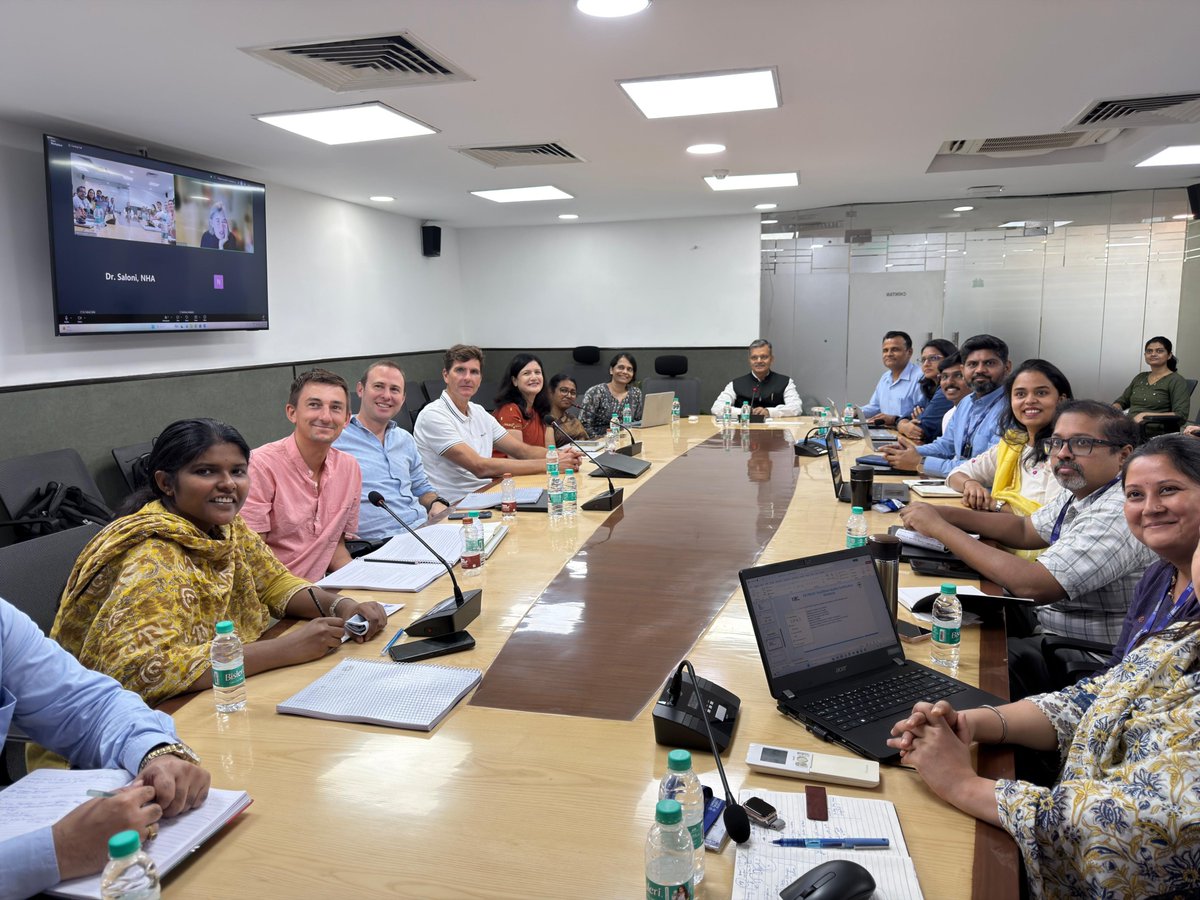
The National Health Authority (NHA) is conducting a two-day Cost Accounting Workshop on 14–15 October 2026 in New Delhi, to strengthen capacity within NHA for hospital cost accounting.
Organised in collaboration with the Centre for Global Development @CGDev, the workshop
1/3
The #EU 🇪🇺 has committed €22B to Central Asia through Global Gateway. How can these investments deliver more jobs?
@helen_dempster, @MartinRaiser, and Mauro Testaverde explore how linking infrastructure, skills training, and labor mobility could maximize impact.
https://t.co/duP2g0VfUz
The World Bank is undergoing major restructuring, but what's driving the changes?
@charlesjkenny questions the lack of public explanations and declining transparency, calling for greater accountability.
https://t.co/TPLvGsnaJZ
MDBs mobilize $108B in private finance annually, but is more capital enough?
@JZattler, Kathrin Berensmann, and @YabibalWalle argue that success must be measured beyond leverage ratios, with greater focus on development impact.
https://t.co/VqZx0eWpwf