Hectiq AI developed the AI-based imaging pipeline powering the Celestron Origin telescope. Last month, Celestron asked us to give a quick "behind the scenes" talk about the AI technology deployed on the telescope. Here's the talk:
https://t.co/jvWqnotPrn
Last week, PhD student Simon Lizotte won the best poster award at @NetSciConf for our work on symmetry-driven embedding of networks in hyperbolic space.
We uploaded the paper to @arxiv as the conference ramped up, and you can find it here: https://t.co/w3NCZvDyv1
I am glad to share that our article "The low-rank hypothesis of complex systems", in collaboration with @all_are and Patrick Desrosiers, is finally published online: https://t.co/bzPuEYJZe1 (https://t.co/DkyIx3Wpaf) !
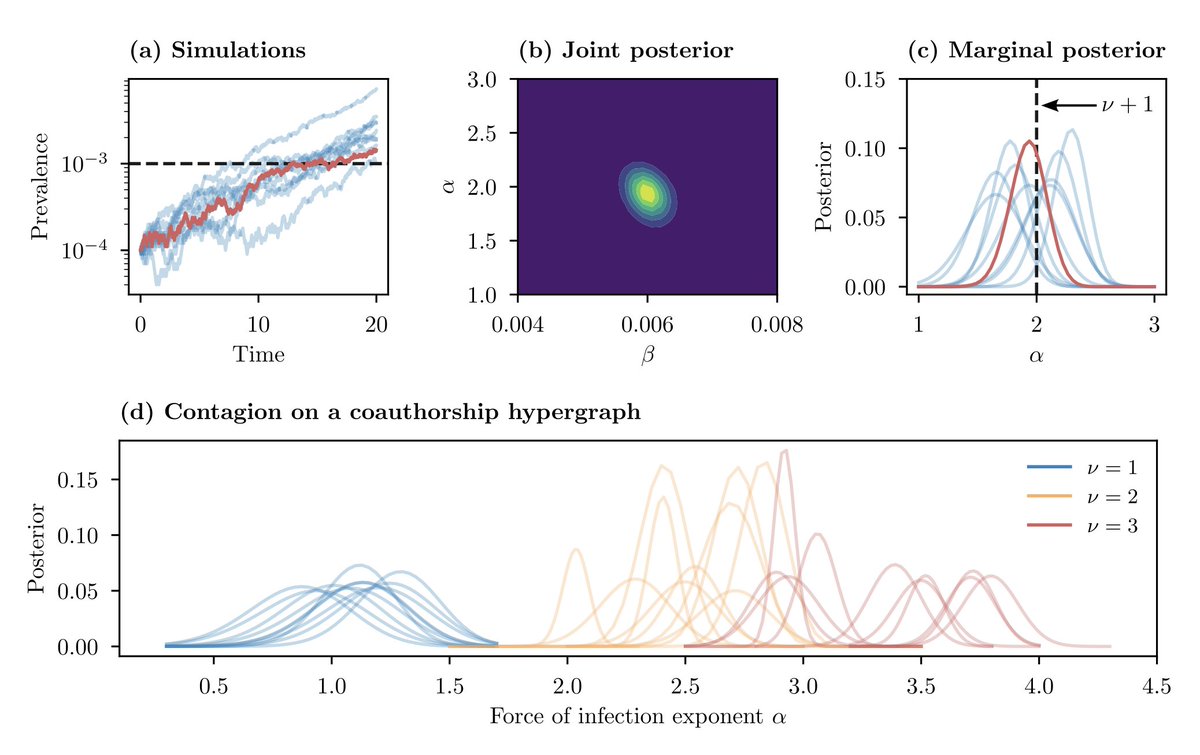
"Nonlinear bias toward complex contagion in uncertain transmission settings"
New publication in @PNASNews co-authored by faculty member @LHDnets
https://t.co/aIjqLKN7fR
It feels amazing to be back at the Monastery for #CNWW23!
The longest darkest nights of Winter are coming soon, but we have warm and bright people to make it through!
Open postdoc position at the Mapping Complexity Lab! Mariangeles and Marián were enthusiastic, smart and supportive mentors, and are now collaborators and friends. I highly recommend! And you'd get to live in one of the nicest cities on Earth...
https://t.co/Dh1E3DbJeg
For dense networks: naive mean-field. For sparse graphs: belief propagation. But if networks are heterogeneous, why one-size-fits-all approximation? Mean-field in parts, more advanced elsewhere. Speed and accuracy improvements *at the same time*. Out now! https://t.co/lTkdgSAXgm
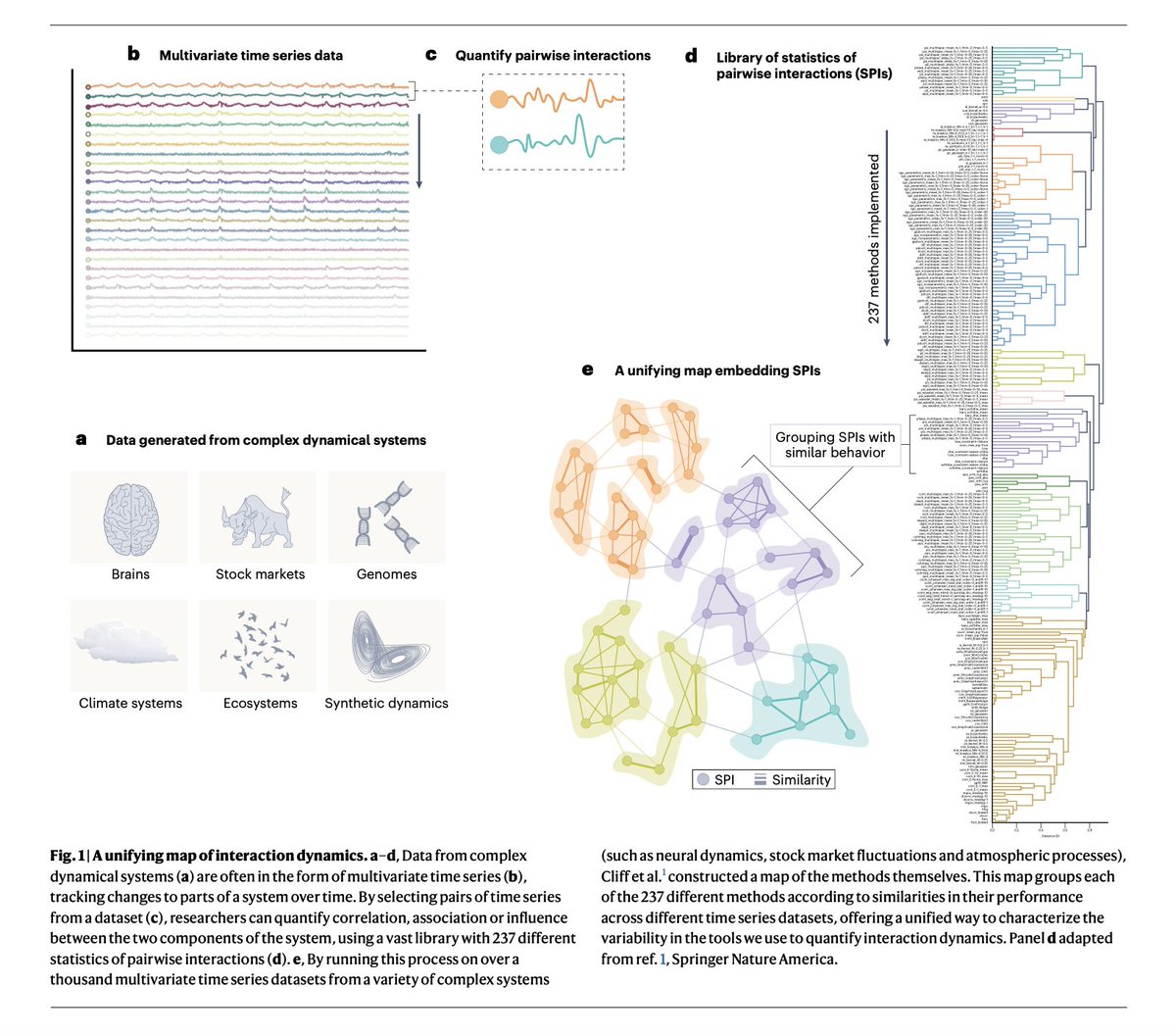
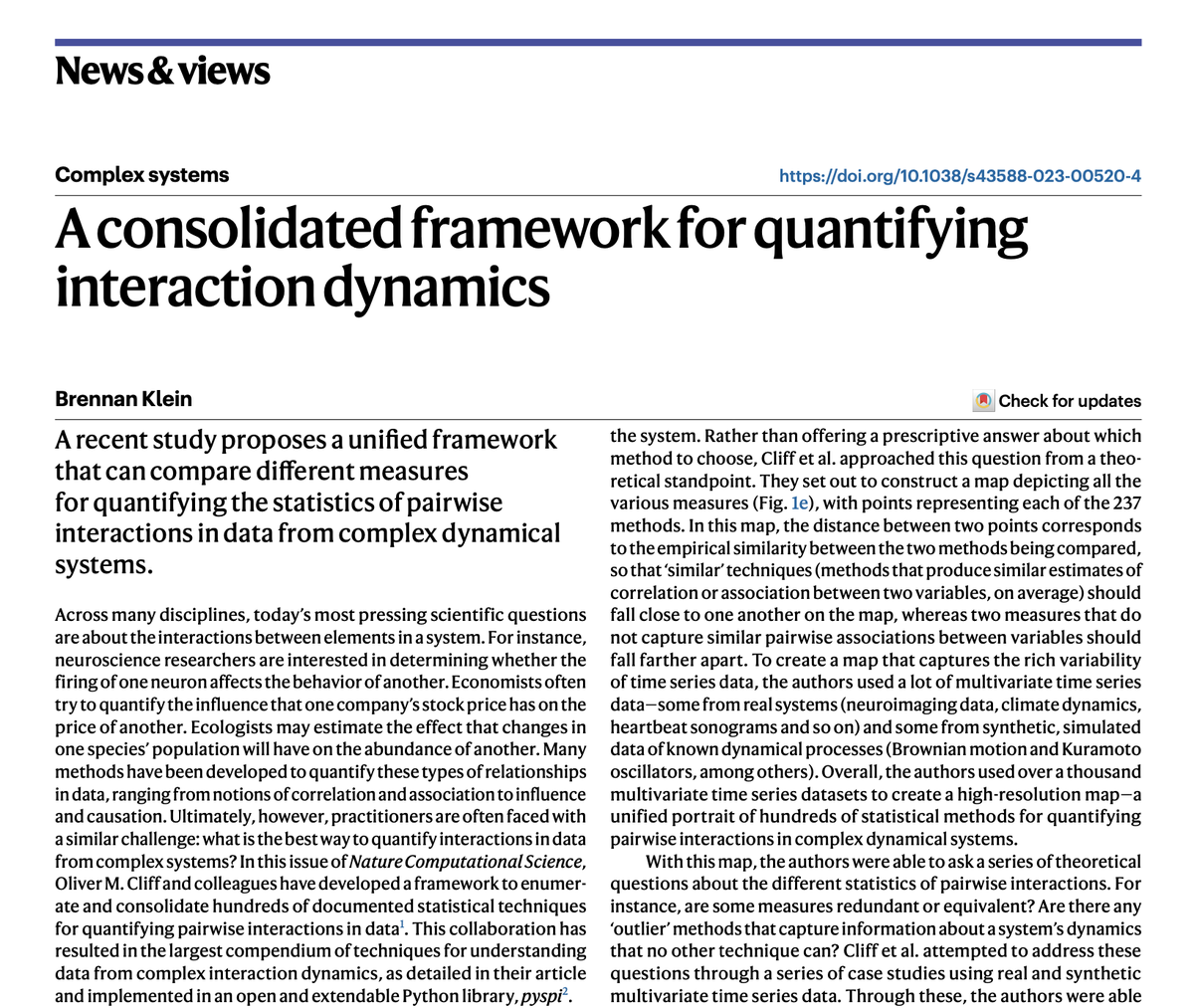
Really happy to write this News & Views in @NatComputSci about work from @olivercliff et al. I try to analogize their work as a sort of "Periodic Table" of interaction dynamics for complex systems
Link to commentary https://t.co/VhmHf4485a
Original paper https://t.co/SWY9YRX6lN
CNWW is back at the Monastery Dec 17-22 2023!
#CNWW23 is a celebration with no participation fees for selected participants as we blur the lines between faculty and the new generation of network scientists.
Apply: https://t.co/2E175wyVSG
Details: https://t.co/ynETtgEgu6
We can finally talk about it openly. I'm delighted to welcome the community to our beautiful city, 14 years almost to the day after our first participation in NetSci in 2010.
Last day of #NetSci2023, and as just announced: soon the wait begins for #NetSci2024 in Québec.
Québec is a special place for many in our community and we can't wait to welcome more of you in our city.
It will be a NetSci of friendship, love, and culture!
Amazing to be back at @netsci2023! The last 2 days have been a great reminder of how much I love this conference & community.
Quick plug for my talk on Thursday afternoon, where I'll be discussing some recent perspectives on the puzzle of ensembles of reconstructed networks.
How do groups form and develop? How do people move between different groups?
W/ @MartonKarsai & @alainbarrat we study the temporal dynamics of group interactions in social netws and propose a hypergraph model!
Arxiv 👉 https://t.co/cBaNta5GfF
5m recap 👉 https://t.co/TOk7xHj8Uv
Advances in Hosiery —A Thread
We’ve received a major new $20M award from NSF EPSCoR for the study of stories:
“Harnessing the Data Revolution for Vermont:
The Science of Online Corpora, Knowledge, and Stories (SOCKS)”
UVM’s press release is here:
https://t.co/QVA31xiUMI