@reverb_cia@Bunkers444@brookaclues@ShuklaRajiv@BCCI@ICC@ybj_19 Lol so there could be an optical illusion exactly when the ball was near the bat but do you think snicko could also malfunction or not register a noise when the ball is so far away from the stump mic???? What is more likely??? There was a clear deviation and contact. Accept it.
Here's an embedded version of the Broken Money video.
-An analysis of the past, present, and future of money, and how technology impacts it over time.
-How the current disequilibrium (transactions way faster than settlements) creates centralized and corrupted money clusters:
HISTORY IS RUNNING IN REVERSE
The Bitcoin ETF is the spiritual reversal of Executive Order 6102. Back in 1935, they seized the gold. But now, digital gold is back.
Ninety years ago, FDR and his fellow travelers rode the 20th century arc of centralization. The chokepoints of then-new technologies for mass media and mass production allowed them to gain control over the population, recruit top talent for their "Brain Trust", and seize the gold after a series of epic legal battles[1].
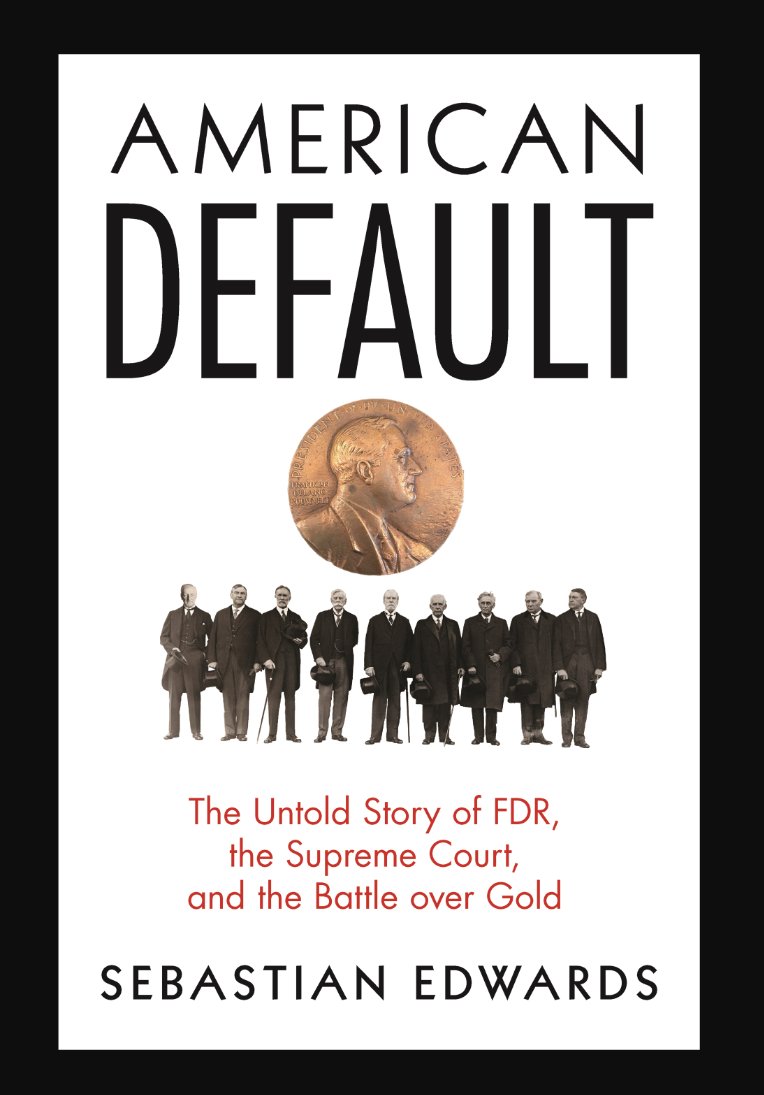
Those gold clause cases are forgotten today, but received as much contemporary coverage as 9/11 or the Moon Landing. They were the most important issue in the country, receiving far more coverage than seemingly comparable Supreme Court decisions like Roe vs Wade. Why?[2]
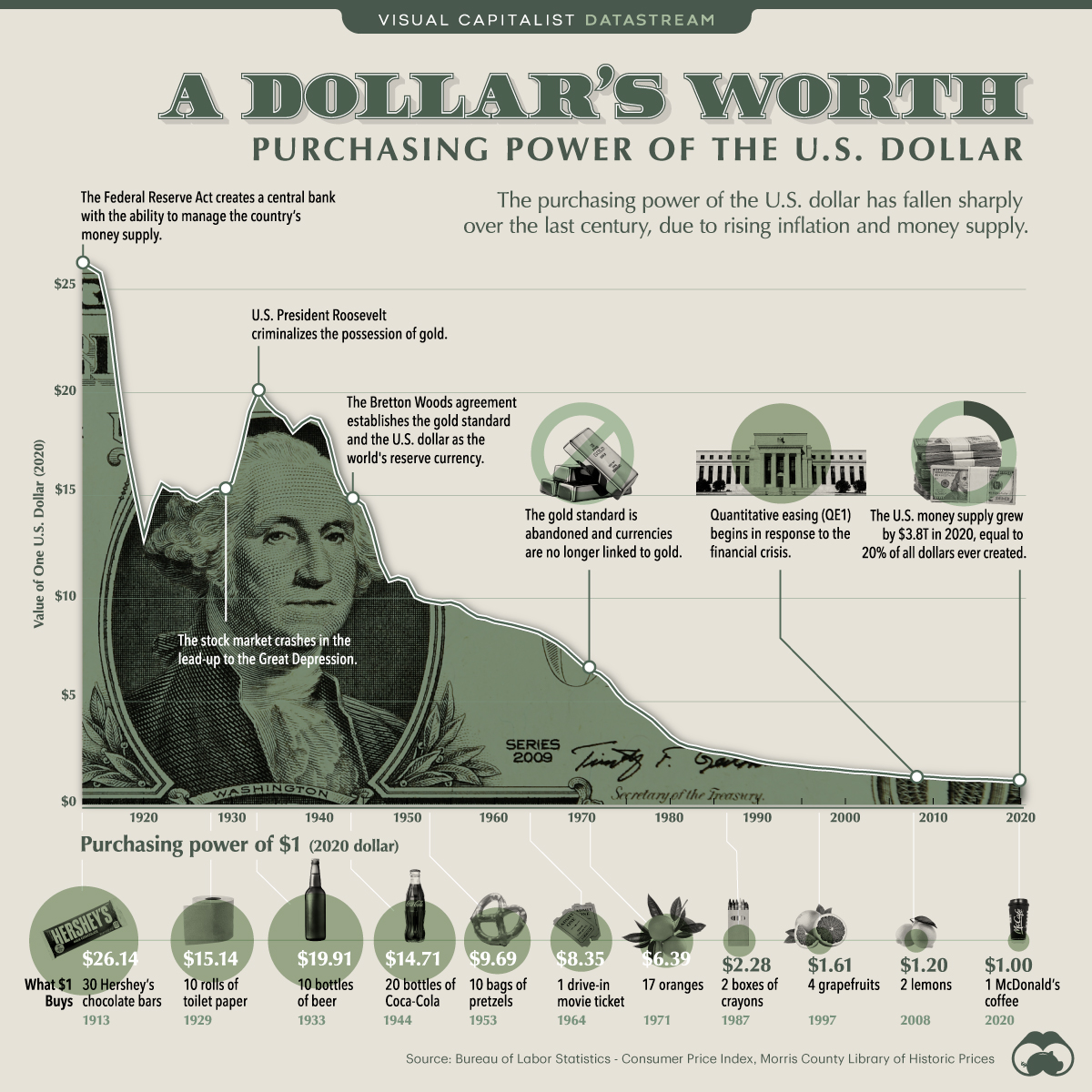
The reason is that the transition from a gold-backed to fiat-backed system was comparable to a soft communist revolution, as the *visible* seizure of gold laid the groundwork for the *invisible* seizure of wealth via money printing.
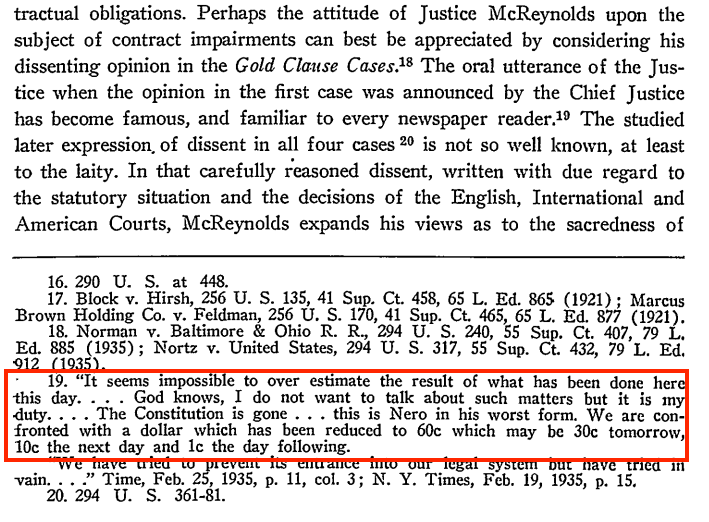
And the classically trained judges at that time fully understood this. Justice McReynolds' then-famous dissent denounced the ruling in the harshest terms, noting that the "Constitution is gone" and the "dollar...may be 30c tomorrow, 10c the next day, and 1c the day following".[3]
McReynolds was right.
While the court was forced into a grudging institutional surrender by FDR's threat of court-packing[2], the gold clause case affected every economic decision-maker in the country, as it amounted to the US government explicitly defaulting on its bonds by seizing the assets of its citizens, laying the groundwork for the century of monetary debasement to come.[4]
Now all of that is unwinding. FDR's team could ride the wave of centralizing technology that built giant states around the world. But today, technology today favors *decentralization* — personal computers, end-to-end encryption, mobile phones, and of course cryptocurrency [5].
Thus, top talent isn't being pulled into a government Brain Trust. It's being brain drained *out* of the US establishment. And as a consequence the epic legal battles are, on balance, going our way.
It's not just the DC Circuit case.[6] The ideological conflict between decentralization and centralization is reflected in the 3-2 vote for the Bitcoin ETF approval itself. Read Peirce's brilliant pro-liberty approval[7], Crenshaw's dour denial[8], and Gensler's reluctant approval[9].
You'll see echos of the gold clause case, but in reverse. This time, it is the centralized state that is being forced into a grudging institutional surrender. And a surrender it is, as Crenshaw's dissent[8] makes clear:
"...there is no primary regulator for the bitcoin spot markets. Spot bitcoin ETPs will be participating in an unregulated, fragmented, continuously traded, global free-for-all. Even if there were a primary regulator for this market, much of it could be beyond the reach of U.S. regulation..."
Let that sink in! This is what the US establishment truly fears: not Bitcoin as "fraud", but Bitcoin as freedom. They want to rule not just you but the world, so they're scared of the prospect of "a global free-for-all..beyond the reach of US regulation". And they know that any spot ETF will bid up the price of self-custodied Bitcoin outside their control[10], as Satoshi intended.
So: since FDR's seizure of gold, our lives have revolved around the centralized state rather than the decentralized market. The state has had control for so long we've forgotten what freedom is like. But now gold is slipping out of their hands, and back into yours.
History is running in reverse.
[1]: https://t.co/yl0MCTRrlg
[2]: https://t.co/92ahAV1AeY
[3]: https://t.co/MknSZv5Q6g
[4]: https://t.co/dbYcaOXyff
[5]: https://t.co/1DWoz5f6nW
[6]: https://t.co/COJmRAwO3K
[7]: https://t.co/pipMkosz5k
[8]: https://t.co/4tSlPrST9c
[9]: https://t.co/ZWjdGrRMXJ
[10]: https://t.co/XMCEWu2PK9
I am launching @BreakoutProp.
We are an evaluation-based prop firm offering best-in-class legacy and crypto trading.
Take an evaluation, pass, get paid.
https://t.co/DntpLBGj00
@ICC 4th umpire is wrong here! Video evidence shows I still had 5 more seconds even after the helmet gave away! Can the 4th umpire rectify this please? I mean safety is paramount as I just couldn’t face the bowler without a helmet
Given recent developments, I have felt compelled to email @ManUtd and let them know how I feel about the Mason Greenwood situation. I can’t believe I have to say this, but I just sincerely hope Manchester United prioritise morals over profits. Time will tell #GreenwoodOut
@Lev_Mazur@juxtathepozer@quantfury So funds are likely to be used for proprietary strategies? No need for QF to borrow from TrueFI etc and provides users with yield.
@adamscochran If institutional sales are securities, does that mean they have a legal right to equity/profits?
If tokens aren't securities, does that mean they don't have the same rights and can only rely on the company acting in good faith and the token succeeding based on fundamentals?
Today is my 32nd birthday.
Over the last month, I asked several 90-year-olds what advice they would give to their 32-year-old selves.
Here's the life advice everyone needs to hear:
@lizrhoffman FTX was not a bank. It was an exchange. They had no right to touch customer assets and play stupid games. No one builds a back door to cook the books if they had good intentions. He's only sorry he got caught. Stop making up excuses for his deliberate actions.
The Harvard Study of Adult Development began tracking the lives of 268 Harvard sophomores in 1938.
It is considered the longest running study on adult life, health, and happiness.
Here are 3 powerful findings everyone should know: