Licences turned out to be the scarce asset at @Visa, which is seeking a new stablecoin settlement partner after @Mastercard closed its purchase of BVNK.
Mastercard paid up to $1.8bn for BVNK, closing 3 Aug 2026
Visa is reportedly seeking a settlement and OTC partner licensed across the US, UK, Canada and Singapore
@Stripe bought Bridge for $1.1bn in late 2024
Visa runs 160+ stablecoin card programs globally through partners
An API can be rebuilt in months. Regulatory approval across four major markets takes years and cannot be accelerated with capital.
That inverts how these companies get valued. The moat is the licence stack, and the largest networks are now willing to buy rather than wait.
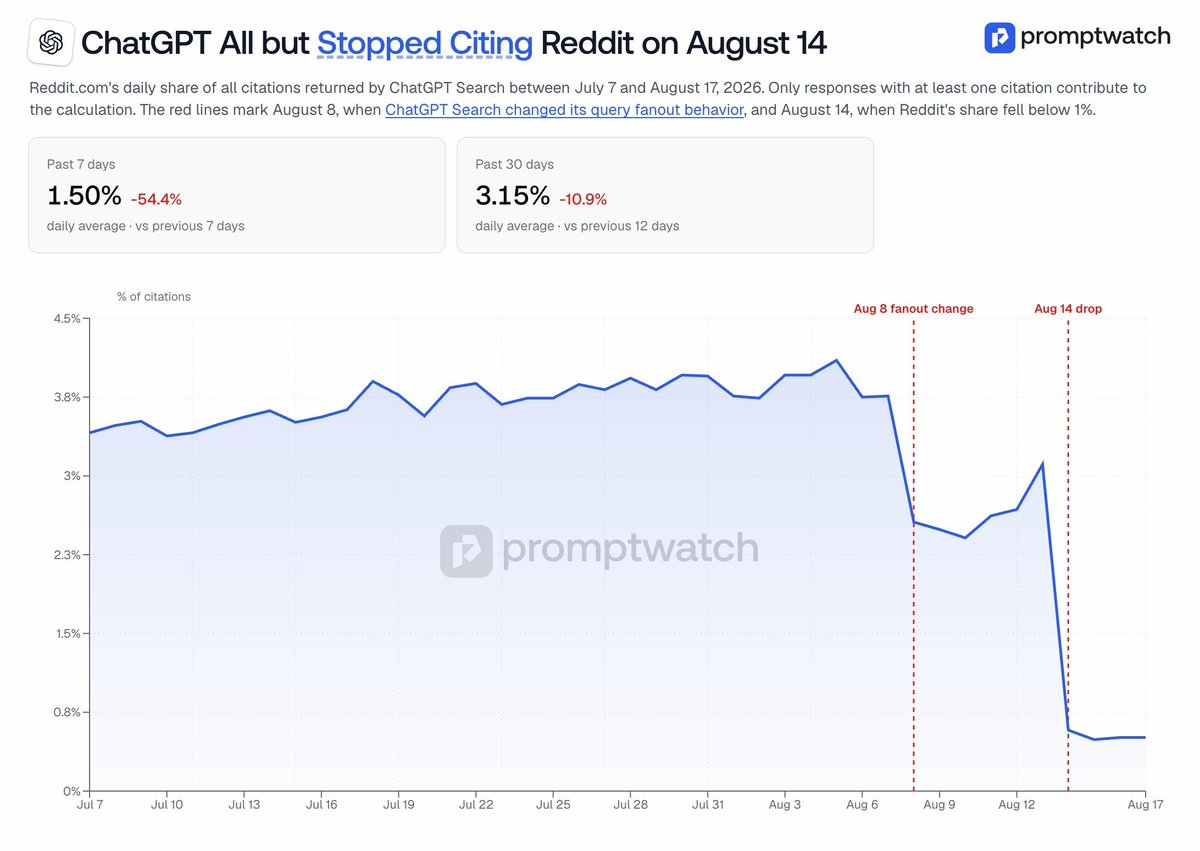
Citation share for Reddit inside ChatGPT Search fell from roughly 3.8% to below 1%, per @promptwatch data.
Daily average of 1.50% over the past 7 days, down 54.4% on the prior week
The line held near 3.8% from early July through early August before dropping
A query fanout change on 8 Aug marked the first fall, with a second on 14 Aug
Reddit sits on a licensing agreement with OpenAI announced in May 2024
Businesses have spent two years optimising for visibility inside AI answers. One routing change removed a top source overnight.
Distribution that depends on someone else's retrieval settings is not distribution you control. Owned channels look considerably more valuable after a chart like this.
Nvidia just became a landlord. PORTS-Pike locks up a 20-year site with OpenAI paying the lease, and every generation of compute that goes inside could mean 1.5mn GPUs and $150bn to $200bn of revenue. The chips get replaced every few years. The land and power do not.
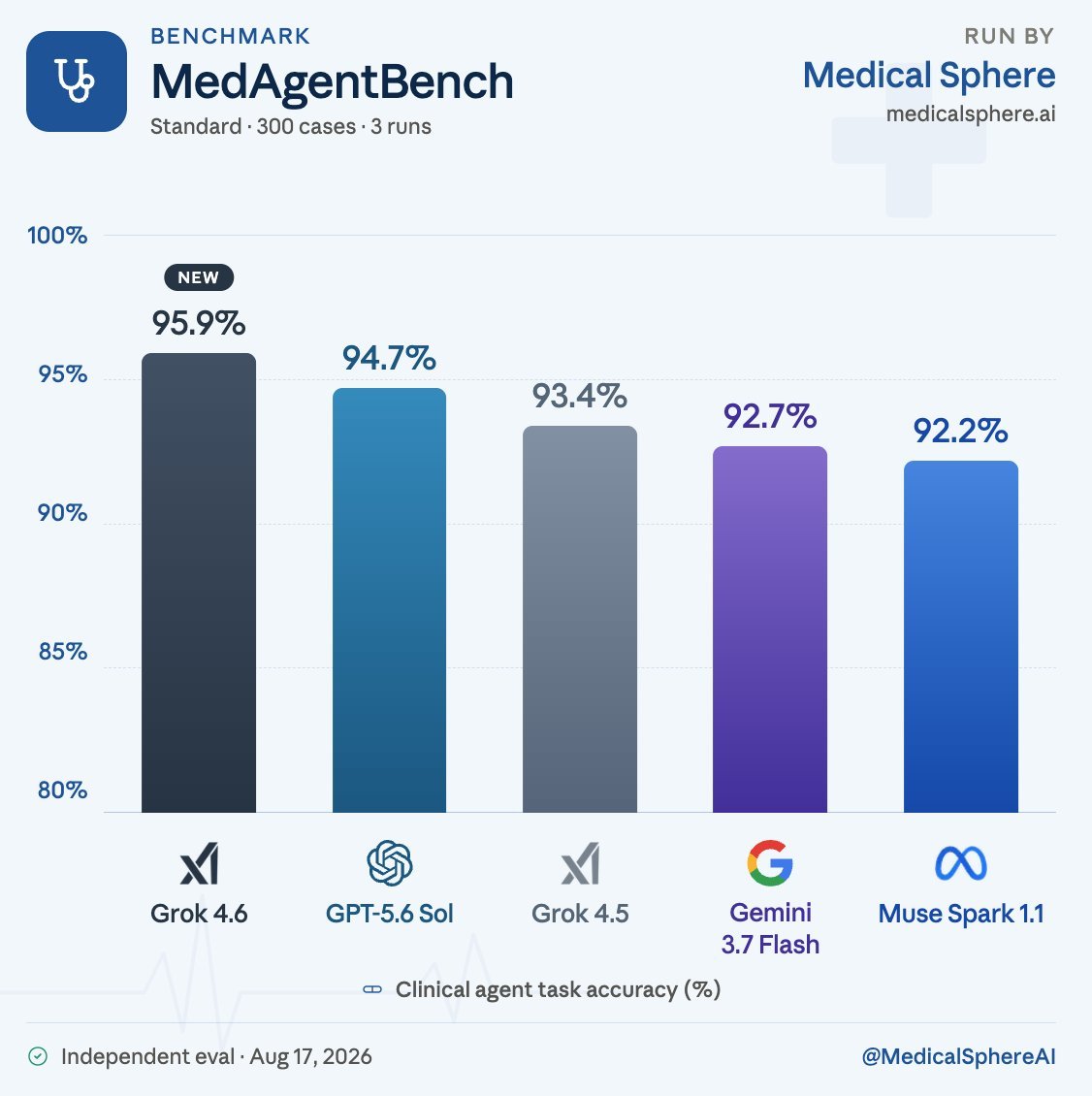
Clinical agent work is where Grok 4.6 now leads, scoring 95.9% on MedAgentBench by @MedicalSphereAI.
Ahead of GPT-5.6 Sol at 94.7% and Grok 4.5 at 93.4%
Each task scored on a single attempt, with no retries allowed
Held between 95.3% and 96.3% across 3 runs on 300 cases
Model works as an agent inside a simulated health record system, calling APIs across 10 task types
Most AI benchmarks let a model try several times and count the best result. This one does not, because a doctor placing an order does not get to try again.
Hospitals have been slow to buy AI for good reason. Scores that hold steady run after run are what will change that.
Agentic work is where @grok 4.6 lands hardest, taking the top spot on the Artificial Analysis Agentic Index at 59, tied with Claude Opus 5 Max.
The index measures tool use, planning, autonomy and complex problem solving rather than single answers
Grok 4.6 completes tasks in ~53 turns and ~0.5bn input tokens on average, against ~103 turns and ~2.0bn for Claude Opus 5 Max
Cost of $0.84 per task, putting it on the intelligence versus cost per task Pareto frontier
Enterprises buying agents pay per completed task, not per benchmark point. Turn efficiency is what determines whether a long-running workflow is affordable at volume.
Two labs now sit at the top of this index with very different cost structures. Buyers get real choice on price for the first time in agentic deployment.
Training on zero robot data, @DynaRobotics pre-trained Dyna-2 on over 1mn hrs of human video.
Scaling holds across 4 orders of magnitude, from 1,000 to 1,000,000 hrs
Human data scaling transferred to robot data the model had never seen
87% quality and throughput rating on zero-shot deployment at new customer sites
$143.5mn raised to date, with @nvidia, @amazon, @salesforce, @Samsung and @LGE_Global backing the Series A
Teleoperation data has been the binding constraint in robotics. Every hour of it costs money and a person, which caps how fast any lab can move.
Human video already exists at effectively unlimited supply. Companies that can convert it into robot capability get a cost structure the teleoperation route cannot match.
Annual revenue at @nvidia has gone from $10.9bn to $215.9bn in 6 years.
- FY20 to FY26 at a 64.7% CAGR
- LTM revenue of $253.5bn
- April quarter revenue of $81.6bn, up 85% YoY, with data center at $75.2bn
- Consensus points to ~$394bn for FY27
Compounding at this rate on a base this size is close to unprecedented. Most companies slow down well before they reach $200bn of revenue.
The cash generation is what makes it durable. $48.6bn of free cash flow in a single quarter funds the next expansion without asking outside capital for anything.
An hour of computer-use agent work now costs $6-8, according to new data from @a16z.
- $6-8/hr for an agent, ~$10 offshore, $30-45 for US back-office labor, fully loaded
- OSWorld-Verified scores up from 42% to 85% in a year, against ~72% for human testers
- One CPG data platform running 15-20mn automated portal interactions a month
- A systems integrator with 27 live workflows handling 1,500-2,100 IT tickets a day
Business process outsourcing was built on wage differences between countries. That gap is now being priced against inference, which keeps getting cheaper.
The durable value sits above the model, in workflow context, verification, and escalation. Navigating a screen has become a commodity, and the companies that understand how a specific enterprise actually works will keep the margin.
Cell towers are the reason mobile networks cost billions to build, and @SpaceX has found a way around them.
- 65 MHz of nationwide mid-band spectrum from EchoStar for ~$19.6bn, with terrestrial rights
- Base stations to sit on the mounts already carrying @Starlink dishes
- Starlink revenue of $4.29bn in the quarter, up 66%
- Subscribers doubled YoY to 12mn
Incumbent carriers paid for towers and site leases long before subscribers arrived. Owned spectrum on an installed rooftop footprint turns that fixed cost into an incremental one.
Gwynne Shotwell put the US wireless market at about $600bn a year. Entering it with a lighter cost base is a rare position to hold.
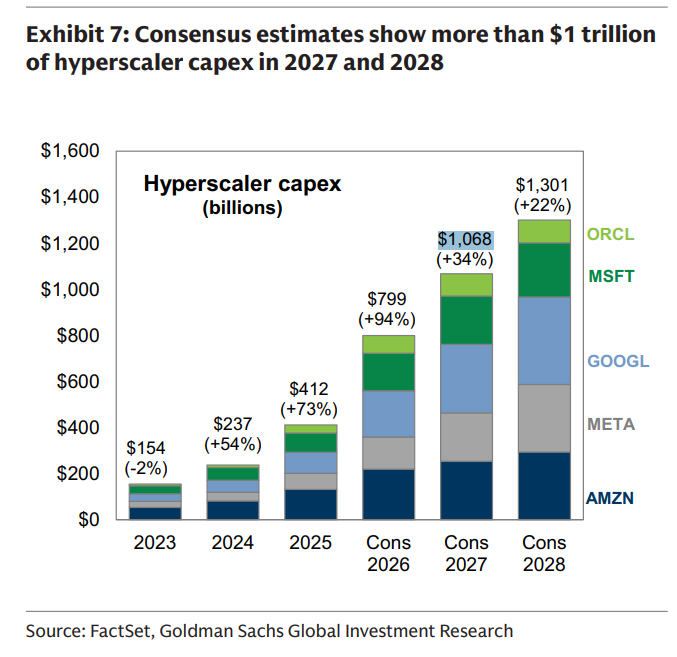
Combined capex at @Amazon, @Microsoft, @Google, @Meta and @Oracle is set to cross $1tn a year on consensus estimates.
- $154bn in 2023, $412bn in 2025, up 73% in the last year
- Consensus $799bn for 2026, up 94%
- Consensus $1,068bn for 2027 and $1,301bn for 2028
- IG bond issuance of $194bn in H1 2026, against $108bn for all of 2025
Operating cash flow paid for the first half of this buildout. Credit markets are funding a growing share of the rest.
That shifts who asks the hard questions about payback. Bond investors underwrite against contracted revenue, and their appetite will set the pace of construction from here.
Figure taught machines to see a factory floor and act in it. Handoff is the same idea pointed at a browser.
Same problem underneath: an unstructured environment, no API to lean on, figure it out from what's on the screen.
Now #1 on Online-Mind2Web, at under a tenth the token cost of frontier models. @adcock_brett is compounding one idea across two worlds.
Today we're introducing Hark Handoff
Handoff has been independently verified as the best internet-use model ever built, outperforming ChatGPT 5.4 & Opus 4.8
While others focus on coding, we focus on everyday life: ordering food, booking flights, shopping, & navigating the web
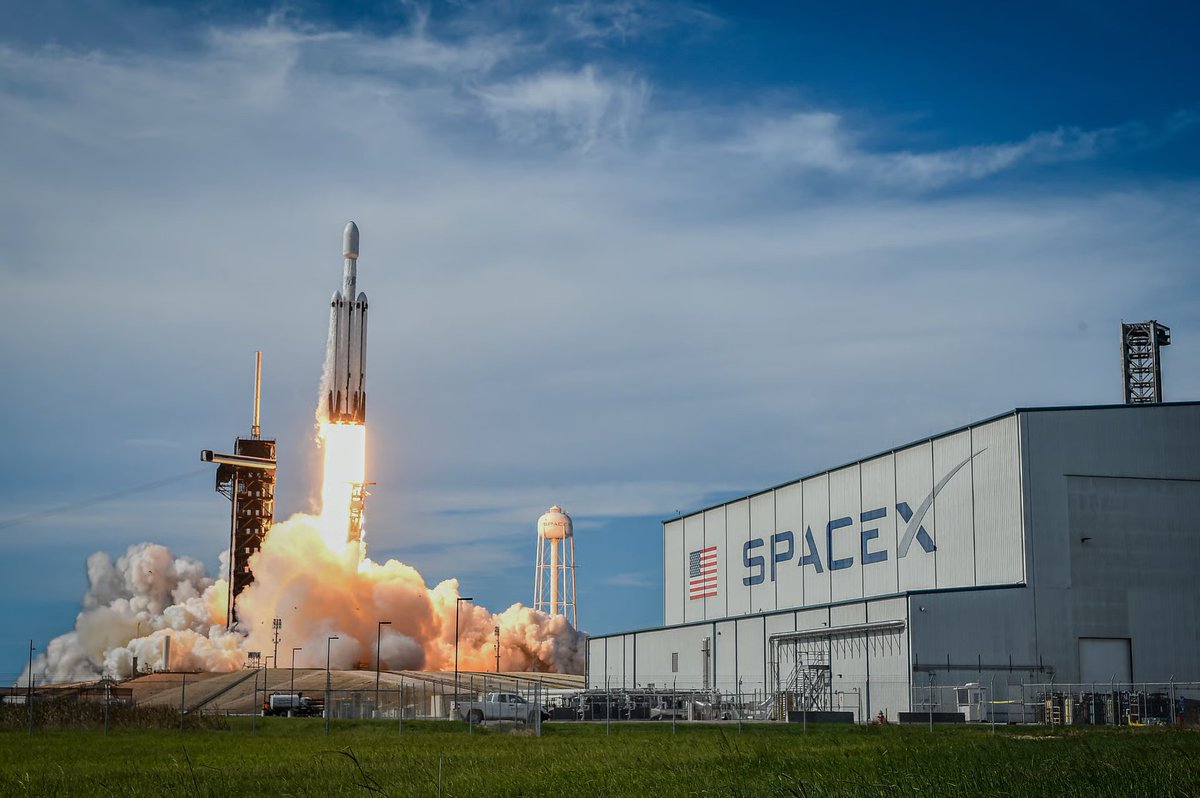
SpaceX just put out its first numbers as a public company.
$SPCX Q2 FY26:
Headline numbers
• Revenue: $7.81B, up 92% Y/Y
• Adj. EBITDA: $3.54B, up 191% Y/Y
• Operating loss: $143M, down from $970M
• Net loss: $541M, down from $1.0B
• EPS: -$0.09, vs -$0.34
• CapEx: $18.37B, with AI accounting for $15.83B
• Cash and securities: roughly $100B
• Backlog: $47.5B
Segment performance
• Space: revenue $962M, up 29% Y/Y
• Connectivity: revenue $4.29B, up 66%; operating income $1.66B, up 79%
• AI: revenue $2.56B, up 247%; Adj. EBITDA positive at $1.15B, from a $609M loss in Q1
Starlink
• Subscribers: 12.0M, double last year and up 1.7M Q/Q
• ARPU: $66/mo, flat Q/Q but down from $85 a year ago
Other developments
• Agreement to acquire Cursor for $60B, closing expected in Q3
• $14.1B in contracted Cloud Services sales
• Over $6B in multi-year Starshield awards
• Compute capacity at 1.4 GW, up from 0.4 GW a year ago
The gap between $3.54B of EBITDA and a $541M net loss is worth sitting with. Most of it is depreciation, $2.85B in this quarter alone, and that line is going to keep climbing as six months of AI capex lands on the balance sheet.
So the EBITDA figure is real, but it flatters a business that is still paying for the buildout. Ask again in four quarters.
A model launch moved Alibaba's Hong Kong shares 7% on Monday, closing at HK$125.20.
@Alibaba_Qwen's Qwen3.8-Max is the reason:
- 2.4 trillion parameters, roughly 95 billion active per token
- 1 million token context across text, image and video input
- Ranked 5th on Arena's text board and 2nd on vision
First Max class model in the family set for public download next week.
Releasing the flagship for public download is a distribution decision. Alibaba is trading exclusivity at the top of its lineup for developer volume that runs back through its own cloud.
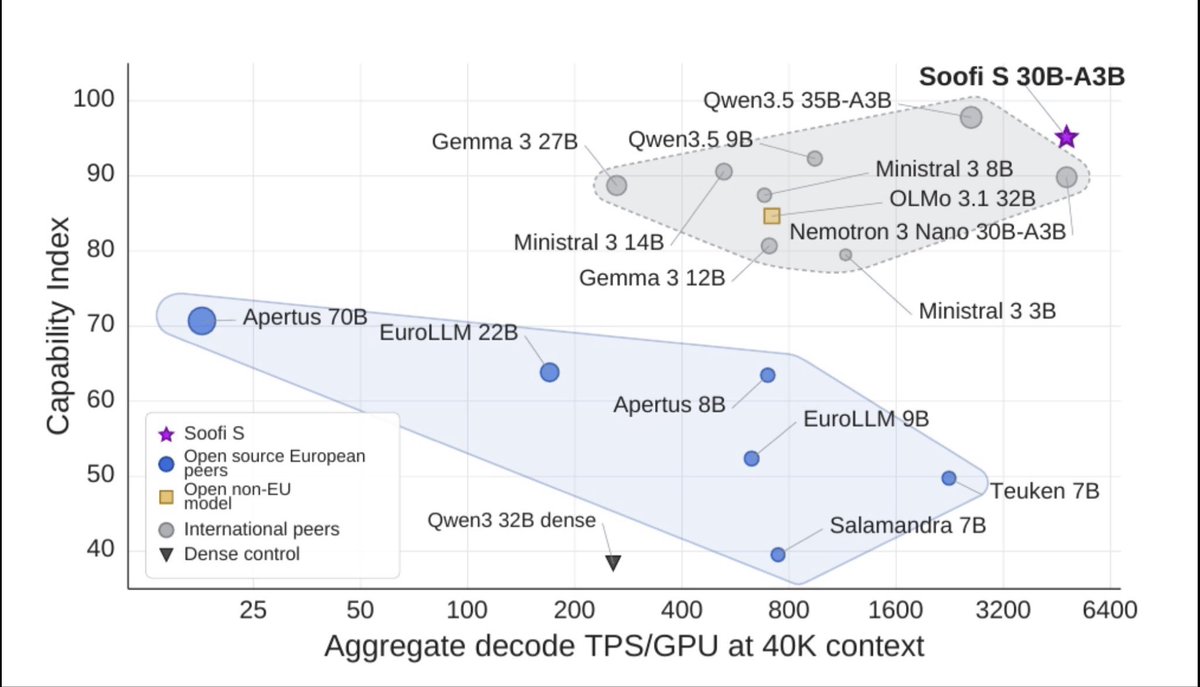
Germany released Soofi S this month, a 30B open model trained end to end on @deutschetelekom Industrial AI Cloud in Munich.
- 31.6B total parameters with roughly 3.2B active per token, so inference cost sits closer to a 3B model
- About 27 trillion training tokens, with German raised to 15.32% of the second phase data mix
- 512 @nvidia B200 GPUs and around 253,000 GPU hours, run from 24 March to 13 May 2026
- Weights, per-source data accounting, training code and checkpoints published under permissive licenses
A national training run is now a budget line rather than a moonshot. That changes who can own a model outright, and ownership matters most to the buyers who cannot accept that the terms of an American or Chinese model might change without notice.
Notable from @PalantirTech: Alex Karp used a @FoxBusiness interview to argue for regulating AI, which is not the position the industry usually takes
in public.
- The comparison drawn was to uranium, useful and dangerous, where the processing and who controls it matter
- The objection is to the European approach, where companies end up existing behind a regulatory wall rather than competing
- @PalantirTech has separately asked the administration not to ban open models
The variable pointed at, whether the regulator understands what it is regulating, gets very little attention from investors. It will do more to set which US companies can operate at the frontier than any single policy in the current debate.
At $2,017 a share, @Revolut is now marked at $115B in its latest employee secondary.
- Up 53% from the $75B set in November 2025, and more than double the $45B mark in 2024
- 2025 revenue of $6B, up 46%, with pre-tax profit of $2.3B, up 57% More than 75 million customers, with a full UK banking license granted in March 2026
- No new capital raised, the sale is liquidity for employees and early shareholders
Companies used to list because employees and early backers needed a way out. Revolut has solved that privately, so nothing forces the timeline anymore. The cost of that sits with public investors, who will get their first entry at a price the private market has already run up.
The singularity call from @sama came with a qualification that changes how to read it.
- One continuous exponential, where no single moment is the tipping point
- The curve can still go either way, the same framing used when @OpenAI started 10 years ago
- @elonmusk calls it the very early stages, @demishassabis calls it the foothills
A continuous exponential gives markets nothing discrete to reprice against. Public investors wait for an event that never arrives in one piece, while private rounds mark to the curve as it moves. That gap is why the good entry points in this cycle have closed before the confirmation arrived.
The push from @JensenHuang is for a competitor to release a model more widely than that competitor wants to.
- Claude Mythos launched in April as a cyber model, limited to vetted partners under @AnthropicAI Project Glasswing
- Glasswing has grown from around 50 partners to roughly 200 across about 15 countries
- @nvidia already sits inside that group, so the access question being raised is about everyone else
Restricted access is compute that does not get sold. Every party in this debate is reasoning from where its revenue sits, and that is worth naming before anyone treats it as a pure safety argument.
The post @DarioAmodei published on open models sits away from where the public argument has been running.
- No ban on open models as a category, called a public good when they carry no dangerous capabilities
- Three measures supported instead: chip and equipment controls on China, a crackdown on industrial-scale distillation, mandatory pre-release safety testing for capable models open and closed
- The stated concern at @AnthropicAI is authoritarian governments training in secret, not US businesses running Chinese models
Distillation is the line investors should read twice. It lets a competitor reach near the frontier on a fraction of the compute, which changes what a training run actually buys.