Todd Thompson, a professor in @OSUAstro, has been appointed chair of the department. Thompson is a theoretical astrophysicist whose research focuses on the evolution and impacts of massive stars and what happens at the end of their lives. https://t.co/qrZoBFQnce
i’m excited to announce that i am hiring!
i am looking for a postdoc in computational astrophysics that’s excited about massive stars, stellar transients, and multi-messenger astronomy to join my group at @StewardAstro.
It is very cool to see some of our earlier discoveries still being studied almost 10 years later!
"Eight Years of Light from ASASSN-15oi: Towards Understanding the Late-time Evolution of TDEs"
https://t.co/FJzuhwXzhk
#VariableUniverse
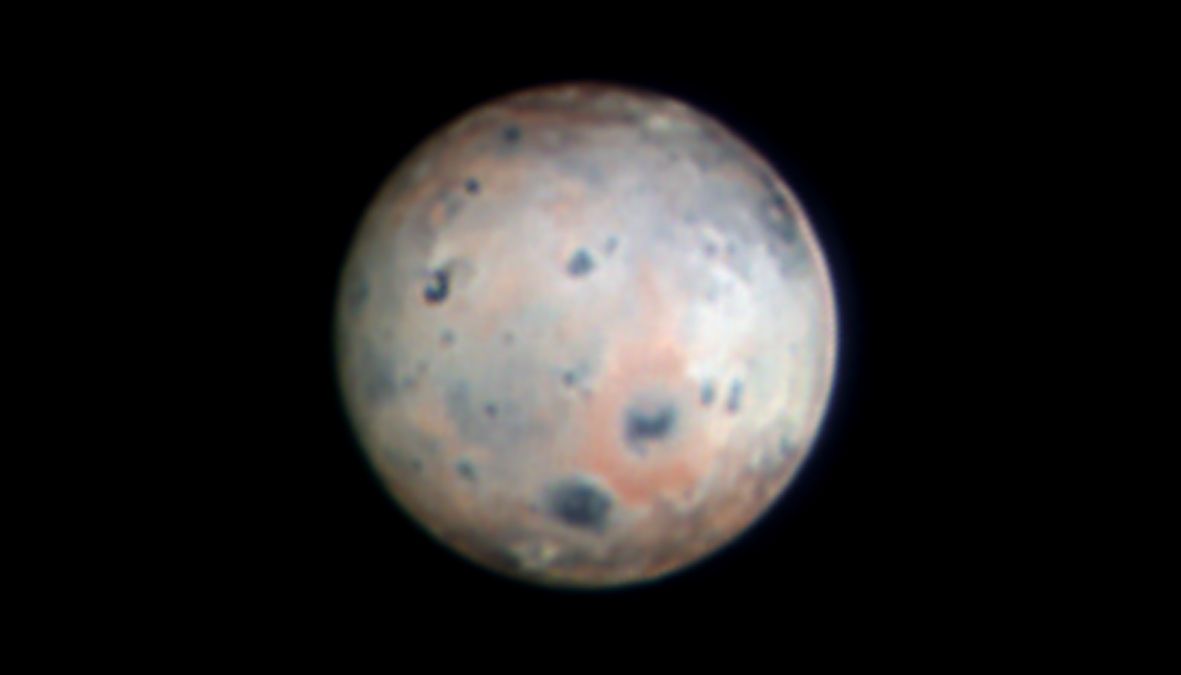
Io, satellite of Jupiter, seen in visible band with an adaptive optics system on the Large Binocular Telescope located in Arizona. We can now say than AO on ground-based telescope is now better than space telescopes even in optical. https://t.co/D0OAbUnGCj
According to information obtained Friday, university spokesperson Ben Johnson said once the troopers began using force on the students around 10 p.m., the state troopers on the roof switched to long-range firearms as part of their protocol.
Read more:
https://t.co/vjhr7zAcVa
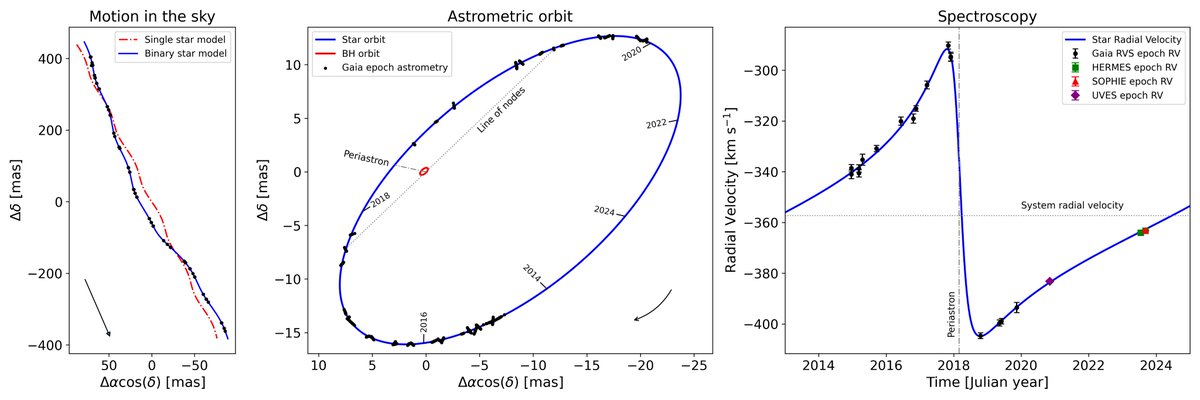
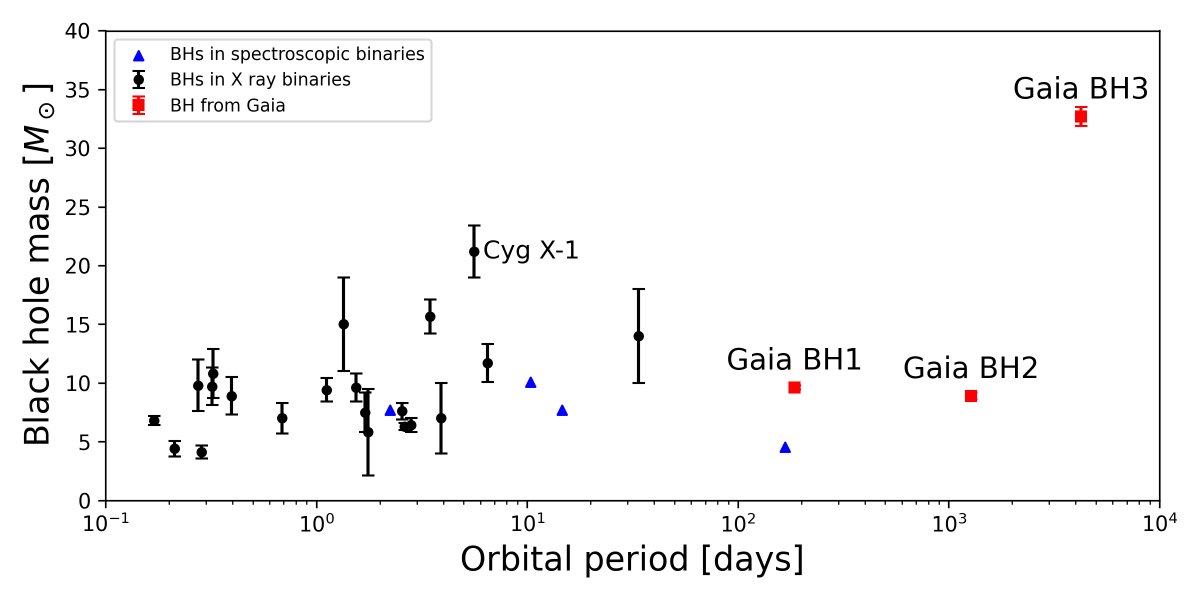
#GaiaBH3 is the new record holder in our Milky Way with its 33 solar masses. Most black holes with stellar origin have a mass of about 10 solar masses. The mass of this new Gaia #BlackHole is pinned down with unparalleled accuracy, putting it firmly in the 30 solar mass range!
While verifying preliminary #GaiaDR4 data, this source popped out! #GaiaDPAC initially thought the solution to be spurious & started to check the data! What a surprise to see this detection of #GaiaBH3! A finding worth publishing in advance of #GaiaDR4. https://t.co/AllbZqVjQY
Gaia spots Milky Way's most massive black hole of stellar origin! It's 33 solar masses, dormant, 2nd closest to Earth at ~2000 light years away, part of a wide binary with an old giant star, with estimated age of 11 Gyr: https://t.co/m26bbmpyFO #GaiaBH3 https://t.co/AllbZqVjQY
Breaking news!🎉 Today we announce the most precise measurements of our expanding Universe using the BAO signal in 6.1 Million galaxies and quasars from Year 1, tracing dark energy through cosmic time. See @BerkeleyLab PR at https://t.co/3BZm4VQU9A 1/10
📸 Credit: @ClaireLamman
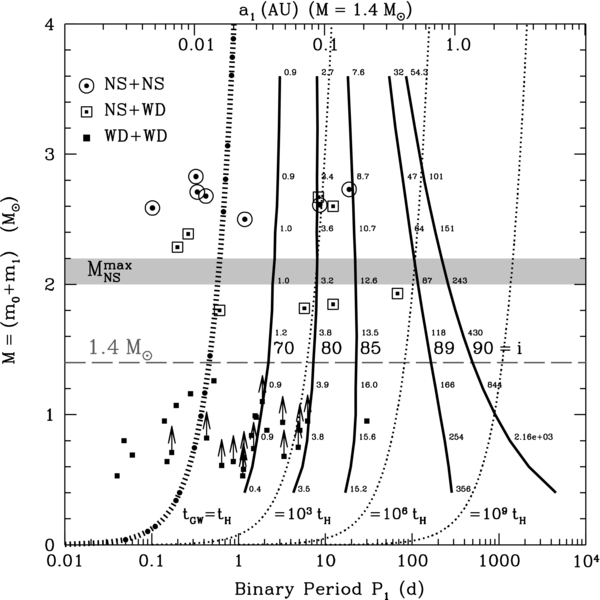
Interested in #threebodyproblem?
Here is a cool plot from a paper by @chargedcurrent:
"Accelerating Compact Object Mergers in Triple Systems with the Kozai Resonance: A Mechanism for "Prompt" Type Ia Supernovae, Gamma-Ray Bursts, and Other Exotica"
https://t.co/e8W7NhByJh
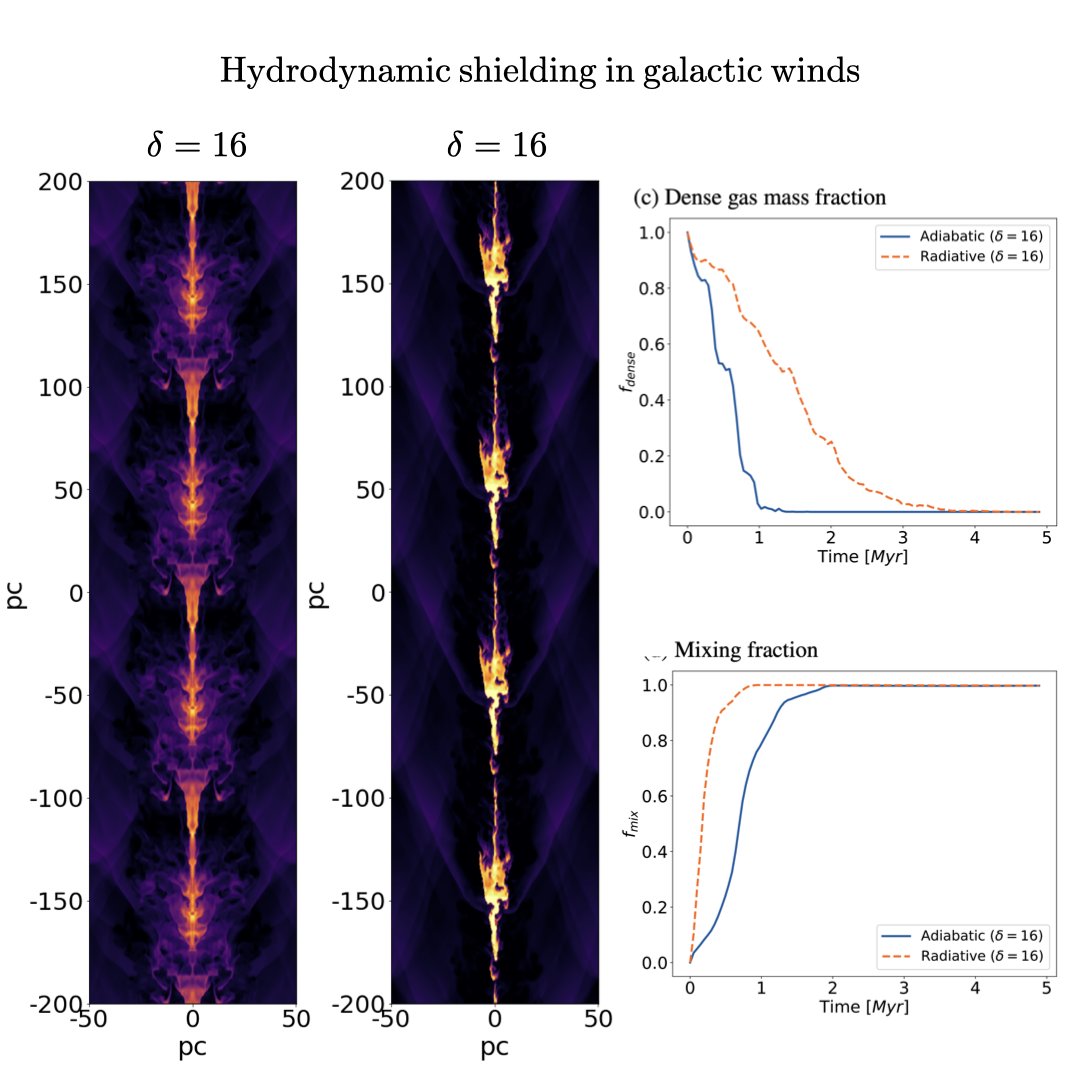
Our new paper is on arXiv today. Hydrodynamic shielding can operate in supersonic regimes and aid cloud survival in radiative galactic winds when the cooling length is much shorter than the cloud radius. Work led by my student @Iandrew81 at @fisicaynanoYT https://t.co/GCGY5QVAhq
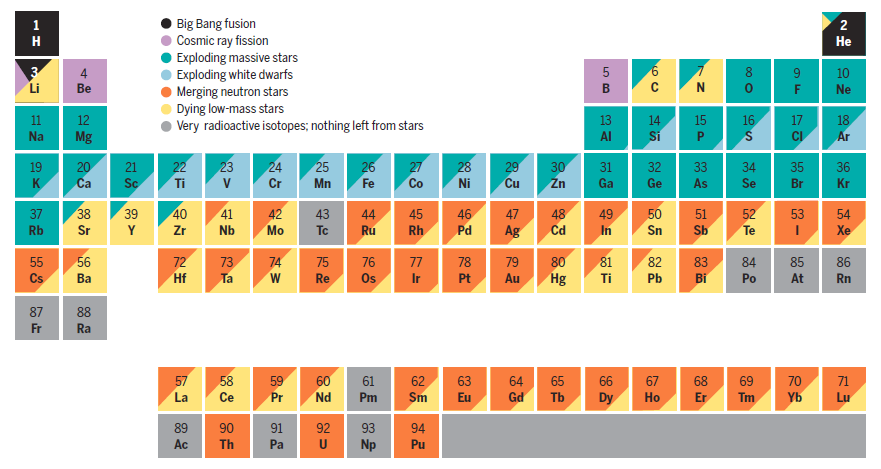
@PlotAstro can I nominate a plot from 5 years ago? Figure 1 of https://t.co/biSP40ihc4 by @JAJohnson51 shows the nucleosynthetic origins of each chemical element.
@mjuric Agree. And it's not that astronomy is useless in any literal sense. The conversation was more about the intrinsic worth of astronomy and the other arts :) (in the sense you mean it here).
@tacosandspace Astronomy was not be claimed to be *completely* useless, but only useless in the same sense people say "Well, you're not curing cancer" or "I won't ever use algebra." The conversation was more about the intrinsic *worth* of astronomy itself, in the same sense as art or poetry or
@kjb_astro@ESAGaia Hills then gives e ~ 0.11 or so (dM/Mtot0 ~ 0.3/3.0; e0=0), close to observed (your Fig 9, top). So, this would require ~0.0(0?) Msun of actual mass loss if Vkick =0. Otherwise, requires "kick cancellation," as you discuss.
@kjb_astro@ESAGaia Interesting! Note that for a NS of M = 1.9 Msun, we expect ~0.3 Msun in nearly-instantaneous irreducible mass loss in the form of neutrinos: e.g., eq. 35: https://t.co/W4UklizPPb
So M_He = 2.2Msun is the minimum possible value.