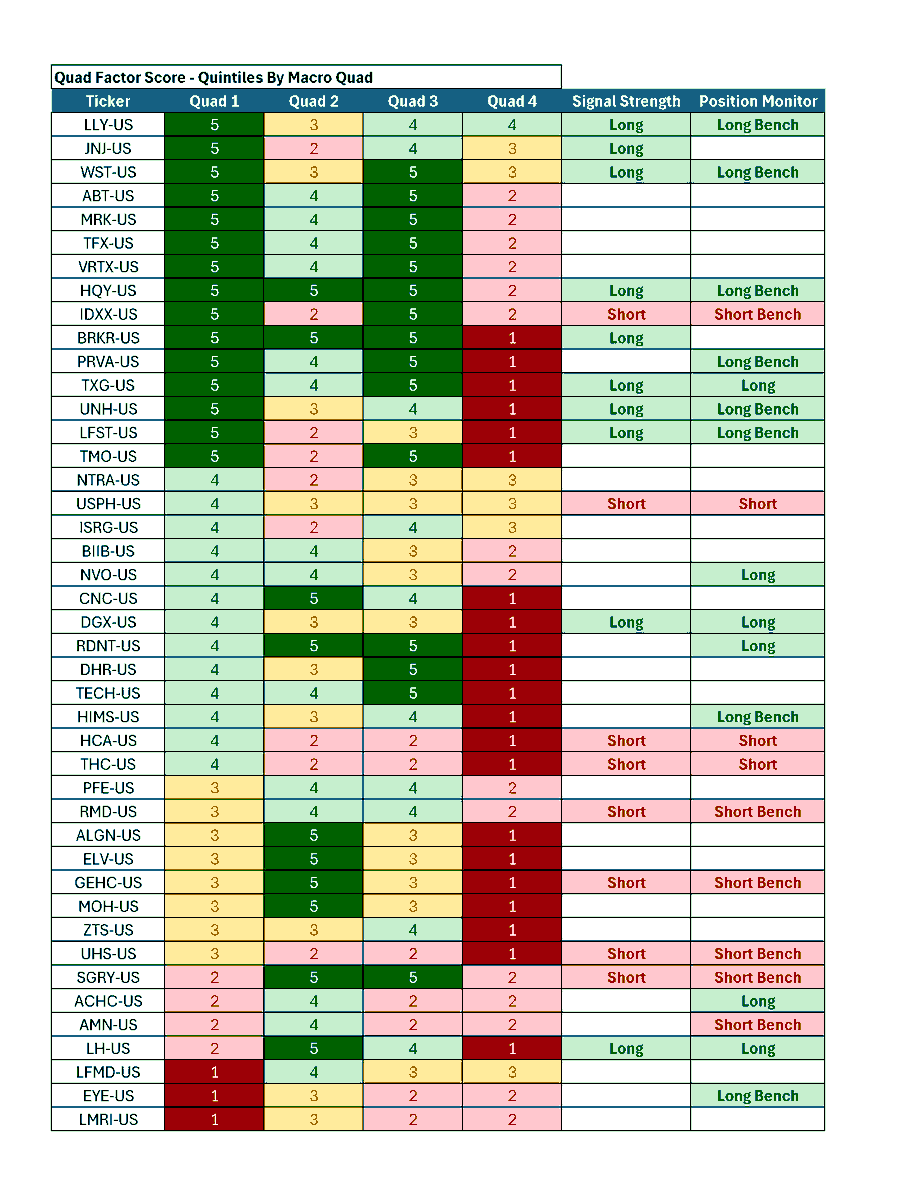
Quad Factor + Signal Strength + Position Monitor = Powerful Combo. Keith and I hit on $HQY $BRKR both at the top of Quad Factor list in Quad 1. (Apologies for the $5 words I used this morning on The Call; diad, quintile, nuclear magnetic resonance.) @Hedgeye@KeithMcCullough
we're making @blocks smaller today. here's my note to the company.
####
today we're making one of the hardest decisions in the history of our company: we're reducing our organization by nearly half, from over 10,000 people to just under 6,000. that means over 4,000 of you are being asked to leave or entering into consultation. i'll be straight about what's happening, why, and what it means for everyone.
first off, if you're one of the people affected, you'll receive your salary for 20 weeks + 1 week per year of tenure, equity vested through the end of may, 6 months of health care, your corporate devices, and $5,000 to put toward whatever you need to help you in this transition (if you’re outside the U.S. you’ll receive similar support but exact details are going to vary based on local requirements). i want you to know that before anything else. everyone will be notified today, whether you're being asked to leave, entering consultation, or asked to stay.
we're not making this decision because we're in trouble. our business is strong. gross profit continues to grow, we continue to serve more and more customers, and profitability is improving. but something has changed. we're already seeing that the intelligence tools we’re creating and using, paired with smaller and flatter teams, are enabling a new way of working which fundamentally changes what it means to build and run a company. and that's accelerating rapidly.
i had two options: cut gradually over months or years as this shift plays out, or be honest about where we are and act on it now. i chose the latter. repeated rounds of cuts are destructive to morale, to focus, and to the trust that customers and shareholders place in our ability to lead. i'd rather take a hard, clear action now and build from a position we believe in than manage a slow reduction of people toward the same outcome. a smaller company also gives us the space to grow our business the right way, on our own terms, instead of constantly reacting to market pressures.
a decision at this scale carries risk. but so does standing still. we've done a full review to determine the roles and people we require to reliably grow the business from here, and we've pressure-tested those decisions from multiple angles. i accept that we may have gotten some of them wrong, and we've built in flexibility to account for that, and do the right thing for our customers.
we're not going to just disappear people from slack and email and pretend they were never here. communication channels will stay open through thursday evening (pacific) so everyone can say goodbye properly, and share whatever you wish. i'll also be hosting a live video session to thank everyone at 3:35pm pacific. i know doing it this way might feel awkward. i'd rather it feel awkward and human than efficient and cold.
to those of you leaving…i’m grateful for you, and i’m sorry to put you through this. you built what this company is today. that's a fact that i'll honor forever. this decision is not a reflection of what you contributed. you will be a great contributor to any organization going forward.
to those staying…i made this decision, and i'll own it. what i'm asking of you is to build with me. we're going to build this company with intelligence at the core of everything we do. how we work, how we create, how we serve our customers. our customers will feel this shift too, and we're going to help them navigate it: towards a future where they can build their own features directly, composed of our capabilities and served through our interfaces. that's what i'm focused on now. expect a note from me tomorrow.
jack
The Hollow Men
American capitalism is rotting from the head down. We have replaced the "Owner-Operator"—the risk-taker-with a new, parasitic class of corporate bureaucrat: The Risk-Free Insider.
By "Insider," I am not referring to a specific title. I am referring to the entire administrative state that has captured the modern corporation. This includes the Directors who exist solely to collect fees, the Executives who exist solely to collect bonuses, and the Managers who exist solely to hire consultants.
These are the hollow men of the boardroom. They are masters of PowerPoint. They wear the right suits. They say the right buzzwords about "governance" and "ESG." But they are mercenaries fighting a war with someone else’s ammunition.
In a functioning economy, authority is tied to liability. If you make a bad decision, you lose your own money. That fear of loss is the only thing that keeps a business honest. It forces you to cut waste, obsess over the customer, and stay late to fix what is broken.
Today, we have severed that link.
We have rigged the game so that heads, the Insider wins; tails, the shareholder loses.
If the stock goes up, the Insider collects a massive performance bonus. If the stock crashes due to their own incompetence, they are fired with a "Golden Parachute" worth tens of millions. They are gambling with the house’s money, and they never leave the table poorer than they arrived.
This looting starts in the boardroom.
We have normalized a "Country Club" culture where directors are selected based on social profiling rather than their ability to build a business. The modern board member is often a professional tourist—paid an average of $350,000 a year.
Let’s be brutally honest about what that number represents. The average director is paid nearly five times the GDP per capita of the United States. They earn more for attending four quarterly lunches than the vast majority of Americans earn in five years of hard labor.
And for what?
Most of these directors are "over-boarded," sitting on three or four boards simultaneously. They treat directorships as a gig economy for the elite. They fly in, rubber-stamp a compensation package they didn't read, and fly out. They collect checks from companies they do not understand, do not use, and certainly do not love.
They are not there to ask hard questions. They are there to be collegial. They are there to protect the other Insiders.
And what happens when these boards hire executives who also have no personal capital at risk?
We get the Delegation Economy.
When a Risk-Free Insider faces a crisis—bloated expenses, a broken supply chain, or a stale product—they do not roll up their sleeves. They hire a consultant. They pay a strategy firm millions of shareholder dollars to produce a 100-page deck telling them what they already know.
This is not management. It is intellectual money laundering.
They use shareholder capital to buy an insurance policy for their own careers. If the plan fails, they can blame the consultants. They delegate the work because they are terrified of the responsibility. They would rather preside over a slow, comfortable decline than risk a bold mistake.
While American Insiders are busy optimizing their severance packages, our global competitors are optimizing their products. They are not slowed down by bureaucracy. They are not waiting for a slide deck. They are outworking us.
If we continue to fill our C-suites with administrators instead of operators, we will lose our edge. We will see iconic American franchises hollowed out by fees, managed for the benefit of the Insiders, while the true owners—the shareholders—are left holding the bag.
The time for polite governance is over.
If we want to save the American economy from mediocrity, we must demand a return to the "Owner’s Mentality." We need leaders who treat shareholder capital with the same reverence they treat their own savings. The era of the Risk-Free Insider must end.
The world is a mess right now — and investors can feel it.
We are in the Fourth Turning: a period of deep structural change marked by economic instability, political polarization, geopolitical tension, and rising social unrest. This is not theoretical. It is happening in real time, and it is reshaping markets, leadership, and the global order.
These environments can create uncertainty — but may offer opportunity for investors who are prepared.
$HEFT is Hedgeye’s Fourth Turning ETF, built specifically to help investors navigate regime shifts with a disciplined, research-driven approach. Rather than relying on static allocations or backward-looking assumptions, HEFT is designed for a world where the rules are changing.
Co-led by Neil Howe @HoweGeneration, author of The Fourth Turning, and portfolio manager R. Patrick Kent @RPKent, HEFT seeks to identify the sectors, themes, and equity opportunities most likely to benefit from long-cycle disruption, generational change, and the transition to a new market era.
If you’re looking for a forward-looking equity strategy built for volatility, transition, and the next chapter of global change, we encourage you to learn more.
@Hedgeye@KeithMcCullough
Watch the short video overview here:
Our $WRBY 'buy with impunity' call said on Friday afternoon that it is a 10-bagger. That was premature. By the time we got done with some of the best modeling work and research I've ever seen (props to Ian Lukasik and Luke Eissler), we arrived at this name as a 25-bagger by the time we presented our case this morning. Yes, Our call is that this will be a $500 stock in 5-years. Let's go!!!
Since we pitched $AAPL Long last month, Apple has OUTPERFORMED Mag 7 avg (excluding Apple) by 12% points …this will continue and be one of the biggest surprises in tech