You can not expect to heal from gut issues with a compromised bile flow.
In fact, this was probably one of the main triggers of your gut issues to begin with.
Overall, impaired bile flow can lead to a wide array of health issues such as:
-Fat malabsorption
-Liver damage
-Hormonal issues
-Gut issues like SIBO
-LPS accumulation
-Impaired ability to detox certain xenobiotics (mycotoxins included), hormones, heavy metals etc
-Low satiety
-Gallstones
-High LDL and triglycerides
-Skin issues such as psoriasis
and more.
Here are a few important things to keep in mind.
Thread🧵
@VitusNnaemeka1c When methyl cobalamin used for my parents having T-1 & T-2 diabetes, B12 sooted up, but on cyno cobalamin is stable, what's the reason?
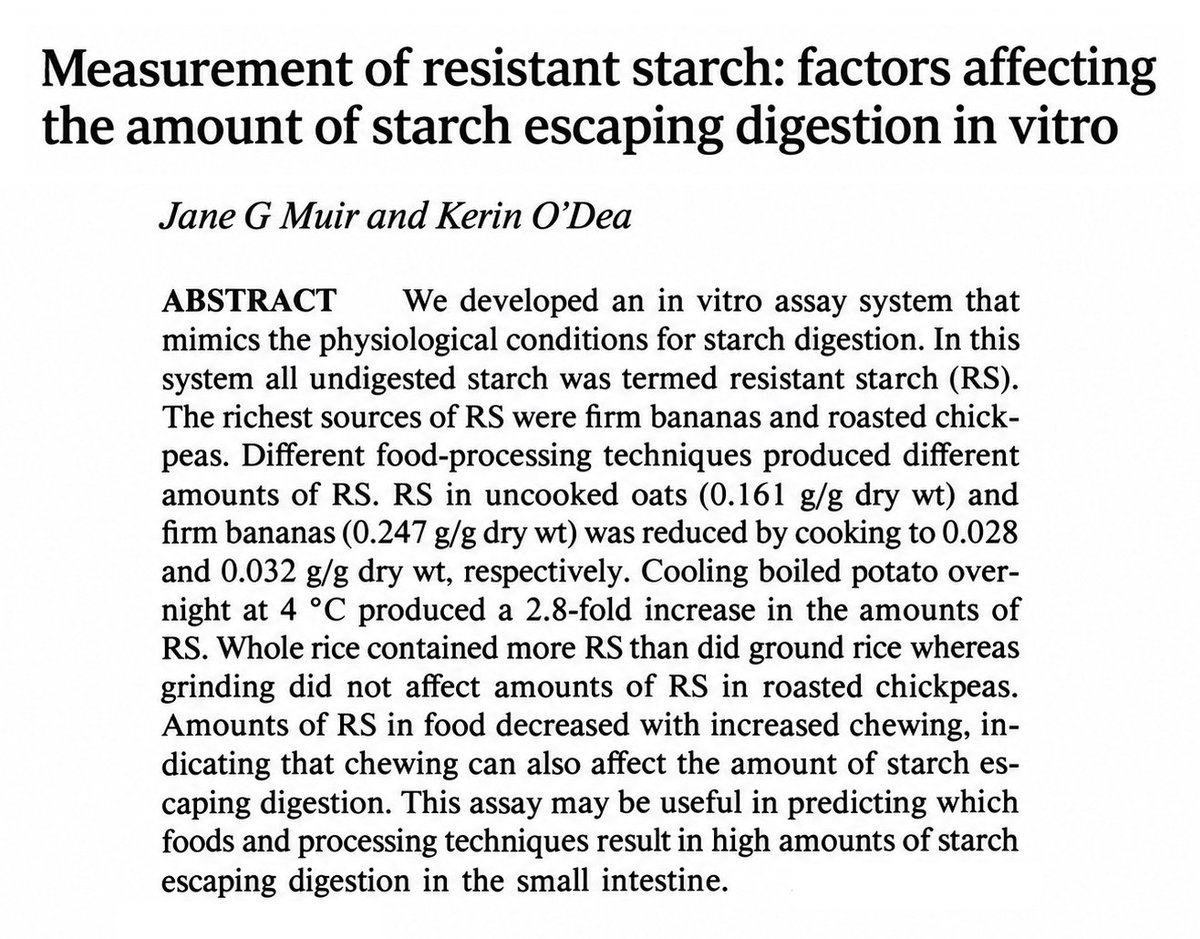
Si dejas la patata cocida durante la noche en el frigorífico a 4 grados, su almidón resistente se multiplica por tres, y esto te beneficia por diversas vías.
El almidón resistente actúa como un potente prebiótico porque, como su nombre indica, resiste la digestión y llega intacto al colon, donde sirve de alimento a bacterias beneficiosas. Estas bacterias lo fermentan y producen butirato y otros ácidos grasos de cadena corta.
Estos compuestos, junto con el menor aporte de glucosa por la porción de almidón no digerida, aportan múltiples beneficios: reducen los picos de glucosa, mejoran la sensibilidad a la insulina, fortalecen la barrera intestinal, disminuyen la inflamación, aumentan la saciedad y favorecen la quema de grasa. Además, el butirato protege contra el cáncer de colon al ser la principal fuente de energía de las células del colon y reducir la inflamación.
When the kidney function declined, the issue is not only low eGFR and high serum creatinine -
The danger is the chain reaction that low filtration triggers throughout entire body, silently, gradually and then suddenly.
This is the reality no one knows until too late.
Sugar depletes B1
Coffee depletes B1
Alcohol depletes B1
B1 turns food into energy. Without it you eat and still feel empty.
Low B1 looks like:
• forgetting why you walked into a room • crashing an hour after meals • pins and needles in your hands and feet • heart racing on the stairs • tired all day, can't sleep at night
Type 2 diabetics had 75% less B1 than healthy people. Their kidneys dumped it 16x faster. The standard test missed it. (PMID: 17676306)
"I take a B complex." Check the label. It probably says thiamine HCl or mononitrate. That form needs a transporter that maxes out at a few milligrams.
TTFD is fat-soluble. It gets in without the transporter.
Crash after every meal? Start here.
Reduce your carbohydrate consumption but remember to meet your iron intake.
Men and postmenopausal women: Minimum 8mg iron per day.
Workmen: Upto 12mg iron per day.
Women aged 19 to 49 years: 18mg iron daily.
cc:
@hyderabaddoctor
TO THE RESPECTED SPONSORS OF BB TELUGU,
@Maruti_Corp@PhonePe@asianpaints@amazonIN
I voted for Rohit. If he was eliminated despite receiving audience support, then I have one question:
WHAT IS THE VALUE OF MY VOTE?
Why ask the audience to vote if viewers feel that their choice is not being valued?
What is the purpose of voting if the audience's support does not make a difference?
We deserve clarity and transparency. Every vote represents the trust and support of a viewer.
SO, WHERE IS THE VALUE OF OUR VOTES?
PLEASE BRING ROHIT BACK.
@StarMaa@EndemolShineIND@JioHotstar
#BringRohitBack #JusticeForRohit #BiggBossTelugu10
Metabolic health:-
Is it about carbohydrates?
Is it about fat?
I think it is much bigger than that.
It is about what your body needs, what you provide, and how well your body can actually use it.
Every cell needs energy to function. Nutrients provide the substrates from which the body can generate energy, and mitochondria play a central role in converting the energy stored in nutrients into ATP , the immediate chemical energy currency used by cells.
ATP is then used to power cellular work from maintaining ion gradients and transporting molecules to muscle contraction, synthesis, repair and many other processes required to keep the cell functioning.
But this entire system is influenced by much more than food.
A poor night’s sleep can affect glucose regulation and insulin sensitivity.
Exercise can improve mitochondrial capacity and metabolic flexibility, but when training load consistently exceeds recovery capacity, exercise can become another physiological stressor.
Our psychological state matters too. Stress and emotional state influence the autonomic nervous system and hormonal signalling, which can affect glucose metabolism, appetite, sleep and recovery.
Even the environment we live in can influence our stress perception, behaviour, sleep and physiological responses.
So metabolic health cannot simply be reduced to:
“How many carbs are you eating?”
or
“How much fat are you eating?”
The bigger questions are:
Does your body have what it needs?
Can your cells use the available fuel efficiently?
Can your mitochondria meet the body’s energy demands?
Can your body adapt when those demands change?
And can it recover?
This is why I see metabolic health as a whole-body process.
It starts with the environment we live in, the food we provide, how we sleep and move, how we handle stress and recover and ultimately, how all of this influences what is happening inside our cells and mitochondria.
Metabolic health is not just about providing fuel.
It is about the body’s capacity to use that fuel, produce ATP, perform cellular work, adapt to demand and recover.
🍽️ Hyderabad’s food heritage is as rich as its history.
Some of the city’s most iconic food institutions have been serving generations of Hyderabadis:
🥇 Hameedi Confectioners 1913 | Mozamjahi Market/Nampally
🍛 Grand Hotel — 1935 | Abids
☕ Garden Café — 1941 | Secunderabad
🍛 Madina Hotel — 1947 | Pathergatti, Charminar
🥞 Taj Mahal Hotel — 1948 | Abids
🥖 Subhan Bakery — 1948 | Nampally
🍦 Famous Ice Cream — 1951 | Mozamjahi Market
🍬 Agra Sweets — 1951 | Banjara Hills
🍛 Paradise — 1953 | Secunderabad
🥖 Karachi Bakery — 1953 | Mozamjahi Market
🍛 Hotel Niagara — 1969 | Chaderghat
🥡 Haiking — 1972 | Himayatnagar
🍛 Café Bahar — 1973 | Basheerbagh/Himayatnagar
☕ Café Niloufer — 1978 | Lakdikapul
🍖 Hotel Nayaab — 1986 | Chatta Bazar, Charminar
🍛 Hotel Shadab — 1986 | Ghansi Bazaar, Charminar
☕ Nimrah Café & Bakery — 1993 | Charminar
🍛 Bawarchi — 1994 | RTC X Roads
From Jouzi Halwa and Osmania biscuits to Irani chai, biryani, haleem, nihari and traditional tiffins, these aren’t just restaurants—they are living pieces of Hyderabad’s culinary history. ❤️
How many have you visited? Which one is your favourite? 🍛☕️
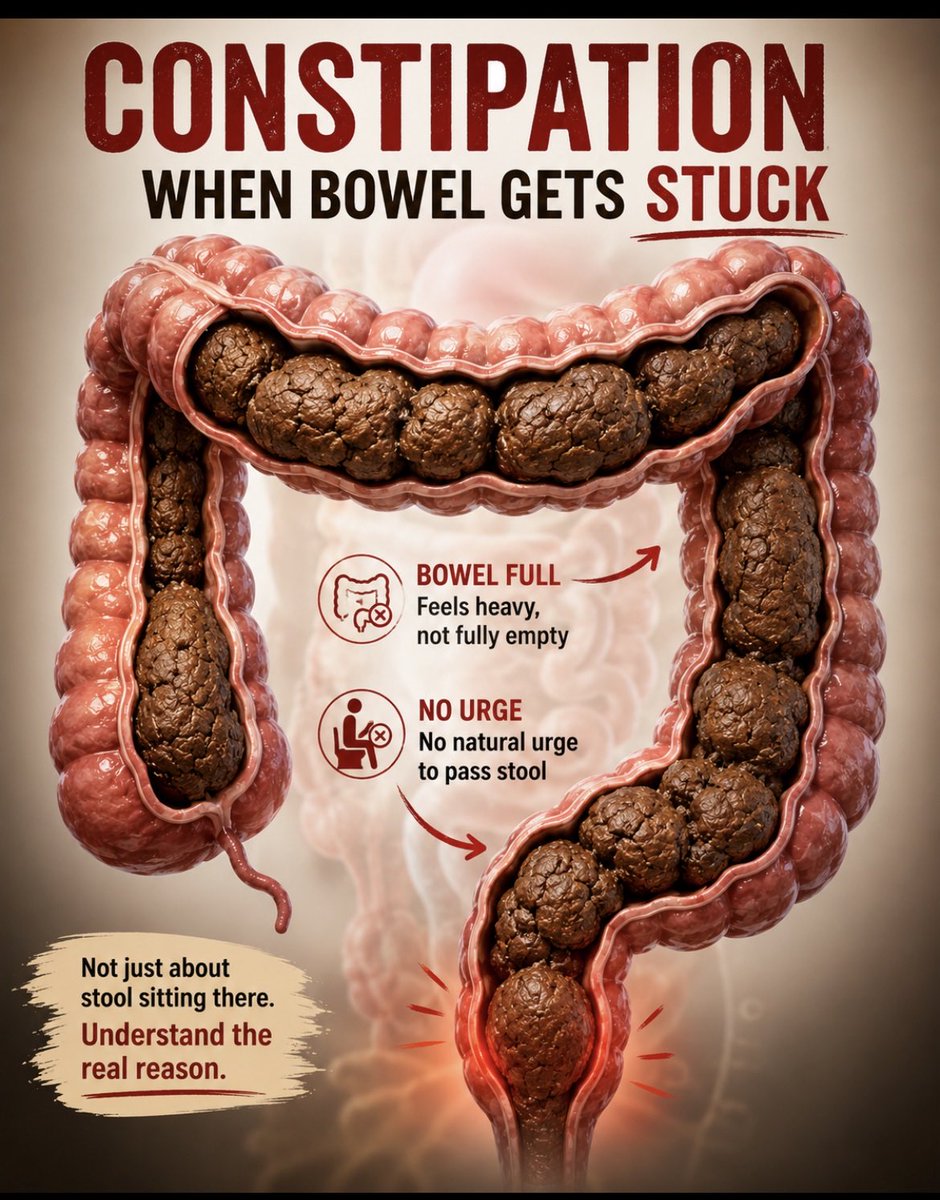
Constipation: First Understand Why the Bowel Isn’t Clearing
When someone has constipation, we shouldn’t simply ask, “How can we make the bowel move?”
We first need to understand why the bowel is not being cleared.
There can be different mechanisms involved.
1. The bowel is not moving properly,
a motility problem
In this situation, stool may be present, but intestinal movement is slow or inadequate. This can be associated with factors such as:
Poor autonomic or vagal regulation
Inadequate hydration
Electrolyte imbalance
Certain nutrient deficiencies
Low physical activity
Medications or other physiological factors affecting gut motility
Here, the focus is on understanding and supporting gut motility and the nervous system regulation of digestion.
2. There is little or no urge to pass stool
This is different.
Some people feel heavy, full, or distended, and may even know that their bowel is not completely empty, but they simply do not get the natural urge to defecate.
In that situation, the question is not only, “Why isn’t the bowel moving?” We also need to ask:
Why is the normal sensation or urge to defecate not being generated or perceived?
This can involve problems with the coordination and sensation of the rectum and pelvic floor, altered bowel habits, repeatedly suppressing the urge, or other physiological factors.
So, constipation is not one single problem.
Before you reach for laxatives, fibre, or simply trying to force a bowel movement, we need to identify the underlying pattern:
Is the problem primarily slow transit?
Or is the problem a reduced/absent urge and impaired evacuation signalling?
Once we understand the mechanism, the intervention becomes much more targeted.
BONE BROTH: A SIMPLE FOOD WITH A BIG ROLE IN HEALTH
Bone broth is a simple, traditional preparation that can provide gelatin/collagen-derived amino acids, protein and minerals in a form that is easy to consume and often gentle on digestion.
And you don’t need an elaborate recipe or 12–24 hours of cooking to make it part of your routine.
Your body is constantly repairing and maintaining different tissues, gut lining, connective tissue, skin, cartilage, tendons, ligaments and bone.
Collagen is a major structural protein in many of these tissues.
Bone broth provides collagen-derived amino acids such as glycine and proline, along with other nutrients released from the bones and surrounding connective tissue during cooking.
These amino acids are particularly interesting because glycine, for example, is involved in collagen synthesis, bile acid production and several metabolic processes.
For the gut, a warm, nourishing broth can also be a very practical food when someone is struggling with poor appetite, digestive discomfort or difficulty tolerating heavier meals.
And there is another advantage:
It is food. Rather than depending entirely on powders, capsules and isolated supplements, we can also obtain useful nutrients through traditional, whole-food preparations.
Use what is available.
🐓 Chicken bones
🐟 Fish bones & heads
🐐 Goat/mutton bones
🥩 Other meat bones with connective tissue
Fleshy bones, joints, cartilage and connective-tissue-rich cuts are especially useful because they contribute more collagen/gelatin.
You don’t have to make a huge batch and spend your entire day cooking it. A pressure cooker can make the process much faster, and even a 30–60 minute preparation can make a nourishing broth, particularly when using smaller bones, joints, cartilage or fleshy cuts.
Longer cooking may extract more gelatin and alter the nutrient profile, but the goal is not to chase a magical cooking time.
The goal is consistency.
If a fresh cup of broth can become part of your daily routine, that’s far more useful than making a giant batch once a month and never doing it again.
Magnesium Bisglycinate
🟢dLife Co-branded supplement
🟢Doctor-led team
🟢dLife course-certified Dr. Preeti Goyal (MBBS MD) @PreetiDukeK leads the team
🟢All supplement batches are third-party lab-tested
🟢Batch test certificate (posted in reply)
🟢Quality, transparency, and reliability are the brand's hallmarks
🟢Buy Quality Supplements with trust
ORDERING LINK: https://t.co/qImMobxnxm
To the young generation: Please STOP being a consumer of information produced by others, START upgrading yourself, your skills (mental, emotional, physical, techinical), LEARN all the good things that are their to learn so you can apply them, avoid the bad things.
Do not expose yourself to too much information on a daily basis (videos, photos, sounds) as our mind is not capable to process too much information at such a young age.
Most of the information is designed to simply tickle our senses and provide us momentary pleasure but we will loose the ability to filter the good from bad and simply become reactors to information we receive. They make us an emotional wreck and affect our ablity to interact with fellow humans.
Too much information going into our system reduce our ability to listen and learn, reduce introspection skills, reduce patience levels, affect attention span, and make us jumpy, irritable,bored and restless.
Not more than 10 to 15 minutes per day of social media could be practised. Go out and play with friends all kinds of sports, crack jokes, laugh together, discuss, debate, argue, refute ideas. Otherwise read books, listen to music, do painting, go for a walk, water the plants in the garden, be with nature.