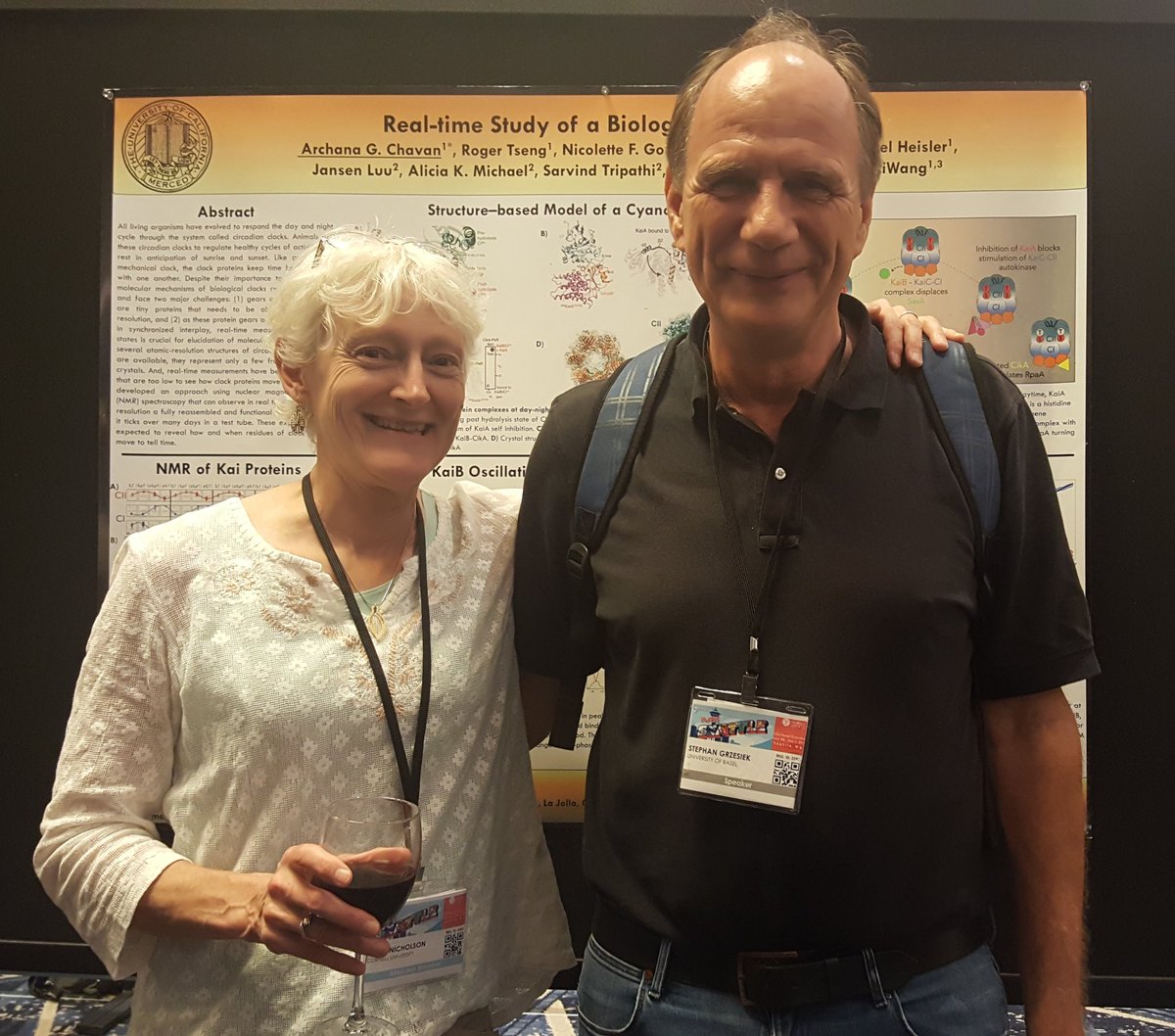
Thank you @ProteinSociety for great poster session at #ps33. Had stimulating conversations after a early career talk. Look at some special visitors to my posters. Enjoyed sharing my work from @liwangandy lab, at @ucmerced.
Bold support for the pursuit of transformative discovery💡The W.M. Keck Foundation is investing nearly $1.8 million in UC Merced research, helping fuel groundbreaking advances while supporting innovative, early-career researchers. 🧬
🔗 https://t.co/urYWsHJxGb
Bold support for the pursuit of transformative discovery💡The W.M. Keck Foundation is investing nearly $1.8 million in UC Merced research, helping fuel groundbreaking advances while supporting innovative, early-career researchers. 🧬
🔗 https://t.co/urYWsHJxGb
A cool story of testing multiple hypotheses and finding that none is correct.
The reality is unexpected, a discontinuity leading to a big discovery.
What happens to a metal as you keep cooling it down? For a long time, this wasn’t clear. Some expected resistivity to gradually increase, others thought it might gradually decrease.
The answer came when Prof. Heike Kamerlingh Onnes was able to actually perform the experiment, thanks to having developed a method to liquify helium. Cooling mercury to about 4.2 K, he observed something striking: the resistivity didn’t just change—it dropped suddenly to (essentially) zero.
That discontinuity revealed an entirely new physical phenomenon: superconductivity.
A reminder that progress often hinges not just on ideas, but on the ability to test them, and that nature doesn’t always follow smooth, gradual paths.
The figure is sourced from The Nobel Prize lecture presented by Prof. Onnes.
What if AI could invent enzymes that nature hasn’t seen? 👩🔬🧑🔬
Introducing 🪩 DISCO: Diffusion for Sequence-structure CO-design
14 rounds of directed evolution and over a year of wet lab work. That's what it took to engineer an enzyme for selective C(sp³)–H insertion, one of the most challenging transformations in organic chemistry.
DISCO surpasses this with a single plate. No pre-specified catalytic residues, no template, no theozyme, no inverse folding, just joint diffusion over protein sequence and structure.
📝 Blog: https://t.co/j9Za0JigfO
📄 Paper: https://t.co/ficrYNBBrM
💻 Code: https://t.co/p81sSwoaPH
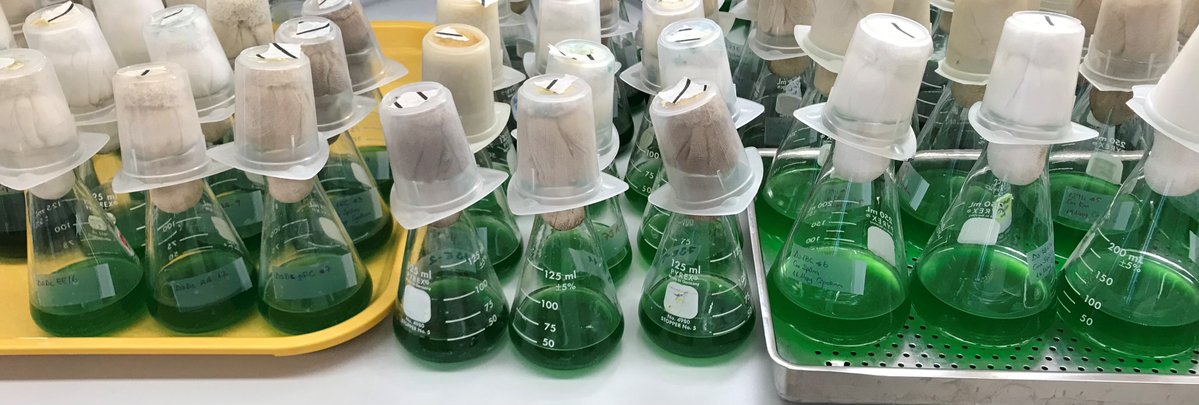
UC Merced researchers solved how bacteria use circadian clocks to control gene activity over a 24-hour cycle. Read more here 🔗 https://t.co/IIdYn1u5im
Alt Text: Laboratory flasks with bright green liquid sit on a lab bench, sealed with cotton plugs.
Published today: Scientists have solved how circadian clocks within cyanobacteria, tiny organisms also known as blue-green algae, are able to precisely control when different genes are turned on and off during the 24-hour cycle. https://t.co/8coLwkuesk
UC Merced biochemist Andy LiWang is studying shape-shifting proteins that may help organisms adapt to temperature. Supported by a $1.2M Keck Foundation grant. 🔗 https://t.co/Y48Hw2Cxzm
Introducing PeptiVerse 🚀, our open-source platform for therapeutic peptide property prediction. We support WT and modified SMILES inputs, and can predict solubility💧, permeability🔬, hemolysis🩸, non-fouling👯, half-life⏱️, tox ☠️, and binding affinity🔗 -- try it out!
🤗: https://t.co/6kjSJFEGtp
📜: https://t.co/UMhGawlPJi
🧵👇
a great read to start off your year: the mundanity of excellence.
a study of the nature of excellence, and what separates olympic-level swimmers from the farm leagues. it's not that they train more, or that they have more raw talent.
instead, true excellence looks extremely mundane. it's small, ordinary actions, performed carefully and consistently, that compound to extraordinary.
https://t.co/7Dxq0IzwaI
Almost couple of decades back, I was discussing with a scientist and he explained to me how our currency is major health problem, from beggars in the streets to saliva of many…
95% I don’t deal in currency, for remaining unavoidable places, I ensure I wash my hands.
This article explores alternatives, hoping for specific protein binders:
The antibodies don’t work! The race to rid labs of molecules that ruin experiments
3/3
https://t.co/fo2L6OwRuG
Describe your neurons like the Allen Institute!
Join us at our Cell Types Workshop to learn how we define cell types and get hands-on experience with our research tools. Programming experience not required.
🗓️ Apr. 6-8 in Seattle
⏳Apply by Jan. 9 https://t.co/2FuSvTZtnp
@DoctorVig@BarackObama@ganavya Your sister @ganavya voice is beautiful but credit to Pasayadan lyrics needs to be given to Saint Dnyaneshwar who wrote this prayer more than 700 years ago.
@fakealia@samavishay@BarackObama@ganavya@ganavya there is no doubt your beautiful voice rendering and music gave a nice touch but please respect the Lyrics is written by Sant Dnyaneshwar more than 700 year ago.
I strongly encourage ECRs to apply for opportunities like the Travelling Fellowships from the ever supportive @Co_Biologists.
They are fantastic for learning new skills, building collaborative networks, and honing scientific writing.
https://t.co/h5EwMA4Ezz